
Roof Repair
Rats, Pigeons, Raccoons: How Animals Damage LA Roofs
Animals damage Los Angeles roofs by chewing eaves and vent screens, lifting loose tile, nesting in vents and fouling insulation. Roof rats and squirrels chew, raccoons pry, pigeons nest. The repair is the same idea each time: get the animals out first, then close every opening with material they cannot chew.
- ★ 4.9 on Google · 69 reviews
- Same-day or next-day bookings
- Based in Van Nuys, CA
Published and updated November 3, 2026 · By the Clear Shield Roofers team, Van Nuys, CA
On this page
- Which animals damage Los Angeles roofs, and how
- Clues on the outside of the house
- What we look for when we walk the roof
- What animal damage does to the rest of the roof
- What closes an entry point and what does not
- A roofer's view of animal damage, and the trade-offs
- The right order: animals out, then repair
- Animal damage on tree-lined South Pasadena streets
- Getting animal damage on your roof looked at
- Common questions
Animals do not need much room. A gap at an eave, a loose vent cover or a missing closure under a tile can be enough. What follows is roof damage in the ordinary sense: chewed wood, torn screens, displaced tile and a wet attic. This post covers who does what damage, how to read it and what closes the way in. Our animal damage roof repair page covers the repair itself.
Which animals damage Los Angeles roofs, and how
| Animal | Common way in | What it leaves behind |
|---|---|---|
| Roof rats | Eave gaps, vents, roof-to-wall joints, reached from palms or wires | Gnawed edges, rub marks, droppings |
| Squirrels | Fascia and soffit corners, vent screens | Larger chewed holes, nesting material |
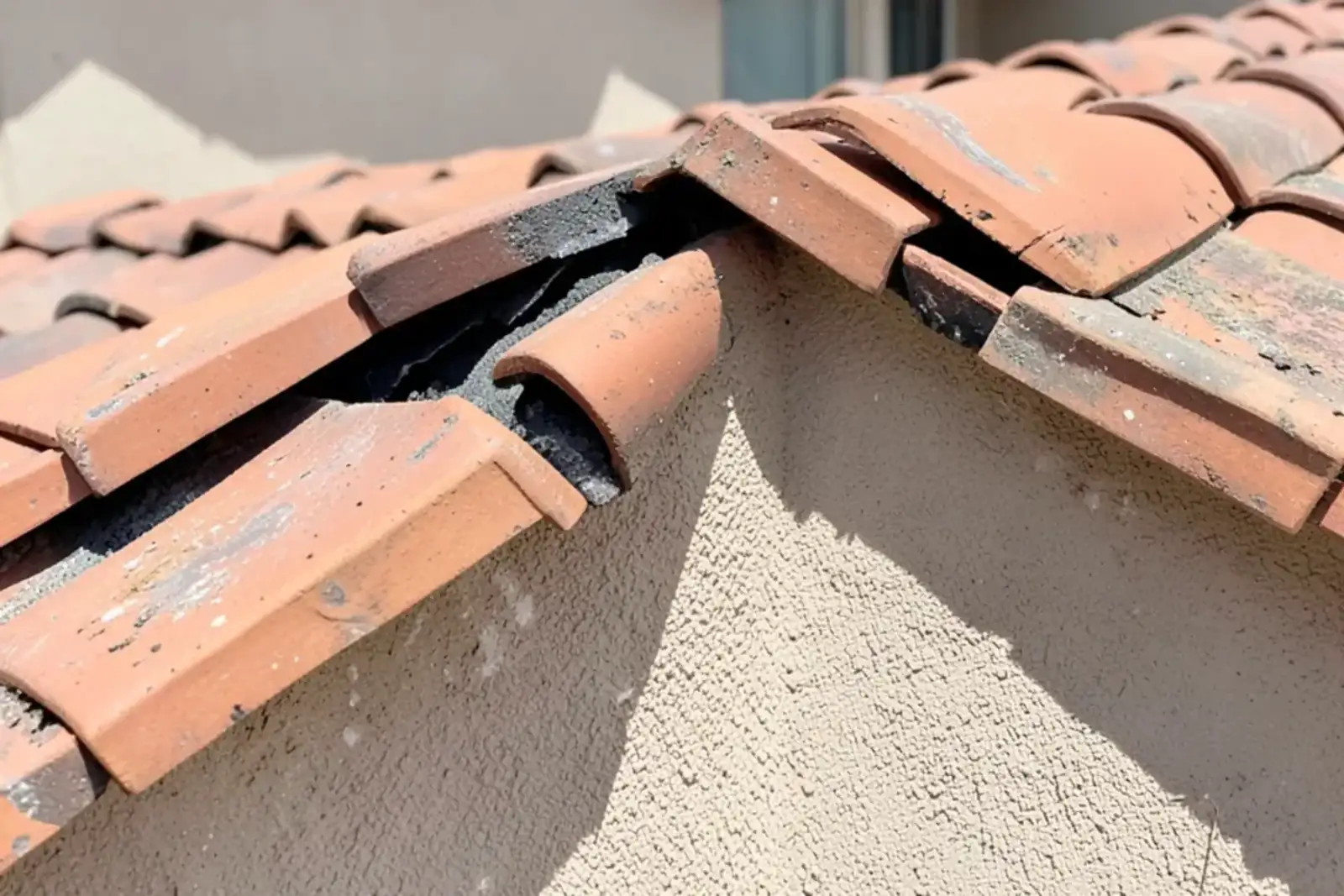
| Raccoons | Loose tile, soffit panels, ridge vents | Shoved or broken parts, torn panels |
| Pigeons and other birds | Vents, open tile ends at eaves | Nests, droppings, blocked airflow |
Clues on the outside of the house
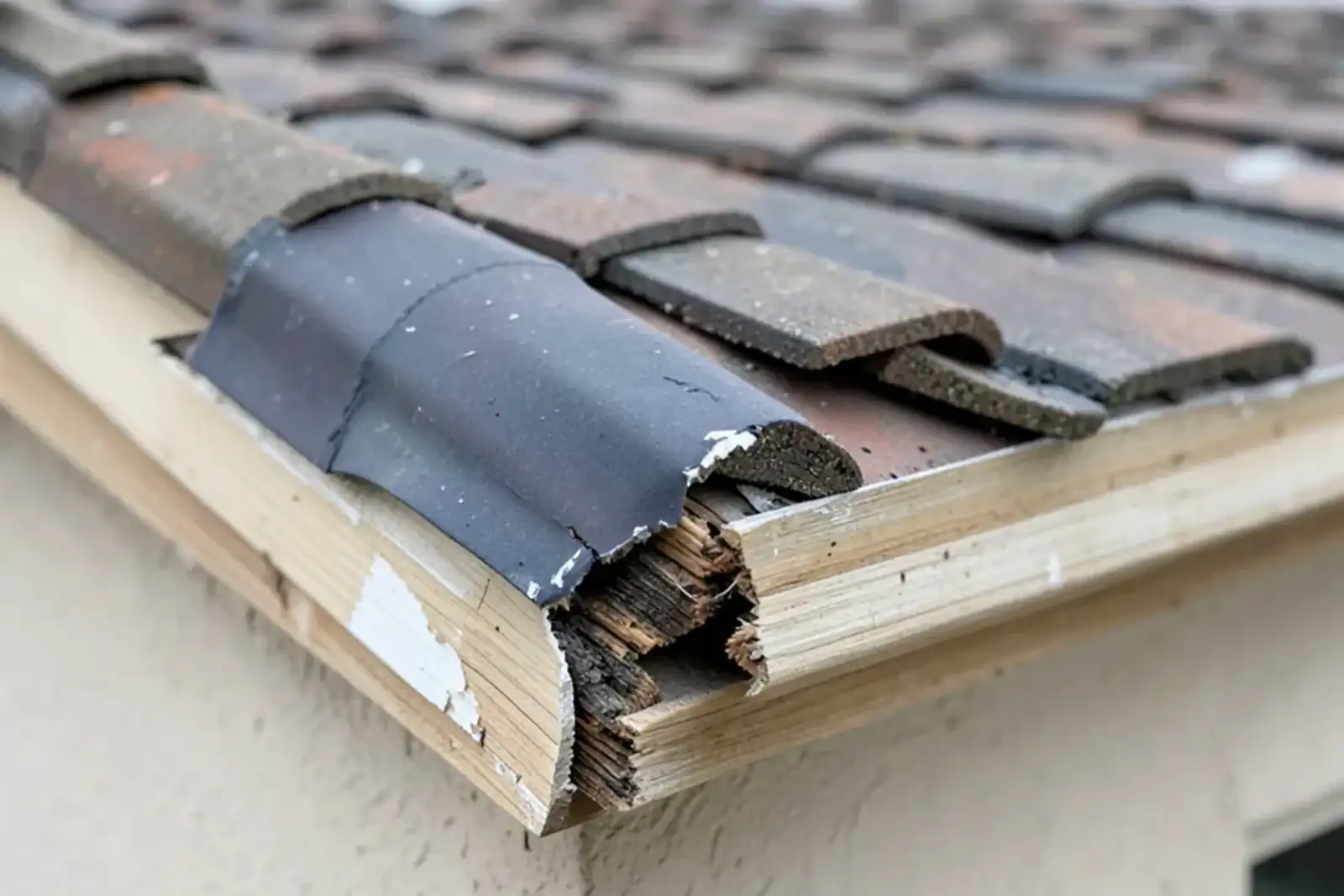
You can often read the problem from the yard. Look along the eaves and under the roofline at dawn or dusk. These are typical clues:
- Frayed wood at fascia and soffit corners
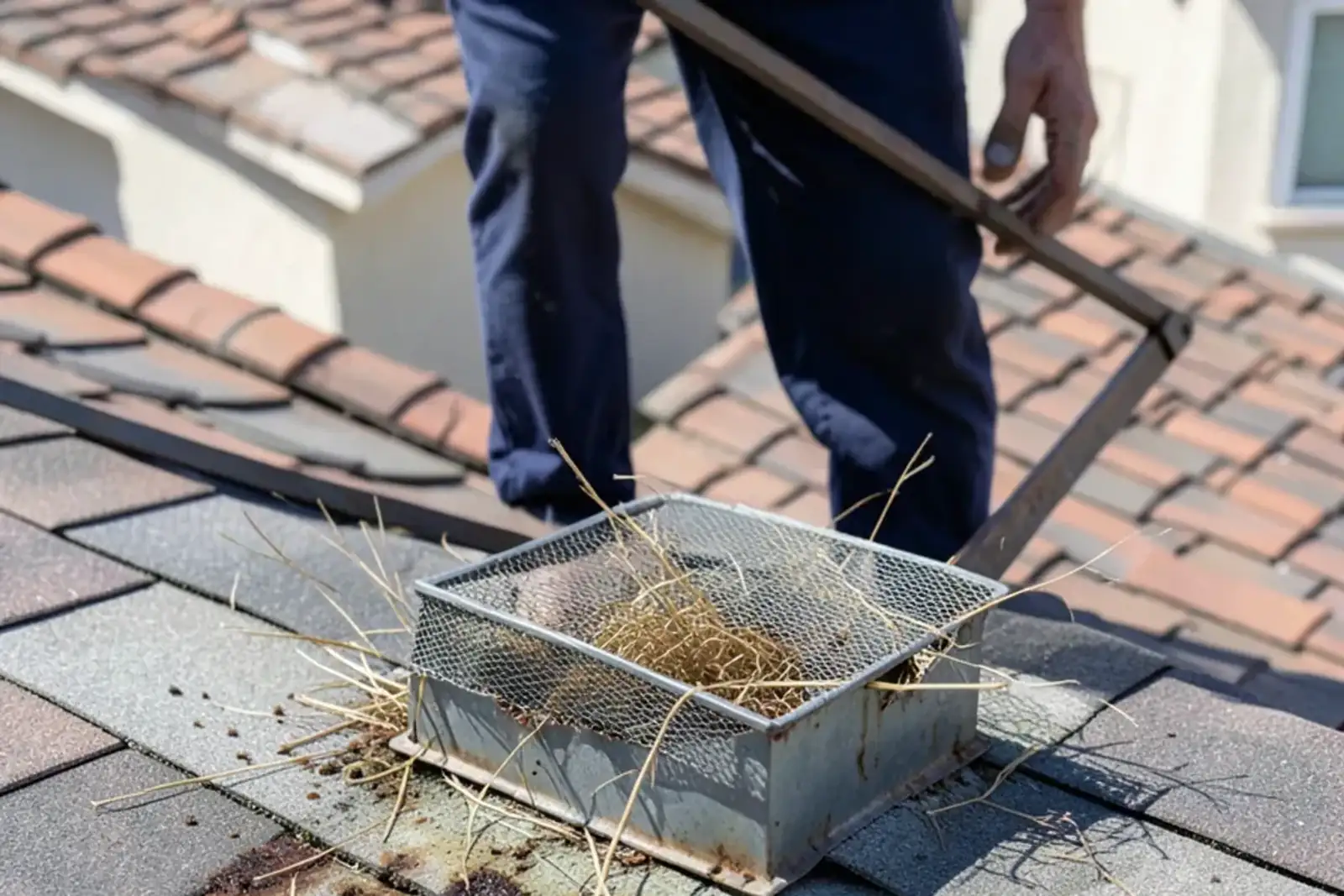
- A vent cover hanging loose or with a torn screen
- Dark, greasy smudges along the edge of a wall or beam
- Twigs, grass or feathers stuffed into a vent
- Tiles out of line, with underlayment showing
- Droppings or streaks on the roof surface or on the ground below
Sounds matter too. Scratching at dusk points to rats or squirrels, and heavy thumping at night often means a raccoon.
What we look for when we walk the roof
Entry points are usually on the roof, not in the attic. We go along every eave, vent and ridge end and check each as a possible way in: screens with torn corners, soffit panels with loose edges, tile ends without a closure strip and fascia corners that have been worked on. Each opening gets a photo.
Animals often exploit another defect that nobody noticed. One Van Nuys customer says the crew "found hidden roof problems we had no idea about, including a poorly placed roof vent, fascia damage, and the need for bird-blocking protection." A vent in the wrong spot can be an open door, so we look at placement as well as damage.
What animal damage does to the rest of the roof
The hole is only the start. Water follows the same gap, so a gnawed eave can soak the fascia, the rafter tails and the ceiling edge. Nesting material blocks vents and traps moisture. Droppings and urine foul insulation, and wet insulation stops working. A raccoon that shoves tile aside leaves the underlayment exposed to sun and rain until someone sets the tile back.
That is why we treat animal work as a roof inspection first. If the damage has reached the boards, fascia and soffit repair comes into play, and a soaked deck may need more than a surface fix. We tell you what we see and put the scope in writing.
What closes an entry point and what does not
Animals test every repair. Use materials they cannot chew or pull loose.
Holds up:
- Galvanized mesh or metal screen fastened with screws
- Metal flashing over a cut-back chewed edge
- Replaced fascia or soffit board where the wood is gnawed
- Closure strips or bird stops under tile eaves
Does not hold:
- Spray foam or caulk on their own
- Steel wool on its own, which rusts away outdoors
- Cardboard, tape or plastic patches
Gap size and the routes animals use to reach the roof
UC Integrated Pest Management advises sealing every hole larger than about a quarter inch to exclude rats and mice, because rats gnaw through foam, plastic, wood and caulk. For vent openings it recommends half-inch galvanized wire cloth or expanded metal, never light chicken wire. That is a smaller gap than most people picture, so a roof that looks tight from the street can still have dozens.
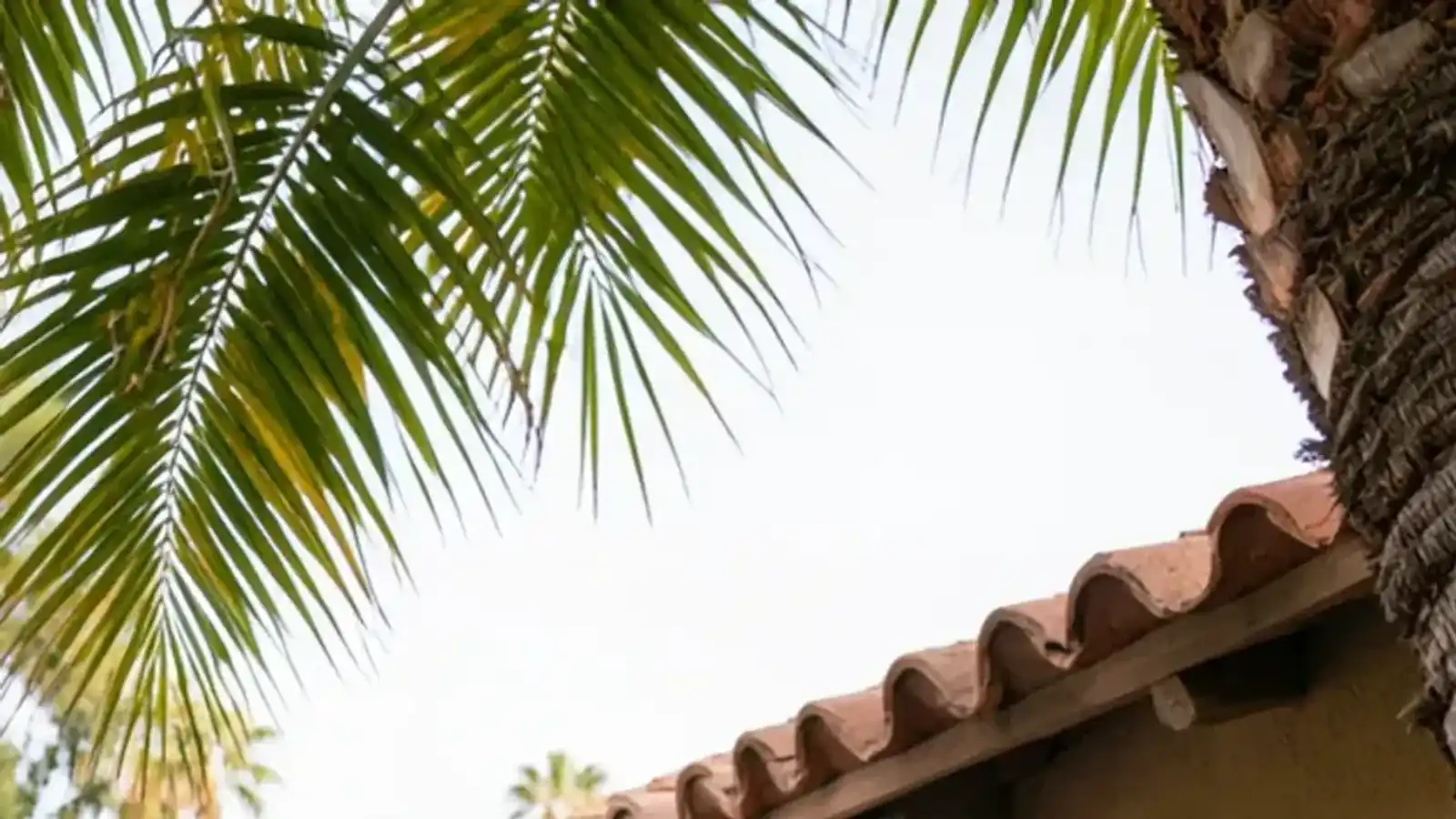
Roof rats are climbers. UC IPM notes they travel along overhead utility lines and fence tops, and use climbing plants such as ivy and star jasmine as ladders. Limbs that touch or hang over the roof work the same way, and UC IPM gives a trim distance of three to six feet depending on the source. In Los Angeles, palms and dense shrubs often make the route, which is why trimming is part of the repair.
A roofer's view of animal damage, and the trade-offs
We repair roofs. We do not trap or remove animals, and we say so. The honest picture has trade-offs on every job.
- Mesh versus airflow. Fine screen keeps animals out and also clogs with dust and lint, which can choke attic ventilation. We size the opening and check airflow before choosing the mesh.
- Bird stops versus netting. Metal or foam bird stops under tile eaves are tidy and last. Netting is cheaper up front and often fails at the first loose corner.
- Repair now or wait. An open eave lets water in as well, so a small hole can turn into a rotted rafter tail. Waiting costs more than most owners expect.
- Closing one hole. If you close one opening and the animals are still inside, they find another or damage more. The order matters: animals out first, then repair.
- Cleanup is a separate trade. Insulation soiled by droppings and urine needs specialist cleanup. We note it in the scope but do not do it.
If you want a second opinion on a repair that failed, send photos of the repaired spot. A patch that animals defeated once tells us what they were testing.
The right order: animals out, then repair
- Confirm what is happening from the noise, the droppings and the damage.
- Have the animals removed by a wildlife control professional.
- Have contaminated insulation dealt with. That is a cleanup trade, not roofing.
- Repair the roof side: rotted wood, vents, tile closures and screens.
- Trim the bridges. Cut tree limbs and palm fronds back from the roofline.
- Check after wind and after the first rain of the season.
Animal damage on tree-lined South Pasadena streets
South Pasadena is known for its tree canopy, and trees give rats and squirrels a route onto the roof. The same canopy drops leaves into valleys and gutters, where wet debris softens wood and hides new gaps. Census ACS (2020-24) puts the median home there at a 1953 build, so much of the original eave wood is old and easy to chew through. We cover South Pasadena from Van Nuys.
Getting animal damage on your roof looked at
Tell us what you have heard or seen, where the damage sits and whether the animals have been removed. Photos of the eaves and vents help. We will set the earliest visit we can, walk the roof for every possible opening and put the repair in writing. Call (209) 563-1278 to start.
Quick answers
How can I tell what kind of animal damaged my roof?
Size and location tell you. Small gnawed holes and greasy rub marks at eaves suggest rats. Larger chewed corners on fascia suggest squirrels. Shoved tile and torn soffit panels point to raccoons. Twigs and droppings in vents mean birds. Photos of the damage help us sort which one it was before we plan the repair.
Do I have to remove the animals before the roof is repaired?
Yes. Sealing an entry point with animals inside traps them, and young left behind in an attic cause a worse problem. A wildlife control professional removes the animals first. After that, we can repair and close the entry points. If you are not sure whether anything is still inside, tell us what you have heard and we will say what to check.
Why do roof rats keep coming back after one hole is sealed?
Because most roofs have more than one way in, and a rat uses whichever is open. Palm fronds, wires and tree limbs make the route. Close every opening in one visit, trim the bridges back from the roofline and look again after the first strong wind, since a repaired eave works only while it stays tight.
Does homeowners insurance cover animal damage to a roof?
Many policies exclude damage caused by rodents and other animals, so read yours or ask your insurer before you plan around a claim. We can inspect, photograph the damage and write a repair estimate. Any claim is argued by you or by a licensed public adjuster, not by us.
How big a gap can a rat get through on a roof?
Smaller than most people expect. UC Integrated Pest Management advises sealing every hole larger than a quarter inch to keep out rats and mice, since they gnaw plastic, foam, wood and caulk. On a roof that means metal mesh or sheet metal at vents, eaves and tile ends, fastened with screws, not a bead of sealant.