
Roofing Materials in Los Angeles, CA
The right roofing materials in Los Angeles depend on your house style, roof pitch, fire zone and budget. Composition shingle fits most budgets, tile suits Spanish and Mediterranean homes, metal lasts longest, and cool-rated products satisfy the energy rules. Below we compare them, then point you to a full guide for each.
- ★ 4.9 on Google · 69 reviews
- Same-day or next-day bookings
- Based in Van Nuys, CA
On this page
- Which roofing materials Los Angeles homes use, by house style
- What is the best roof type for Los Angeles heat and sun?
- What does roof underlayment do under each material?
- Does roof color matter in Los Angeles?
- What moves the price of roofing materials in Los Angeles?
- Which rules limit roofing material choices in Los Angeles?
- Why Clear Shield for choosing a roofing material in Los Angeles
- Common questions
A material choice is really three choices: what covers the roof, what sits under it, and what your address allows. Get all three right and the roof lasts. Get one wrong and a good material leaks early.
What our material guidance covers. Before you pick, the written estimate compares:
- Two or three coverings that suit your house style, pitch and fire zone
- The underlayment and flashing that go under each one
- Cool-roof and Class A requirements for your address
- Weight, so tile or slate is checked against the framing
- Permit responsibility and what the quote includes
Which roofing materials Los Angeles homes use, by house style
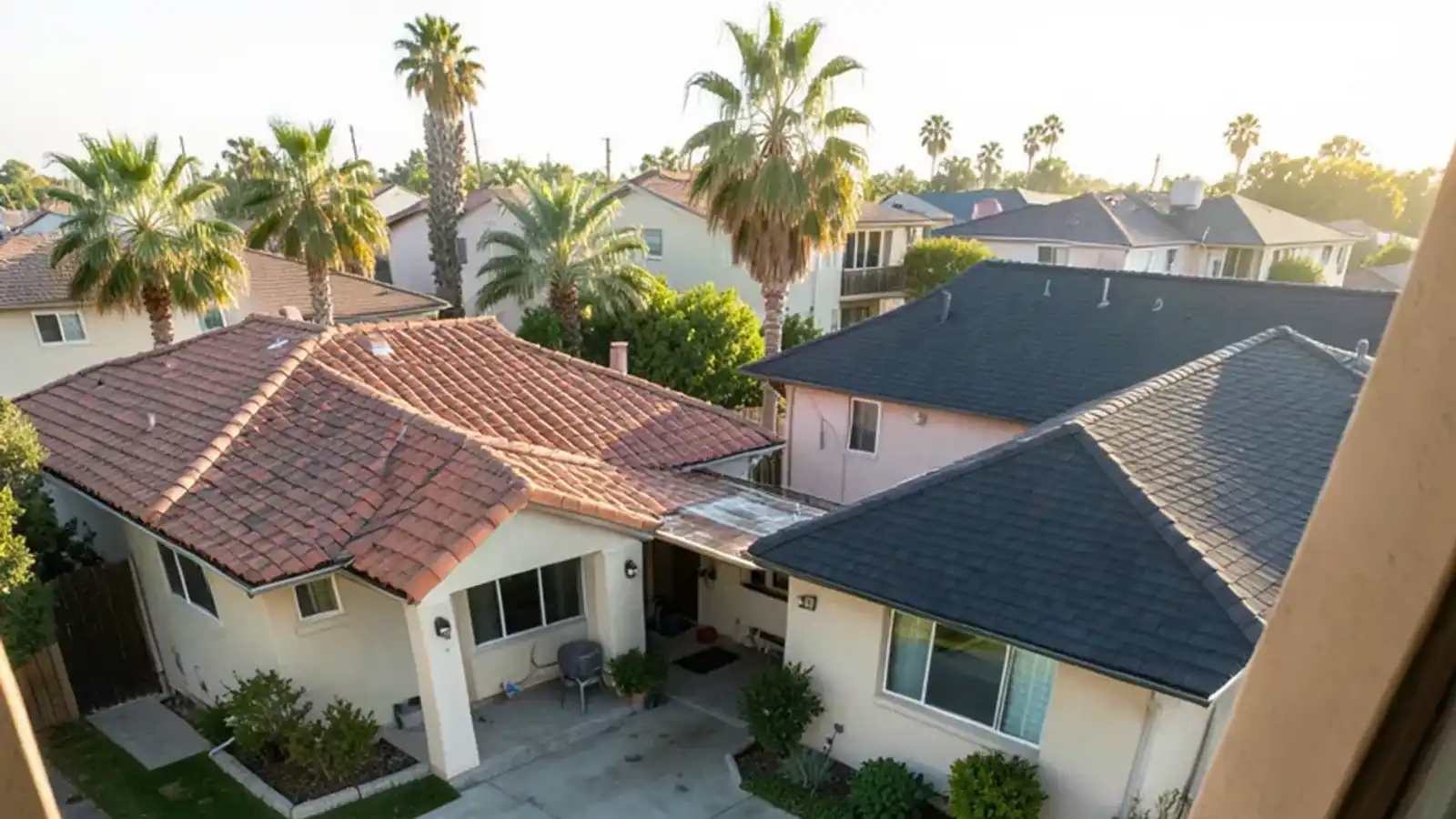
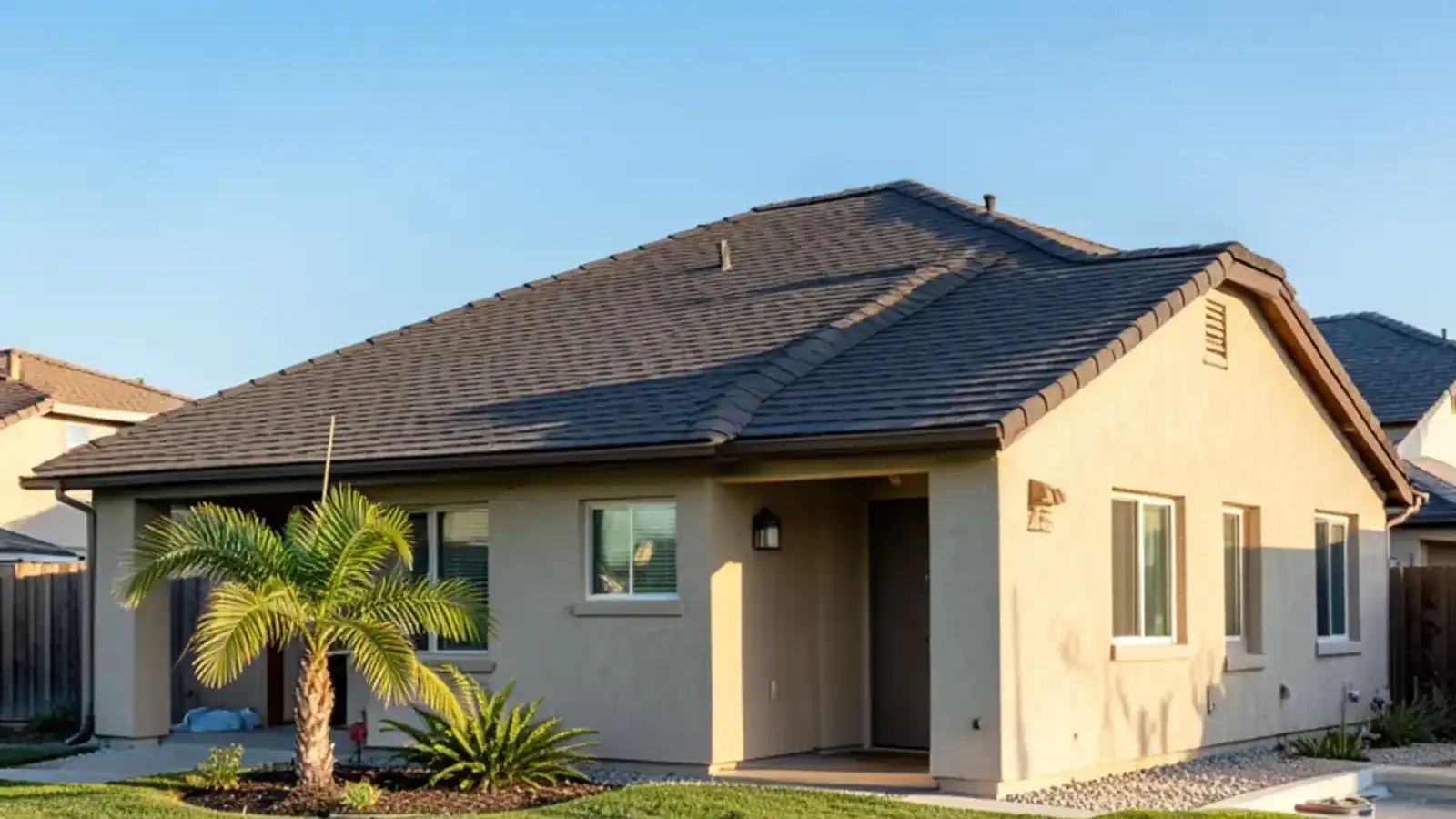
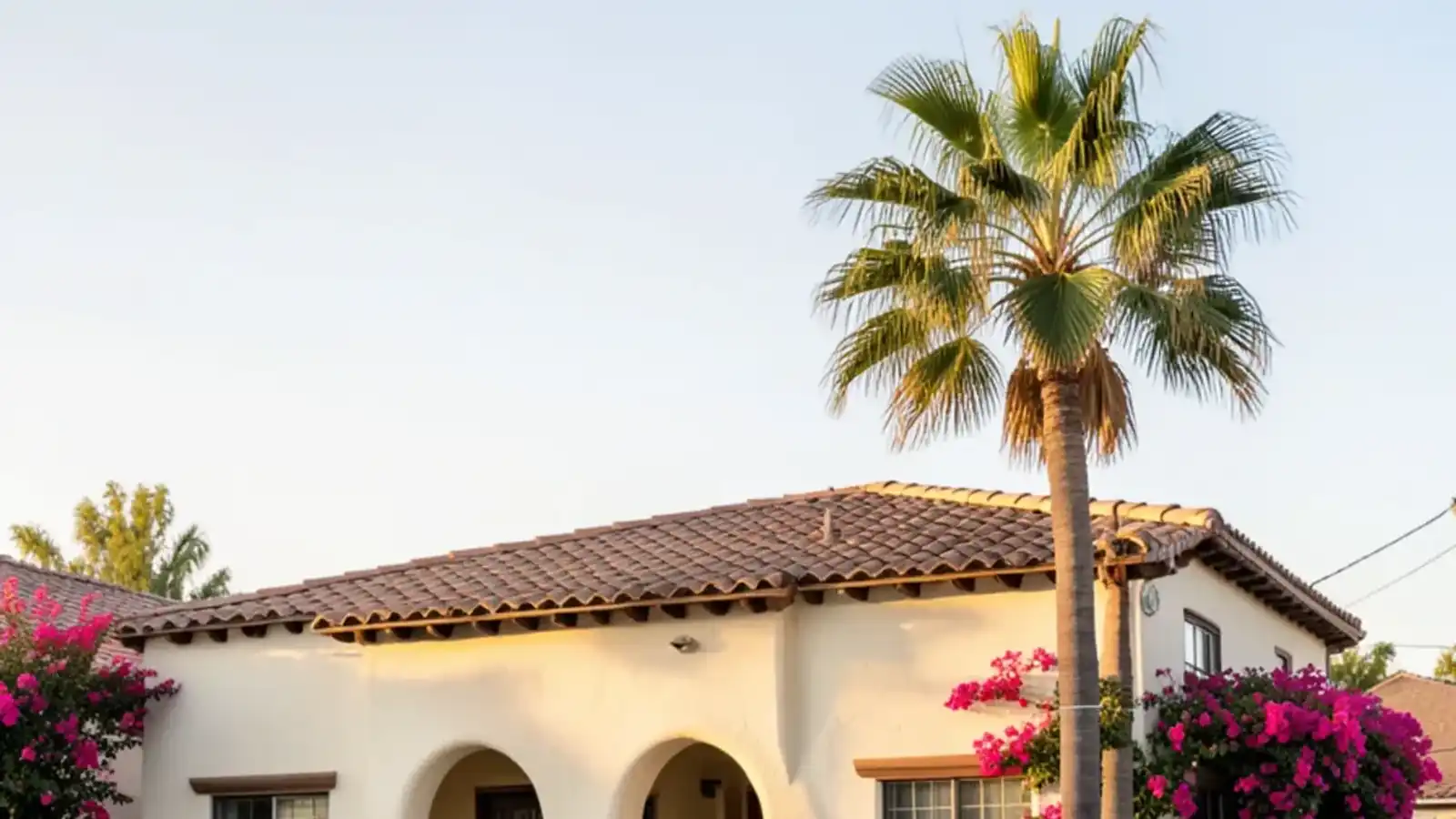
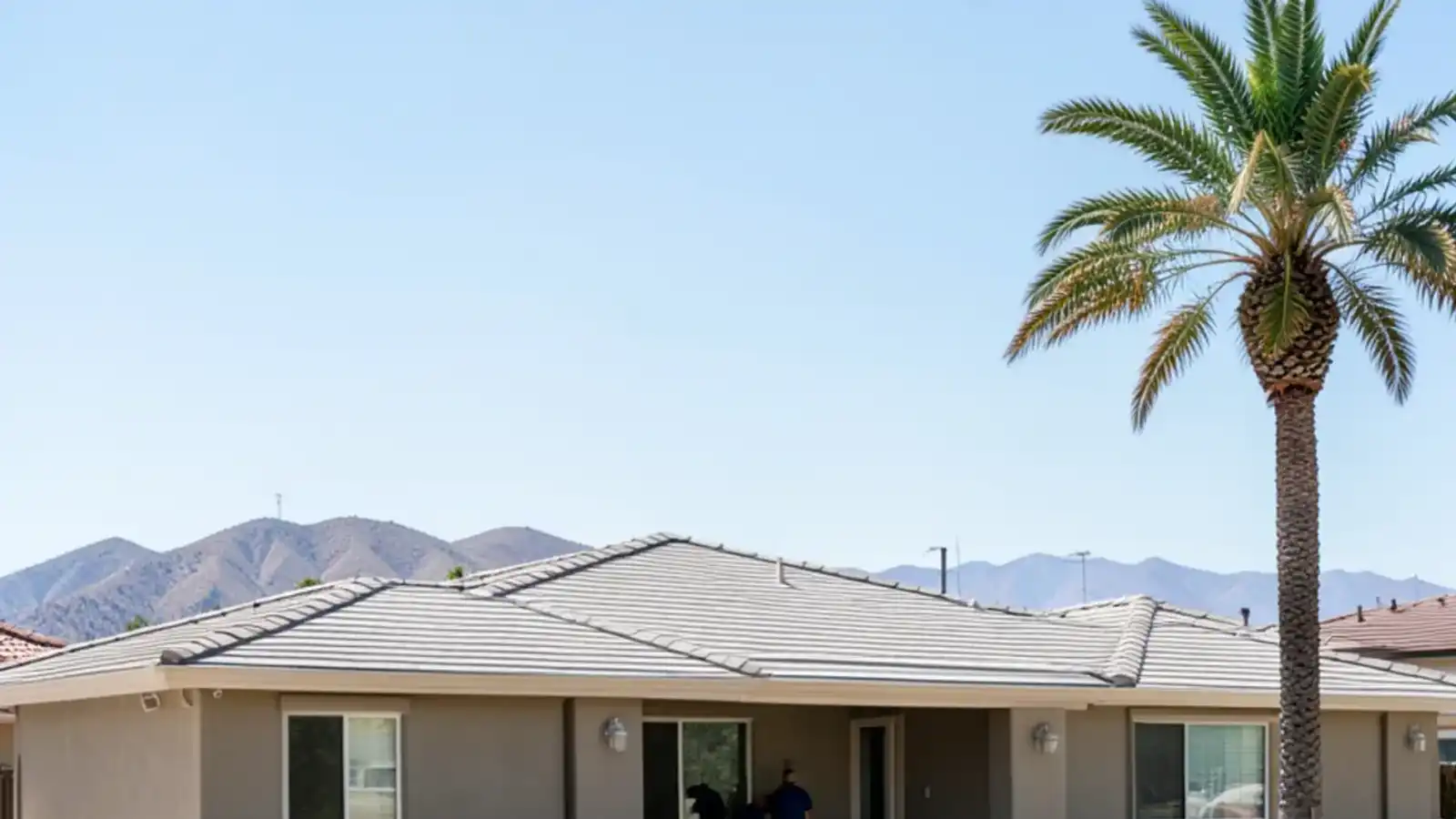
Stucco homes with curved red tile are Spanish or Mediterranean in style. Postwar ranch houses and tract homes mostly carry composition shingle. Flat and low-slope roofs on apartments, additions and patios need a different family of products, covered under flat roofing.
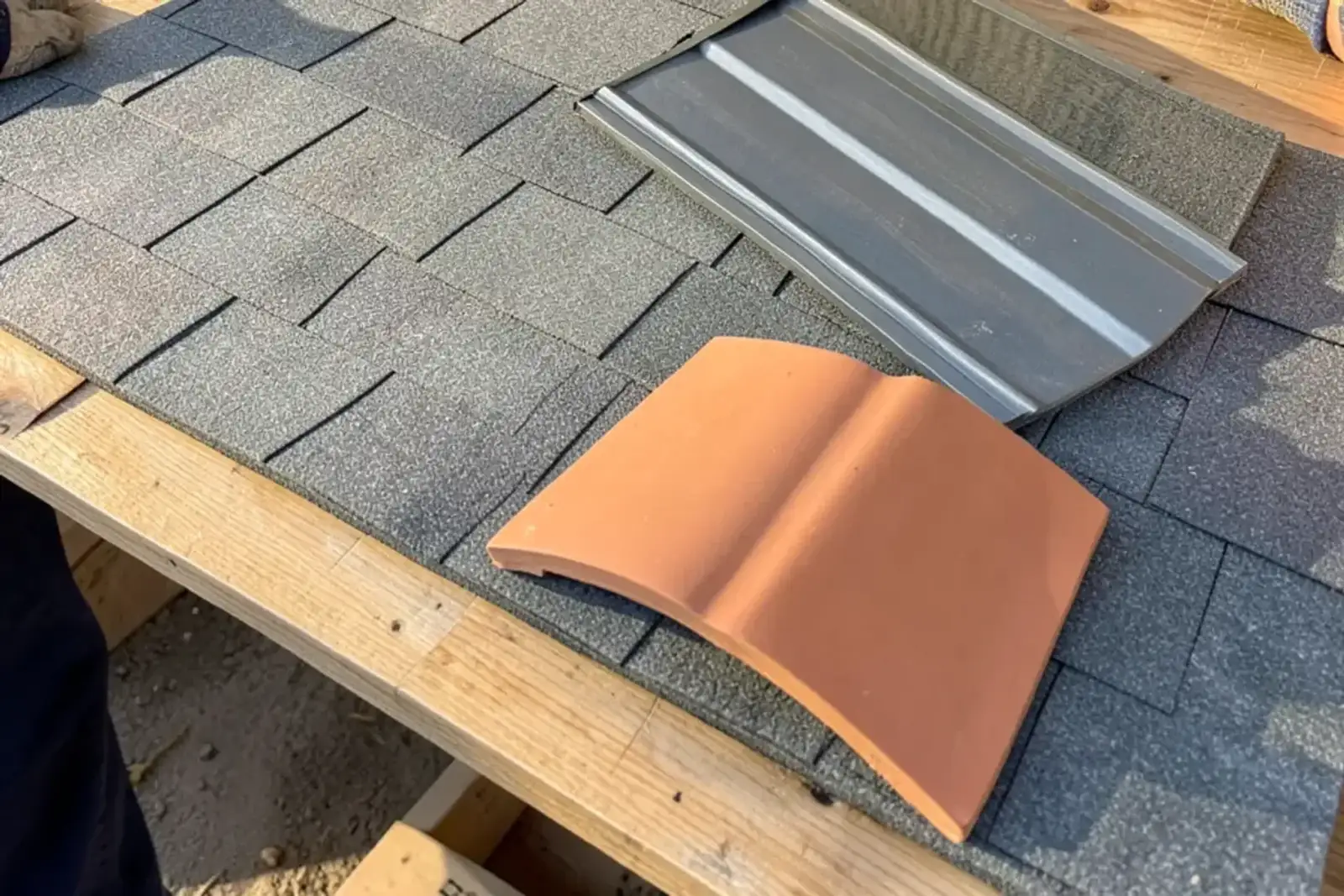
| Material | Where it fits | What to watch |
|---|---|---|
| Asphalt shingle | Ranch homes, tract houses, most budget re-roofs | Sun ages it faster in the Valley than at the coast |
| Clay and concrete tile | Spanish, Mediterranean and many newer tract homes | Weight, hidden underlayment, broken tile from foot traffic |
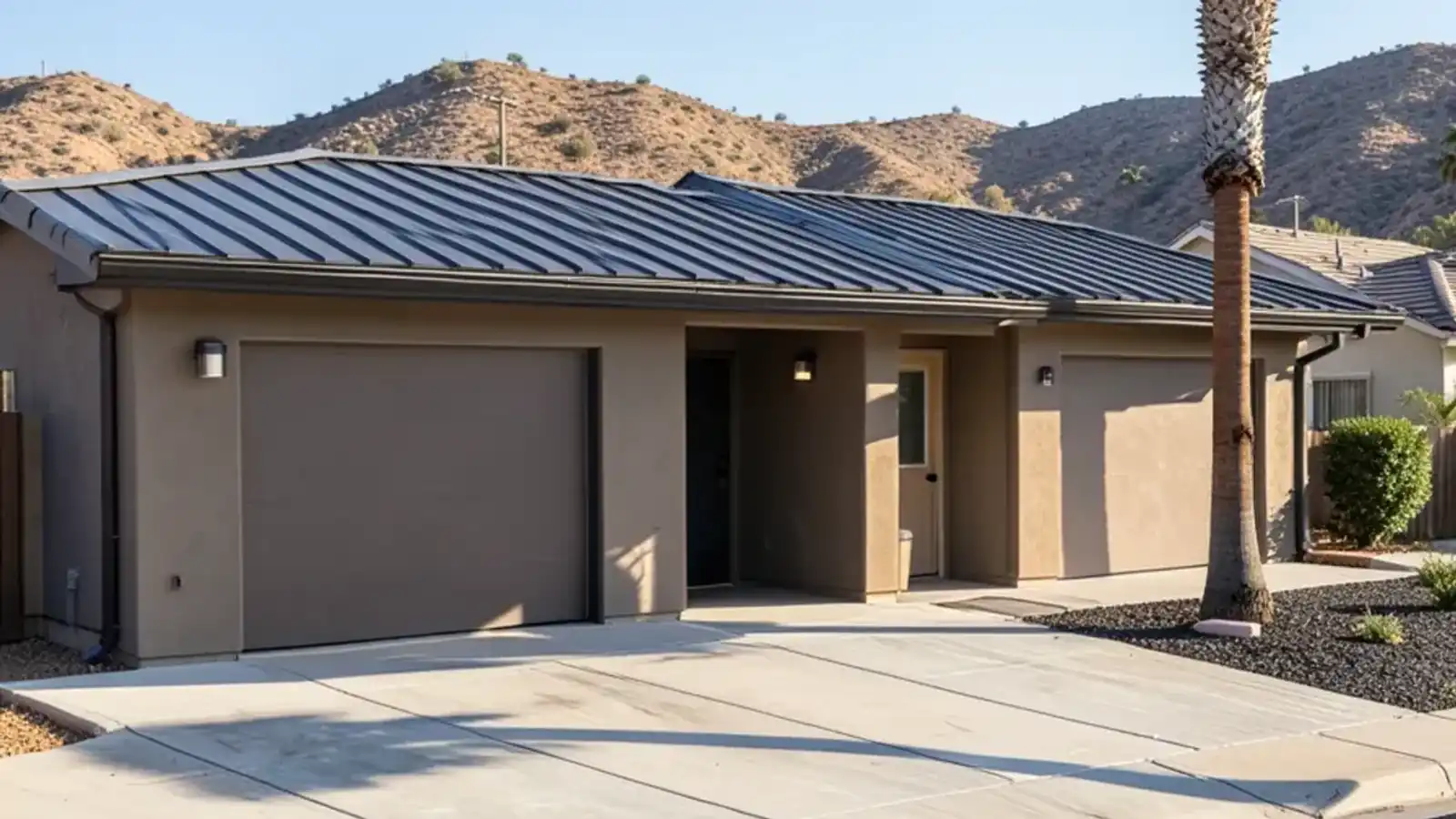
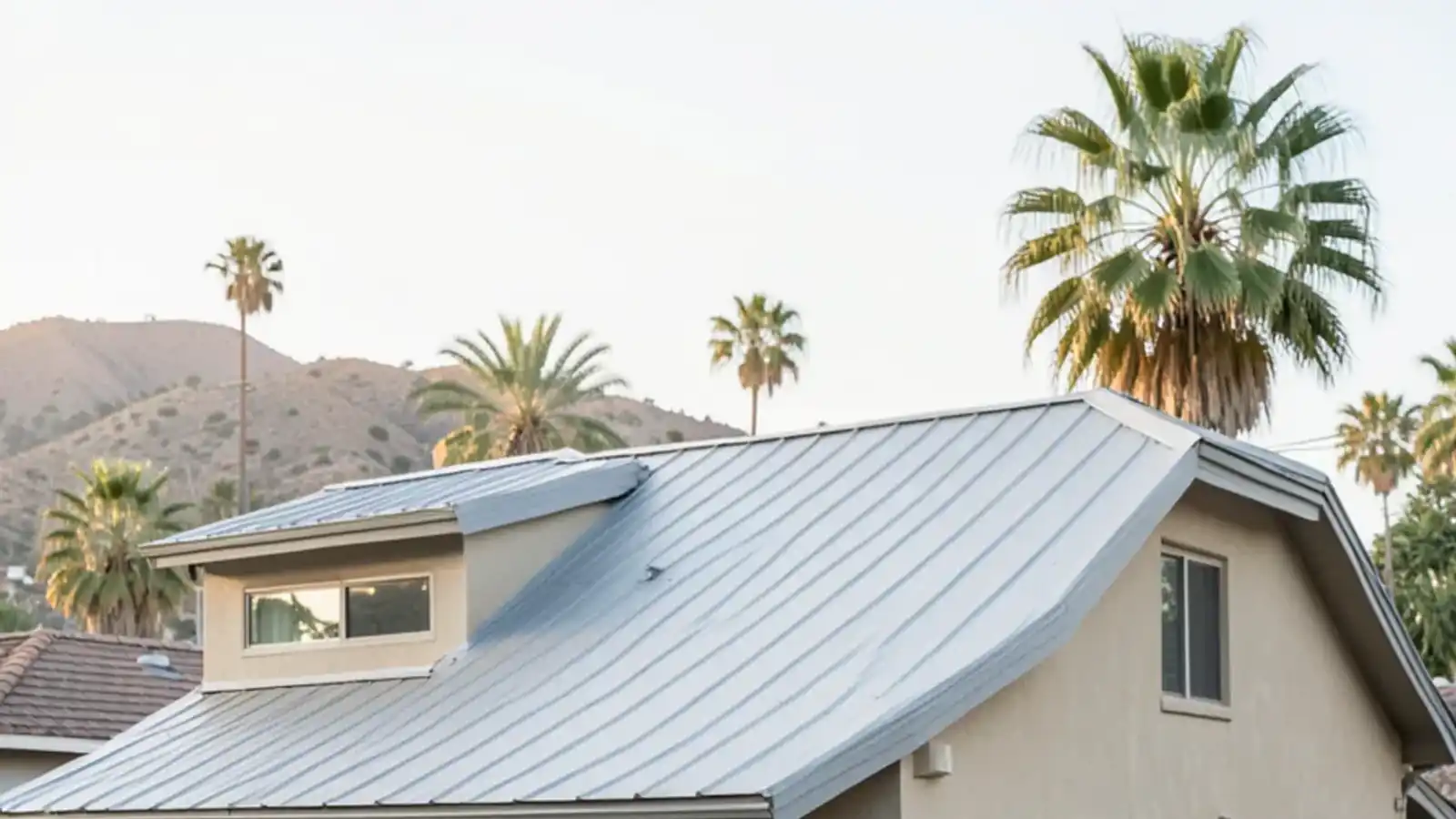
| Metal panels | Homes wanting long service life or wildfire resistance | Expansion, noise reputation, coastal corrosion |
| Standing seam metal | Modern homes and tie-ins between roof heights | Higher installed price, skilled seam work |
| Cool-rated products | Any re-roof covering more than half the roof | Rules vary by slope and address |
| Cedar shake | Existing wood roofs only, in most cases | Banned citywide in Los Angeles for new coverings |
Natural slate turns up on a few high-end homes. It is very heavy, so the framing gets checked first, and many owners pick a lighter lookalike. Wood shake is a special case. Inside Los Angeles city limits it is banned as a roof covering, so an old shake roof usually gets replaced with a fire-rated lookalike.
What is the best roof type for Los Angeles heat and sun?
No single roof wins everywhere, because the climate changes fast over a short distance. NOAA's 1991-2020 normals put Van Nuys at about 77 days a year at 90°F or hotter, downtown at about 26 and LAX at about 5. A Valley roof works harder than a beach roof.
Rain is the opposite problem: downtown gets about 14 inches a year, mostly December through March, so a roof can bake for months and then take a storm. Our notes on the best roof for San Fernando Valley heat go deeper on this.
Starting points that hold up for most houses:
- Valley heat: light-colored cool-rated shingle, tile, or reflective metal
- Coastal air: metal with a coating and fasteners chosen for salt, or tile
- Brush and hillside edges: a Class A roof assembly, whatever the cover
- Low-slope sections: a product made for low pitch, never standard shingle
What does roof underlayment do under each material?
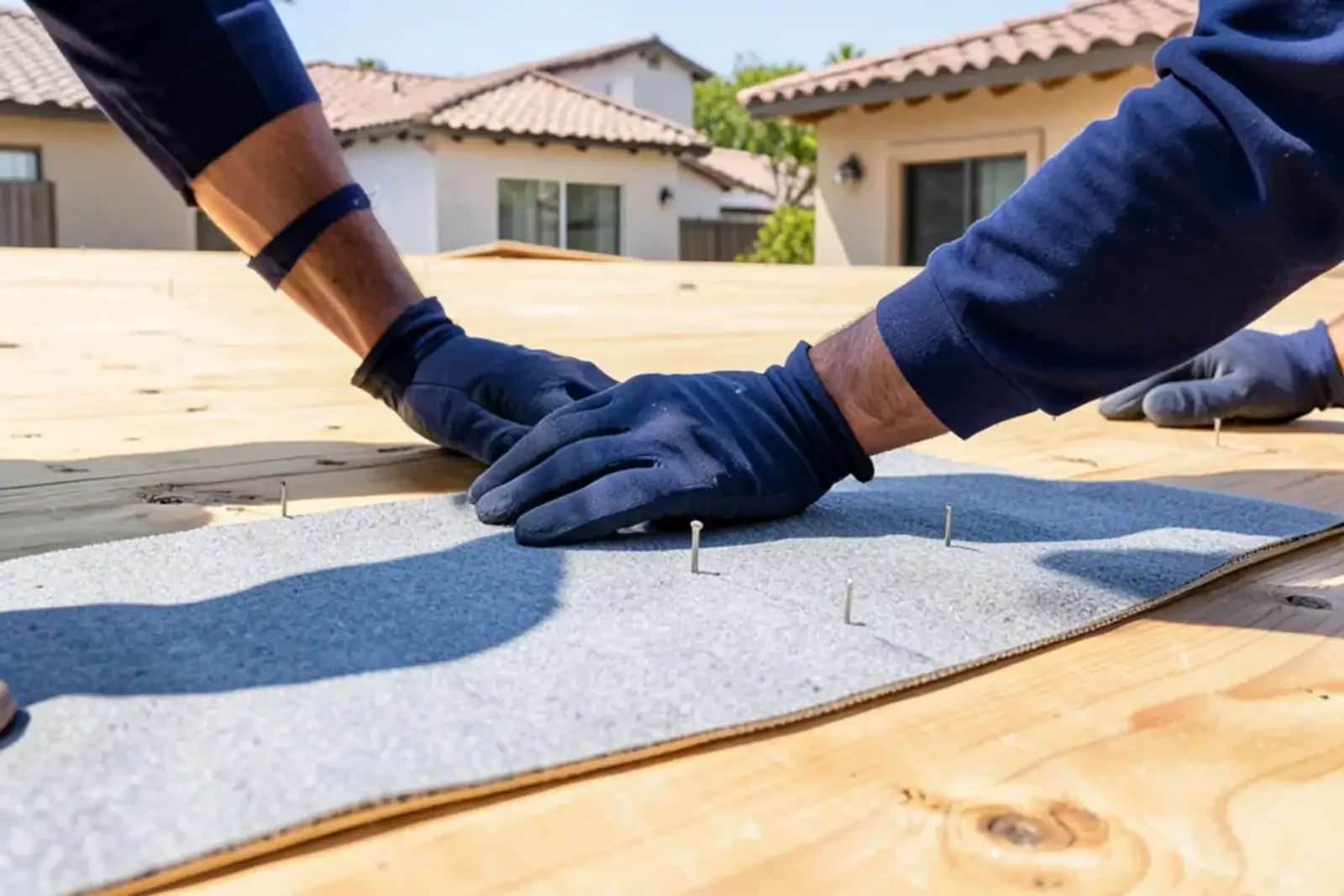
Roof underlayment is the water-resistant layer laid over the deck, beneath the visible covering. It is the second line of defense when wind-driven rain gets past shingles, tile or metal.
Three types are common:
- Asphalt-saturated felt, the older standard, which absorbs moisture and can wrinkle
- Synthetic underlayment, a woven or spun polymer sheet that is generally harder to tear and handles sun exposure during installation better
- Self-adhered membrane, which sticks to the deck and seals around nails, often used in valleys, at eaves and around penetrations
The right one depends on the covering above and the installation instructions for the whole system. Some Class A assemblies list specific underlayments, so a swap can change the fire rating. Under shingle, underlayment is replaced with the roof. Under tile it ages out first, which is why tile jobs so often mean lifting and resetting tile. Under metal, a high-temperature product is common because metal panels run hot.
A full roof tear-off is also when the deck gets a real look, and when worn underlayment gets replaced, not covered.
Does roof color matter in Los Angeles?
Yes, for two reasons. Lighter and cool-pigmented products absorb less heat, and color decides how the roof sits against your stucco and neighbors. Cool-rated products now come in more than white, which we cover on the cool roofing page.
Check HOA or historic rules before you fall for a color, and get approval in writing. Then look at a full-size sample outdoors, in morning and afternoon light. One Van Nuys customer describes shingle samples and gutter guard choices brought to their home. Ask when you book whether samples can come to yours.
What moves the price of roofing materials in Los Angeles?
For a full roof replacement, Angi puts Los Angeles at roughly $4 to $12 per square foot, with an average near $8.60 (accessed November 2026). That works out to about $17,200 on a typical 1,700 sq ft home. Where yours lands in that range depends on:
- The material and how heavy or complex it is to install
- Roof size, pitch and the number of hips, valleys and penetrations
- How many old layers come off, and what the deck needs
- The underlayment type and the flashing detail
- Access, haul-away and permit costs
Pricing arrives in writing once we have seen the job; our post on new roof cost in Los Angeles explains how to compare quotes.
Which rules limit roofing material choices in Los Angeles?
Rules depend on your address, so confirm with your building department before you order anything.
- Permits: A re-roof inside the City of Los Angeles generally means a building permit, though eligible single-family homes may use a certificate of compliance from LADBS's contractor program. Every other city has its own building department, and unincorporated neighborhoods answer to the county. See our roof permits page.
- Layers: The state residential code rules out a third roof layer, and also rules out re-covering soaked roofing, deteriorated roofing, or clay and cement tile.
- Cool roofs: Past the half-roof mark, a re-roof must use a CRRC-rated cool product.
- Fire: Wood shake is prohibited citywide. Class A roofing is required where the city has mapped a Very High Fire Hazard Severity Zone, and the state updated its maps in 2025, so look your address up on CAL FIRE's viewer. See Class A fire-rated roofing.
Write the permit responsibility into the contract. One Van Nuys customer says the permit process was handled for them.
Why Clear Shield for choosing a roofing material in Los Angeles
One customer was deciding between standing seam metal and asphalt shingles and says the pros and cons were talked through for their home and budget. Another job swapped an old tile roof for asphalt shingle.
What Van Nuys customers say about choosing materials
“I recently had my old shingle roof replaced with a new CertainTeed Pro line roofing system, and I am very happy with the results.”
“We were deciding between a standing seam metal roof and asphalt shingles, and frederick was a great guide who helped us understand the pros and cons so we could make the best choice for our home and budget.”
“The crew’s workmanship looked top-notch, and they kept me updated by sending drone photos of the roof work as it happened, which was really helpful since I wasn’t about to climb up there myself!”
4.9 on Google · 69 reviews as of November 2026. Read all reviews
How a material decision goes with us:
- Look at the roof. We check the pitch, deck, current layers and what is failing.
- Match the house. Style, HOA limits and fire zone narrow the list.
- Compare two or three options. You see trade-offs in plain terms, not a single pitch.
- Settle the system. Underlayment, flashing and ventilation go on the estimate with the covering.
- Get the price in writing. It names the material, the permit responsibility and the scope.
- Confirm the rules. We check cool-roof and fire requirements for your address before work starts.
We take roofing material work across the Valley and beyond, including Santa Clarita, Glendale, Burbank and Santa Monica.
Roofing Materials: common questions
Which roofing material lasts longest in Los Angeles?
Clay tile and standing seam metal often last longest, frequently several decades, though the manufacturer's rated life governs. Composition shingle generally lasts fewer years in Valley sun. Underlayment under tile often wears out first, so a tile roof can need renewal while the tile itself is sound. We look at the roof's current condition before suggesting how long a new one should run.
Which roof is best for Southern California heat?
Light-colored, cool-rated products reflect the most sun, and tile also lets air move beneath it. Van Nuys averages about 77 days a year at 90°F or hotter, so Valley roofs work harder than coastal ones. Cool-rated shingle, tile and reflective metal all suit heat, and the right one depends on your pitch, house style and fire zone.
Will you bring samples to my home?
One Van Nuys customer describes shingle samples and gutter guard choices being brought to their home. Whether samples can come to your address depends on the material and the schedule, so ask when you book. Full-size samples are worth seeing outdoors, in morning and afternoon light, before you commit to a color.
How does underlayment affect how long a roof lasts?
Underlayment is the water barrier under the visible covering, so when wind-driven rain gets past shingles, tile or metal, it is what keeps the deck dry. Under tile and metal it is hidden and often ages first. A new roofing material over worn underlayment can leak years before the material itself fails.
Can I mix roofing materials on one Los Angeles house?
Yes, if the pieces are detailed correctly where they meet. Additions, patios and garages often carry a different roofing material than the main house. The risk is at the joints, where flashing has to shed water from one material onto the other. We check those transitions and the pitch of each section before quoting.
Should I choose roofing materials by warranty length?
Use warranties as one factor, not the deciding one. Get the terms in writing for both the material and the labor, and read what voids them, such as missing ventilation or the wrong underlayment. A long term on paper helps little if installation details are skipped, so compare the full roof system you are quoted.
Areas served for roofing materials
- Downey, CAA large stock of 1950s ranch homes makes cool-rated composition shingle the usual starting point, and Downey runs its own permits.
- Walnut, CAMany tile-roofed tracts mean the question is often whether to relay tile over new underlayment or move to a lighter material.
- Culver City, CABungalows from the 1920s to 1940s sit beside low-slope office and retail roofs, so one city needs both steep-slope and flat-roof materials.
- West Rancho Dominguez, CAOlder homes mix with industrial and warehouse roofs, so material advice splits between residential coverings and low-slope systems, with county permitting.
- Phelan, CAHigh-desert wind and hot summers favor wind-rated fastening and heat-reflective products, and it is a long drive from Van Nuys.
- Paramount, CASmall-lot homes mix with light-industrial roofs, so both steep-slope and low-slope materials come up here.
- Val Verde, CABrush-covered hills with high wildfire exposure make a Class A assembly and ember-resistant details the first filter on any material.
- Buena Park, CALarge postwar neighborhoods near the I-5 corridor mean many second-generation roofs, where underlayment and deck condition steer the material choice.
- Santa Clarita, CA
- Glendale, CA
- Burbank, CA
- Santa Monica, CA
- West Hollywood, CA
- San Bernardino County, CA
- Covina, CA
- Cypress, CA
- Rowland Heights, CA
- Brea, CA
- Stanton, CA
- Montclair, CA
Need roofing materials?
Call and tell us what you are seeing on the roof. We will take it from there.