
Roofing Contractor
Annual Roof Maintenance Checklist for LA Homeowners
An annual roof maintenance checklist has two halves. You look from the ground and the attic once or twice a year, and a roofer walks the roof once a year or after any major storm or wind event. Keep dated photos of both, because records matter if you ever file a claim.
- ★ 4.9 on Google · 69 reviews
- Same-day or next-day bookings
- Based in Van Nuys, CA
Published and updated November 3, 2026 · By the Clear Shield Roofers team, Van Nuys, CA
On this page
- What you can check without a ladder
- Jobs that should go to a roofer
- What a yearly roofer visit covers
- How the checklist changes for tile, shingle and flat roofs
- What working roofers want you to know about yearly maintenance
- Signs between visits that mean call now
- Keeping records that help with insurance
- Maintenance on older homes, with Glendale as an example
- Book your yearly roof walk
- Common questions
Roof care works best as a small calendar, not a big project. Here is one schedule that fits the Los Angeles year, with the long dry stretch and a short wet season:
| When | What to check | Who does it |
|---|---|---|
| Early fall | Gutters, valleys, boots, flashing, loose tile or shingles | You, from the ground and the attic |
| After the first big storm | Ceilings, attic decking, downspouts | You |
| Late winter | Wear patches, new stains, branches | You |
| Late spring | Moss or algae, sealant, vents | You, with a roofer if needed |
| Once a year | Full walk of the roof | A roofer |
| After wind or a fallen limb | Damaged pieces, displaced ridge caps | A roofer |
What you can check without a ladder
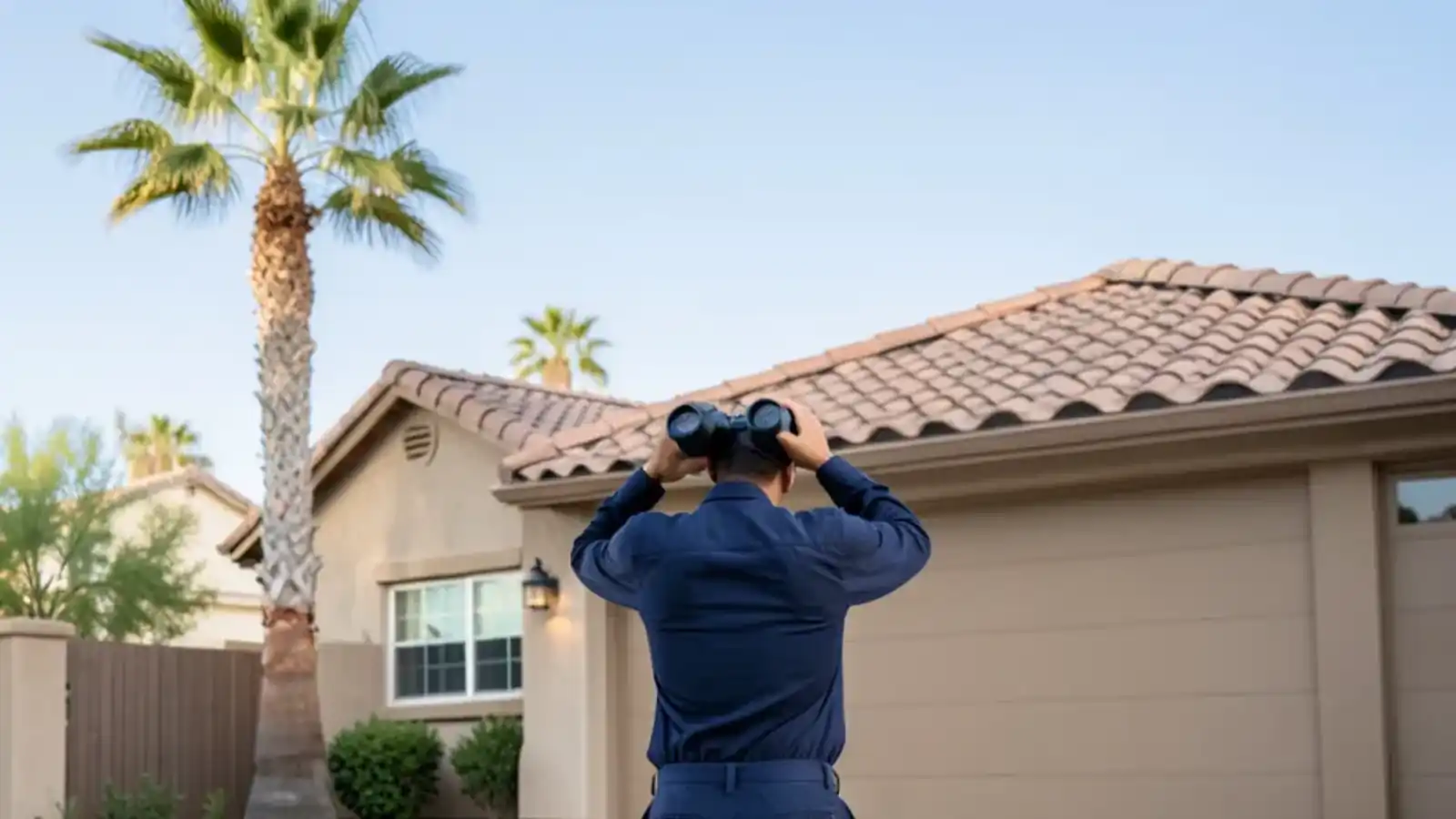
You can learn a lot from the yard. Use binoculars and look along each slope for missing, cracked or curled pieces. Look at the fascia and eaves for stains or soft paint. Watch the gutters when it rains and note any that overflow.
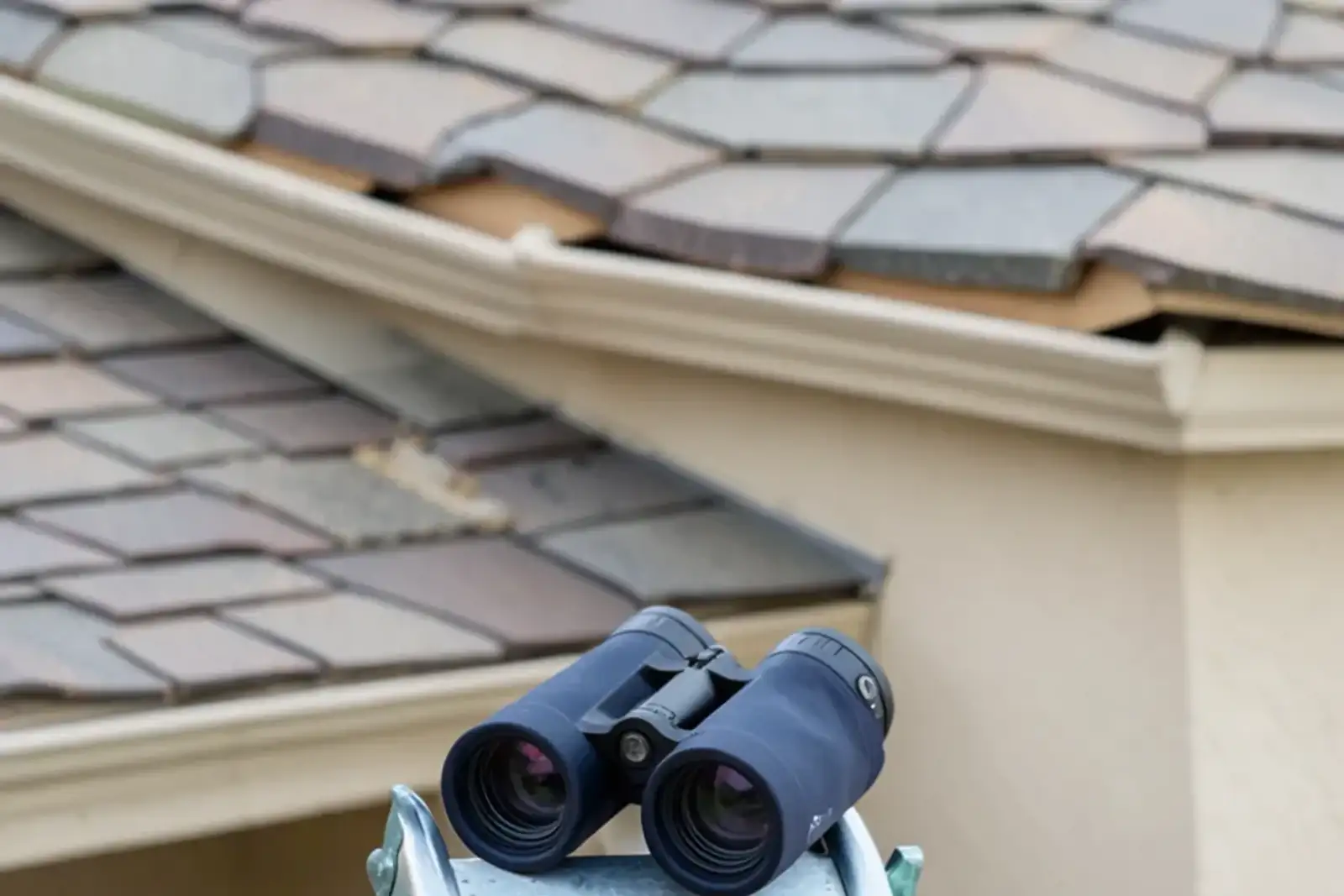
Inside, check the ceilings in good light and the attic with a flashlight. Look for dark rings, damp insulation and daylight where it should not be. Sniff for a musty smell. If anything looks new, take a photo and mark the date.
Do not climb a roof you are not trained to be on. Tile breaks underfoot, and dry shingles slip. We climb with a harness and know where to step, so leave the walking to a roofer.
Trees, wind and dry debris to clear before the wet season
Southern California roofs collect debris all summer. Dry leaves, palm fronds and pine needles pack into valleys and gutters, then hold water when the first storm arrives. The fall clean-out is the single most useful chore on this list.
Cut branches back so they stay clear of the roof, and do not let limbs rest on it. Trimming a large tree is a job for a tree service, not a roof task. Santa Ana wind season also sends branches and loose tile onto roofs, so look again after any strong wind event.
Moss and algae show up where roofs stay shaded and damp. Algae streaks are mostly cosmetic. Moss is not, because it holds water against the roof. If a roof needs gentle cleaning, our roof cleaning service covers it. Avoid pressure washing yourself, since it can strip granules and force water under shingles.
Jobs that should go to a roofer
Some tasks look easy and are not. Hand these off:
- Replacing flashing, which has to be woven into the roofing and the wall
- Resealing skylights and chimneys, where the wrong product traps water
- Repairing tile, which means lifting the course above without cracking its neighbors
- Fixing sagging or soft decking, which usually points to a deeper leak
- Anything on a steep or two-story roof
A Van Nuys reviewer describes a leak being traced before coating, then a roof coating applied afterward. That order, trace first and coat second, is the one to hold your roofer to.
What a yearly roofer visit covers
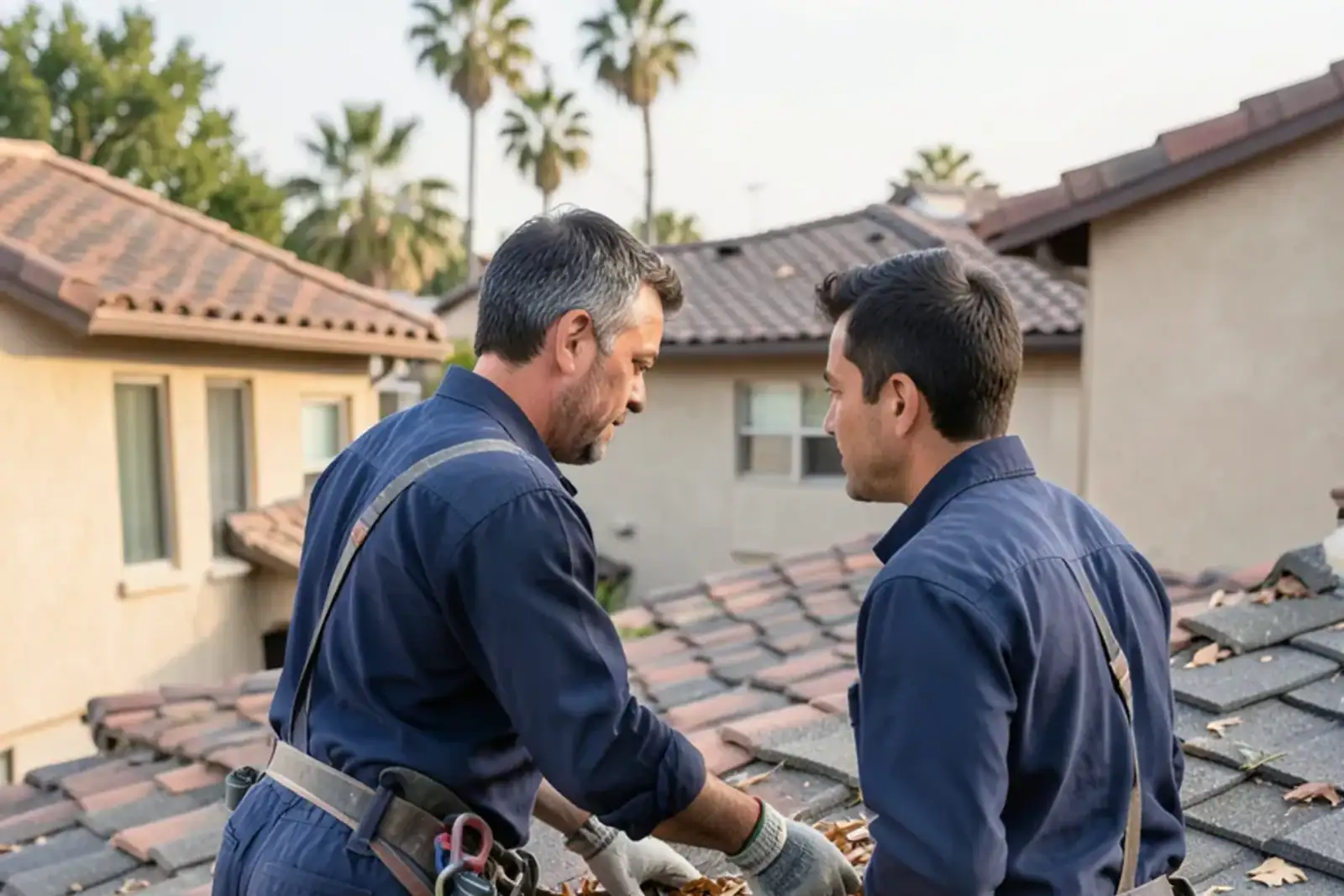
When we walk a roof for maintenance, we follow the same path each time. We start at the eaves and work up, check every penetration, press on flashing, look at the ridge and valleys, then go into the attic. We compare the roof with the photos from last year, if you have them.
Then we report. You get what we found, what can wait and what should not. Where a roof maintenance visit turns into a repair, you get a written estimate before any work. Hidden items do come up. A Van Nuys reviewer describes problems found that they had no idea about, including fascia damage and the need for bird blocking.
How the checklist changes for tile, shingle and flat roofs
The same calendar works for every roof, but the weak points differ. Know which one you have and look in the right place.
| Roof type | Where problems start | What to look for from the ground |
|---|---|---|
| Clay or concrete tile | Underlayment under the tile, cracked or slipped pieces, mortar at the ridge | Broken pieces in the yard, gaps along the ridge, tile that sits out of line |
| Composition shingle | Pipe boots, valleys, nail pops, granule loss | Curling or missing tabs, dark patches, grit in the gutter |
| Flat or low-slope | Ponding, seams, drains, edge flashing | Standing water a day after rain, blistering, clogged drains |
On tile roofs the tile itself often outlasts what is under it. The underlayment is the waterproof layer, and it ages in the heat even when every tile looks fine. That is why a tile roof can leak with no visible damage on top. Flat roofs add one more rule: clear the drain, then check that water leaves the roof within a day or so of rain.
What working roofers want you to know about yearly maintenance
A yearly walk is worth doing, but it has limits, and we would rather say so. Here is how we weigh it.
A maintenance visit catches the small things: a dried pipe boot, a lifted flashing edge, a handful of cracked tiles, a gutter pulling away from the fascia. Those fixes are usually modest, and they protect the decking, which is the expensive part. That is the real return.
It cannot fix an old roof. If the covering is worn across the whole surface, patching it every year only delays the decision. A good roofer will tell you when repairs have stopped paying off, and our guide to roof repair versus replacement shows how that call gets made.
Two trade-offs come up often. Sealant is the quick fix, but it dries out in the sun and should be treated as a short-term measure, not a repair. And cleaning a roof can look like maintenance while hiding a problem, so look first and clean second. If you want a formal read on the roof, a roof inspection gives you a written record of its condition, which is different from a quick look.
Signs between visits that mean call now
Do not wait for the calendar if you see any of these:
- A ceiling stain that is new, bigger or darker after rain
- Granules in the gutter in heavy amounts, or bare patches on shingles
- Tile or shingle pieces on the ground after wind
- Daylight showing at the ridge or around a vent from the attic
- Sagging along a roofline, or a soft spot you can feel from inside
- Water marks around a skylight or chimney
Any one of these can be small. All of them are cheaper to fix early. Take a photo, note the date and call, then keep the photo with your roof records.
Keeping records that help with insurance
Records are cheap to make and hard to rebuild. Each year, photograph every slope, the attic and any past repair. Keep invoices and inspection notes in the same place, with the date. Cloud storage works.
If damage does happen, we may inspect, photograph and document it and write a repair estimate. We can be on site when the adjuster visits. Only the policyholder or a licensed public adjuster may negotiate a claim, and that is outside our role. You can verify an adjuster at insurance.ca.gov.
California's claims rules generally require an insurer to acknowledge your claim within 15 days and to accept or deny it within 40 days after proof of claim. If something goes wrong, the California Department of Insurance hotline is 800-927-4357.
Maintenance on older homes, with Glendale as an example
Older houses ask for more. Census ACS puts Glendale's median home at 1966, and homes of that age often have original flashing, thin underlayment and several layers of past repairs. Spanish-style tile roofs there need careful handling, because broken tile cascades.
A Glendale owner with an older roof does well to schedule the yearly look in the fall. For a wider routine, see the full list of what a roofing contractor in Los Angeles can do to keep a roof ahead of its problems.
Book your yearly roof walk
Pick a date in early fall and put it on the calendar, then keep this checklist where you will find it. If you would rather have a roofer do the climbing, call (209) 563-1278 and we will set the earliest visit we can. Tell us the roof type and the age of the home, and send any photos you already have.
Quick answers
How often should a Los Angeles roof get a professional inspection?
Once a year is a sensible default, plus after any big wind, a fallen limb or a heavy storm. Older roofs and tile roofs reward a closer look. In a mild climate with most rain between December and March, early fall works well, since you can fix small problems before the wet season.
What records should I keep about my roof for insurance?
Keep dated photos, invoices and any inspection report in one folder. Insurers consider roof age and condition, so ask yours what they want to see. California's claims rules generally require an insurer to acknowledge a claim within 15 days, and a record of the roof's condition before damage makes your case easier to follow.
Does a roof need maintenance if it is not leaking?
Yes. Most leaks start as small, quiet defects such as a dried pipe boot or a lifted flashing edge, long before a ceiling stains. A short yearly check costs far less than repairing wet decking and insulation. It also tells you how much life the roof has left, which helps when you plan a sale or a replacement.
What should I do about moss or algae on a Los Angeles roof?
Dark streaks are usually algae, and moss grows in shaded, damp spots such as north-facing slopes under trees. Neither is urgent, but moss holds water against the roof and can lift shingle edges. Do not pressure wash a roof. Ask a roofer about gentle cleaning and note whether your manufacturer restricts any method.
When is the best month for an annual roof check in Los Angeles?
Early fall, ideally September or October, before the first real storm. Downtown Los Angeles averages about 14 inches of rain a year, mostly from December through March (NOAA 1991-2020 normals), so a fall visit lets you fix small defects while the weather is dry. Add a quick look after the first heavy rain.