
Gutters
Are Gutter Guards Worth It in Southern California?
Are gutter guards worth it? In Southern California they pay off where debris is steady, such as homes under pines, oaks or eucalyptus and homes beside brush, and where a ladder is risky. On a house with few trees, regular cleaning may be simpler. No guard ends maintenance, and none makes a house fireproof.
- ★ 4.9 on Google · 69 reviews
- Same-day or next-day bookings
- Based in Van Nuys, CA
Published and updated November 3, 2026 · By the Clear Shield Roofers team, Van Nuys, CA
On this page
- Gutter guards worth it? Four questions that decide
- Which guard types handle pine needles
- What guards can and cannot do in a fire zone
- What we notice at the roof edge that sells or kills a guard
- How do guards compare with just paying for gutter cleaning?
- Where do reverse-curve and mesh guards go wrong in heavy rain?
- What installation involves, and what to ask
- The installer's view: when we would say skip them
- Gutter guards in La Crescenta-Montrose
- What should you do before you buy gutter guards?
- Common questions
Gutter guards are worth it when the debris load is heavy, the roof edge is hard to reach or the gutter sits near brush. They are less worthwhile on a house with few trees. The fire-zone question is real too, and we cover it below.
Our gutter guards page explains the types we install. This guide helps you decide whether you need them at all.
Gutter guards worth it? Four questions that decide
Answer these honestly and the choice gets clearer.
| Question | If yes | If no |
|---|---|---|
| Do pines, oaks or eucalyptus hang over the roof? | Guards likely pay off | Cleaning may be enough |
| Is the roof edge steep, tall or hard to reach? | Guards cut risky ladder trips | A simple cleaning schedule works |
| Is your home beside brush or open hills? | Guards help limit dry debris | Less pressing |
| Will you still brush the surface now and then? | Guards perform as designed | Debris can build on top |
Guards are an upgrade, not a cure. A guard on a gutter that is already sagging or too small will not fix the overflow. Get the gutter right first.
Which guard types handle pine needles
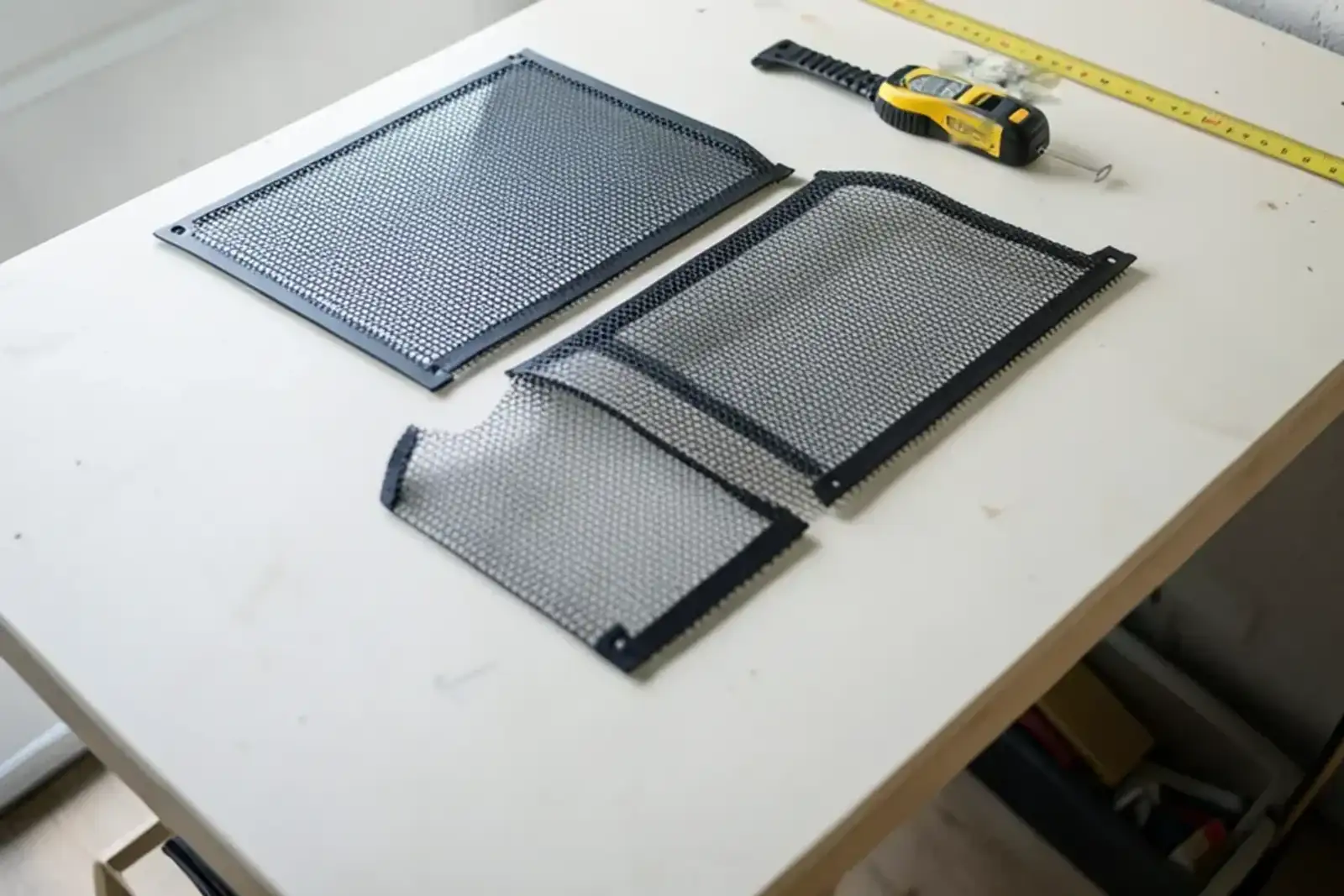
Needles are the hard case. They are thin enough to slip through coarse holes and they pack tight when wet. These are the main styles:
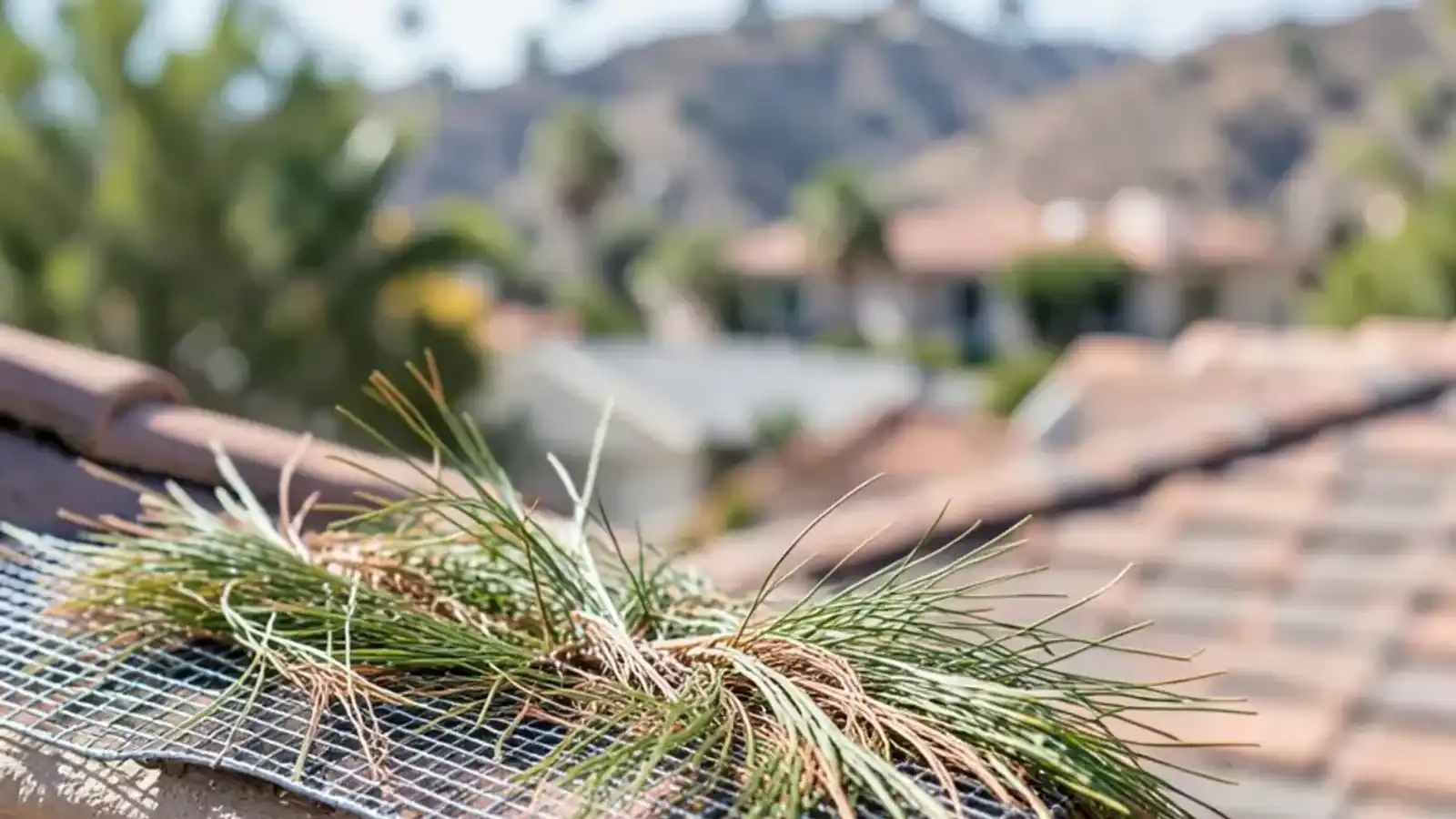
- Fine mesh: best for needles and seed pods, though debris sits on top and needs brushing
- Perforated or slotted covers: fine for large leaves, but needles can pass through
- Reverse-curve covers: shed leaves over the front edge, but they can let needles and run-off pass
- Foam or brush inserts: easy to fit, but they clog and need cleaning
We match the type to your trees. Reviewers mention gutter guard choices brought to the home, and we like to do the same: you see the sample on your own gutter before you decide.
What guards can and cannot do in a fire zone
Dry leaves and needles in a gutter can catch embers, so keeping the trough clear helps. A guard that keeps debris out is one layer of protection. It is not a complete one.
California's Wildland-Urban Interface Code (Title 24, Part 7) took effect January 1, 2026, and the state's fire hazard severity zone maps were updated in 2025, adding Moderate and High zones in local areas. We cannot tell you which zone an address falls in. Check yours on CAL FIRE's viewer, and ask your building department which roof and gutter rules apply, because rules differ by city and county.
What we notice at the roof edge that sells or kills a guard
Hands on the gutter tell us things a brochure cannot. We check whether the trough is stiff enough to carry the guard, whether the hangers are tight, and whether the first row of shingles or tile leaves room for the attachment. We also look at what is falling on the roof. A palm drops fronds in big pieces, an oak drops leaves in autumn, and a pine drops needles almost year round, so the same guard behaves differently under each.
If a guard is a poor match, we say so. Sometimes the right answer is a regular cleaning visit and no hardware at all.
How do guards compare with just paying for gutter cleaning?
The honest math is local, and published payback claims conflict wildly, so we will not offer one. Three numbers decide it for your house: what each cleaning visit costs, how many visits your trees force each year, and what the guard quote is for the length of gutter you have. A house with a single oak and a short roofline may never earn back a guard. A long roofline under pines, with two-story eaves, often does.
Count the non-money costs as well. Every ladder trip on a tall eave is a fall risk. If you do not want to climb, or do not want to hire someone to climb several times a year, that tilts the answer toward guards. If you enjoy a quick spring check and have few trees, regular gutter cleaning is the simpler path. Our cleaning schedule for Southern California gutters shows how often most roofs need it.
Where do reverse-curve and mesh guards go wrong in heavy rain?
Reverse-curve hoods work by letting water cling to the curve and drop into the trough while leaves shed over the edge. In a hard downpour, water can overshoot the curve and spill past the gutter, and the performance depends on the guard sitting at the right angle for your roof pitch. Fine mesh can shed water over the front once pollen, grit and roof granules build up on the surface, which is why it needs a brush now and then.
Rain in Los Angeles is concentrated, with downtown averaging about 14 inches a year, mostly from December through March (NOAA 1991-2020 normals). A gutter that must pass a heavy burst in a short time needs enough capacity, so size and downspouts still matter. If your gutters already overflow, read why gutters overflow before spending on guards.
What installation involves, and what to ask
Fit matters as much as the product. A guard that is tucked under the first course of shingles must not lift the edge. On a tile roof, the guard needs an attachment that works with the tile. A poorly fitted guard can trap water or let it shoot over the front in a heavy storm.
- Clean and flush the existing gutter before anything goes on.
- Check the gutter for sag, rust and loose hangers.
- Test-fit a section at the roof edge.
- Attach it to suit your roof, shingle or tile.
- Flush the system and watch the water move.
Ask about warranty terms in writing for the guard and about how the attachment touches your roof.
The installer's view: when we would say skip them
We would tell a homeowner to skip guards when the gutters are old, dented or pulling away, since the money belongs in new gutters first, when there are no overhanging trees, or when the roof is a low-slope design with an internal drain. We would also hesitate on a brittle old tile roof where fitting a guard means lifting tiles that may crack.
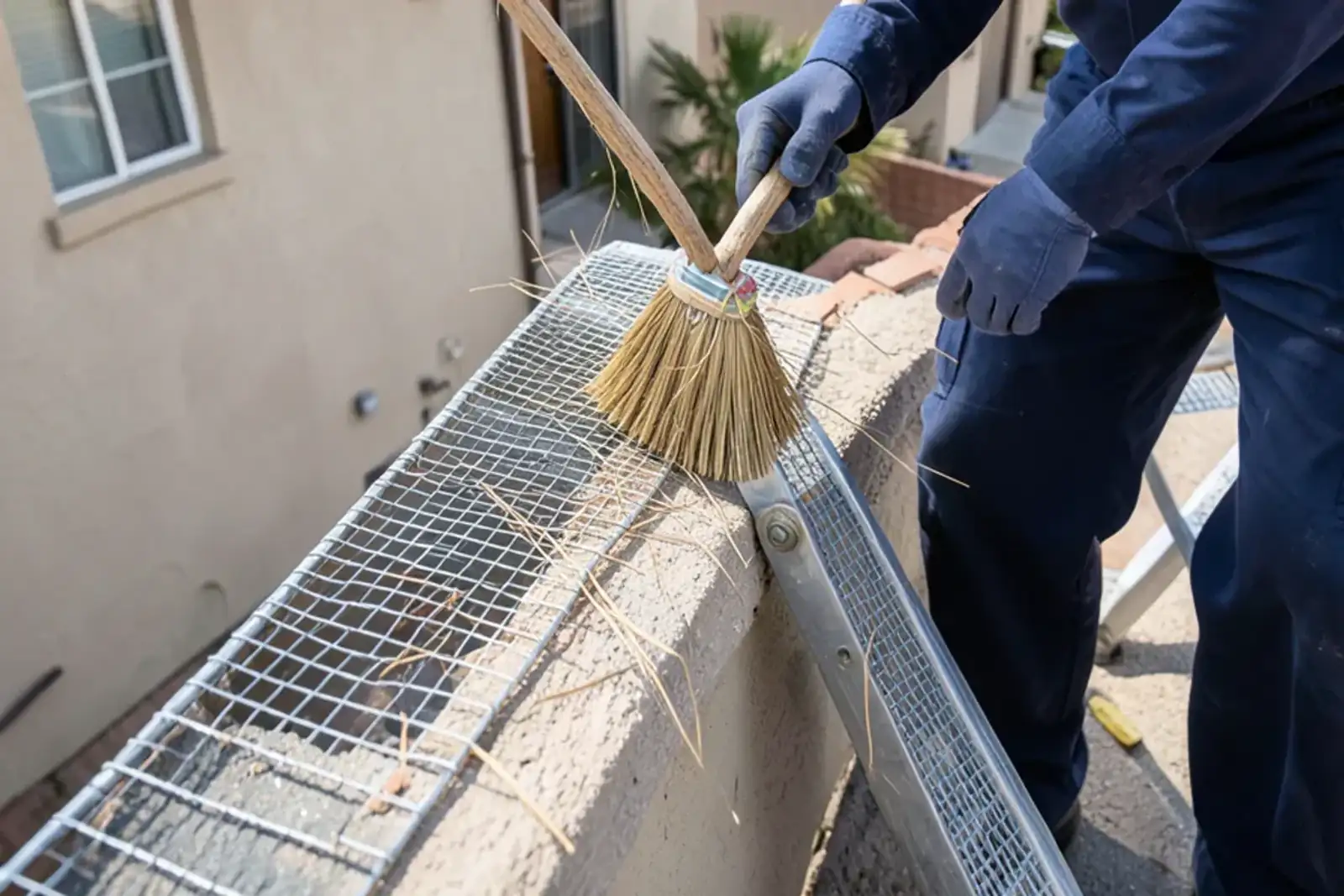
We would recommend them for tall two-story eaves under pines or eucalyptus, for homes beside brush, and for owners who cannot or would rather not climb. The trade-off to name plainly is that guards add cost now and still need a brush or rinse later. Foam and brush inserts are cheap, but we would not expect them to last, and mesh that is never brushed can clog until it looks like a sheet of felt.
Gutter guards in La Crescenta-Montrose
La Crescenta-Montrose is an unincorporated foothill community against the Angeles National Forest, and its housing is older, with a Census ACS 2020-24 median build year of 1958 and about 59 percent owner-occupied homes. Pine needles and canyon gusts test gutters and roof edges every Santa Ana season. Because it is a CDP, permits and building rules come through the county rather than a city.
For a hillside home with trees overhead, guards plus a twice-yearly brush often beat cleaning from scratch. We cover La Crescenta-Montrose from Van Nuys, an estimated drive of about 30 minutes for 16 miles.
What should you do before you buy gutter guards?
- Walk the roof edge from the ground after a windy day and note what falls and how much.
- Check the gutters for sag, rust and loose hangers, and fix those first.
- Ask for two guard types priced on your actual length of gutter.
- Ask how each one attaches to your shingle or tile edge.
- Get warranty terms in writing for both the guard and the roof.
If you want a second opinion on your trees and eaves, call (209) 563-1278 and we will set the earliest visit we can.
Quick answers
Do gutter guards stop pine needles?
Fine mesh and tight-weave guards stop most needles from dropping into the trough, though needles can still lie on the surface and build up. Coarse perforated and slotted styles let needles slip through. Expect to brush or rinse the surface now and then, and match the guard to the debris you actually have.
Are gutter guards a good idea in a fire zone?
Partly. A guard keeps dry fuel out of the trough, which is one spot embers can settle. It does not make a house fireproof, and wildfire building rules reach well past gutters. Look up your address on CAL FIRE's viewer, then ask your building department which requirements apply to your roof edge.
Can gutter guards cause problems with my roof?
They can if they are installed badly. A guard slid under shingles can lift an edge, and one that traps water can overflow. Tile roofs need a style that attaches to suit the tile. Ask how the guard attaches to the roof edge, and get warranty terms for the roof and the guard in writing.
Do gutter guards mean I never have to clean?
No. Guards cut how often you clean but do not end it. Fine debris, pollen and roof grit can still collect on or under the guard, and a clogged downspout still needs clearing. Many homeowners go from cleaning several times a year to checking and brushing once or twice, which still saves ladder time.