Roof Replacement
Class A Roofs in LA Fire Zones: What to Know
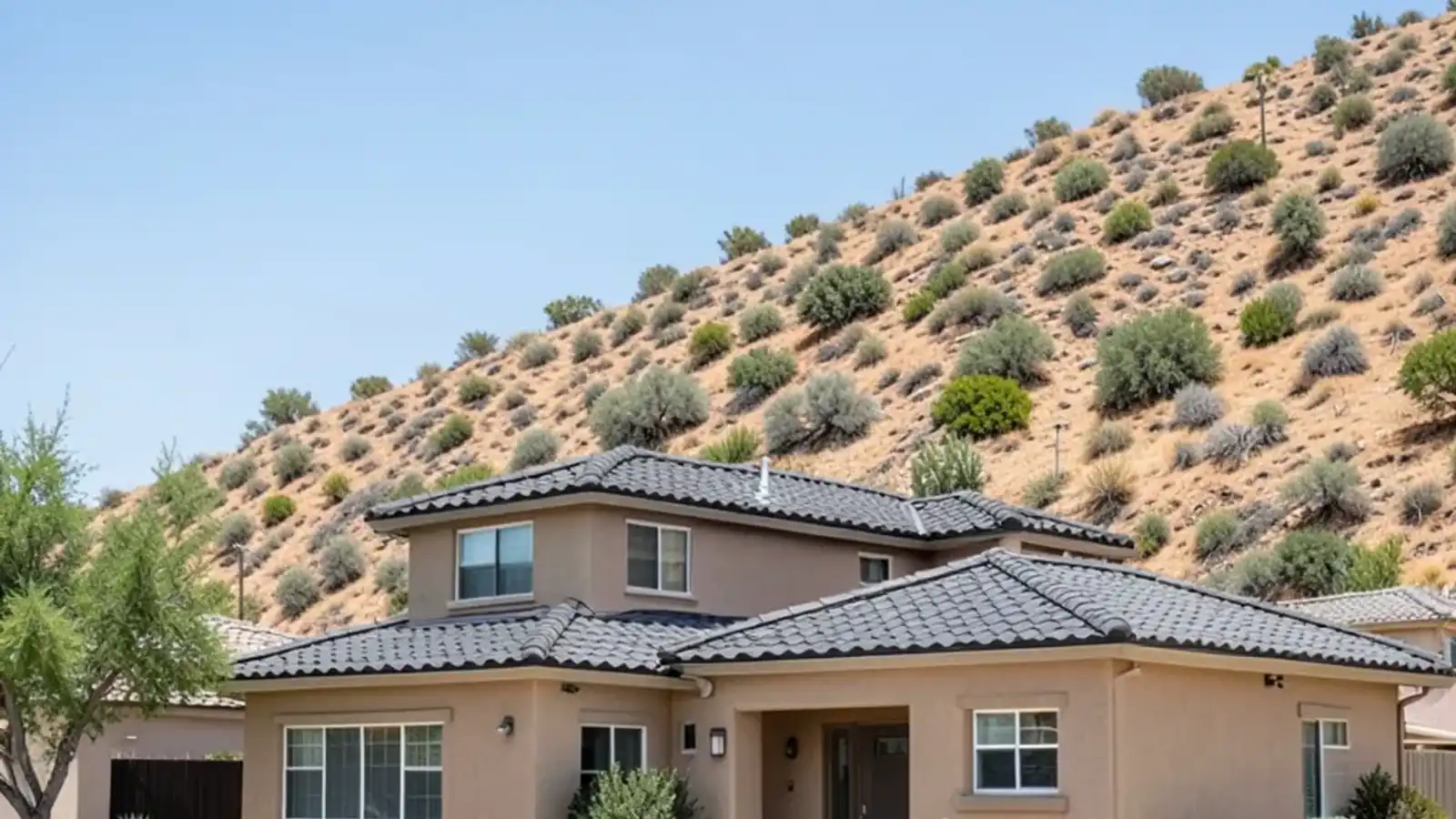
A Class A roof is the highest fire rating a roof covering can earn, and the City of Los Angeles requires it in the Very High Fire Hazard Severity Zone. Wood shake is banned outright. Whether your address sits in a zone is a map question, so this guide covers the rating, the rules and the details beyond the shingle.
- ★ 4.9 on Google · 69 reviews
- Same-day or next-day bookings
- Based in Van Nuys, CA
Published and updated November 3, 2026 · By the Clear Shield Roofers team, Van Nuys, CA
On this page
- Where Los Angeles requires a Class A roof
- How common roof materials compare on fire rating
- Vents, gutters and eaves: the parts embers actually find
- What a Class A fire test measures
- What working roofers say about fire-rated re-roofs
- What changes the cost of a Class A re-roof
- Choosing a covering when your roof is due
- Insurance, roof age and fire rating
- Next step for a fire-zone roof
- Common questions
Class A is the top of three fire ratings for roof coverings: A, B and C. The rating comes from standardized fire tests, and Class A means the covering resists severe exposure to fire from outside the building. It does not make a roof fireproof. Roofers use it as the baseline for any home near brush, and in some zones the code requires it.
Here is how a Class A roof in Los Angeles fits into the rules, and what to check besides the rating on the box.
Where Los Angeles requires a Class A roof
The City of Los Angeles requires a Class A roof covering in the Very High Fire Hazard Severity Zone, and it prohibits wood shake and wood shingle coverings citywide. California's Wildland-Urban Interface Code (Title 24, Part 7) took effect on January 1, 2026, and the state wildfire rules apply in designated hazard zones.
The zone maps changed recently. State fire hazard maps were updated in 2025 and added Moderate and High zones in local areas. We cannot tell you which zone you are in from an address on a phone call, and we will not guess. Look up your parcel on CAL FIRE's viewer, then ask your building department how the rules apply.
The stakes are real. CAL FIRE reports the January 2025 Eaton Fire destroyed 9,419 structures and the Palisades Fire destroyed 6,845. The 2018 Woolsey Fire destroyed 1,643.
How common roof materials compare on fire rating
Most roof coverings sold in Southern California can reach Class A in some form. What differs is how they get there. This table is a general guide, and the manufacturer's listing for the exact product governs.
| Covering | Typical fire rating | What to confirm |
|---|---|---|
| Composition shingle | Many products are Class A | The listing for the product and underlayment together |
| Concrete or clay tile | Generally Class A | Closed eave ends and sound underlayment beneath |
| Standing seam metal | Often Class A as an assembly | The underlayment or cap sheet under the panels |
| Wood shake or shingle | Prohibited citywide in the City of LA | Only a narrow exception for small repairs applies |
Notice that the rating belongs to the assembly in several rows. A good tile on a failed underlayment is a weaker roof than the label suggests. For a deeper look at the product category, see our page on Class A fire-rated roofing.
Vents, gutters and eaves: the parts embers actually find
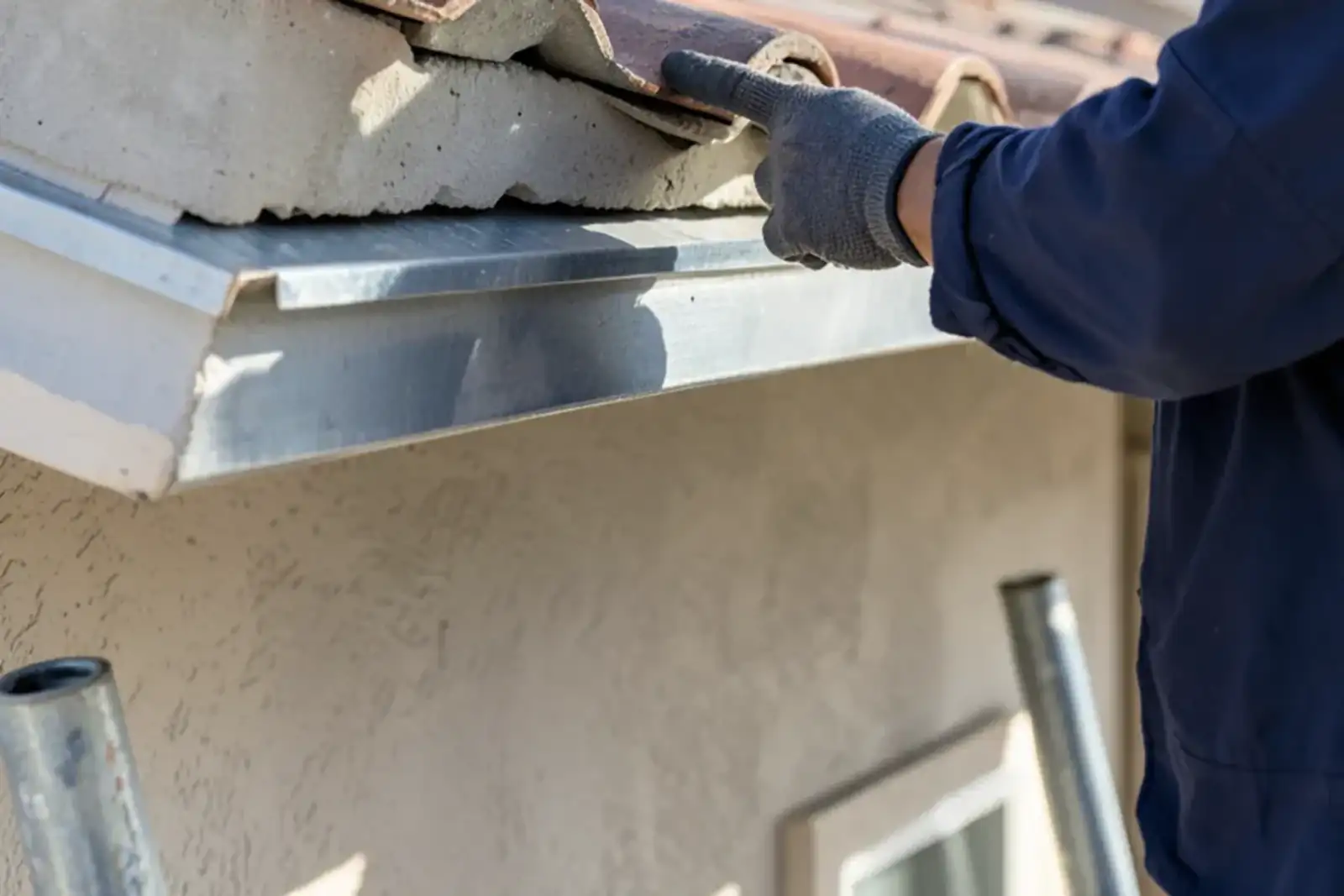
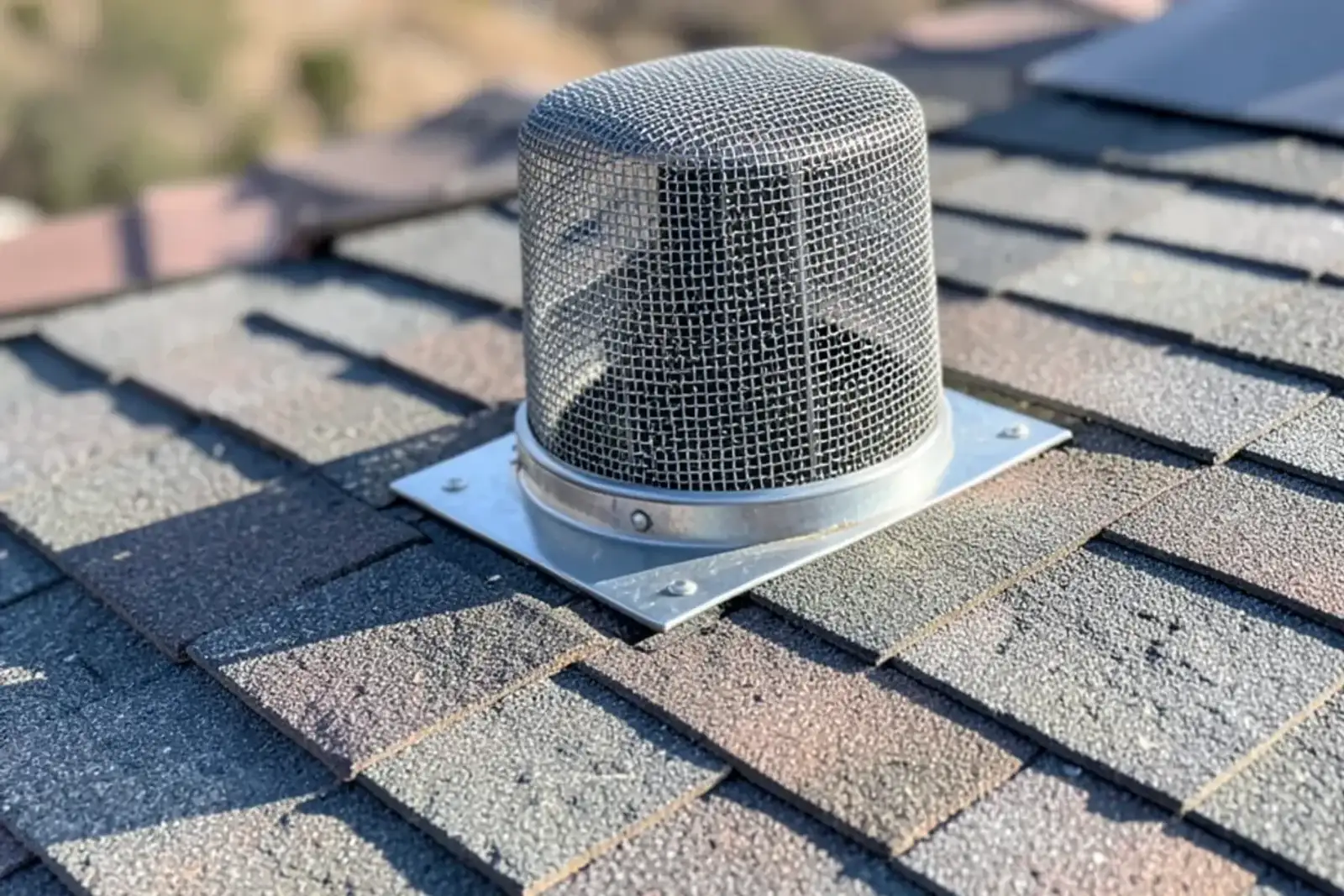
Embers rarely land on a shingle and burn through it. They blow into openings. That makes the small parts the real weak points of a roof in a fire-prone neighborhood.
We look at four places first:
- Attic and soffit vents: standard louvers let embers in, so fine-mesh or ember-resistant versions are worth asking about
- Eave and tile ends: open gaps under tile courses give embers a place to settle, and they should be closed off
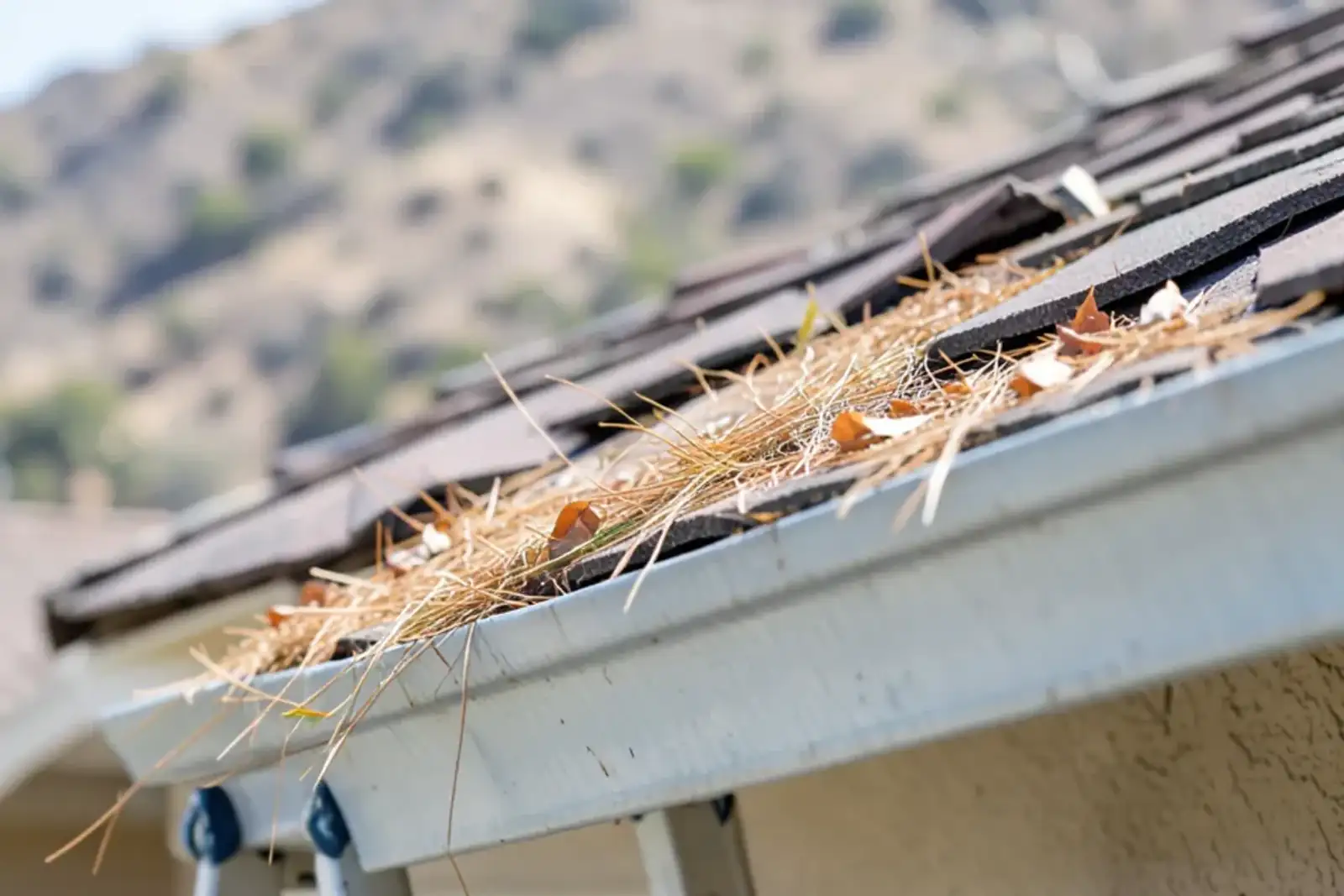
- Gutters: dry leaves and pine needles ignite easily, and metal gutters with guards cut that load
- Skylights and ridge details: the seals and curbs need to be sound and the surrounding covering rated
On an older roof, these openings are what we check before we look at the shingles. A reviewer in Van Nuys describes our crew finding a poorly placed roof vent and the need for bird blocking that they never knew about. Bird blocking closes the gaps where a roof meets the wall or tile edge, which also helps keep embers out. We would look for the same kinds of gaps on a foothill roof.
What a Class A fire test measures
Class A is not a label a manufacturer picks. It comes from ASTM E108, also published as UL 790, which sets three core tests: spread of flame, intermittent flame and burning brand. In the burning brand test, a burning block is set on the roof sample, and for Class A and B a continuous gas flame runs for ten minutes. Class C gets four.
The test is run on a built-up sample, deck included. That is why a rating can belong to the assembly rather than to the covering by itself. Over a plywood deck, the underlayment or cap sheet under a product can decide whether it earns Class A. California's wildfire building code points the same way: its provisions for a combustible deck refer to a mineral-surfaced cap sheet or a listed Class A underlayment, installed as its listing says, and the listing should show it as part of a Class A assembly with your covering.
So when you compare quotes, compare listings, not brochures. Ask which underlayment the Class A listing names and whether the quote includes it.
What working roofers say about fire-rated re-roofs
The honest trade-off is cost and detail against weight and time. A listed Class A underlayment or cap sheet adds a layer to the job, and ember-resistant vents and metal gutters add parts and labor. In return the whole assembly stands behind the rating, not only the top layer. Heavy tile gives a long-lived Class A covering but needs the structure to carry it, and the eave ends must be closed.
Gutter guards help on a hillside, but dry needles can still pile on top. A seasonal clean-out matters more than the guard. Our gutter cleaning page covers that routine. We would rather list every vent and edge in one estimate than have a Class A shingle undone by a louvered attic vent.
What changes the cost of a Class A re-roof
We price after seeing the roof, in writing. The main variables are:
- Covering: shingle, tile and metal each cost differently
- Underlayment or cap sheet: the listed assembly may add a layer
- Vents and edges: ember-resistant vents and eave closures are added line items
- Structure and deck: tile weight and soft decking change the scope
- Permit and inspection: the agency depends on the address
Choosing a covering when your roof is due
If your roof is due and your home sits near brush, the order of questions is simple. Use these steps:
- Find your zone on CAL FIRE's viewer and note the result.
- Ask your building department which wildfire rules apply to your address.
- Pick a covering with a Class A listing for the full assembly you plan to install.
- List the vents, gutters and edges in the same estimate as the roof.
- Get permit and inspection terms in the contract, including who pulls the permit.
- Keep the product listing with your records for insurance.
A foothill city like La Cañada Flintridge sits just below mountains that have burned before, so owners there tend to ask about fire ratings. That is a reason to check your address, and we will not say a particular street is in a zone unless a map says so. Our full roof replacement overview explains the tear-off and underlayment work that goes under any rated covering.
Insurance, roof age and fire rating
Insurers look at roof age and condition. Some may also ask about the roof covering. Ask yours what it wants, and do not assume that a newer roof will reduce your premium. The FAIR Plan is a basic fire policy, and wind can be added to it.
We can inspect a roof, photograph it and write a repair estimate that you can pass on. Talks with the insurer belong to you, as the policyholder, or to a licensed public adjuster, who is the only person allowed to negotiate a claim for a fee.
Next step for a fire-zone roof
Check your parcel on CAL FIRE's viewer, then call Clear Shield Roofers at (209) 563-1278 with the result and your roof's age. We will go through the covering, underlayment, vents and edges that belong in one written estimate.
Quick answers
Does my Los Angeles home need a Class A roof if I am not in a mapped fire zone?
Not necessarily by code, but it is still worth considering. The state updated its fire hazard maps in 2025 and added Moderate and High zones, so check your address on CAL FIRE's viewer and ask your building department what applies. Many composition shingles and tile systems already carry a Class A rating, so ask for the product listing before you buy.
Is a Class A shingle enough for a fire-resistant roof in Los Angeles County?
The rated shingle is one piece. Embers also enter through attic vents, open tile ends, gutters full of dry leaves and gaps at the eaves. Wildfire building rules cover those details, which is why the whole assembly is rated, not only the top layer. Ask for the roof covering, underlayment, vents and edges to be listed together in the estimate.
What does a Class A fire test actually involve?
Roof coverings are tested under ASTM E108, also published as UL 790, with spread of flame, intermittent flame and burning brand tests. For Class A the burning brand test applies a continuous gas flame for ten minutes. Because the test runs on a built assembly, the underlayment under the covering can matter, so ask for the listing of the full assembly you plan to buy.
Can I keep my wood shake roof in the City of Los Angeles?
Wood shake and wood shingle roof coverings are prohibited citywide in the City of Los Angeles, with a narrow exception for small repairs. If your shake roof needs more than a patch, expect to replace it with a different covering. Confirm the current rule for your address with LADBS before you plan the work.
Sources
- LADBS Information Bulletin on roofing requirements for wood shakes and shingles
- CAL FIRE, Eaton Fire incident page
- CAL FIRE, Palisades Fire incident page
- Building Standards Commission finding of emergency, California Wildland-Urban Interface Code (Part 7)
- City of La Cañada Flintridge, CAL FIRE 2025 fire hazard severity zone maps for Los Angeles County