
Roofing Contractor
What a Drone Roof Inspection Can and Can't Show
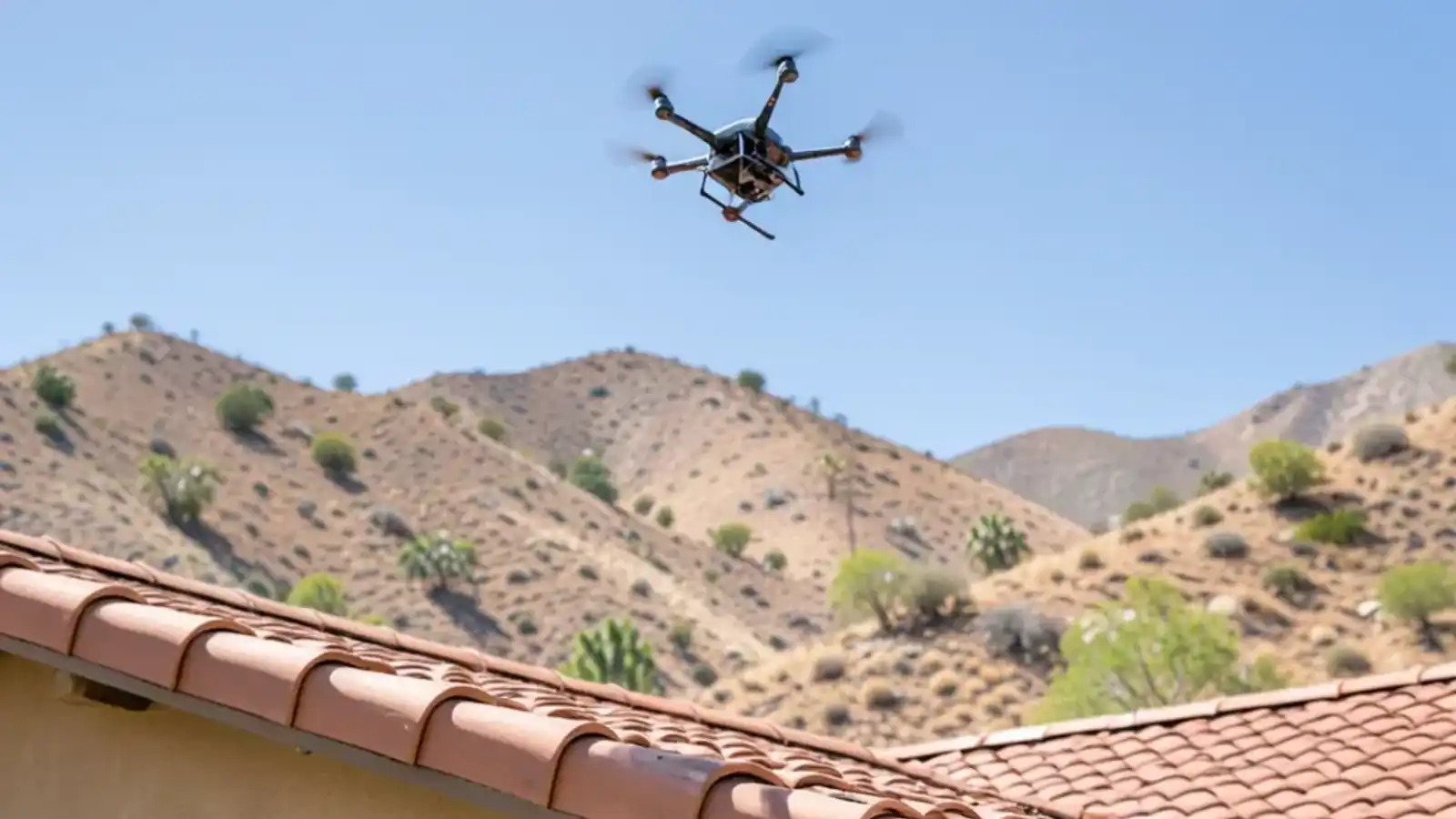
A drone roof inspection gives you clear overhead photos of the whole roof without anyone climbing it. It is good for documenting wear, missing pieces, ponding and debris. It cannot press on soft decking, test a sealant joint or see inside the attic, so a drone pass supports a hands-on inspection and does not replace one.
- ★ 4.9 on Google · 69 reviews
- Same-day or next-day bookings
- Based in Van Nuys, CA
Published and updated November 3, 2026 · By the Clear Shield Roofers team, Van Nuys, CA
On this page
- What a drone pass shows well
- Where we use photos, and where we climb
- What a drone cannot tell you
- Airspace, wind and privacy: what limits a drone flight in Los Angeles
- Using drone photos for documentation and insurance
- What working roofers trust a drone for, and where we are wary
- What affects the price of a drone inspection
- Questions to ask before you hire a drone inspection
- Book a roof look with photos in Santa Clarita or the Valley
- Common questions
Drones see what you cannot from the ground, and what a roofer would have to climb for. They are fast, and they make a good record. They also have limits that you should know before you rely on one.
| A drone is good at | A drone cannot do |
|---|---|
| Showing missing, slipped or broken tile and shingles | Press on a soft spot to test the decking |
| Mapping the whole roof in one set of photos | Feel loose flashing or lifted sealant |
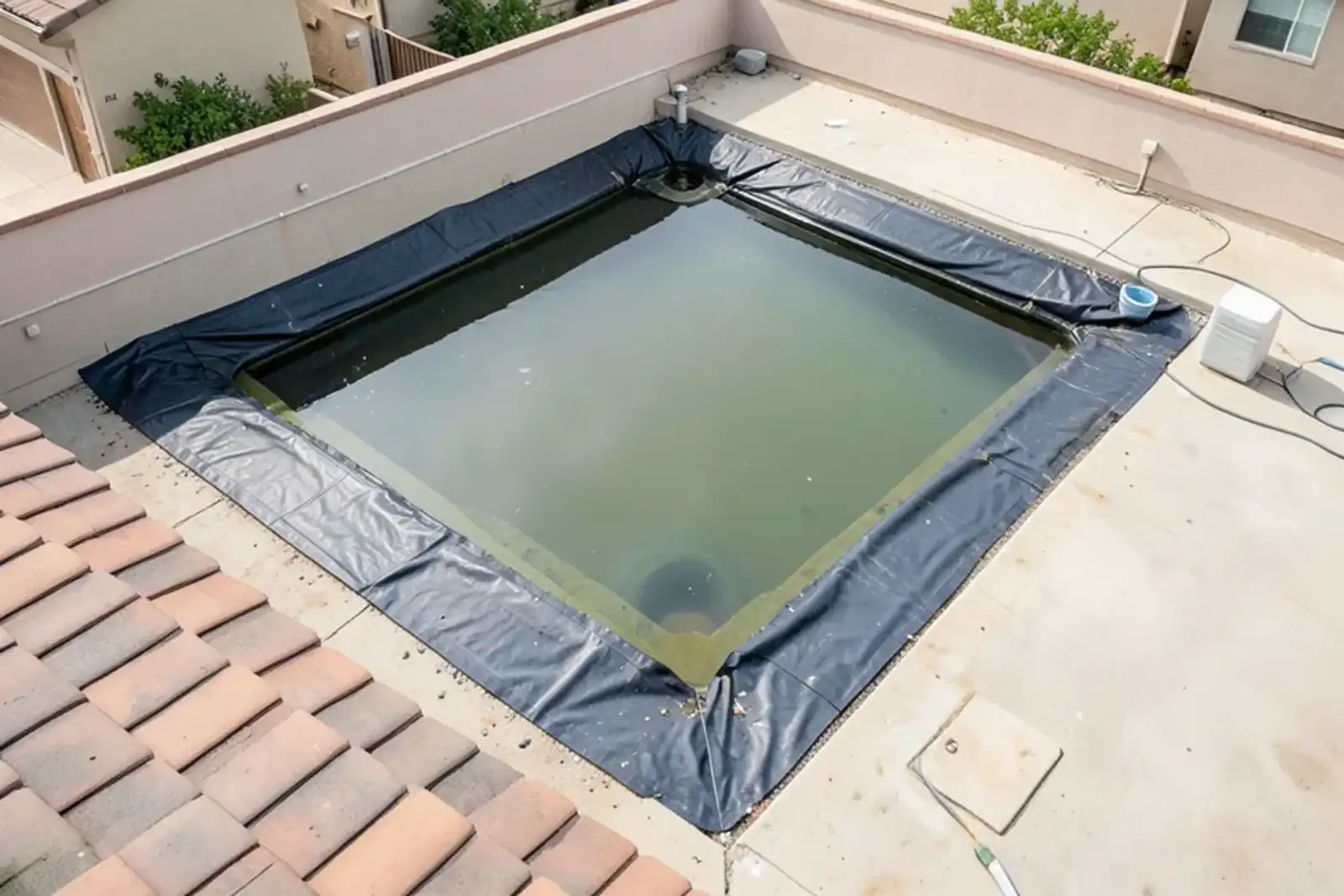
| Spotting ponding on a flat roof | Look inside the attic |
| Showing debris, stains and moss | Smell damp or hear a hollow patch |
| Reaching a steep or fragile roof | Open a seam to see what is under it |
What a drone pass shows well
An overhead set covers every slope and every penetration in a few minutes. You can zoom in on a chimney cap, a vent, a ridge or a valley without a ladder. On a flat roof, ponding and discoloration around drains are easy to see from above.
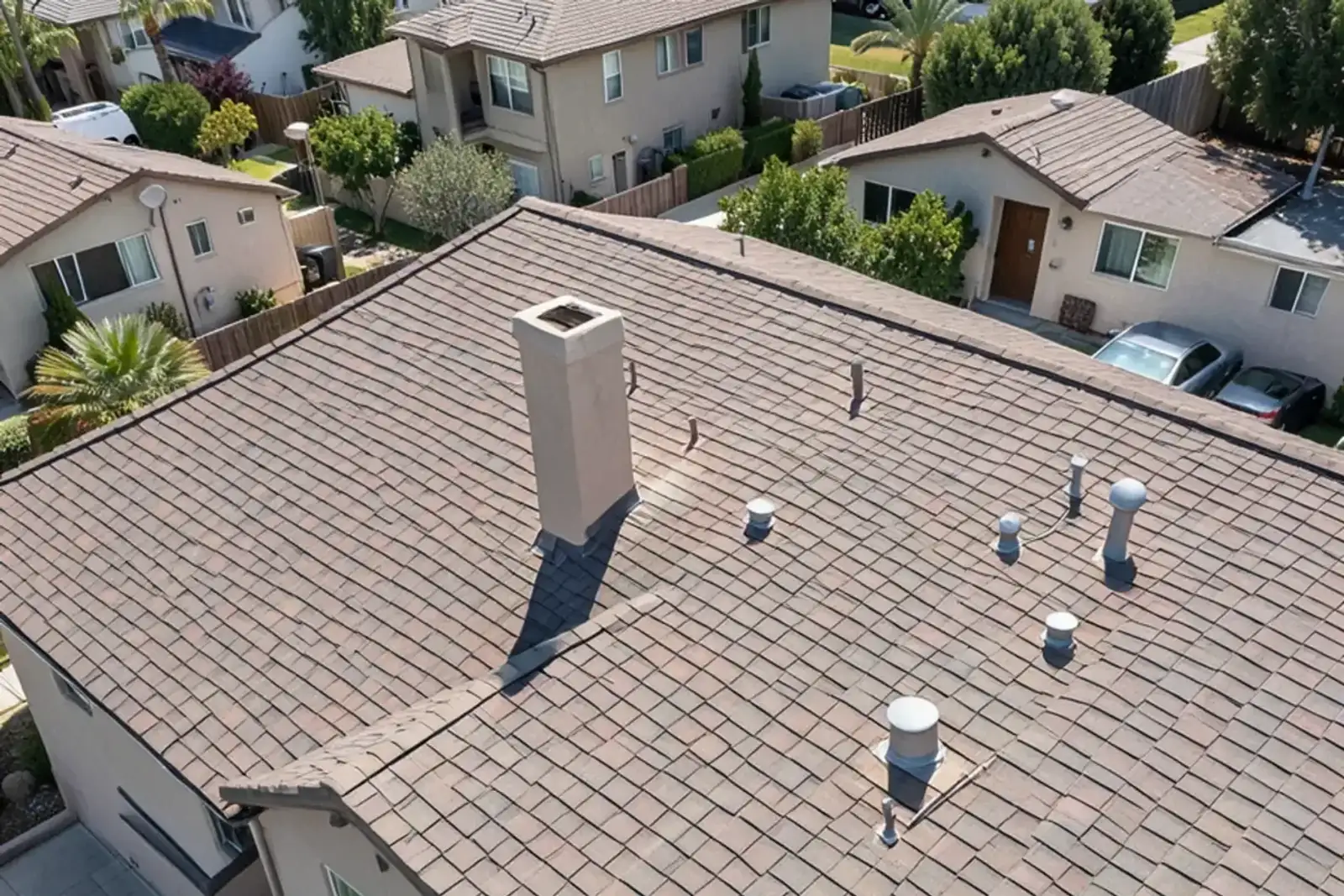
A drone is also useful for steep or fragile roofs. Tile roofs can crack under a person's weight, so photographing from the air avoids foot traffic. Steep roofs, including those on hillside lots, are hard to walk safely, and a first look from the sky can show whether a closer visit is needed. Santa Clarita is about 20 miles and 35 minutes from our Van Nuys base by our estimate, and Census ACS puts the median home there at 1987, so many roofs in its tracts are mid-life and worth a look.
Where we use photos, and where we climb
A Van Nuys reviewer describes drone photos sent during their roof work, which they found helpful because they were not about to climb up there themselves. Another describes pictures and measurements before the quote. We use photos that way, as a record and a way to show you what we see.
But we do not treat photos as the final word. Once we are on the roof, we press the flashing, probe suspect areas, check the underlayment where tile is lifted and go in the attic. A drone shows that something looks wrong. Hands and eyes on site say what it is and what it takes to fix.
What a drone cannot tell you
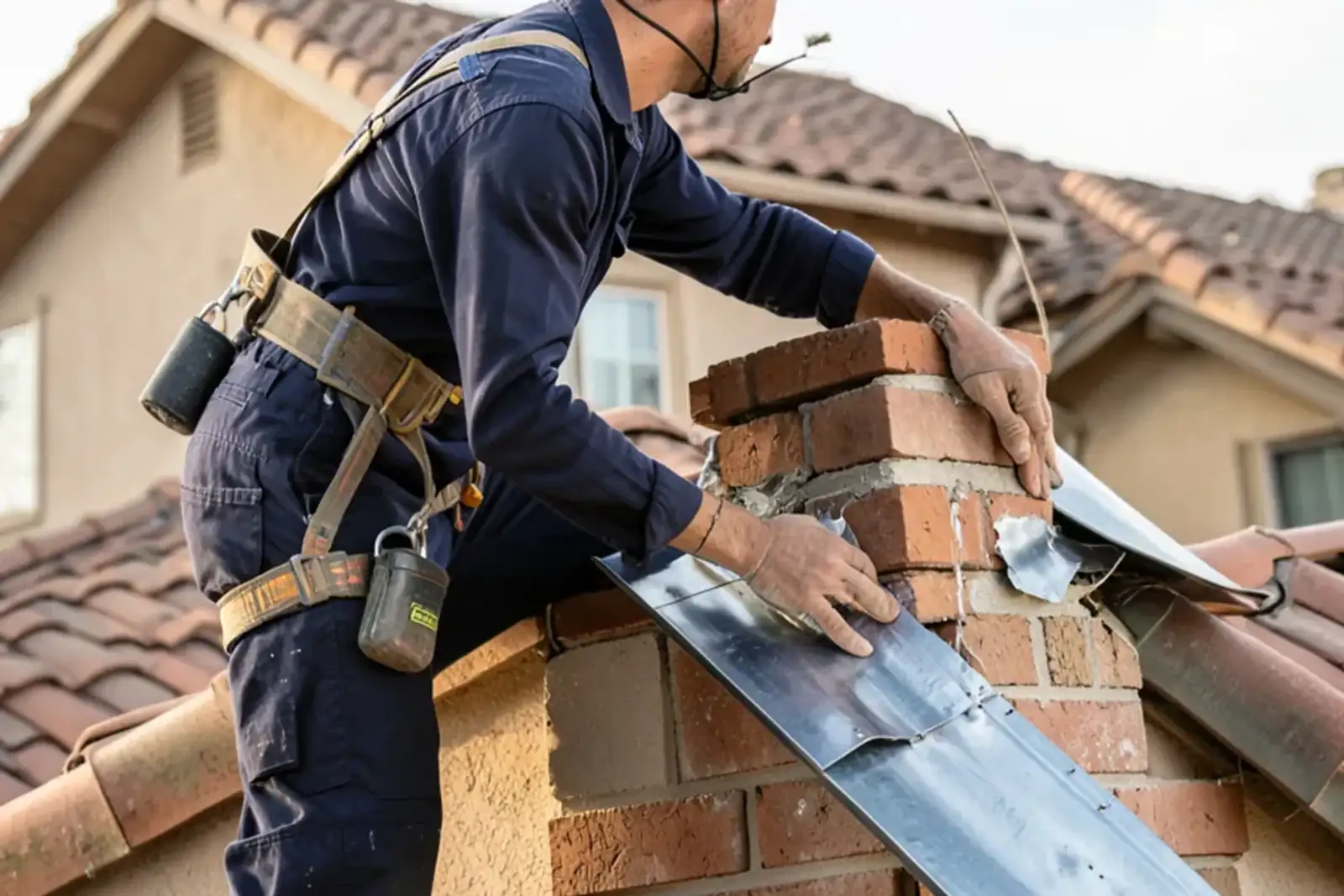
Some problems hide from any camera:
- Soft decking feels wrong under a hand but looks fine from above
- Failed sealant can look intact while water gets behind it
- Hairline tile cracks disappear in glare
- Moisture in insulation sits in the attic, not on the roof
- Fastener condition needs a close look at each nail or screw
This is why we pair drone photos with a roof inspection rather than substituting one for the other. Photos find candidates. A person confirms them, and a person writes the repair scope you can price against.
Airspace, wind and privacy: what limits a drone flight in Los Angeles
Not every roof can be flown on every day. Commercial drone flights in the U.S. fall under the FAA's Part 107 rules, and the pilot needs a remote pilot certificate. Parts of the San Fernando Valley sit near Van Nuys and Burbank airports, which means controlled airspace, and a flight there needs FAA authorization before takeoff. Ask the operator how they handle that.
Weather matters too. Santa Ana winds and gusty foothill canyons can ground a drone for the day. Glare on tile or a white membrane can wash out detail at midday, so early morning light gives cleaner photos. Neighbors count as well, because a drone over a tight lot will have other homes in frame, and a careful operator keeps those images private.
Using drone photos for documentation and insurance
Photos are strong evidence of condition, especially when they are dated. A set of before-and-after pictures shows what the roof looked like and what changed. That matters after a storm or a fallen limb.
For insurance, we may inspect, photograph, document damage and write a repair estimate, and we can be on site when the adjuster visits. Negotiating a claim is for the policyholder or a licensed public adjuster. The California Department of Insurance also advises you not to call anyone to repair before your insurer's adjuster inspects, so photograph first.
What working roofers trust a drone for, and where we are wary
Our view comes from standing on roofs, and it is a mixed one. A drone is a very good first look. It saves a climb, it records the roof as it stood on a given day and it lets a homeowner see what we see. For a tile roof that may crack underfoot, that alone can be the right choice.
We are wary when a drone pass gets sold as the whole inspection. Photos make a roof look fine from fifty feet up, and the first sign of trouble may be a soft spot, a loose boot or a damp attic board. A report built only on aerial images can miss those, and it can also overcall a stain that turns out to be dirt.
The honest trade-off is time against certainty. Photos are quick and carry no fall risk. A hands-on visit takes longer and tells you more. For an older roof, a roof with a known leak or a house you are about to buy, we want both. For a newer roof and a routine yearly check, photos may be all you need. A scheduled roof maintenance visit is where the two get compared year over year.
What affects the price of a drone inspection
We do not publish a drone inspection price, and you should be wary of anyone who quotes one without asking about the roof. The usual factors are:
- Roof size and complexity: more slopes, valleys and levels mean more flight time
- Access and airspace: trees, wires and nearby homes slow a flight
- Deliverable: raw photos cost less effort than a written report with a scope
- Follow-up: a visit to the roof and attic adds time
- Travel: distance from our Van Nuys base matters on the far edges of the county
Our prices come in writing after we see the job.
Questions to ask before you hire a drone inspection
Any company can buy a drone. Ask these before you book:
- Who flies it, and do they follow FAA rules for paid flights?
- What do I get: photos only, or photos and a written scope?
- Does anyone go on the roof or in the attic afterward?
- How are the images stored and for how long?
- Will you say plainly what the photos cannot show?
Heat and wind change what is worth flying. Inland roofs see far more hot days than coastal ones, with about 77 a year in Van Nuys and about 5 at LAX by NOAA's 1991-2020 normals, and a sun-baked shingle roof shows its age clearly in aerial photos. A good roofing contractor in Los Angeles uses the camera for what it does well and then gets on the roof for the rest. See our Santa Clarita page for the areas we cover in that valley.
Book a roof look with photos in Santa Clarita or the Valley
If you want overhead photos and a roofer's opinion on one visit, call (209) 563-1278 and we will set the earliest visit we can. Tell us the roof type, its age and what prompted the question, and we will say whether a drone pass, a climb or both make sense.
Quick answers
Can a drone find a roof leak?
Sometimes it finds the cause but rarely the leak itself. A drone can show a missing tile, an open flashing or a clogged valley, which are all common causes. It cannot see water moving through the roof or damp wood in the attic. Tracing a leak still means a person in the attic and on the roof with a hose and a flashlight.
Is a drone safe to use over a hillside home in Santa Clarita or Los Angeles?
A trained operator can fly one safely, but wind, trees and nearby homes matter. Santa Ana gusts and canyon winds can rule out a flight on a given day. Ask who is flying, whether they follow FAA rules for paid flights and how they handle privacy for neighbors in the frame.
Does a drone roof inspection work on tile and flat roofs?
It works well on both, with different limits. On tile, a drone spots broken or slipped pieces without anyone stepping on fragile tile, but hairline cracks hide in glare. On flat roofs it shows ponding, blisters and clogged drains clearly. Neither replaces probing seams or checking the attic, which a roofer does by hand.
Can I use drone photos to support a roof insurance claim in California?
Dated photos are useful evidence of condition, and a company can include them in a damage report. They do not settle a claim. Only the policyholder or a licensed public adjuster negotiates with the insurer, and the California Department of Insurance advises photographing damage before repairs. Keep the originals with their dates.