
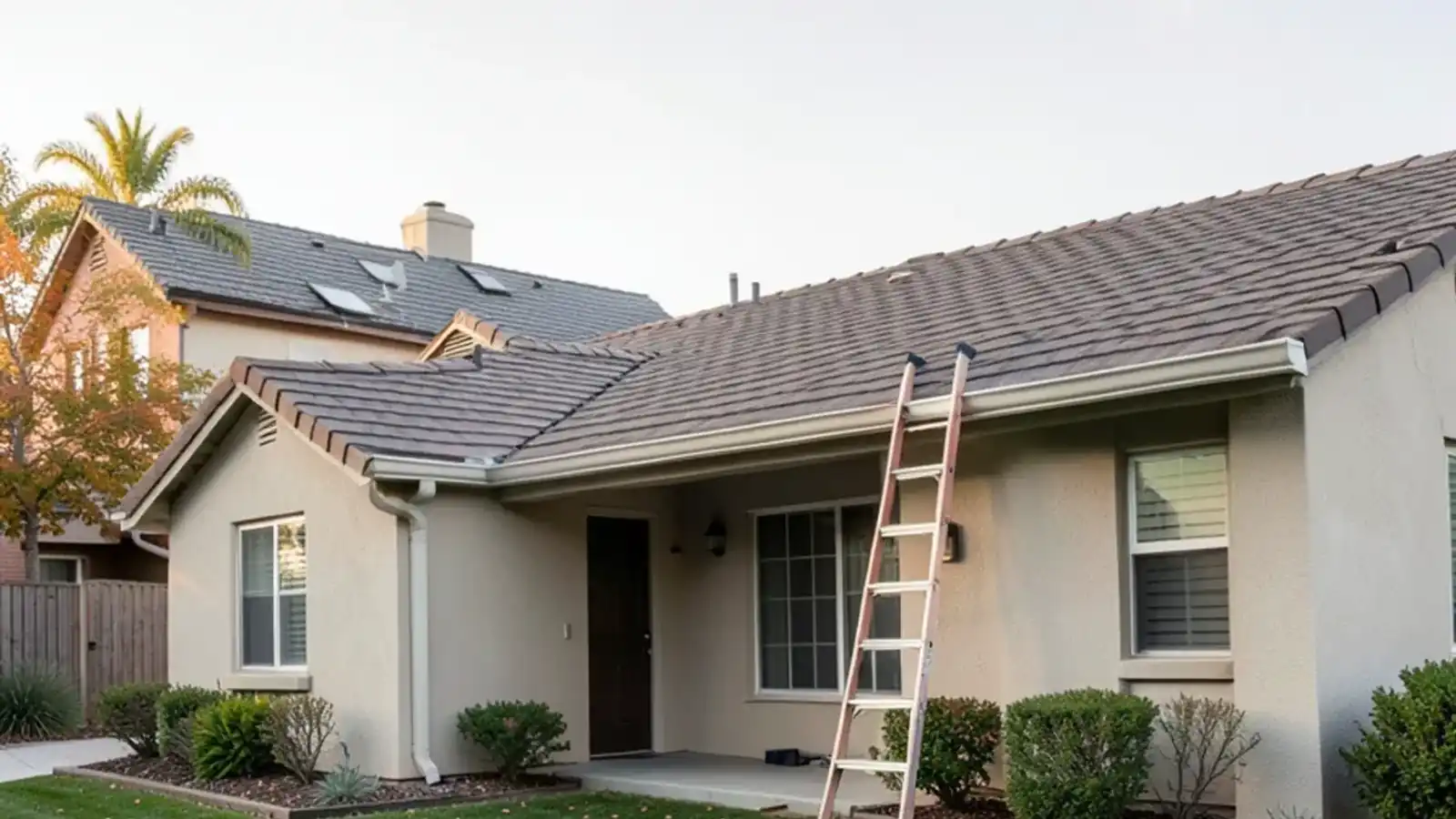
Roofing Contractor
Fall Roof Checklist Before LA's Rainy Season
A fall roof maintenance checklist for Los Angeles comes down to five jobs before the first big storm. Clear the gutters and valleys, check flashing and pipe boots, replace loose tile or shingles, look at the attic, and trim what hangs over the roof. Most rain falls from December through March.
- ★ 4.9 on Google · 69 reviews
- Same-day or next-day bookings
- Based in Van Nuys, CA
Published and updated November 3, 2026 · By the Clear Shield Roofers team, Van Nuys, CA
On this page
- Gutters and the places water collects
- Flashing, boots and sealant after a dry summer
- Which fall roof jobs can you do, and which need a roofer?
- Where does roof water go once it leaves the gutter?
- What we check on a fall visit
- Santa Ana winds, trees and foothill roofs
- What do working roofers say about fall roof checks?
- Mistakes that make a fall check worse
- Before the first storm: attic, interior and records
- Booking a fall roof check
- Common questions
Downtown Los Angeles averages about 14 inches of rain a year, and most of it arrives between December and March. The rain comes in a handful of short, hard storms. A roof that held through summer can fail in the first one.
This is the order we would work through on any home:
- Clear gutters, downspouts and valleys. Dry leaves, pine needles and shingle grit pile up through the summer. Water backs up under shingles when it cannot leave.
- Check flashing and pipe boots. Look at the rubber collars around vent pipes and the metal where roofs meet walls. Cracks, gaps and lifted edges are the usual start of a leak.
- Replace loose or broken tile and shingles. One missing piece lets water reach the underlayment.
- Look at the attic. Use a flashlight after dark or on a bright day, and check for stains, damp wood and daylight.
- Trim branches that touch or hang over the roof.
- Photograph everything with the date, as a baseline.
Gutters and the places water collects
Water has to leave the roof. If the gutter is packed, it spills over the fascia and soaks the eave. If a valley is clogged, water runs sideways under the shingles. Clear the gutter by hand, flush the downspout with a hose and watch where the water goes.
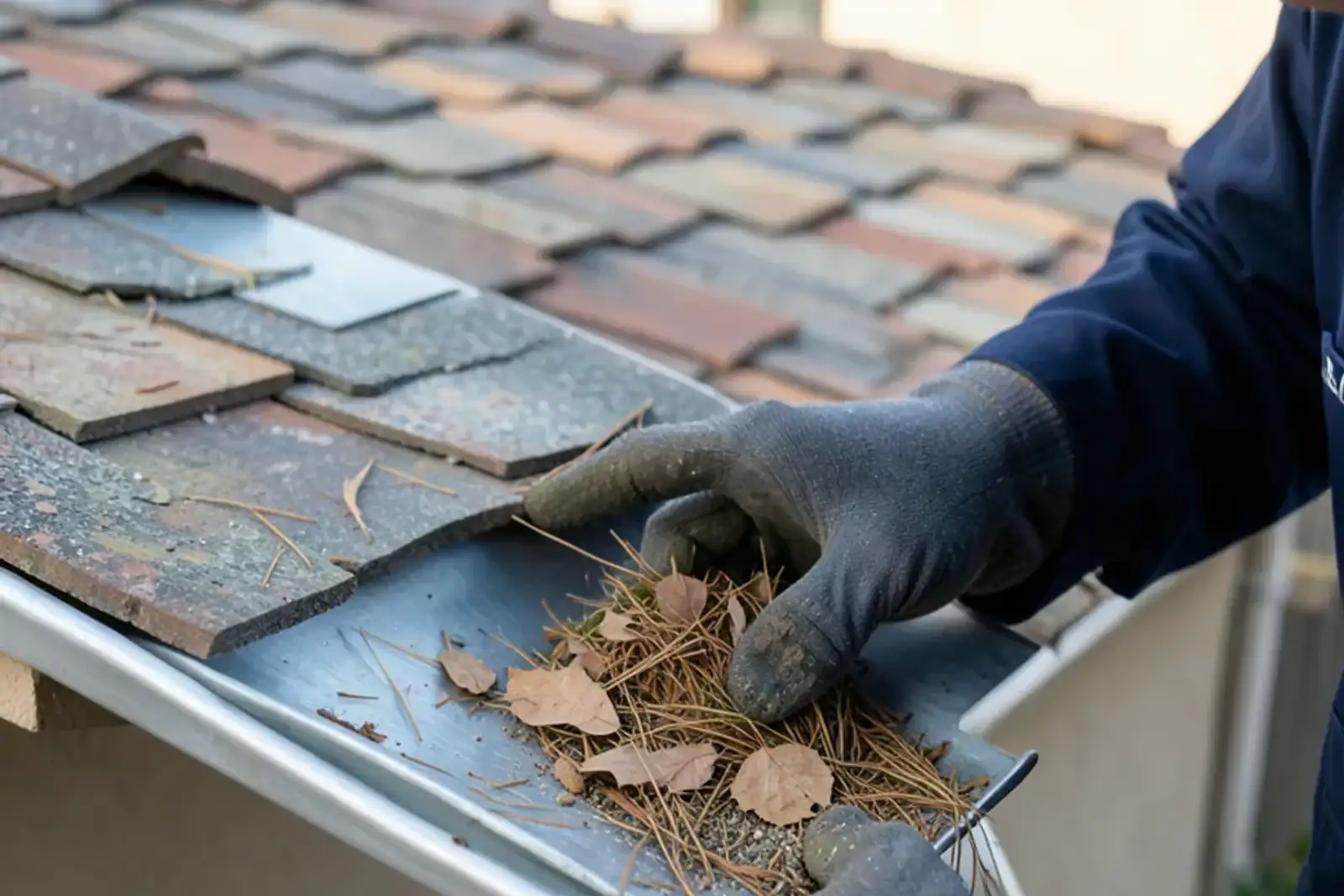
A pro should handle anything that needs a ladder on steep or two-story roofs. A Van Nuys reviewer describes a thorough roof cleaning and careful gutter work, along with power washing of the surrounding areas. That is a fair picture of the scope when the gutters are the problem.
Flashing, boots and sealant after a dry summer
The summer sun does its damage quietly. Van Nuys averages about 77 days a year at 90°F or hotter by NOAA's normals, and heat dries rubber and sealant until they crack. The first heavy rain then pushes water through gaps you could not see in August.
Here is where we look first:
| Spot | What fails | What it looks like |
|---|---|---|
| Pipe boots | Rubber splits | Cracks around the vent |
| Wall flashing | Sealant pulls away | A gap or dark stain on stucco |
| Skylight curb | Seal dries out | Staining on the ceiling below |
| Ridge caps | Mortar or fasteners loosen | Loose pieces after wind |
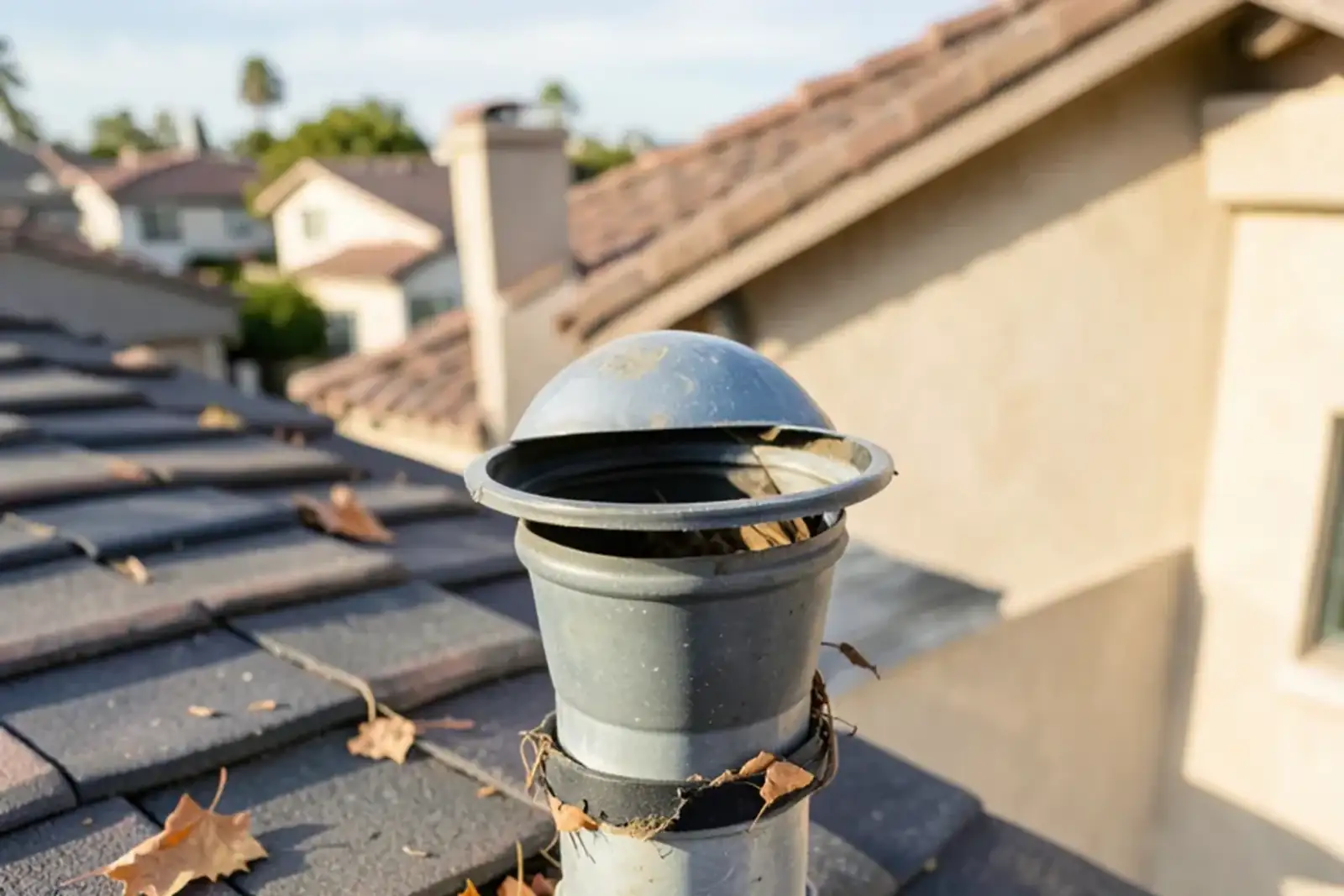
Fixing a cracked boot is a small job when you catch it in October. Waiting for a ceiling stain turns it into a bigger one.
Which fall roof jobs can you do, and which need a roofer?
Sort the list by risk. This is how we would split it:
| Job | Homeowner from the ground or attic | Call a roofer |
|---|---|---|
| Scan for broken or slipped tile and shingle | Yes, with binoculars | Anything you spot |
| Check ceilings and attic for stains | Yes | Damp wood, daylight, active drips |
| Clear low gutters and downspouts | Yes, from a stable ladder on a one-story roof | Two stories, steep pitch or tile |
| Trim small limbs | Yes, if clear of the roof | Limbs touching or over the roof |
| Flashing, boots, valleys, ridge caps | Look only | Repair or replacement |
Where does roof water go once it leaves the gutter?
A clear gutter only helps if the water has somewhere to go. Check each downspout outlet for a splash block or a line to a drain, and look for bare soil that will wash out. Water aimed at a foundation, a retaining wall or a hillside cut can cause trouble that has nothing to do with the roof.
LA County Public Works publishes storm preparedness guidance for homeowners, including a guide on flood, debris and erosion control and information on sandbag locations. Check your own city's site for local rules. If your property sits below a slope, it is worth reading before the first storm.
What we check on a fall visit
On a fall roof visit, we climb with a harness and work the roof in sections. We check every penetration, look along each valley, press on suspect flashing, and compare the age of the roof with its condition. Then we look in the attic from below.
We photograph what we find and explain what is urgent and what can wait. When something is clearly small, we say so. When the roof is at the end of its life, we say that too, and we put the options in writing. Our roof maintenance page describes how a regular plan works.
Santa Ana winds, trees and foothill roofs
Fall also brings the first Santa Ana winds. They lift loose ridge caps and tile, and they bring down limbs and debris onto roofs. Homes near trees or foothills see more of it. A Burbank house under the Verdugo foothills, for example, may need a debris check after every wind event.
Walk around the house after a wind. Look for pieces of tile or shingle on the ground. A Van Nuys reviewer describes a roof with a ridge vent and gutters repaired after storm-fallen limbs, which is a reminder that branches close to the roof are worth cutting back before they fall.
What do working roofers say about fall roof checks?
Here is how we would put it, trade-offs included. A fall check is cheap compared with a ceiling repair, but it is not a guarantee. It finds what is visible now, and the first heavy storm can still turn up something hidden.
A repair now or a replacement later is a real question on an older roof. If a roof is near the end of its life, spending on patches each fall adds up, and we would price both paths. If the roof is sound, a few small fixes in October are all it needs.
Timing is the other trade-off. October and November are quiet, and repair dates are easier to find, but every wind event brings more callers. Booking early beats booking during the rush. Our roof inspection page describes what a visit covers, and roof cleaning covers debris and algae.
Mistakes that make a fall check worse
A few habits do more harm than good:
- Smearing sealant over cracks without finding where the water enters
- Skipping the attic, which shows leaks before the ceiling does
- Blowing debris into a neighbor's yard or onto a lower roof, where it clogs another valley
- Climbing a wet or dusty roof without a harness
Most of this is slow, dull work, and it pays back in January.
Before the first storm: attic, interior and records
Inside the house, check ceilings for old stains and note whether any have grown. In the attic, look for damp insulation, dark rings on the decking and daylight at vent pipes. After the first heavy rain, look again.
Keep a folder with dated photos and invoices for any repair. Insurers consider roof age and condition, so records help if you ever file a claim. If water does get in, we will set the earliest visit we can and, as the schedule allows, offer same-day or next-day bookings. A Van Nuys reviewer also describes the crew returning on a Sunday morning to fix a leak that showed up after rain during their job.
For a broader plan, see how a roofing contractor in Los Angeles can help you build a routine around the seasons.
Booking a fall roof check
Tell us the roof type, its age and what you saw from the ground or the attic, and we will set the earliest visit we can. Same-day or next-day bookings are possible as the schedule allows. To get a roof checked before the rain, call (209) 563-1278.
Quick answers
When is the best time in the fall to check a Los Angeles roof?
October or early November, before the first soaking storm. Weeks of dry weather bake rubber boots and dry out sealant, then the first real rain finds every weak spot at once. Giving yourself a month before December leaves time to book a repair rather than rush one.
Should I walk on my own roof for a fall check?
Usually no. Tile cracks underfoot and dry shingles can be slick with dust or leaves. Start from the ground with binoculars, then look at the attic from inside. If something needs a closer look, a roofer wears a harness and knows where it is safe to step.
What should I not do to my roof in the fall?
Do not seal over a leak you have not traced, and do not pressure-wash shingles or tile. Roof cement over failed flashing often traps water and moves the leak elsewhere, and a hard spray strips granules and loosens tile. Clear debris by hand, note what you find and let a roofer decide what needs a real repair.
Where should a downspout drain during Los Angeles winter storms?
Away from the foundation and off any slope you do not want saturated, onto a splash block, a planter or an approved drain. Never aim it at a neighbor's yard or a hillside cut. LA County Public Works publishes storm preparedness guidance for homeowners, and your city may have rules, so check yours before you reroute water.
How do I know if a roof stain in the fall is old or new?
Mark the edge of the stain with a pencil and a date, then check it after the next rain. A stain that grows or turns darker brown is active, while a faded, dry ring is usually old. Photograph it either way. Active stains, damp attic wood and drips are reasons to call before the next storm, not after.