
Roof Replacement
Hillside Roofing in LA: Access, Wind and Fire Rules
Hillside roofing in Los Angeles costs more mostly because of access, haul-off and safety setup, not the roofing itself. Fire-zone rules can also dictate the material, since a Class A roof assembly is required in Very High zones. Here is what changes when the house sits up a canyon or on a steep lot.
- ★ 4.9 on Google · 69 reviews
- Same-day or next-day bookings
- Based in Van Nuys, CA
Published and updated November 3, 2026 · By the Clear Shield Roofers team, Van Nuys, CA
On this page
- Why a steep lot or canyon road raises the price
- Getting materials up and debris down
- Wind and ember details on an exposed ridge
- What does fall protection look like on a steep hillside roof?
- How do brush clearance rules touch a hillside roof?
- What the fire rules mean for a hillside roof
- Hillside roofing in Topanga: what the canyon adds
- What do working roofers say about hillside trade-offs?
- How we would quote a hillside roof, step by step
- Booking a look at your hillside roof
- Common questions
Hillside roofing in Los Angeles is priced by the hill first and the roof second. The shingles, tile or metal on a canyon home cost about what they cost anywhere. What changes is how many hours it takes to get them up there, how safely a crew can stand on the slope and which fire rules apply to the address.
This guide covers the cost drivers, the wind and fire details worth paying for and what to settle before anyone signs.
Why a steep lot or canyon road raises the price
Most of the extra cost is labor and logistics. These are the factors we weigh when we price a hillside job:
| Factor | What it changes on the job |
|---|---|
| Street width and parking | Where the delivery truck, dumpster and crew vehicles can sit |
| Driveway grade | Whether materials are lifted by machine or carried by hand |
| Roof pitch | Fall protection, anchors, slower footing and fewer hours of productive work |
| Slope below the eave | Where debris can land and how far nails and fragments can roll |
| Wind exposure | Fastening pattern, ridge details and how the day is scheduled |
| Fire-zone status | Which roof assembly and vent details are required |
None of these shows up in a phone quote. We look at the street, the drive and the lot, then put the access costs in writing next to the material and labor lines.
Getting materials up and debris down
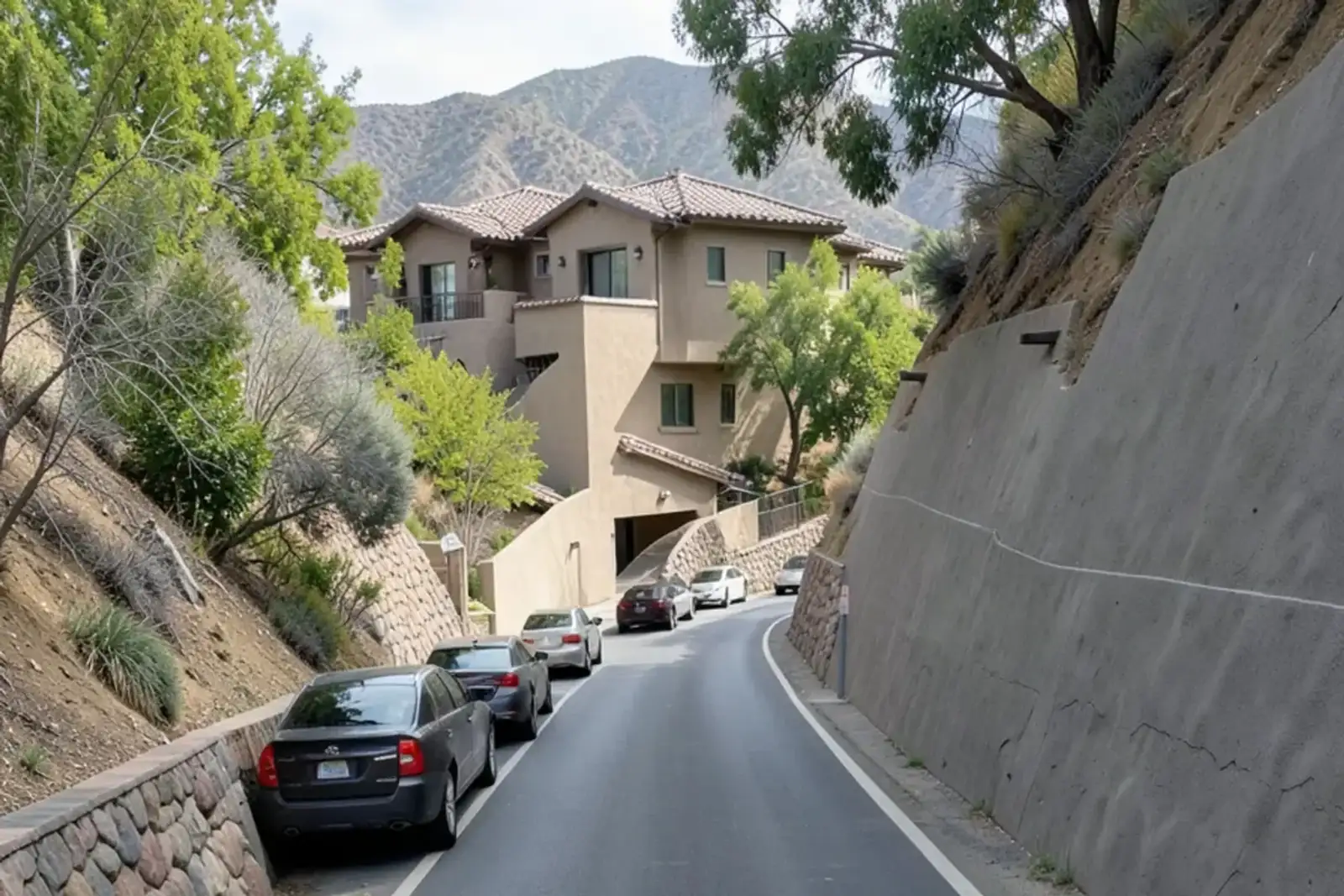
On flat ground a truck backs up to the house. On a hillside we ask different questions first. Can a boom truck reach the roof from the street? Can a dumpster sit close enough to be useful? If not, tear-off debris gets bagged or carried to the bin, and that adds hours.
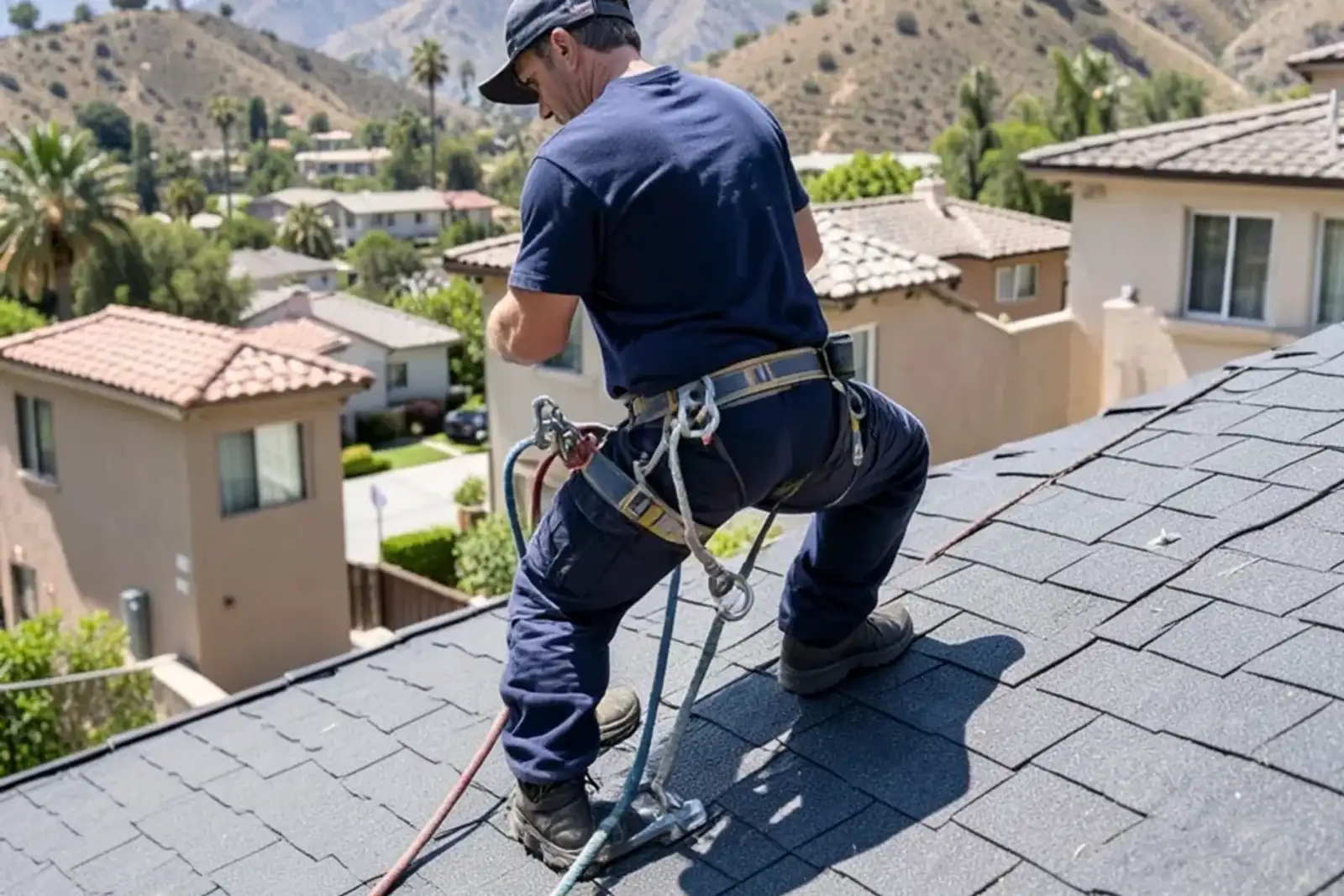
Steep pitch is the other half of the day. Every worker on a steep slope is tied off to an anchor, and moving those anchors costs time. We would rather build that time into the estimate than rush it on the day.
Cleanup matters more when the lot drops away below the eave. A nail that rolls down a hill is hard to find. Reviewers in Van Nuys describe a second pass with a magnetic roller to catch missed nails, and on a slope that habit earns its keep. Protect plants, drains and any neighbor's driveway below the work before tear-off starts.
Wind and ember details on an exposed ridge
Hillside homes catch Santa Ana winds that valley floor homes barely feel. Lifted ridge caps, loose edge shingles and flashing that opens at the rake are the usual damage. The fixes are mostly in the fastening and the edge metal, so check them during a replacement, not afterward.
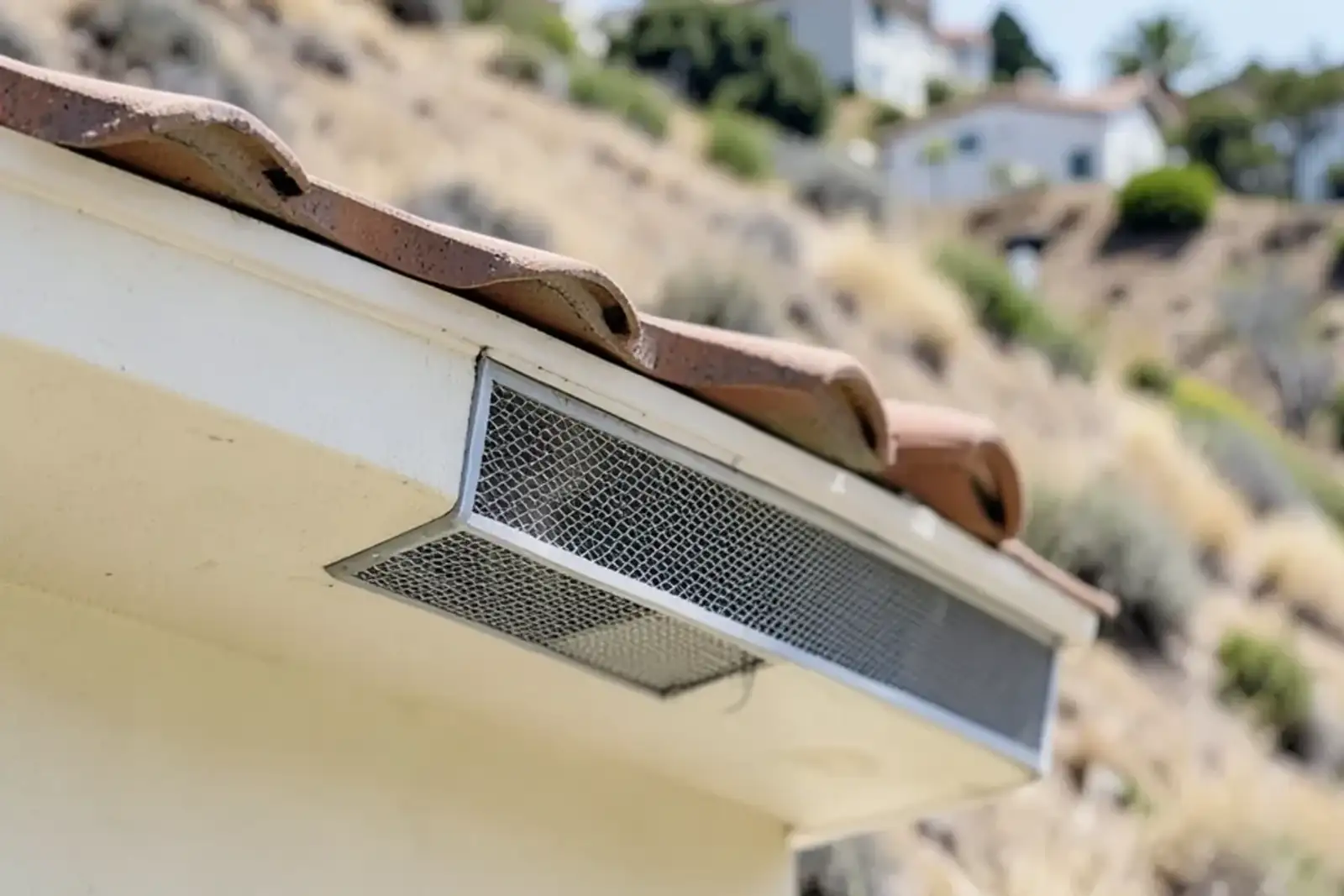
Fire exposure adds details at the eaves and vents. Embers can enter an attic through open vents, so California's Wildland-Urban Interface Code (Title 24, Part 7, effective January 1, 2026) addresses vents and roof edges in mapped zones. Ask your roofer which vent and eave details apply at your address instead of assuming a standard job covers them.
What does fall protection look like on a steep hillside roof?
Federal OSHA treats a roof steeper than 4 in 12 as steep. At unprotected edges 6 feet or more above a lower level, workers on one need guardrails with toeboards, safety nets or personal fall arrest systems, and a warning line alone does not count. California's Cal/OSHA enforces its own fall rules, so we would not treat the federal text as the whole picture.
On a hillside the drop below the eave can be longer than the height of the house, which is why anchors, harnesses and rope management take real setup time. Ask any roofer how the crew will be tied off, and how that cost appears on the estimate.
How do brush clearance rules touch a hillside roof?
The Los Angeles Fire Department's brush clearance page says roof surfaces must stay free of substantial accumulation of leaves, needles, twigs and other combustible matter, and it asks for vertical clearance between the roof and overhanging tree limbs. Brush clearance itself runs year-round within a set distance of structures. Those rules apply to City of Los Angeles properties, and other fire agencies run their own.
For a roof, that means a clean valley and clear gutters count as fire safety, not only upkeep. An oak canyon lot may need roof cleaning more than once a year.
What the fire rules mean for a hillside roof
Los Angeles has three rules worth knowing:
- Class A in Very High zones. A Class A roof covering is required in the Very High Fire Hazard Severity Zone.
- No wood shake. The City of Los Angeles prohibits wood shake and wood shingle coverings citywide, with a narrow exception for small repairs, according to a LADBS bulletin.
- Maps changed. State fire hazard zone maps were updated in 2025 and added Moderate and High classes in local areas. A house that was outside a zone before may not be now.
The stakes are real. CAL FIRE counts 9,419 structures destroyed in the 2025 Eaton Fire, 6,845 in the 2025 Palisades Fire and 1,643 in the 2018 Woolsey Fire. Check your address on CAL FIRE's viewer, then read our Class A fire-rated roofing page for how the assemblies work.
Hillside roofing in Topanga: what the canyon adds
Topanga is an unincorporated community in the Santa Monica Mountains, so roofing permits there generally go through LA County Public Works, not LADBS. Census ACS data puts the median home at 1971 and owner occupancy at 82 percent, which means many roofs are on their second or third cycle. We cover Topanga, about 30 minutes and 15 miles from Van Nuys by our estimate.
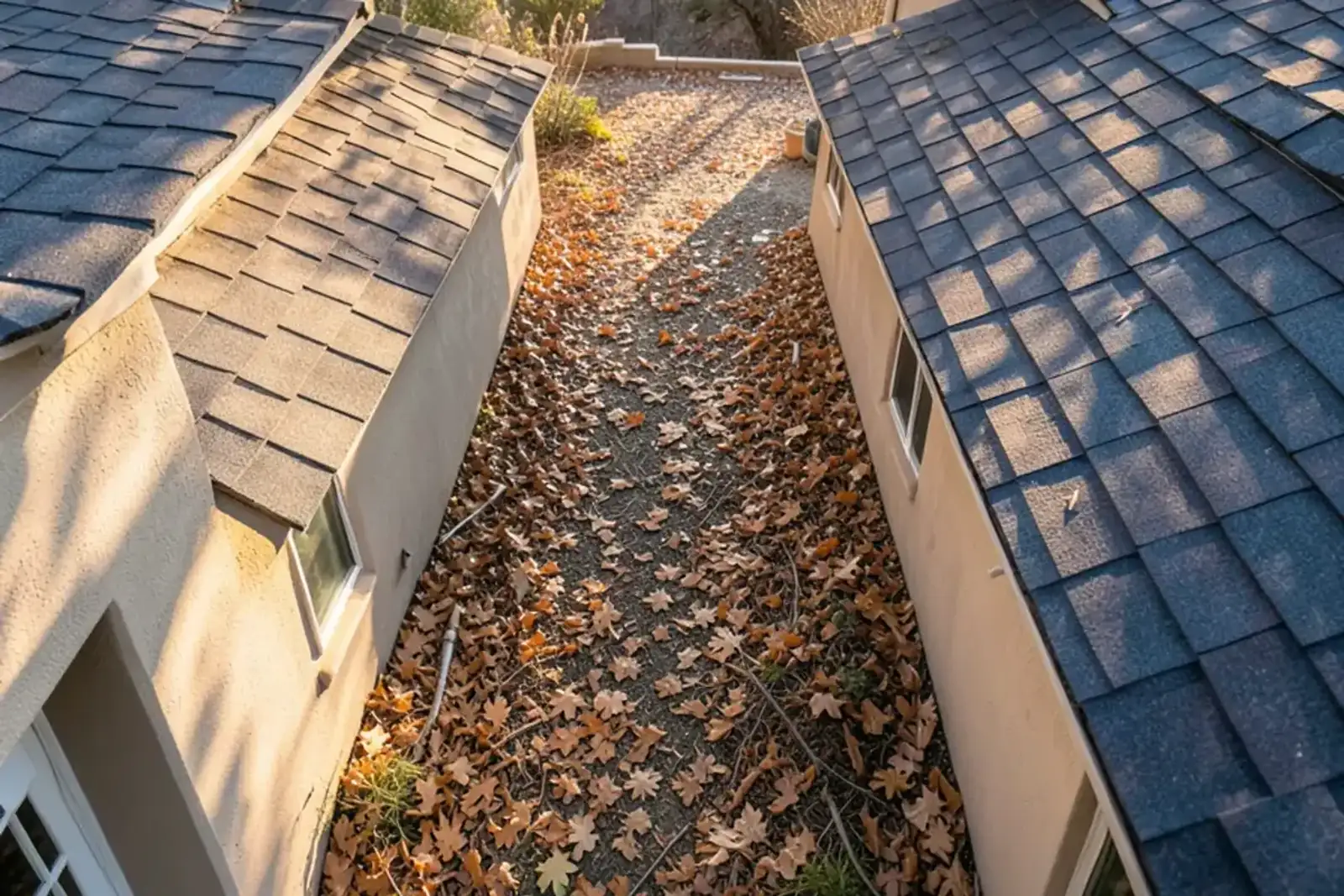
Two local details matter. Oak canyons drop leaves and twigs into valleys all year, and packed debris holds water against the roof. And canyon roads can close after slides or fires, so we would confirm road access before booking a start date.
What do working roofers say about hillside trade-offs?
Here is the honest version, since a hillside job pulls in several directions.
A longer day can be cheaper than a rushed one. Slowing down to tie off, stage materials and protect the slope below costs hours but avoids dropped bundles and missed nails.
Heavier is not always safer. Tile resists fire well as an assembly, but it adds load and is slow to carry up a steep drive. Lighter Class A shingle can be easier on the framing and the schedule.
Wind-rated fastening beats wishful thinking. An exposed ridge catches gusts that a street-level neighbor never feels, so we would price the fastening pattern and edge metal with the roof, not as an add-on.
Delivery plans fail at the last 50 feet. If the street is narrow, we would decide where each load and the dumpster sit before the first bundle arrives. Our roof replacement page lays out what a full job involves.
How we would quote a hillside roof, step by step
- Look at the approach. We check the street, the drive and where a truck and bin can sit.
- Walk the roof and the attic. We photograph the slopes, vents, valleys and deck condition.
- Check the fire status. We note which zone the address falls in and what the covering must be.
- Price the access on its own line. Hand carrying, fall protection and extra haul-off show up separately.
- Name the permit owner. The contract should say who pulls the permit and with which agency.
- Set the weather plan. We agree how the roof gets covered if rain or wind arrives mid-job.
Written estimates arrive after we have seen the property. Get any warranty terms in writing before you sign.
Booking a look at your hillside roof
Tell us the street, the grade of the drive and what the roof is doing, and we will say what we need to see. Reviewers in Van Nuys mention drone photos sent during the work and pictures and measurements before quoting. To book a visit, call (209) 563-1278 and we will set the earliest visit we can.
Quick answers
Why does a hillside roof replacement cost more than the same roof on flat ground?
Because the crew spends more time getting materials up, debris down and people safely anchored. A steep driveway or a narrow street can mean hand carrying bundles, extra trips and more fall protection. The roofing materials may be identical. We price the access separately in the written estimate so you can see what the hill adds.
Do I need a Class A roof on a hillside home in Los Angeles?
Generally yes if the home sits in a Very High Fire Hazard Severity Zone, where a Class A roof covering is required. State zone maps were updated in 2025, so do not assume your old status still applies. Check your address on CAL FIRE's viewer or with the building department that covers your street, then ask us to confirm the product.
Can a roof be replaced on a Topanga canyon road with limited parking?
Usually, with planning. We would look at the road width, the driveway and any turnaround before quoting, then work out where a delivery truck and a dumpster can sit. Topanga is about 30 minutes from our Van Nuys base by our estimate, so those logistics get worked out at the first visit.
Do brush clearance rules apply to the roof of a Los Angeles hillside home?
Yes, in part. The LAFD brush clearance page says roof surfaces must be kept free of substantial buildup of leaves, needles, twigs and other combustible matter, and it asks for vertical clearance between the roof and overhanging tree limbs. Those rules cover City of Los Angeles properties, so confirm the standard that applies to your address with your fire agency.
How steep is too steep to walk a hillside roof safely?
Federal OSHA treats a roof steeper than 4 in 12 as steep and calls for guardrails, safety nets or personal fall arrest systems at unprotected edges 6 feet or more up. Even below that pitch, loose granules and slick tile make footing poor. Ask any roofer how crews will be tied off, and stay off the roof yourself.
Sources
- OSHA, 29 CFR 1926.501 duty to have fall protection
- LAFD, brush clearance requirements
- LADBS bulletin on wood shake and shingle roofing requirements
- CAL FIRE, Eaton Fire incident page
- CAL FIRE, Palisades Fire incident page
- CAL FIRE, Woolsey Fire incident page
- CALBO on the 2025 California Wildland-Urban Interface Code