
Commercial Roofing
Reroofing a Warehouse Without Closing Operations
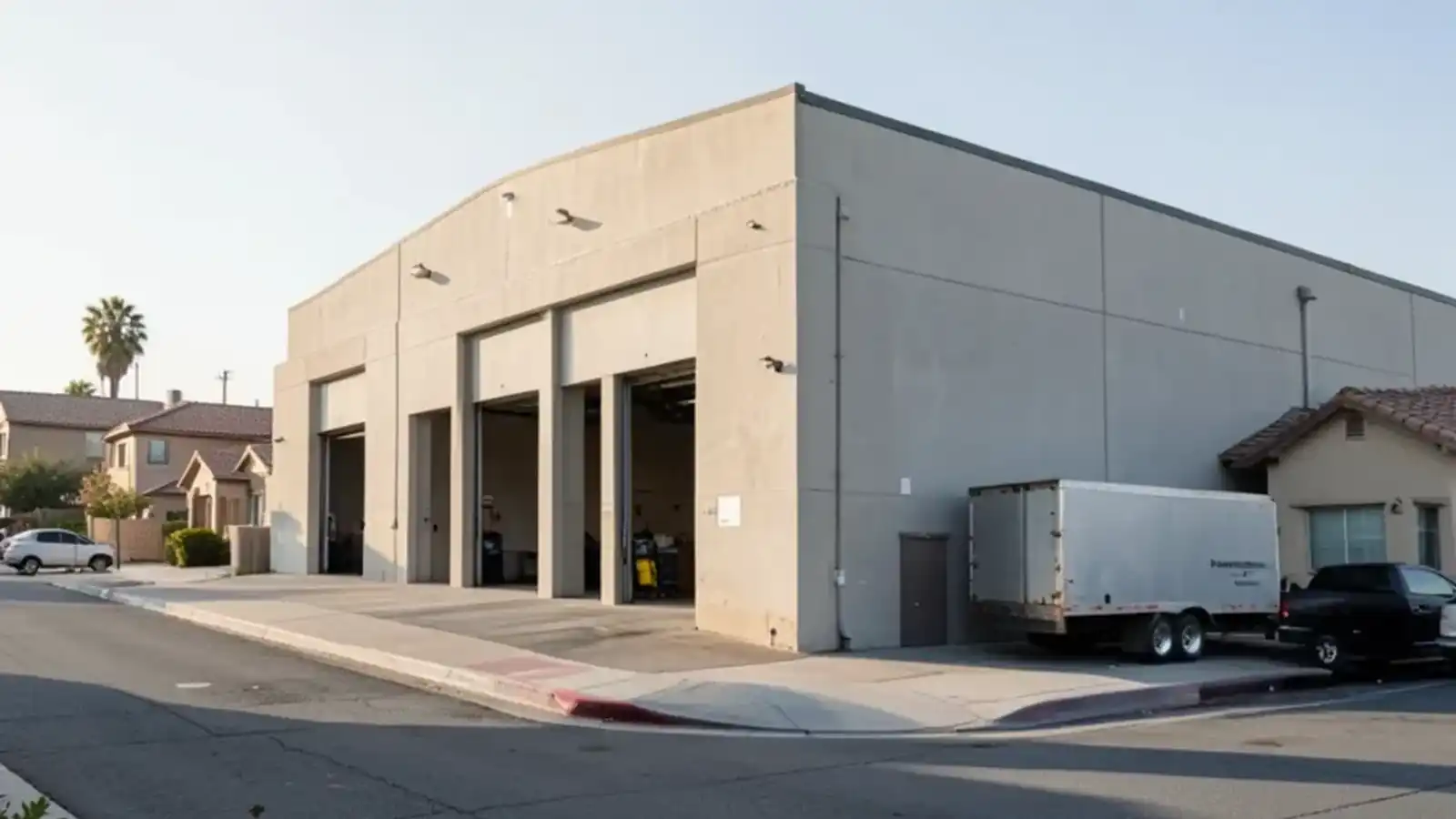
A warehouse roof replacement in Los Angeles can usually run while the building stays open, if the work is phased in sections and each section is dried in before the day ends. The plan lives in the sequence, the staging and the schedule, so settle those with your roofer before the contract.
- ★ 4.9 on Google · 69 reviews
- Same-day or next-day bookings
- Based in Van Nuys, CA
Published and updated November 3, 2026 · By the Clear Shield Roofers team, Van Nuys, CA
On this page
- How a phased warehouse reroof is sequenced
- Staging, forklifts and dock schedules
- The roofer's view: dry-in and weather windows
- Recover, selective tear-off or full replacement: the working roofer's trade-offs
- Rules that apply to an industrial reroof
- Vernon's industrial roofs and the logistics of a live reroof
- What changes the price of a warehouse roof
- Plan your warehouse reroof before the busy season
- Common questions
The question owners ask first is whether they have to shut down. In most cases they do not. A warehouse roof is large, flat and made of repeatable sections, so it suits phased work. The roofer opens one section, replaces it, seals it and moves on, and the rest of the building keeps its old roof until its turn comes.
The details are what make it work: how sections are cut, where materials sit, how forklifts and trucks move around the work and what happens when rain is forecast. This guide covers that plan for owners and operations managers looking at industrial roofing or a full commercial roof replacement.
How a phased warehouse reroof is sequenced
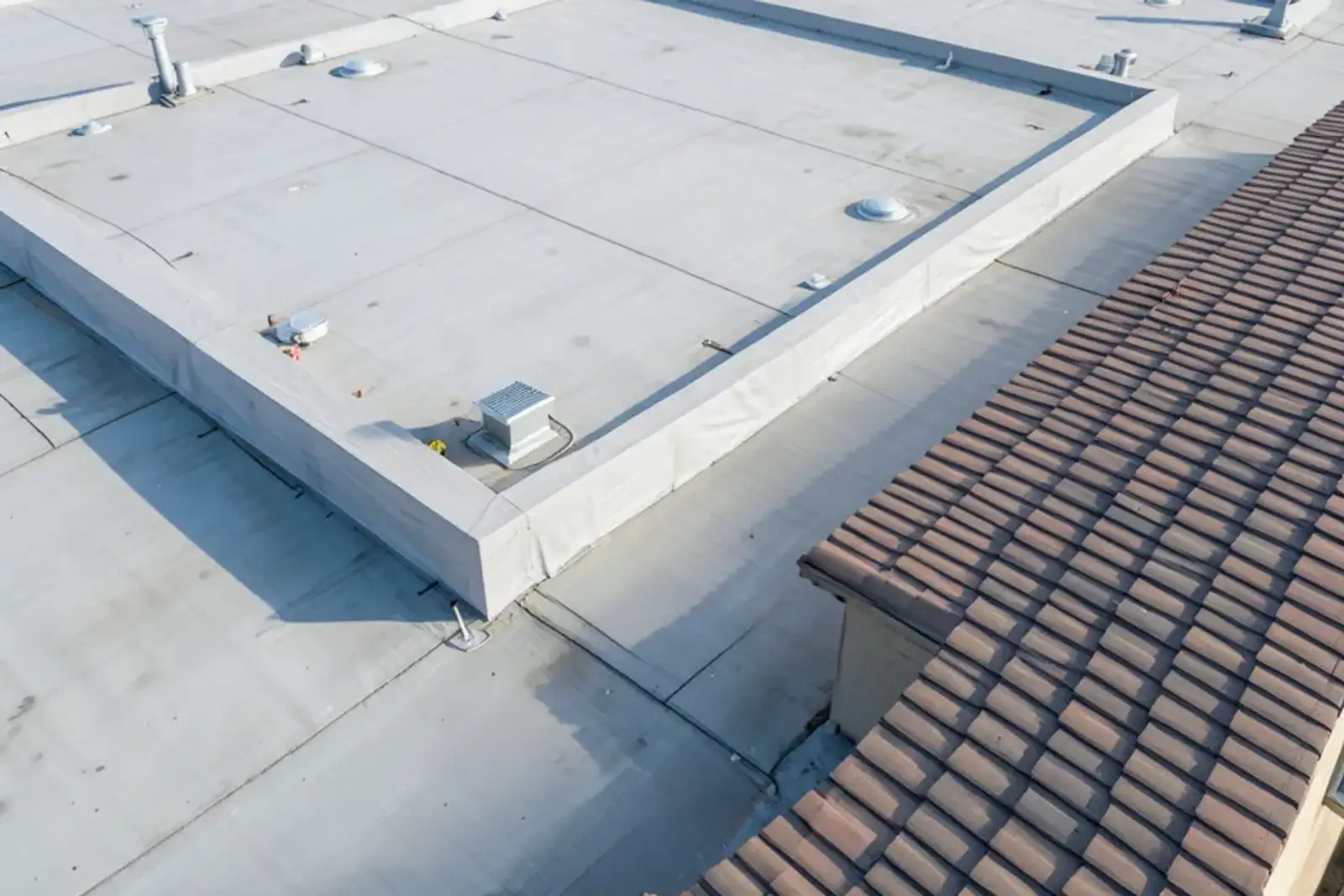
Phasing means dividing the roof into zones and finishing each before starting the next. The zones follow practical lines, such as bays, expansion joints or drainage areas, so every finished section drains on its own.
The sequence usually runs like this:
- Survey and zone map. Walk the roof, mark drains, curbs, skylights and equipment, and draw the sections.
- Order and stage materials. Insulation, membrane and fasteners arrive in controlled deliveries, not all at once.
- Open one zone. Remove the old covering down to the deck or to the layer that stays.
- Repair the deck and insulation. Fix wet or damaged areas before anything goes on top.
- Install the new system and tie in. Edges and transitions get sealed at the end of each day.
- Inspect and move on. Photograph the finished zone and release the next.
Tilt-up buildings add one more point: parapets are tall and wall panels are heavy, so edge flashing and coping need careful attention where roof meets wall.
Staging, forklifts and dock schedules
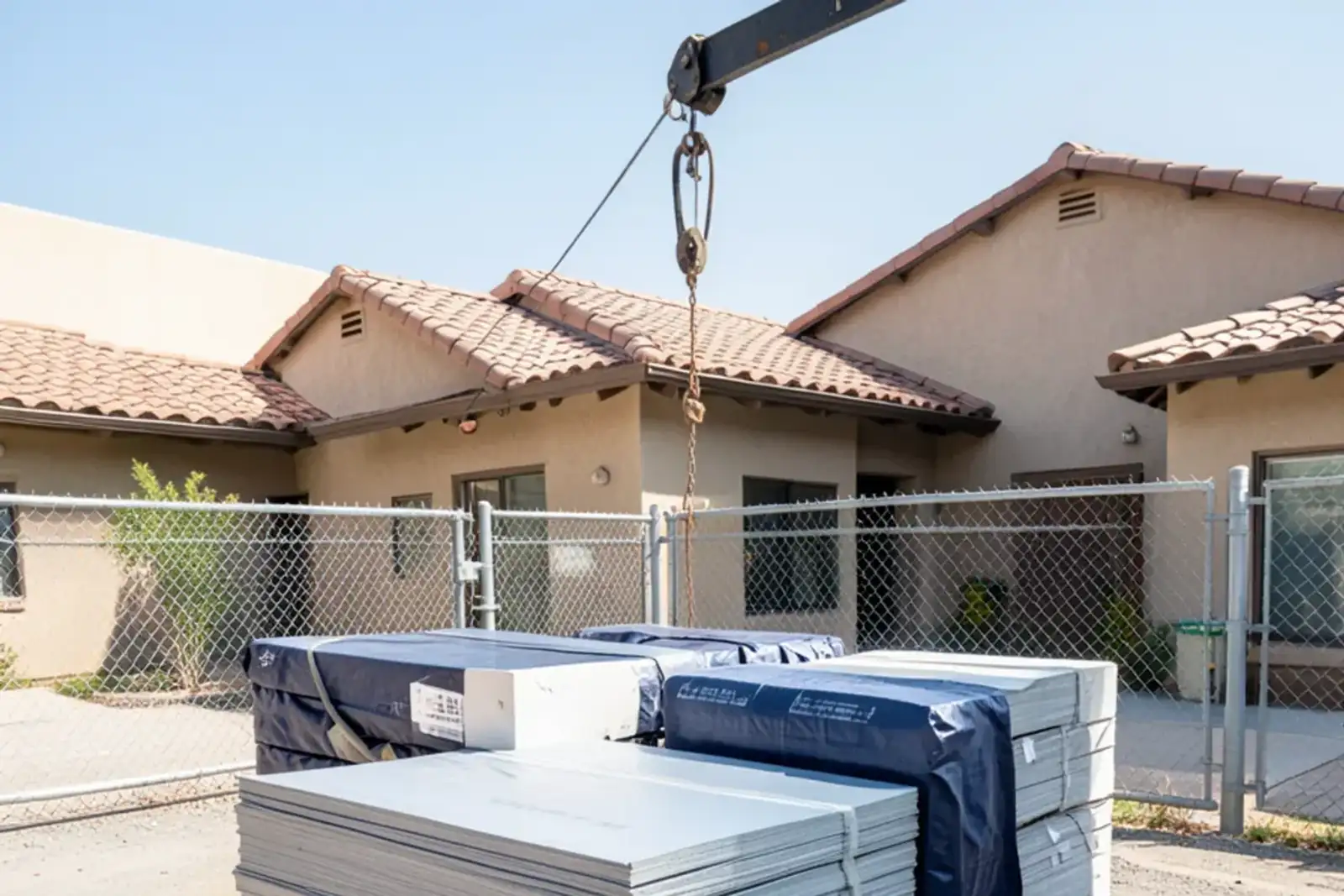
Staging plans fail when they ignore the loading yard. Pallets of insulation and rolls of membrane need a place that does not block trucks, a hoist or crane location away from dock doors and a path for debris to leave in a dumpster or chute.
Decide these points with the operations manager before work starts:
- Which dock doors stay clear at all times
- Where trailers park and turn
- When deliveries of materials arrive, outside peak shipping
- Where the dumpster sits and how often it is pulled
- Which areas under the roof hold sensitive goods or equipment
Daily cleanup matters more in a yard full of forklift tires. Loose nails and fasteners are a real hazard, and a magnetic sweep at the end of each day is a reasonable ask.
The roofer's view: dry-in and weather windows
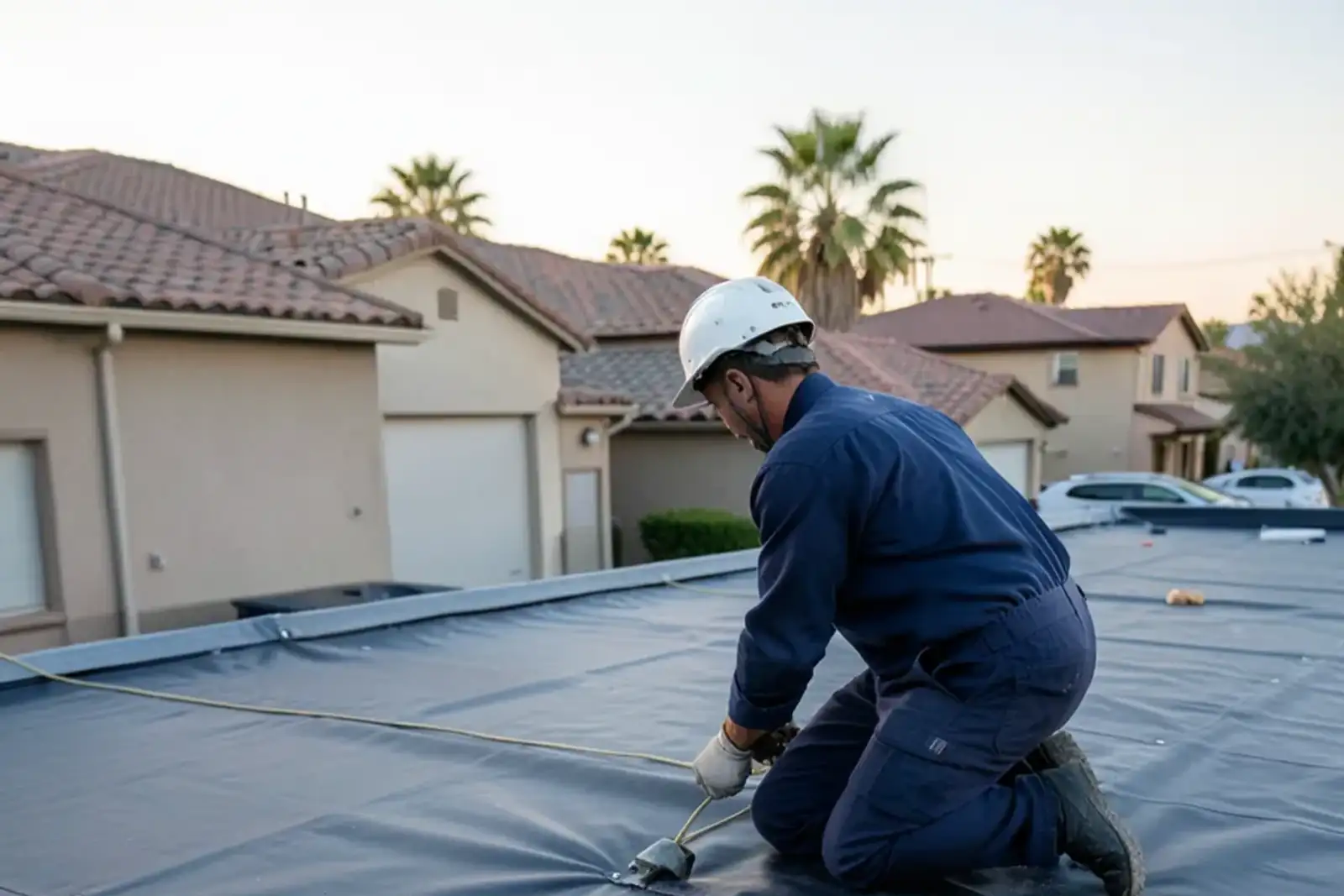
Rain is what ruins a phased plan, so the crew's day should be built backward from the dry-in. Only open as much as can be closed by the end of the shift. Check the forecast the day before and again that morning.
Los Angeles rain falls mostly between December and March, with downtown averaging about 14 inches a year by NOAA's 1991-2020 normals. Summer heat is the other constraint. The San Fernando Valley sees far more 90°F days than the coast, which affects adhesives, membranes and how long a crew can work on a dark surface.
Here is what we would do before bidding a warehouse. We would ask for building plans if you have them, walk the roof for wet insulation and ponding, photograph drains and penetrations, and write down the weak points that the schedule must work around. Then we would give you a zone map and a rough sequence in the estimate, so the plan is visible before the contract is signed.
Recover, selective tear-off or full replacement: the working roofer's trade-offs
On an occupied warehouse, the roof system you choose changes how much disruption you get. Here is how the options compare.
A recover puts a new membrane over the old roof. It avoids tear-off noise and debris, which suits live operations. It only works when the existing roof is dry and sound and the code allows another layer, and it can hide wet insulation. A roof that has already been recovered once may be a candidate for full replacement instead.
A selective tear-off removes only the wet or damaged areas and recovers the rest. It can cut cost and disruption, but the lines where old meets new are common failure points, so they need careful detailing and the manufacturer's sign-off.
A full replacement is the most disruptive and the most thorough. It exposes the deck, which is the only way to know its condition, and it resets the roof. Coating sits beside these options for a sound roof, and it is the least disruptive when moisture scans clear it.
We would not guess among these. We would scan or sample the roof, write up what we find and price the realistic options side by side, with the manufacturer's requirements governing. Tilt-up edges and deck fastening are also matters for a structural engineer when the building's age or condition raises questions.
Rules that apply to an industrial reroof
The building department that covers the property issues the permit. Vernon, an almost entirely industrial city, runs its own, and the City of Los Angeles uses LADBS. Our Vernon service area page explains how we cover it from Van Nuys, about 25 miles away.
Commercial re-roofs generally trigger cool roof requirements under California's Energy Code once enough of the roof is replaced, and the City of Los Angeles adds its own rules. The California Energy Commission explains the nonresidential rules. Confirm the threshold and product listing with the building department before you buy.
If the plan includes torch-applied membrane, remember that it is regulated as hot work under the California Fire Code. Permits and fire watch vary by jurisdiction. Some older roofing materials may also contain asbestos, so if we see signs of it, we recommend lab testing before removal.
Vernon's industrial roofs and the logistics of a live reroof
Vernon is five miles south of downtown Los Angeles and was incorporated in 1905 to promote industry along its railroads. It covers 5.2 square miles, had 222 residents at the 2020 census and has about 46,000 people working in its businesses, according to Wikipedia. Food manufacturing and metalworking are among its main industries, so many buildings are working plants with trucks, rooftop exhaust and equipment on the roof.
That mix shapes a reroof. Rooftop exhaust and make-up air units need to be located and protected, and food plants may have rules on dust and odors near intakes that the operator knows better than any roofer. Vernon is about 25 miles and 45 minutes from our Van Nuys base by our estimate, so we would plan around your shifts and the forecast and schedule walks well ahead. Check permit and inspection timing with the city.
What changes the price of a warehouse roof
We do not publish prices, and our prices come in writing after we see the job. These factors move the number most:
- Roof area and whether the old roof comes off or stays
- Wet insulation or deck repair
- System choice, such as single-ply, built-up or a restorative coating
- Number of drains, curbs, skylights and rooftop units
- Phasing, working hours and access
- Permit and inspection requirements
Ask each bidder to list tear-off, repair allowances and cleanup separately, so a low total does not hide missing work.
Plan your warehouse reroof before the busy season
Tell us the building size, the roof type and when your peak shipping runs. Call (209) 563-1278 and we will set the earliest visit we can to walk the roof and talk through a phase plan.
Quick answers
Can a warehouse stay open during a reroof?
Usually yes, when the work is phased and the roof stays watertight at the end of every day. Operations then continue under finished sections while crews work on one area at a time. Noise, dust and access to certain bays may be affected, so the schedule should name which areas are in play each week.
How do you protect inventory under a warehouse roof during replacement?
Tear-off is done in sections small enough to be dried in the same day, and temporary protection covers any open area. Stored goods, racking near the work and sensitive equipment should be walked through with the roofer first. Some owners shift product or tarp rows directly below the active section as an extra safeguard.
Does a warehouse reroof need a permit in Los Angeles County?
Generally yes, and the agency depends on the city. The City of Los Angeles uses LADBS, and independent cities such as Vernon run their own building departments. Cool roof rules and fire rules for any hot work also apply. The contract should name who pulls the permit, and the building department's inspection should happen before final payment.
Can a warehouse roof be coated instead of replaced to avoid disruption?
Sometimes. A coating can suit a dry, sound roof and avoids tear-off noise and open decks, but it cannot fix wet insulation, open seams or a failing deck. A moisture scan or core samples show whether the roof qualifies. We would check that first, then price a coating and a replacement side by side in writing.
How should a Vernon warehouse plan truck traffic during a reroof?
Vernon is an industrial city of rail spurs and truck routes, so dock schedules are the pinch point. Agree which doors stay clear, where trailers turn and when material deliveries arrive outside peak shipments. Vernon runs its own building department, so confirm permit and inspection timing with the city before locking the phase schedule.