
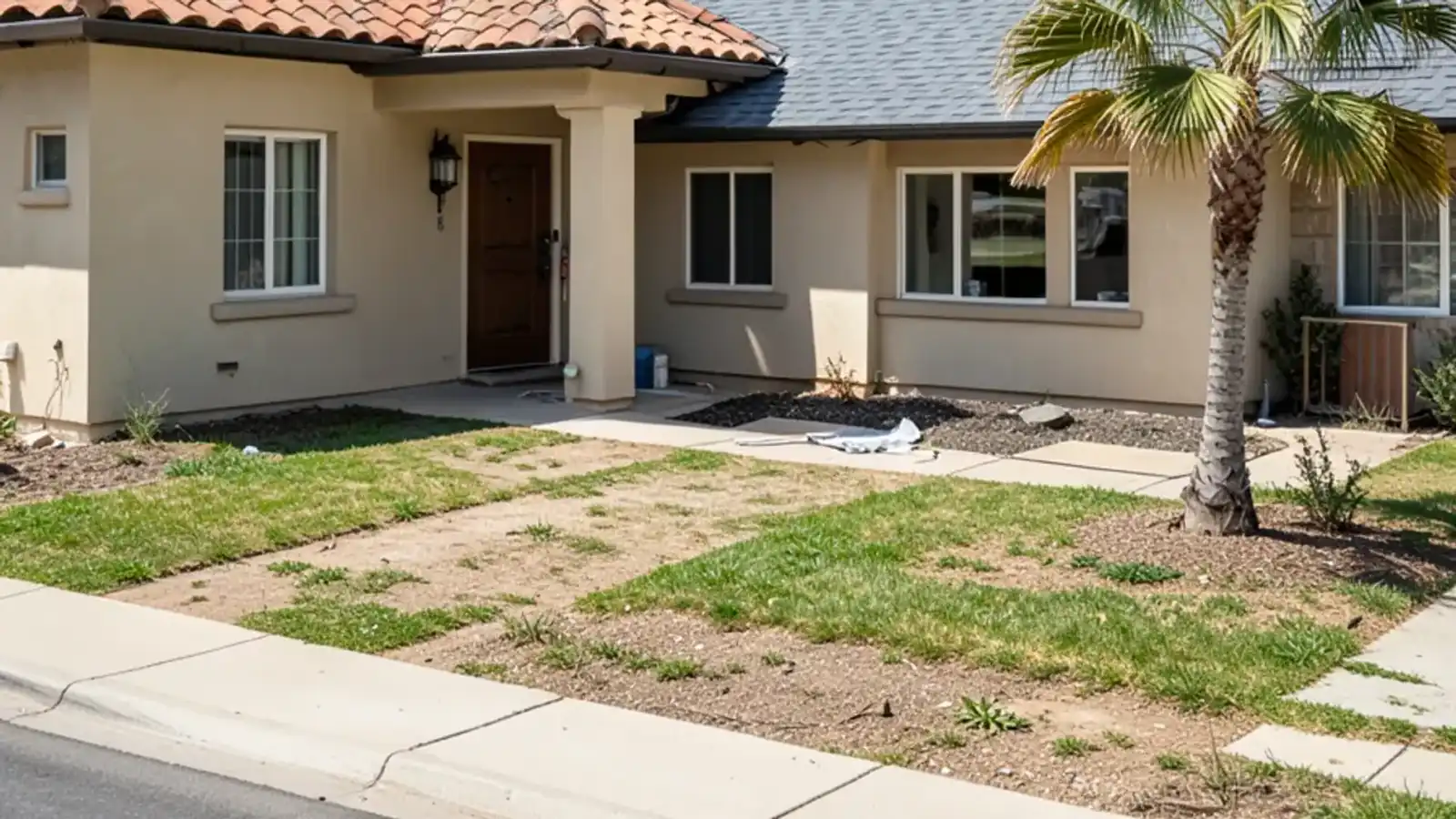
Roof Replacement
Tile to Shingle: When Switching Makes Sense
Switch a tile roof to shingles when the tile is cracking across the roof, the underlayment beneath it has failed and lifting and relaying the tile would cost nearly as much as starting over. Keep the tile when it is mostly sound, the house depends on the look or a historic rule applies. Condition decides, not style.
- ★ 4.9 on Google · 69 reviews
- Same-day or next-day bookings
- Based in Van Nuys, CA
Published and updated November 3, 2026 · By the Clear Shield Roofers team, Van Nuys, CA
On this page
- Signs it makes sense to switch a tile roof to shingles
- When keeping the tile is the smarter call
- Tile and shingles compared on the points that change your decision
- The roofer's view: honest trade-offs before you convert
- What pulling off tile looks like on the roof
- Permits, cool-roof and fire rules for a conversion
- What moves the price of a tile-to-shingle conversion
- Tile-to-shingle questions from San Fernando homeowners
- How do you decide whether to convert your tile roof?
- Common questions
Deciding to switch a tile roof to shingles is a bigger call than it looks, because tile is often the better roof until the day it is not. A tile roof that is leaking everywhere is a different problem from one that is just old. The right answer depends on what is happening underneath.
The tile itself usually outlives what holds it up. Underlayment, the felt or membrane under the tile, fails first. So the choice is rarely tile against shingle in a fair fight. It is usually lift-and-relay against a new roof.
Signs it makes sense to switch a tile roof to shingles
The conversion tends to win when several of these show up together:
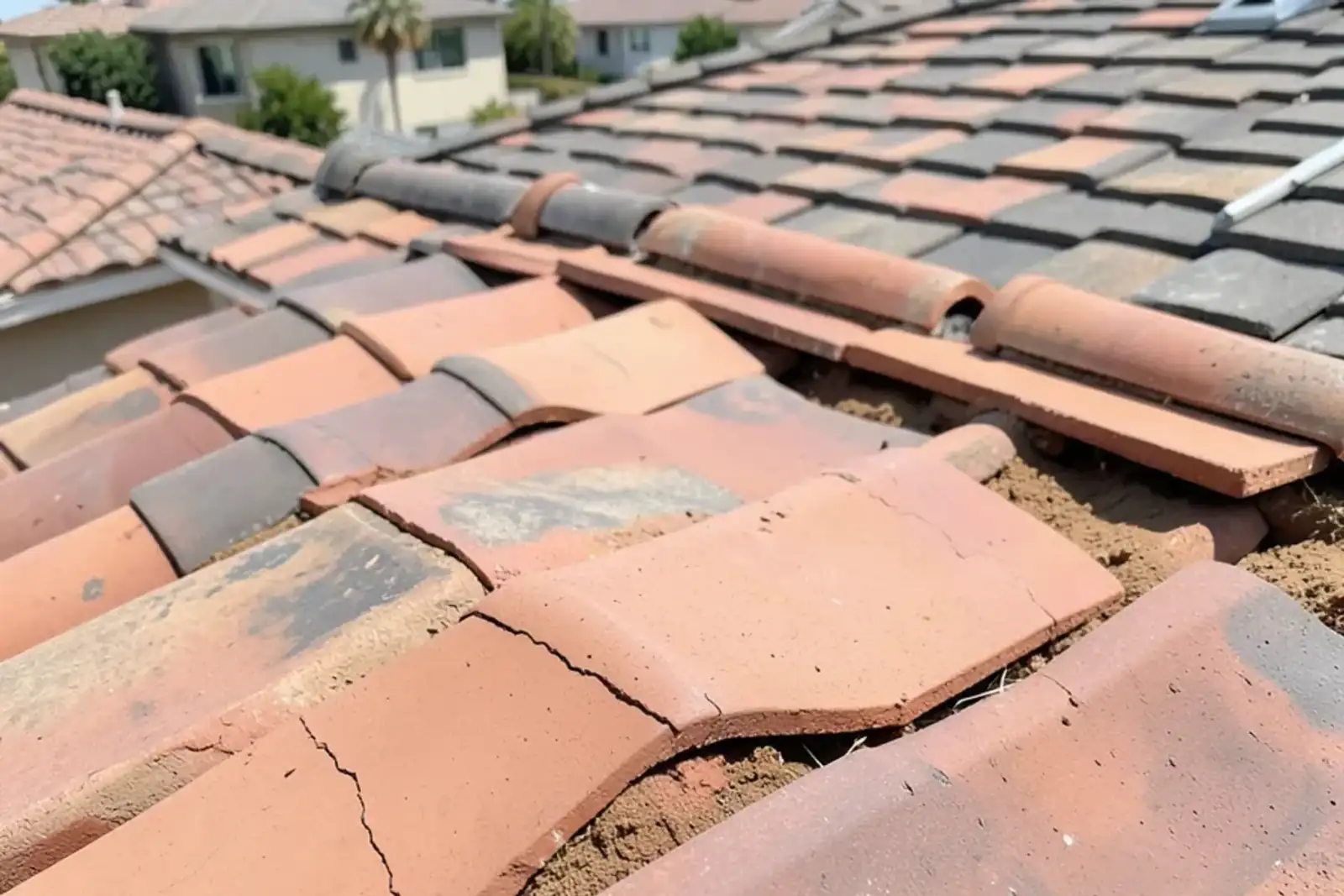
- Broken tile across more than one slope, not only where someone walked on it
- Repeated leaks that come back after repairs, which points to failed underlayment
- Soft or stained decking found whenever tile is lifted for a repair
- A repair quote for lift-and-relay that approaches the price of a new roof
- Load worries, if a builder or engineer has flagged the weight of the tile on your framing
Lifting and relaying means taking the tile off, replacing the underlayment, then setting the same tile back. It saves the tile, and it costs real labor. When half the tile is cracked, you are paying to reinstall pieces you will replace anyway.
When keeping the tile is the smarter call
Tile is not a roof to throw away lightly. Keep it if most of these are true:
- The tile is in good shape and the leaks trace to flashing, valleys or one failed area of underlayment
- The house is a Spanish Revival or Mediterranean design that depends on tile
- A homeowners association or historic overlay expects tile
- You plan to stay long enough to get the extra years of a relay
Clay and concrete tile often last decades, and the manufacturer's rated life governs. If your tile is sound, ask for both prices and compare.
Tile and shingles compared on the points that change your decision
| Point | Tile | Asphalt shingle |
|---|---|---|
| Weight | Heavy, framed for the load | Much lighter |
| Typical life | Often long, with underlayment replaced once | Often shorter, depending on the product and sun |
| Repairs | Skilled work, tile can break underfoot | Simpler, and matching age is the challenge |
| Look | Fits Mediterranean and Spanish styles | Plain, wide color range |
| Fire rating | Class A assemblies are common | Many products reach Class A, so ask |
| Removal later | Tile cannot be roofed over | Overlay rules limit layers |
Ask for the fire rating of the exact assembly, not the material category. It matters most on hillside lots. Our Class A fire-rated roofing page explains how ratings work.
The roofer's view: honest trade-offs before you convert
We would rather talk an owner out of a conversion than into one they regret. A few things we say plainly.
Shingles will not last as long as sound tile, and they run hotter in full sun. If your tile is mostly intact and only the underlayment has failed, a lift-and-relay keeps the longer-lived material and the architecture. If tile is cracking across the roof, pieces no longer match, or the framing is under strain, shingles are the practical move.
Price the two paths together, then compare what each leaves you with after the money is spent. A conversion also gives you a clean deck inspection and an entirely new roof system in one go, which a relay does not.
If your home sits in a historic district or an HOA, check the approval rules before tile comes off. A swap that changes the look of the street can need design review, and finding that out after a deposit is a hard conversation.
What pulling off tile looks like on the roof
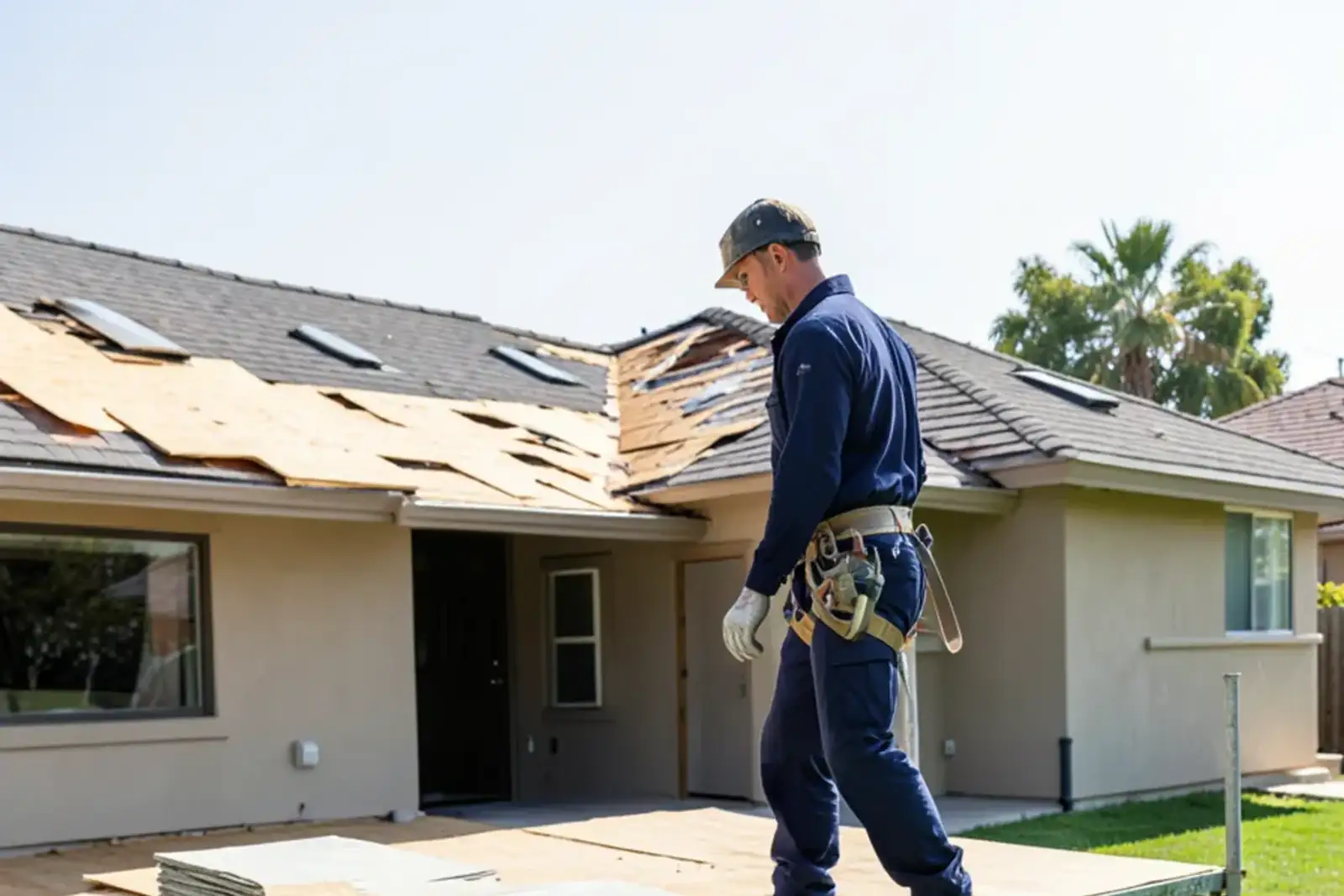
This is the hands-on part, and the part nobody sees from the street. Tile comes off by hand, a few pieces at a time. It gets stacked on a safe platform, lowered to the ground and loaded for haul-off. A single concrete tile is heavy. A whole roof of them is tons, which is why access and disposal take real planning.
Once the tile is off, we see the roof as it actually is. Under the tile there is usually old felt, battens (the strips that hold tile) and a deck. We look for rot, nail pops, split boards and bad flashing. Reviewers in Van Nuys mention that damaged plywood was replaced and explained first, and a customer there describes old tile being switched to asphalt shingle. These are single jobs, not promises.
Older roofing materials may contain asbestos. When a roof shows suspect material, lab testing before removal is the cautious step, and SCAQMD Rule 1403 sets survey and notification rules for certain work.
Permits, cool-roof and fire rules for a conversion
A conversion is a full re-roof, so expect permit paperwork. Within the City of Los Angeles that means LADBS paperwork, and a Re-Roofing Certificate of Compliance (form IN.Form.12) can cover eligible single-family homes. Independent cities set their own process. Your contract should say in writing which party handles the permit.
Cool-roof rules apply when more than half the roof is replaced, and the product must be CRRC-listed. California's code also bars shingles from going over tile, which is why tear-off comes first. Where your address falls in a fire hazard zone, ask what covering is required.
What moves the price of a tile-to-shingle conversion
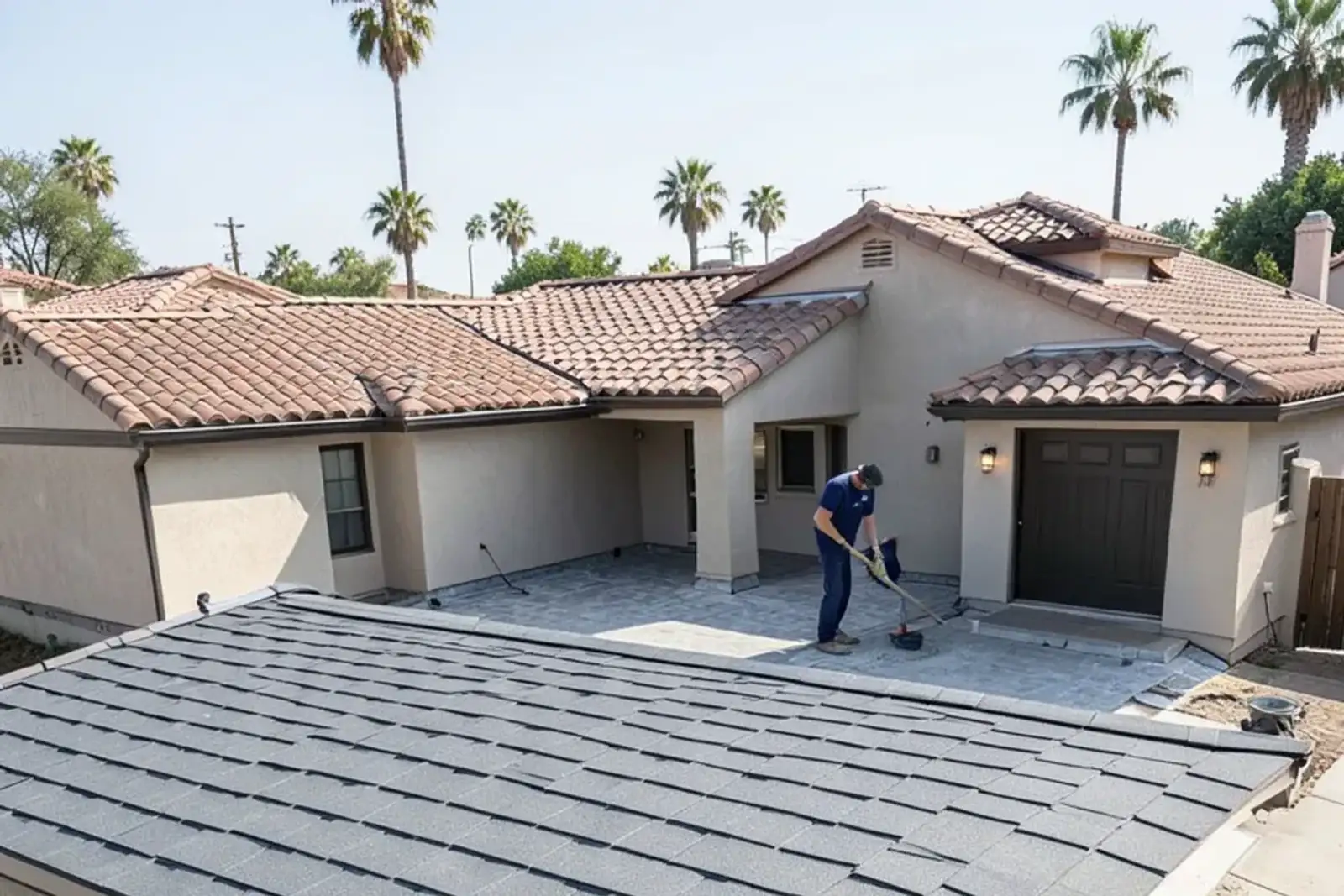
We do not quote prices in a blog, and we will not guess at yours. For scale, Angi's Los Angeles estimate for a standard roof replacement runs roughly $4 to $12 per square foot, averaging about $8.60 (accessed November 2026). These items move the price of a tile conversion:
- Tile removal and haul-off. Weight and access drive the labor.
- Deck condition. Rotted boards add plywood and time.
- Roof size and pitch. Steeper roofs need more safety setup.
- Shingle product. Better products raise the material line.
- Flashing and edge metal. Walls, chimneys and valleys are rebuilt.
Prices arrive in writing after we see the job. Ask any bidder to show tile removal as its own line.
Tile-to-shingle questions from San Fernando homeowners
We cover San Fernando, about 20 minutes and 8 miles from Van Nuys by our estimate. It is an independent city enclosed by Los Angeles, so permits run through its own building division, not LADBS. Census ACS data puts the median home built in 1956, which means many roofs are on their second or third cover. For the full process, read our roof replacement overview and our tile to shingle conversion page.
How do you decide whether to convert your tile roof?
Work through these steps in order:
- Photograph the cracked or slipped tile on every slope and the underlayment where it shows.
- Ask a roofer to price a lift-and-relay and a full conversion on the same scope, in writing.
- Confirm the weight, deck and framing question if you are changing materials.
- Check HOA and historic rules for your address.
- Compare the two totals against how long you plan to stay.
If the relay price gets close to the conversion price, the conversion usually wins. To start, call (209) 563-1278 and we will set the earliest visit we can to look at the tile and the deck beneath it.
Quick answers
Can new shingles be installed right over my old tile roof?
No. California's residential code does not allow a new roof over clay or cement tile, so the tile has to come off first. Removal also lets us inspect the deck, which is often where the real damage sits. Plan for tear-off, deck repair where needed, new underlayment and flashing, then the shingles on top.
How long does it take to remove a tile roof before shingles go on?
Longer than a shingle tear-off of the same size, because tile is heavy and has to be stacked, lowered and hauled. The exact time depends on the roof size, access and how much deck repair turns up. We give a schedule in the written estimate after we see the roof, since a hilly lot or narrow street adds hours.
Will switching tile to shingles hurt my home's value in San Fernando?
It can, depending on the street and buyer. A block of well-kept tile homes may expect tile, while an aging tile roof with a leaking deck is a harder sell than a sound new shingle roof. Ask a local real estate agent about your block, and ask your roofer to explain the trade-offs honestly.