
Roofing Materials
Standing Seam Metal vs Asphalt Shingles in Los Angeles
Standing seam metal usually costs more up front and often lasts longer. Asphalt shingles cost less, install faster and suit most Los Angeles roofs. Either can be a cool-rated roof. The right pick depends on slope, budget, how long you will stay and how the roof looks on your house.
- ★ 4.9 on Google · 69 reviews
- Same-day or next-day bookings
- Based in Van Nuys, CA
Published and updated November 3, 2026 · By the Clear Shield Roofers team, Van Nuys, CA
On this page
- Standing seam vs asphalt shingles at a glance
- How price and ownership time change the answer
- Heat, wind and rules that touch the choice
- What about oil canning, expansion and resale?
- Upkeep, repairs and what happens when something goes wrong
- The installer's view: what we ask before recommending one
- Burbank and hillside homes
- How do you choose between standing seam and shingles for your house?
- Common questions
The choice between standing seam metal and asphalt shingles comes down to a handful of tradeoffs, and no one answer fits every house. Metal is the premium option. Shingles are the mainstream one, and a good shingle roof is a good roof.
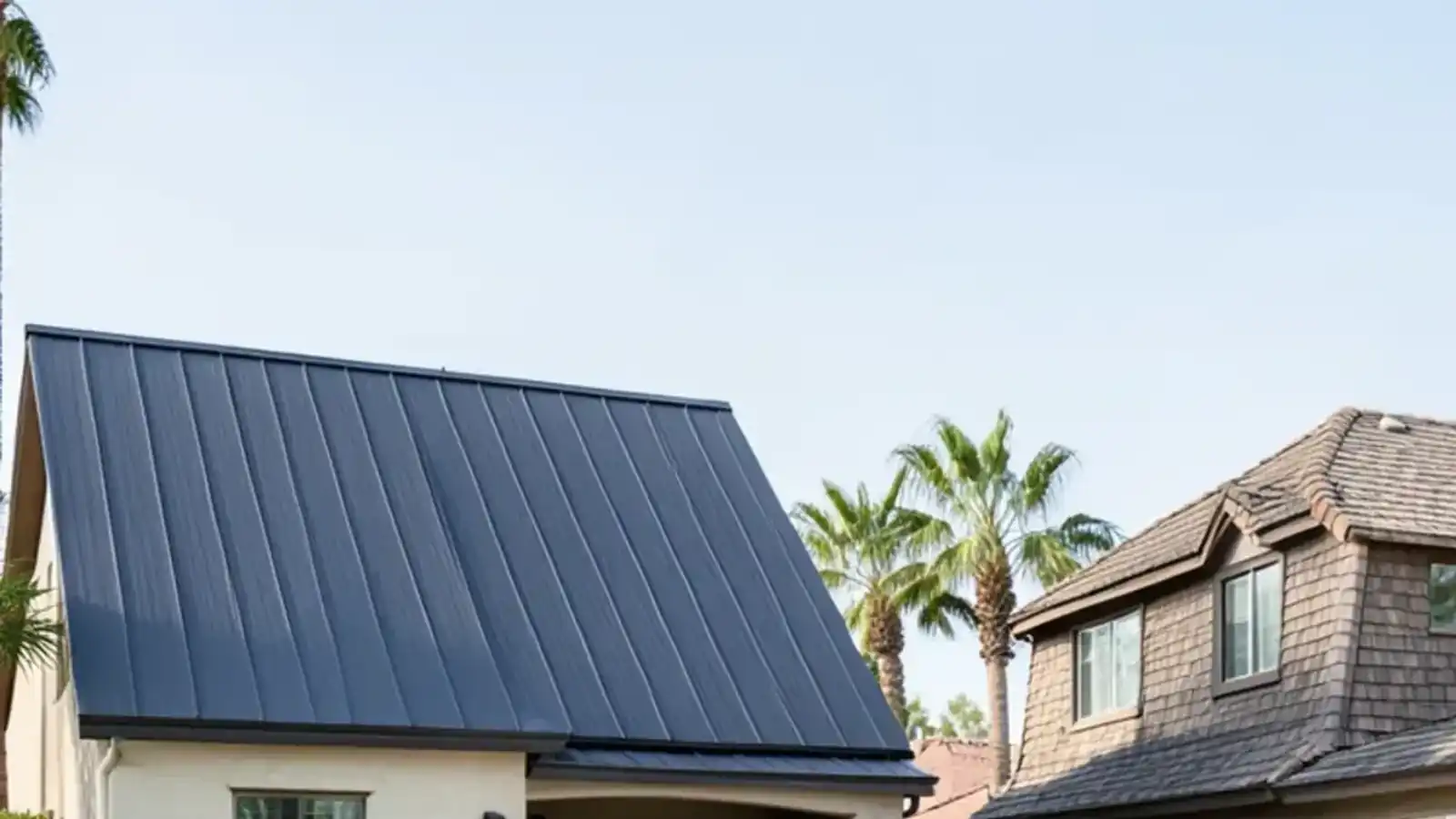
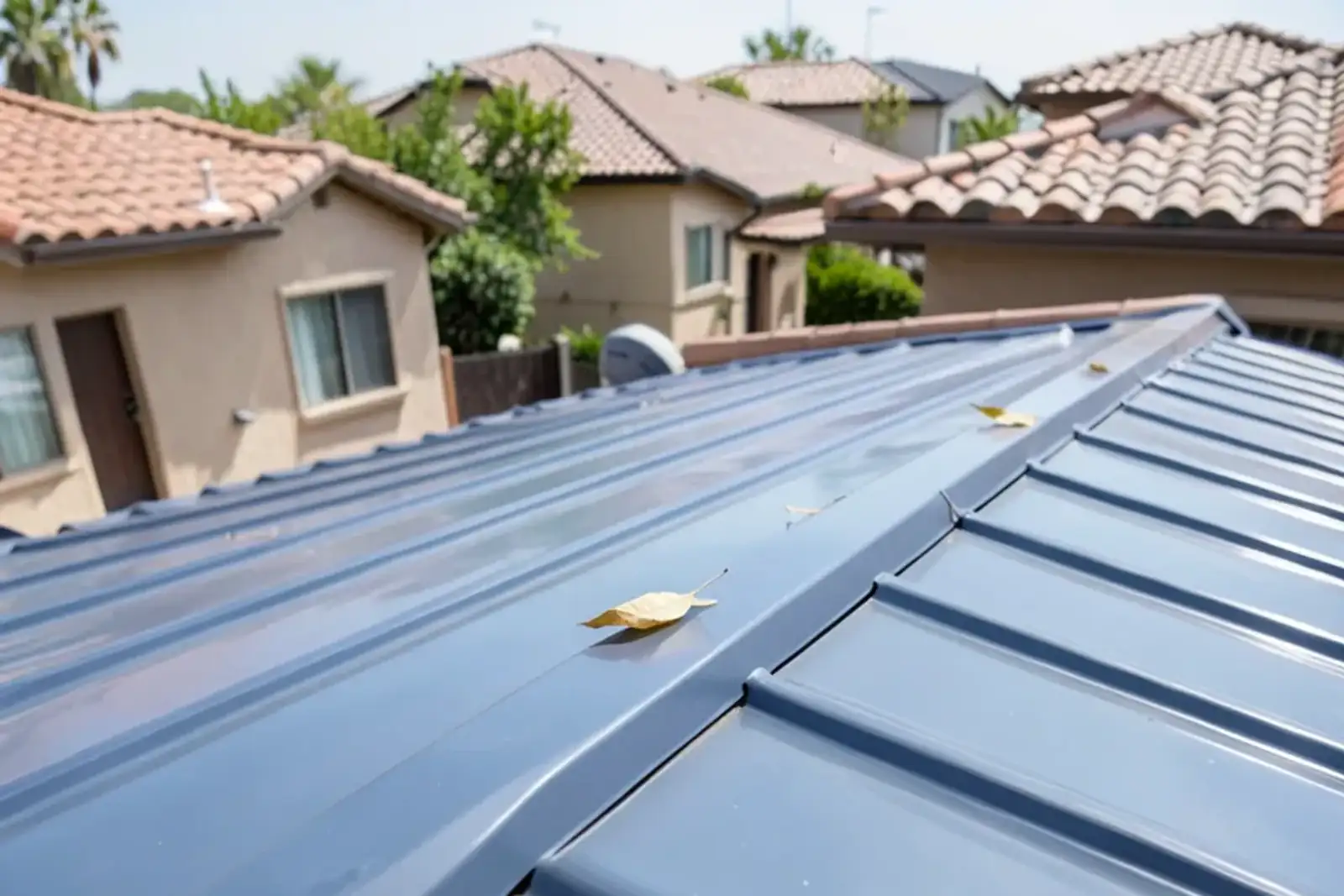
Standing seam is a metal panel system with raised seams that run from eave to ridge, with the fasteners hidden or covered. The seams are what shed water. Our pages on standing seam metal roofing and asphalt shingle roofing go into each, and the roofing materials hub shows the wider field.
Standing seam vs asphalt shingles at a glance
This table compares what homeowners ask about most. Treat lifespans as rough ranges, because the manufacturer's rated life governs.
| Factor | Standing seam metal | Asphalt shingles |
|---|---|---|
| Up-front cost | Generally higher | Generally lower |
| Typical life | Often several decades, sometimes longer | Often 15 to 30 years, varying by product and heat |
| Heat | Reflective finishes help; cool-rated options exist | Cool-rated shingles are available |
| Rain noise | Can be louder without good underlayment and decking | Quieter |
| Repair | Needs a metal-capable crew; panels are hard to patch | Easy to patch, widely understood |
| Look | Clean modern lines | Wide range of colors and profiles |
| Install time | Longer, precise work | Usually faster |
Both can carry a Class A fire rating when the full assembly is listed, which matters on hillsides. Ask for the assembly rating, not just the covering.
How price and ownership time change the answer
Metal costs more because the material is pricier and the install is slower and more precise. Over a long hold, that cost can even out against replacing a shingle roof once. Over a short hold, you may not recover it.
Think in three scenarios:
- Staying 20 years or more: metal's longer life can pay off, and its look may be what you want
- Selling in a few years: shingles usually offer better value for the money
- Keeping rental property: shingles are easier to maintain and repair
We will not put a dollar figure on either here. Angi estimates roof replacement in Los Angeles at roughly $4 to $12 per square foot, averaging about $8.60 (accessed November 2026), and that range covers every material. We put our prices in writing after a look at the roof.
Heat, wind and rules that touch the choice
Los Angeles summers are long, and the Valley is hotter than the coast. Metal sheds heat fast and can be finished in cool-rated colors. Shingles also come in cool-rated products. Roof replacements in Los Angeles covering more than half the roof must use a cool-roof-rated product, and rules depend on slope and climate zone, so either choice needs a CRRC listing.
Slope matters too. Standing seam can work on lower slopes where shingles cannot. Shingles generally want a steeper pitch and sound decking. Santa Ana winds test both, and the edges, ridge and fasteners decide how well each holds.
What about oil canning, expansion and resale?
Three questions come up on almost every metal quote.
Oil canning is a faint waviness that can show in wide, flat metal panels, especially in low sun. It is cosmetic and does not mean the roof leaks, but it is permanent once it shows. Ask about panel width, ribs or striations, and metal thickness, and look at a finished roof in the same finish before you sign.
Expansion is why the panels are clipped, not nailed hard to the deck. Metal grows and shrinks with temperature, and a Valley roof can swing a long way between a cool morning and a 90°F afternoon. The clips let the panel slide, and sloppy clip or trim work is where problems start.
Resale is harder to pin down. Some sources suggest metal helps a sale, but buyers in Los Angeles also expect a roof that suits the house, and a quiet shingle roof in good shape is rarely a mark against it. We would not count on a bump when choosing.
Upkeep, repairs and what happens when something goes wrong
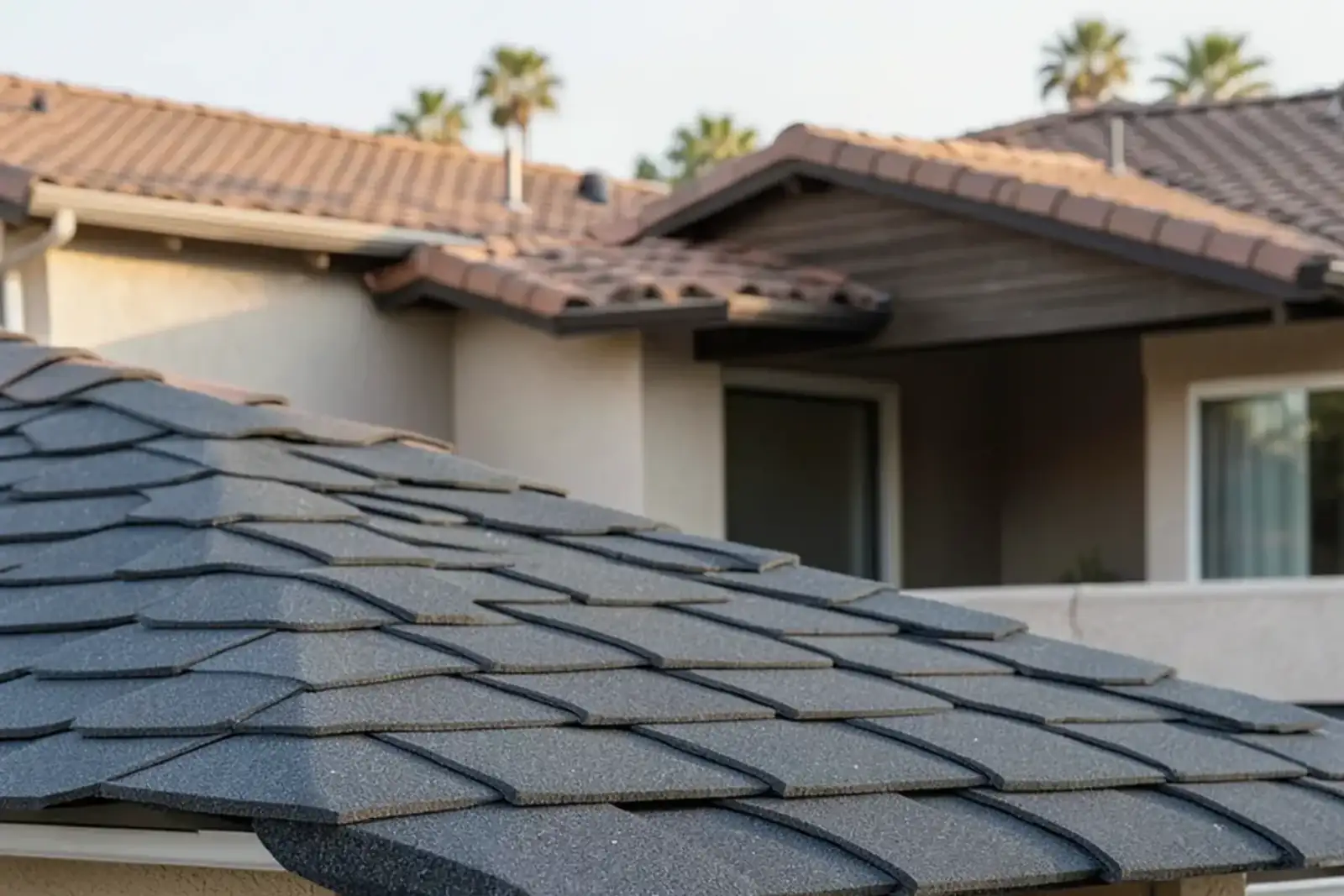
Shingles are easy to repair. A few damaged tabs can be replaced in an afternoon, and nearly any roofer can do it. Matching color is the usual snag on older roofs, since sun fades the original.
Metal needs less routine attention, but repairs need the right crew and parts. A damaged panel may mean replacing a full run from eave to ridge, and sealant at penetrations still needs a look every year or two. Either roof benefits from a yearly check in fall, before the rains, and from clearing debris out of valleys and gutters.
The installer's view: what we ask before recommending one
When a homeowner asks us to compare these two, we start with questions and a look at the roof. How steep is it? What is the decking like? How is the attic ventilated? Is there a chimney, a skylight or a valley that complicates metal? We also ask how long you plan to stay, since that changes the math.
One Van Nuys customer says we helped them understand the pros and cons of standing seam metal and asphalt shingles so they could choose for their home and budget. We approach it that way: no push toward one, just what each does on your roof and what it costs, in writing.
The honest trade-offs from the roof side run both ways. Metal is the better long-term roof on a simple, steep or low-slope shape if you will stay put, but it is unforgiving: it needs a precise crew, and a rushed trim detail shows. Shingles forgive more. They go on faster, patch easily and hide small imperfections, but a heat-baked Valley shingle roof will age out sooner and you will pay for another tear-off. On a complex roof with many valleys, dormers and penetrations, metal costs more per square foot of finished work, and shingles are often the sensible call.
On installation, here is how we would walk through the work:
- Tear-off and deck check. Metal wants flat, sound decking, so damaged boards are replaced first.
- Underlayment. A proper layer goes down, and it matters for sound and leaks.
- Flashing and trim. Edges, valleys and penetrations are flashed to suit the material.
- Panel or shingle install. Panels are cut and clipped, or shingles are laid in courses.
- Ridge and final details. Caps, vents and sealants are completed.
- Cleanup and walkthrough. Nails and scraps get swept, and we show you the result.
Burbank and hillside homes
Hillside and foothill neighborhoods add wind and fire considerations. Some areas call for Class A assemblies, and your address decides it. Burbank runs its own building division, so confirm with them what your address needs. See our Burbank service area page for how we cover it from Van Nuys.
How do you choose between standing seam and shingles for your house?
Run through this checklist before you collect bids:
- Time in the home: more than 15 to 20 years points toward metal, under 10 toward shingles
- Roof shape: simple planes suit metal, and many valleys and penetrations add cost
- Slope: low slopes may rule out shingles
- Look and HOA: check what your association or street will accept
- Noise tolerance: decide how much rain sound you will live with
- Budget: get both options priced on the same scope, in writing
If the answers split, price both and compare the lines side by side. A written estimate that names the decking work, underlayment, flashing and the cool-roof product tells you more than any article can. To talk it through on your roof, call (209) 563-1278 and we will set the earliest visit we can.
Quick answers
Is standing seam metal worth the extra cost over asphalt shingles?
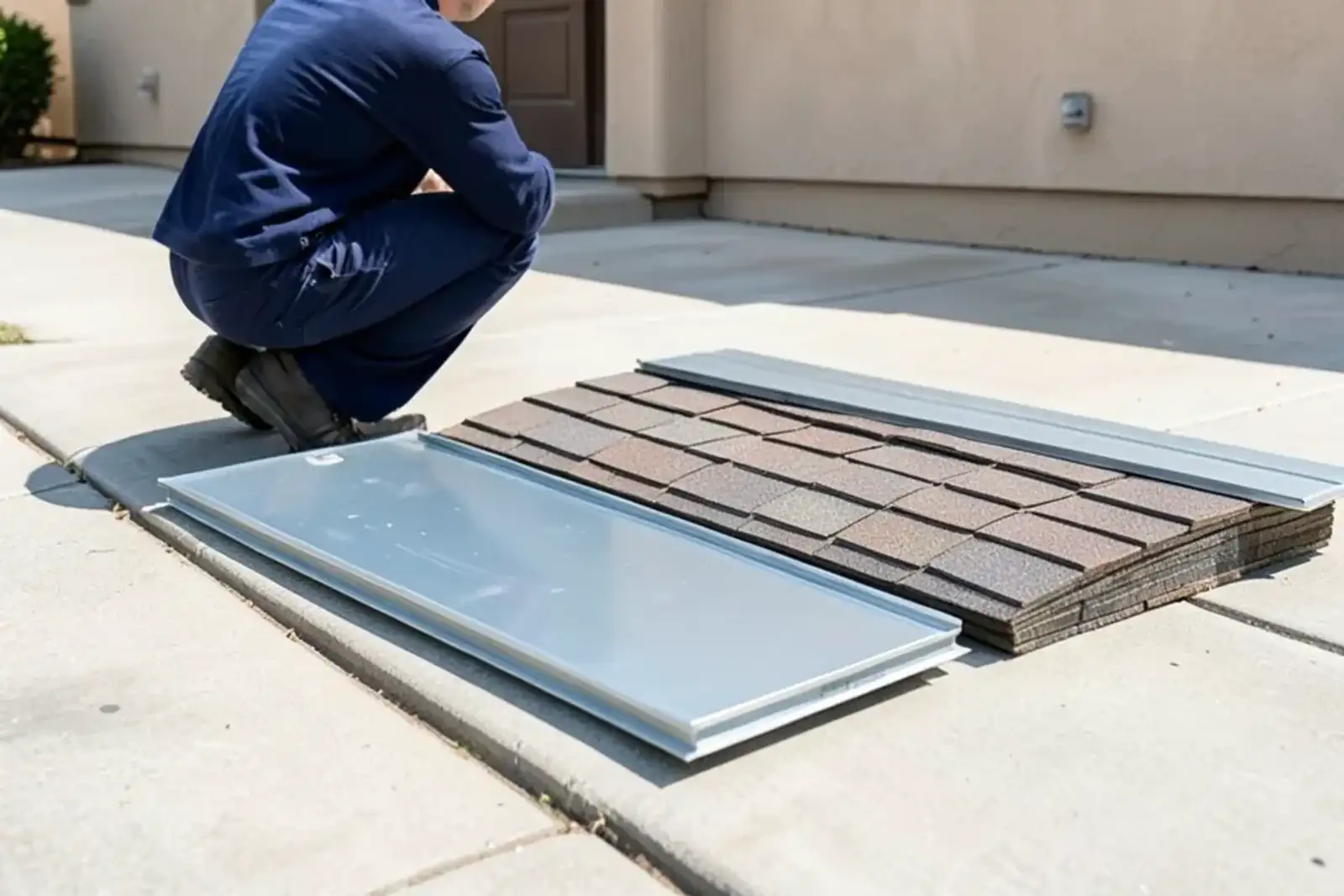
It can be, if you plan to stay in the home a long time, want a long-lived roof or have a roof shape that suits metal. If you may sell within a few years or are working to a tighter budget, shingles often make more sense. Ask for both quoted on the same scope so the comparison is fair.
Is a standing seam metal roof louder in the rain?
It can be, depending on the decking, the underlayment and the attic insulation beneath it. Solid decking with proper underlayment and attic insulation reduces rain noise a lot. Ask your installer how the roof will be built, and listen to the way the roofer describes sound, not only looks, before you decide.
Which handles Santa Ana winds better, metal or shingles?
Both can perform well when installed properly. Shingle edges, ridges and rakes are where wind gets in, and metal panels depend on clips, fasteners and edge trim. Ask about wind ratings in the product literature and about how edges and ridges are fastened. Installation quality tends to matter as much as material.