
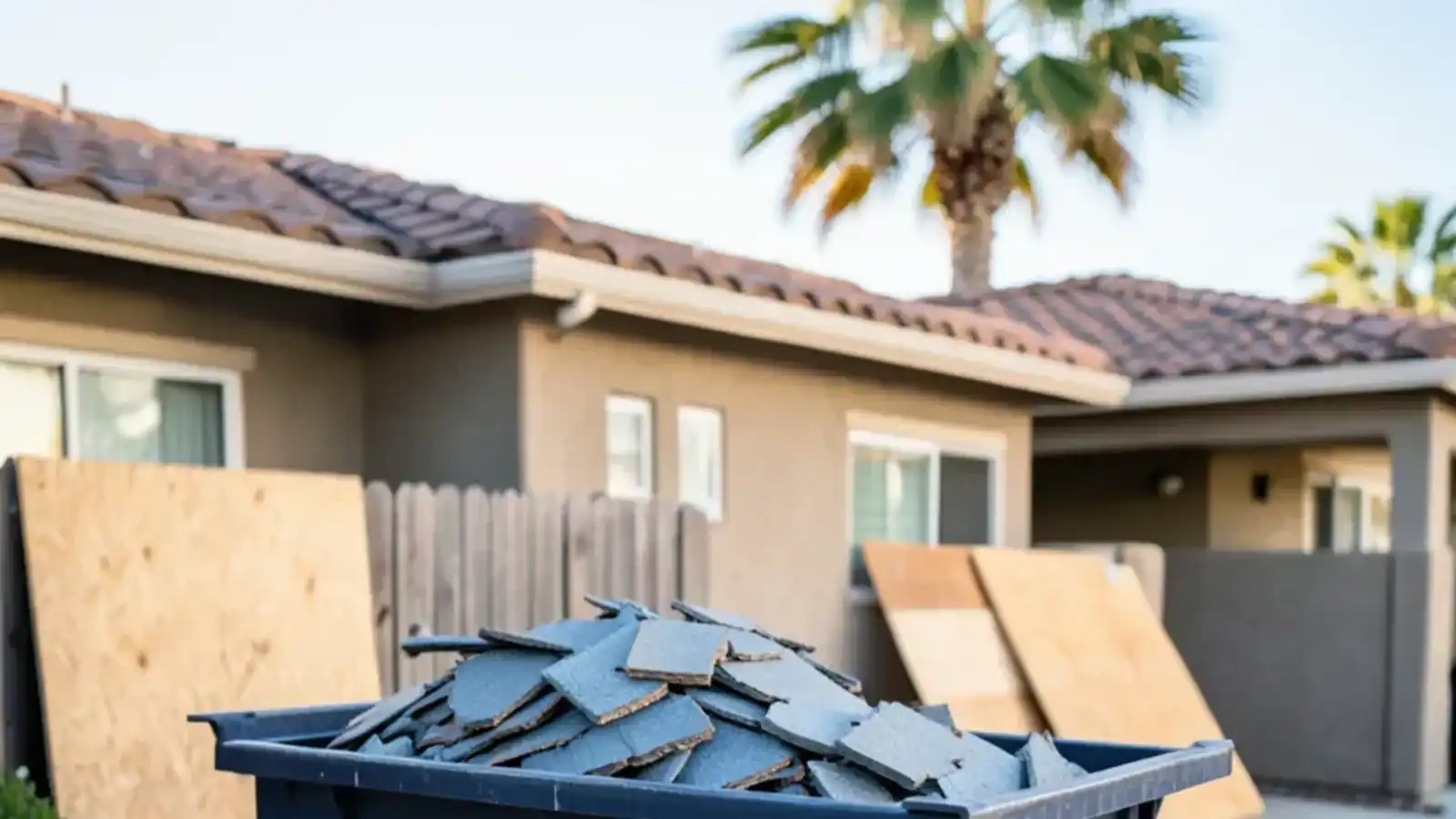
Roof Tear-Off in Los Angeles, CA
A roof tear-off in Los Angeles strips the old roofing down to the deck, so the boards can be inspected and the new roof starts on a clean surface. California's residential code limits how many layers a roof may carry, and that often decides the question. Here is how a tear-off runs and what moves the price.
- ★ 4.9 on Google · 69 reviews
- Same-day or next-day bookings
- Based in Van Nuys, CA
On this page
- When is a roof tear-off needed, and when can an overlay work?
- How a roof tear-off in Los Angeles runs, step by step
- What multiple roof layers and old decking change
- Could an older roof contain asbestos?
- What affects the cost of roof removal and dump fees?
- Permits and rules for removing an old roof in Los Angeles
- Why Clear Shield for roof tear-off in Los Angeles
- Common questions
A tear-off removes every layer of old roofing, down to the plywood or boards underneath. It is the first stage of any full roof replacement in Los Angeles, and it is the stage where hidden problems show up: soft decking, old nail pops, a vent in the wrong place. We plan it around one rule. No part of the house sits open to the weather overnight.
A tear-off in Los Angeles generally includes these lines, each priced on the written estimate:
- Site protection: tarps over plants, air conditioners and walkways, and a placed debris bin
- Removal: shingles, underlayment, old flashing and nails taken down to the deck
- Deck inspection: soft, stained or split boards marked and photographed
- Haul-off: debris loaded and disposed of
- Cleanup: magnetic sweep of the lawn, driveway and beds
When is a roof tear-off needed, and when can an overlay work?
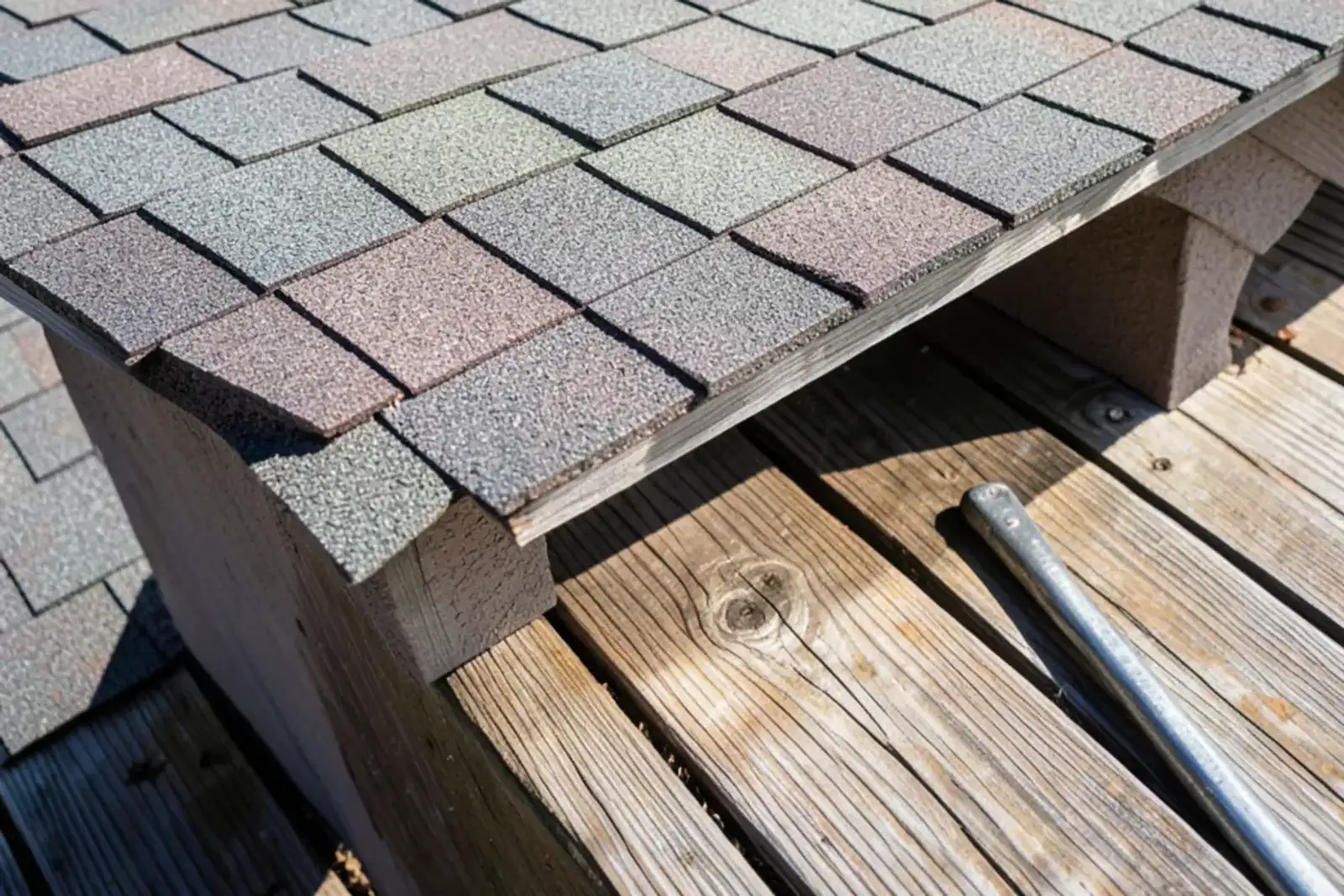
A tear-off is needed when the roof already has two layers, when the covering is deteriorated or wet, or when it is tile. An overlay puts new shingles over one sound layer and is the exception. California's residential code does not allow a new roof over a roof that has two applications, over a water-soaked or deteriorated roof, or over slate, clay or cement tile.
Where an overlay is allowed, we still lean toward stripping. An overlay hides the deck, adds weight and leaves any soft spot to rot under new shingles. Our guide to roof tear-off vs overlay sets out the trade-offs.
| What the old roof shows | What it means for removal |
|---|---|
| One sound layer, solid deck | An overlay may be allowed, though stripping gives a clean deck |
| Two layers of shingles | No overlay; both layers come off, with twice the debris |
| Curling, bare or wet shingles | Removal is required, and the deck below gets checked for moisture |
| Clay or cement tile | Removal is required; see tile to shingle conversion |
How a roof tear-off in Los Angeles runs, step by step
A tear-off follows a fixed order so the house is covered as we go.
- Protect the site. Tarps go over plants, air conditioners and walkways, and the bin goes where it spares the lawn.
- Strip the covering. Flat shovels lift shingles, underlayment and old flashing, working down from the ridge in sections.
- Inspect the deck. We walk the boards, mark soft or stained spots and photograph them. Reviewers mention pictures and measurements before quoting, and drone photos sent during the work.
- Repair the decking. Rotten boards or plywood come out. You hear what we found, and the price, before we replace anything.
- Dry in. Underlayment and edge metal go over the whole opened area the same day.
- Sweep for nails. A magnetic roller covers the lawn, driveway and beds, and we check again before leaving.
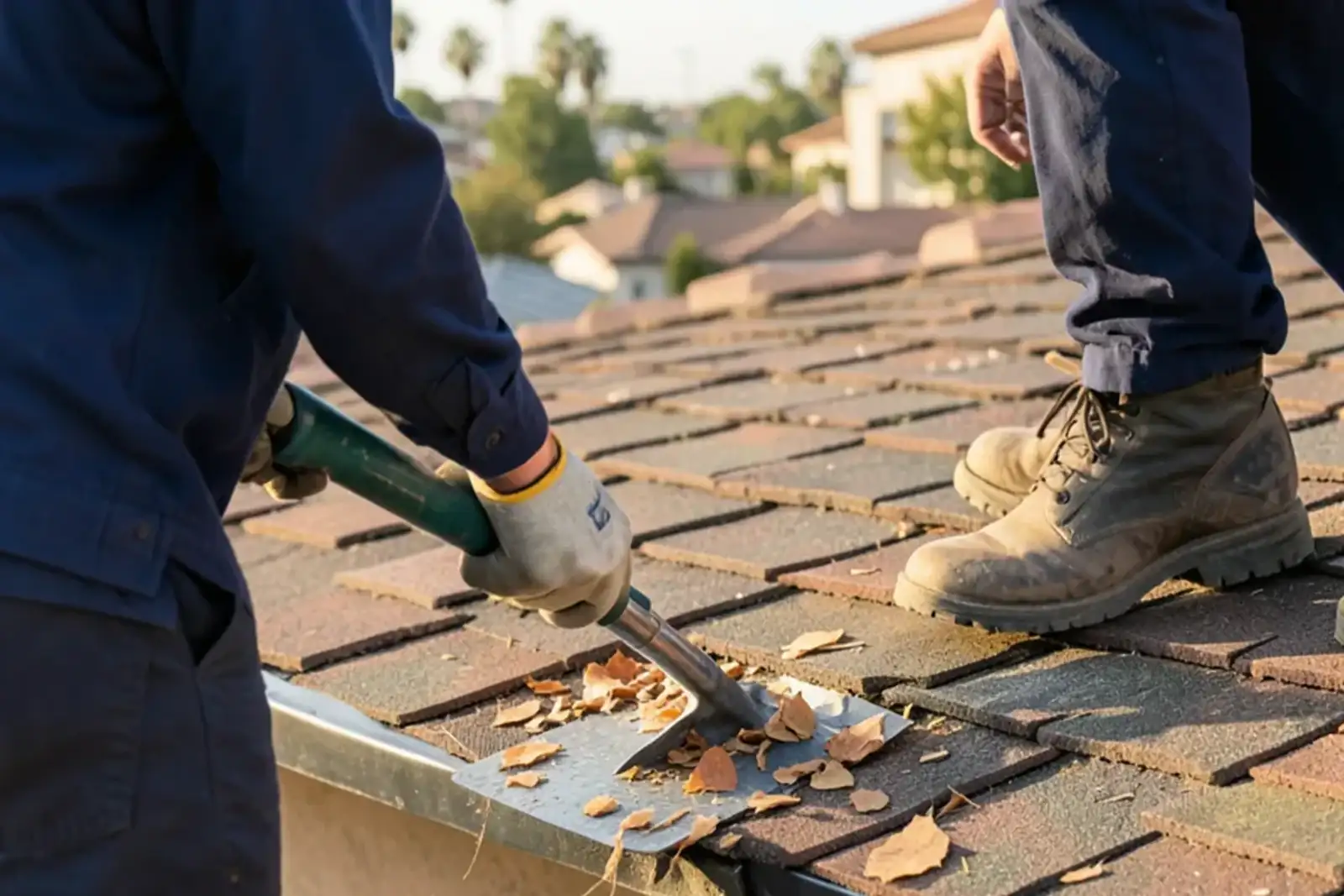
Weather decides how big a section we open. Most of the rain here falls from December through March, and a slope stays closed until the forecast allows it. If a tarp is needed, we plan for it before the first board comes up.
What multiple roof layers and old decking change
Every extra layer adds labor, debris and weight to the job. Two layers of shingles mean double the stripping and double the trips to the bin, and the bottom layer is usually the most brittle. Older homes can add a surprise under both: spaced boards instead of solid plywood, which need a plan before shingles can go back. Our older home roof replacement page covers that case.
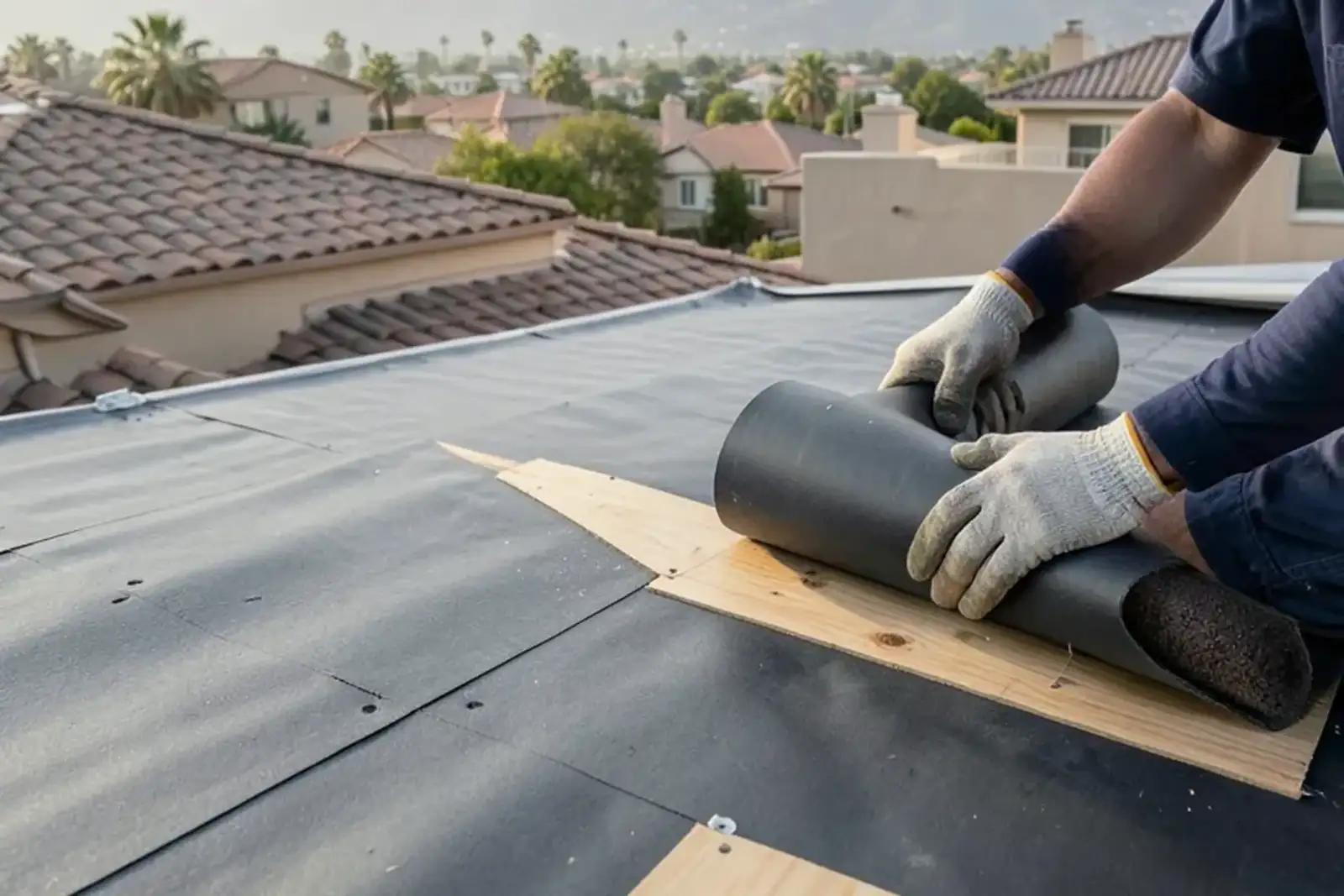
The deck is where a tear-off earns its cost. One reviewer describes plywood being replaced and explained first, and another reviewer lists hidden findings that included a badly placed vent, damaged fascia and a need for bird blocking. We would rather show you a rotten board in a photo than bury it.
Where does the old roofing go?
Tear-off debris is heavy, and shingles, tile and gravel weigh and price differently at the dump. The City of Los Angeles adopted a construction and demolition recycling ordinance in 2010, and hauling rules differ from city to city. Ask who hauls the debris, where it goes and whether disposal sits inside the quote.
Could an older roof contain asbestos?
Some older roofing materials may contain asbestos. Where we see signs of it, we advise sending a sample to an accredited lab before any removal starts. We do not run the test ourselves. In Southern California, SCAQMD Rule 1403 sets survey and notification requirements for regulated asbestos work, so the test result decides how removal is handled.
Most modern asphalt shingle roofs are not a concern. The question matters most on roofs that were installed decades ago and have never been stripped.
What affects the cost of roof removal and dump fees?
Removal cost follows labor and disposal, and both rise with layers, weight and access. Angi's Los Angeles estimate for a full roof replacement runs roughly $4 to $12 per square foot, averaging about $8.60, which works out to about $17,200 for a typical 1,700 sq ft home (accessed November 2026). The tear-off is one line inside that total. Ours comes in writing after we see the roof.
- Layers: each one adds stripping time and haul-off volume
- Material: tile and gravel are far heavier than shingles
- Roof size and pitch: steep slopes need more safety setup and slower work
- Bin access: a tight driveway can mean smaller bins and more trips
- Dump fees: disposal sites charge by weight or volume, and rates vary by facility
- Deck repair: priced separately once the boards are exposed
Permits and rules for removing an old roof in Los Angeles
In the City of Los Angeles, replacing a roof generally calls for a building permit or, for eligible single-family homes, a certificate of compliance from a contractor in the LADBS Certified Licensed Contractor program. Other cities run their own building departments, and unincorporated areas go to the county. Put in the contract who pulls the permit. One reviewer in Van Nuys credits us with taking care of the permit process.
Replacements covering more than half the roof must also use a cool-rated product. Our roof permits page covers the paperwork in more detail. California limits a down payment to $1,000 or 10% of the contract price, whichever is less.
Why Clear Shield for roof tear-off in Los Angeles
Cleanup is where reviewers say the difference shows. One customer describes a second pass with a magnetic roller to catch missed nails, and reviewers mention thorough daily cleanup and a protected yard.
What Van Nuys customers say about tear-offs and cleanup
“I recently had my old shingle roof replaced with a new CertainTeed Pro line roofing system, and I am very happy with the results.”
“We were deciding between a standing seam metal roof and asphalt shingles, and frederick was a great guide who helped us understand the pros and cons so we could make the best choice for our home and budget.”
“They also took care of the permit process, which made everything much easier for me.”
4.9 on Google · 69 reviews as of November 2026. Read all reviews
We work from Van Nuys across the city and nearby. Older single-family stucco homes, like those in Lynwood, and the 1920s to 1940s bungalows of Culver City are the kind of houses that can carry more than one layer. Hillside homes in View Park-Windsor Hills need a plan for bin placement and debris, and in Hidden Hills homeowner association rules may shape material and schedule.
Roof Tear-Off: common questions
When is a full tear-off necessary?
A full tear-off is needed when the roof already has two layers, when the existing covering is worn through or wet, or when it is tile. California's residential code does not allow a new roof over any of those. Even on a single sound layer, stripping to the deck lets us see the boards, so we price it both ways when an overlay is possible.
How do you handle nails and debris after tear-off?
Debris goes into a bin, tarps catch what falls, and a magnetic roller sweeps the lawn, driveway and beds. One Van Nuys customer describes a return visit with a magnetic roller to check the ground again for missed nails. Roofing nails hide in grass and gravel, so we sweep more than once and finish with a hand check around the bin.
How is the house kept dry between tear-off and install?
We strip only as much roof as we can cover the same day, then dry it in with underlayment before moving on. Van Nuys averages about 13 inches of rain a year, mostly December through March, so we watch the forecast before opening a slope. One customer describes a visit on a Sunday morning to fix a small leak after rain during a job.
Can a roof tear-off in Los Angeles be finished in one day?
Often, for a modest single-story roof with one layer. Steeper roofs, two layers, tile or deck repairs take longer. The stripping is the quick part, and the dry-in and board repairs set the pace. We give a schedule in writing after seeing the roof, and rain can move it, since we do not open a slope into a forecast storm.
Do I need to leave the house during a roof tear-off?
Usually not. Expect noise, some vibration and dust shaking loose in the attic, so take framed pictures off exterior walls and cover or move stored items in the attic. Keep pets inside and away from the work zone. If anyone in the house is sensitive to noise, tell us when we book and we will plan the loudest hours with you.
Will a roof tear-off damage my landscaping or pool?
It should not when the site is protected first. We cover plants, air conditioners and walkways with tarps, set the bin where it spares the lawn, and ask you to cover a pool. One customer describes the yard staying protected during their job. Tell us about sprinkler heads, drip lines and delicate beds before the first day.
Areas served for roof tear-off
- Torrance, CALarge 1950s tracts where decades of sun have dried the shingles, so old roofs come off in brittle pieces and the deck needs a careful look.
- El Segundo, CASalt exposure near the coast can corrode old nails and edge metal, and large commercial roofs raise disposal volume.
- Gardena, CAA mix of 1940s to 60s homes and light-industrial roofs, so layer count and disposal planning differ by building.
- Bell, CASmall-lot homes and light-industrial roofs near the river and I-710, where tight access can limit bin placement.
- La Habra Heights, CALarge lots and long driveways need a bin plan, and brush and avocado groves mean extra care protecting the site.
- Fullerton, CAHistoric Spanish-style homes and older tree-lined districts, where a tile or layered roof needs a removal plan.
- Montclair, CAOlder homes around the Montclair Place corridor, where the first job is counting the layers on the roof.
- Bloomington, CAOlder homes beside growing warehouse districts, where tight streets can change how a bin is placed and hauled.
- Lytle Creek, CAA remote canyon community in heavy brush and forest, so hauling distance and brush exposure shape the plan.
- View Park-Windsor Hills, CA
- Hidden Hills, CA
- Culver City, CA
- La Cañada Flintridge, CA
- Kern County, CA
- Val Verde, CA
- Lake Sherwood, CA
- Rolling Hills, CA
- Irwindale, CA
- Bradbury, CA
- City of Industry, CA
Need roof tear-off?
Call and tell us what you are seeing on the roof. We will take it from there.