
Commercial Roofing
Dingbat Apartments and Flat Roofs in Los Angeles
A dingbat apartment roof in Los Angeles is a flat or nearly flat deck over a stucco box, usually with several old layers, little drainage and a lot of rooftop clutter. Owners should plan around ponding, layer build-up, tenant access and permit rules before choosing a system.
- ★ 4.9 on Google · 69 reviews
- Same-day or next-day bookings
- Based in Van Nuys, CA
Published and updated November 3, 2026 · By the Clear Shield Roofers team, Van Nuys, CA
On this page
- What makes a dingbat roof different
- Why apartment flat roofs leak and pond
- How to plan a multi-unit reroof
- How old is a typical dingbat roof, and what does that mean for the deck?
- What moves the price of a flat apartment reroof?
- The hands-on side: what we look at before quoting a flat apartment roof
- What do working roofers say about apartment flat roof trade-offs?
- Cool roof rules, permits and West Hollywood
- Getting an older flat apartment roof assessed
- Common questions
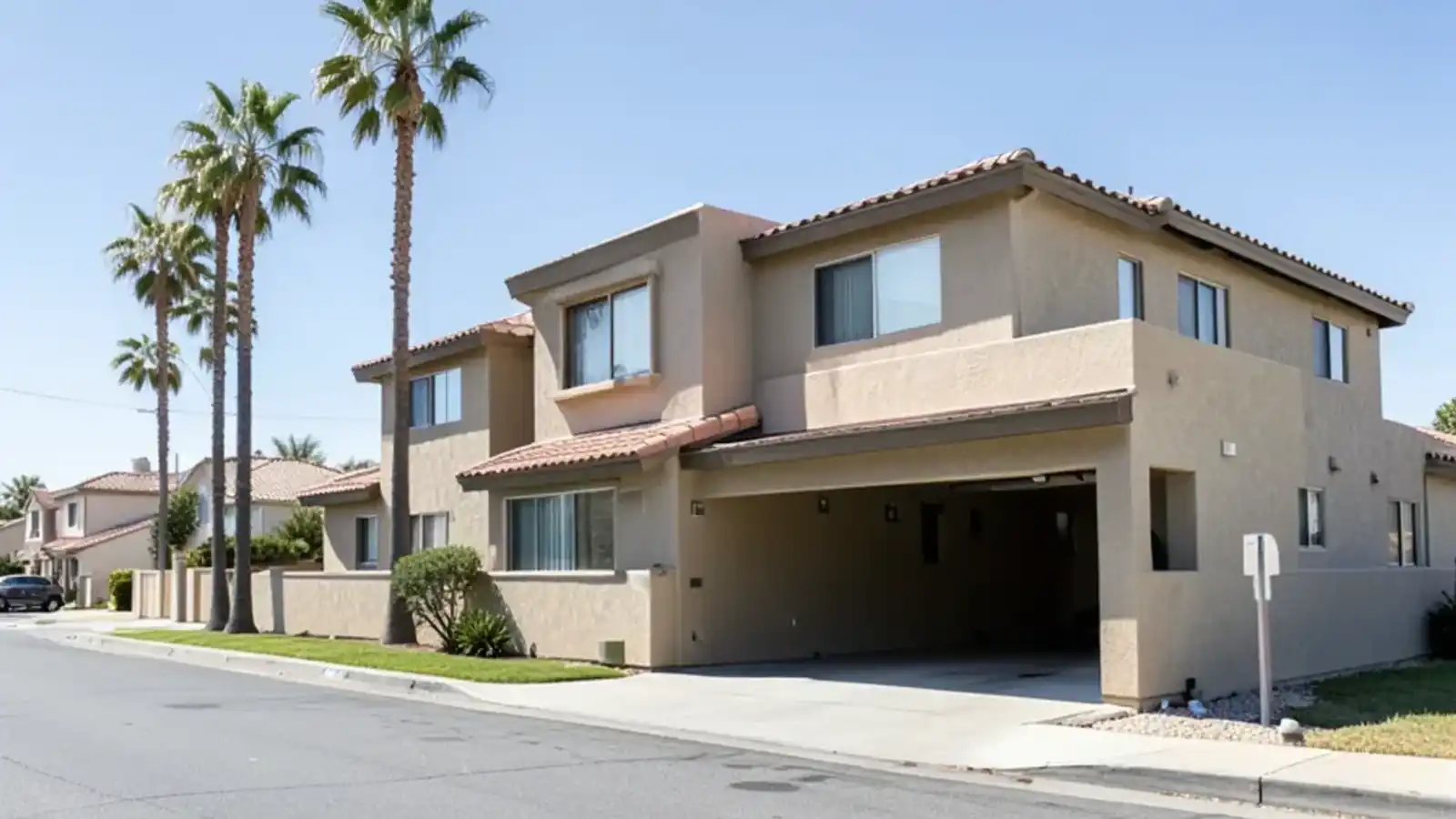
Drive through almost any older Los Angeles neighborhood and you will pass them: two-story stucco apartment buildings with parking tucked underneath and a flat roof overhead. Locals call them dingbats. Their roofs share the same set of problems, and a landlord who understands them can budget a reroof with far fewer surprises.
The short version is that the flat roof on a dingbat building is probably older than you think, probably has more than one layer on it, and almost certainly drains slowly. This guide sits alongside our multi-family roofing service and the wider commercial roofing work we do.
What makes a dingbat roof different
These buildings were put up in large numbers after the war. They are simple boxes, so the roof is a big flat or low-slope plane with a short parapet around it. Water has to travel to a scupper or a few small drains, and any dip in the surface holds it.
Three habits of the building type drive most of the trouble:
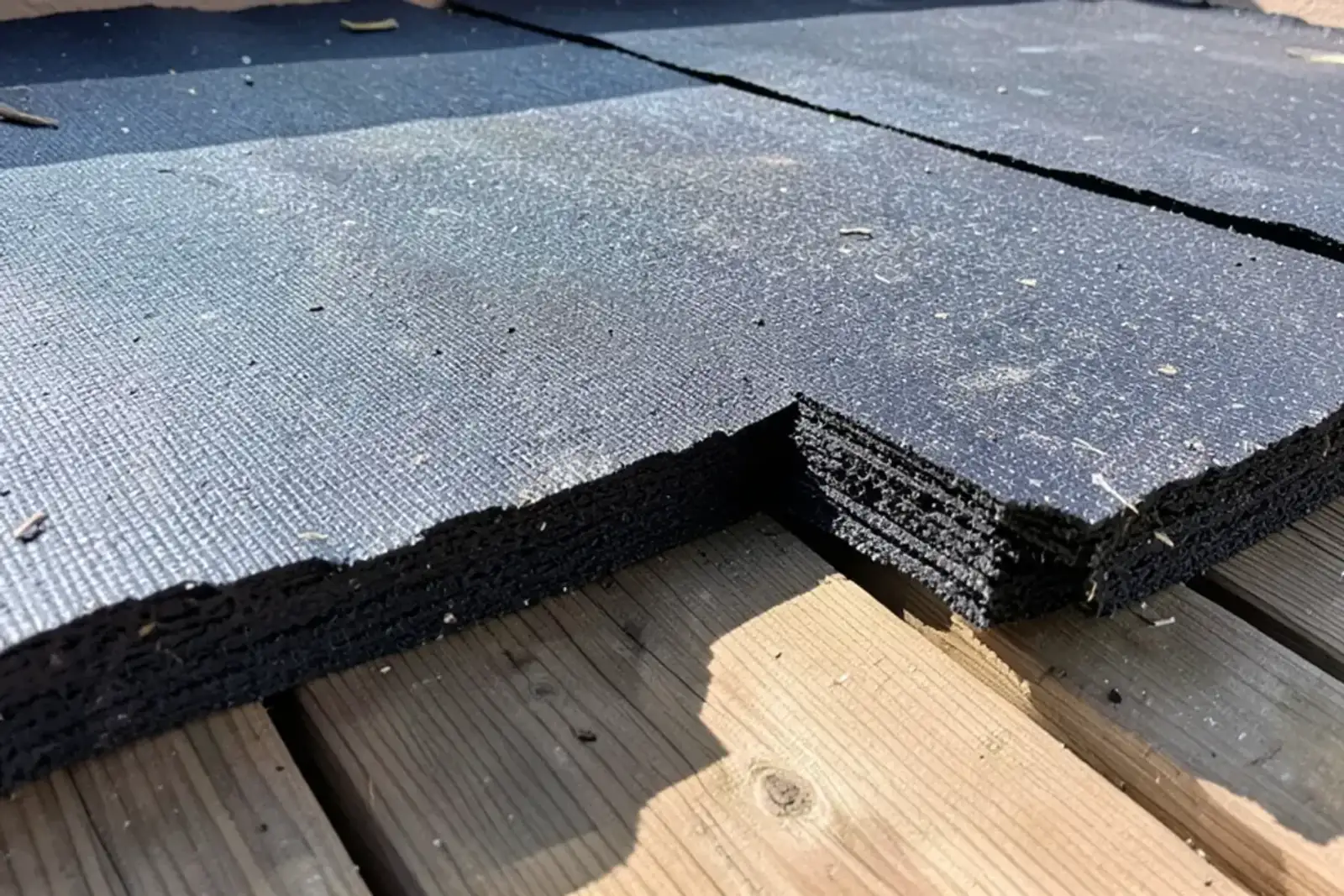
- Layers on layers: flat roofs were often patched and recovered rather than torn off, so the deck can carry several generations of material
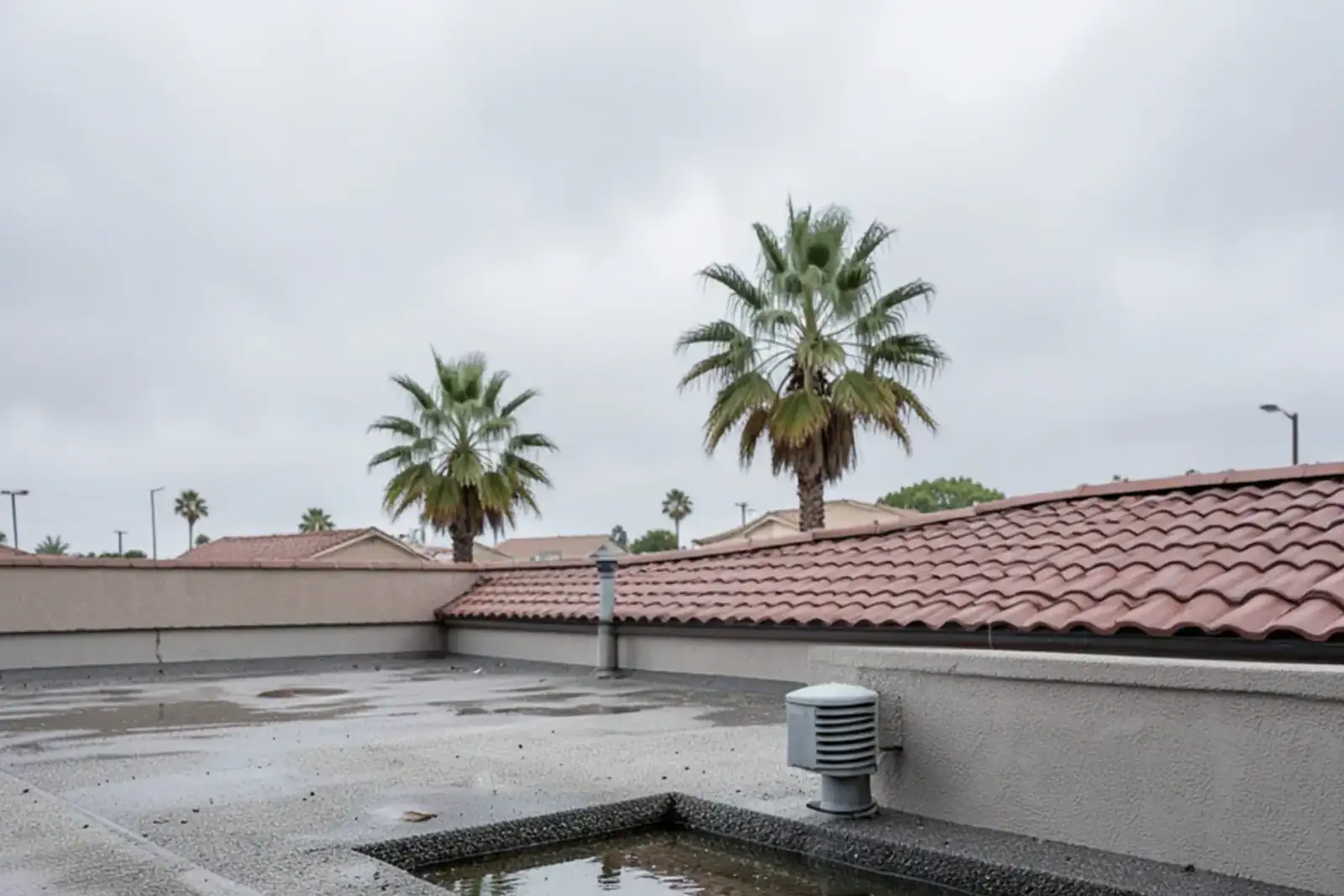
- Thin drainage: a few scuppers do the work of a whole gutter system, and they clog
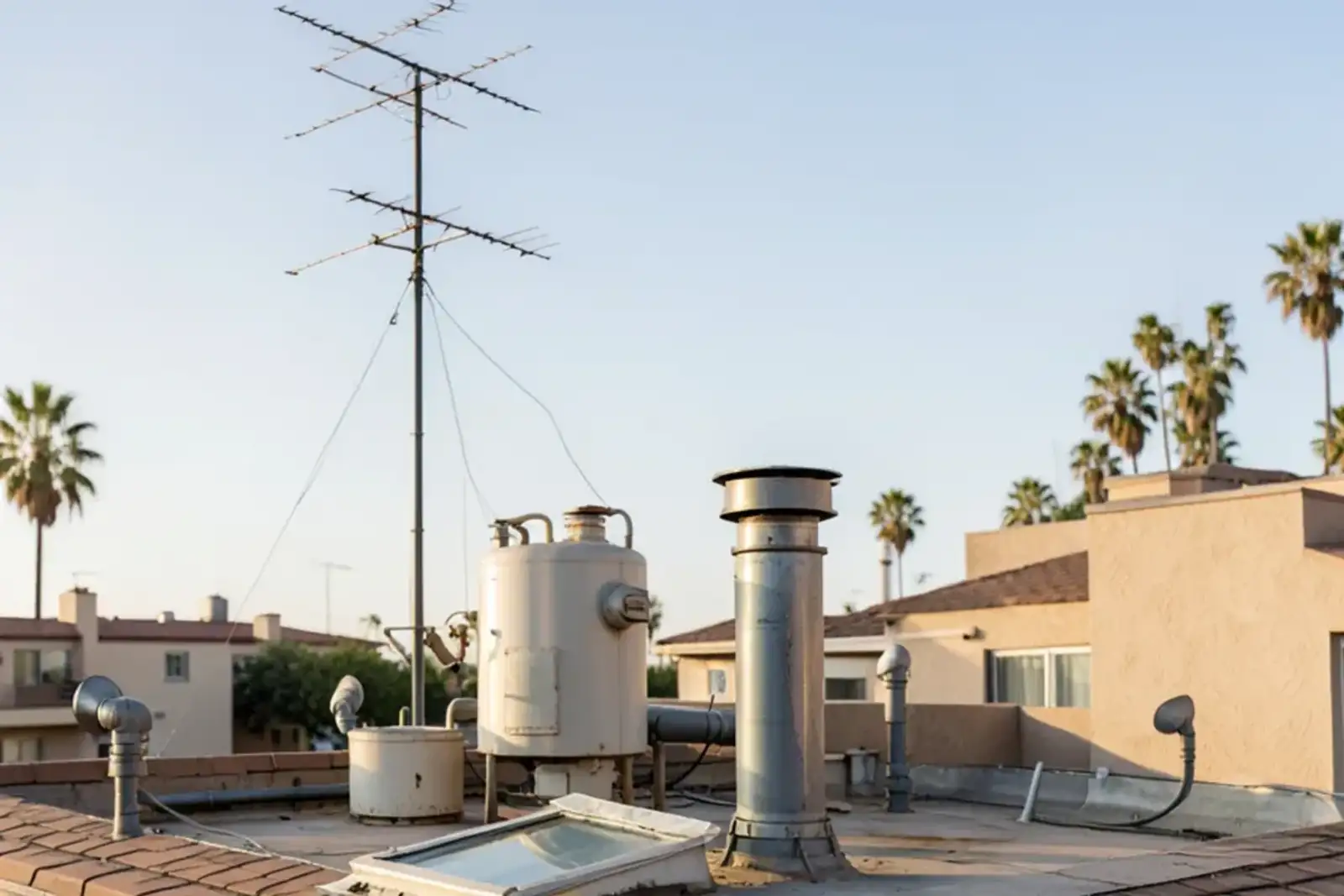
- Rooftop clutter: plumbing vents, water heater flues, old antenna mounts and hatches each add a penetration that must be flashed
Why apartment flat roofs leak and pond
Ponding is water that is still standing 48 hours after rain. On an older apartment roof it comes from a sagging deck, settled insulation or drains set too high. A flat roof is built to shed water, and standing water finds every seam and every weak patch.
Heat does its share as well. A dark roof in an inland summer expands and shrinks daily, which cracks old surfaces and loosens flashing at walls and pipes. Then winter storms arrive and use every opening. Stucco walls make it harder, since water that gets behind the roof flashing can run down the wall cavity and show up as bubbling paint or a stain at a window.
If you manage the building, walk the top-floor units after the first big storm each year. Ceiling stains in the same room two winters running mean the roof is telling you where it hurts.
How to plan a multi-unit reroof
A reroof on an occupied building is a scheduling job as much as a roofing one. These are the decisions an owner should settle before bids come in:
- Check what is up there. Count the layers and look for wet insulation. This sets whether it is a recover, a tear-off or a repair.
- Pick a system. Single-ply sheet, modified bitumen, built-up and a restorative coating all have a place. We would assess the deck and the drainage before recommending one.
- Notify residents. Give a written schedule, parking changes and who to call.
- Confirm who pulls the permit. The contract should name who pulls it and who books the inspection.
- Phase the work. Roofing one section at a time keeps the rest of the building dry.
- Close out. Get photos, a punch list and warranty terms in writing.
Older roofing may contain asbestos. If we see signs of it, we recommend lab testing before any removal. South Coast AQMD Rule 1403 sets survey and notification rules for asbestos work in Southern California.
How old is a typical dingbat roof, and what does that mean for the deck?
Dingbats went up mostly from the 1950s into the early 1970s, as two- or three-story wood-frame boxes with stucco walls and parking at ground level. That puts many roofs well past a half century of life, with decks that have lived through several patch jobs. Bloomberg's design history and other accounts describe a plain, repeated box, which is why one building's roof problems usually match the next one's.
Age matters for what lies under the membrane. Old plank or plywood decking can hold moisture for years, and a soft board near a drain can be the first clue. That is why we look at the deck before we talk about the covering.
What moves the price of a flat apartment reroof?
We price these roofs in writing once we have walked them, and we do not publish a per-square-foot number. These are the lines that move the total:
- Layers to remove: each extra layer adds labor, weight and haul-off
- Wet or damaged insulation and decking: priced by how much turns up
- Drainage changes: new drains, scuppers or tapered insulation to move water
- Penetrations and flashing: each vent, flue and hatch gets its own detail
- Access and phasing: stairs, hoists and whether residents stay in place
- System choice and coating: single-ply, modified bitumen, built-up or roof coating over a sound deck
The hands-on side: what we look at before quoting a flat apartment roof
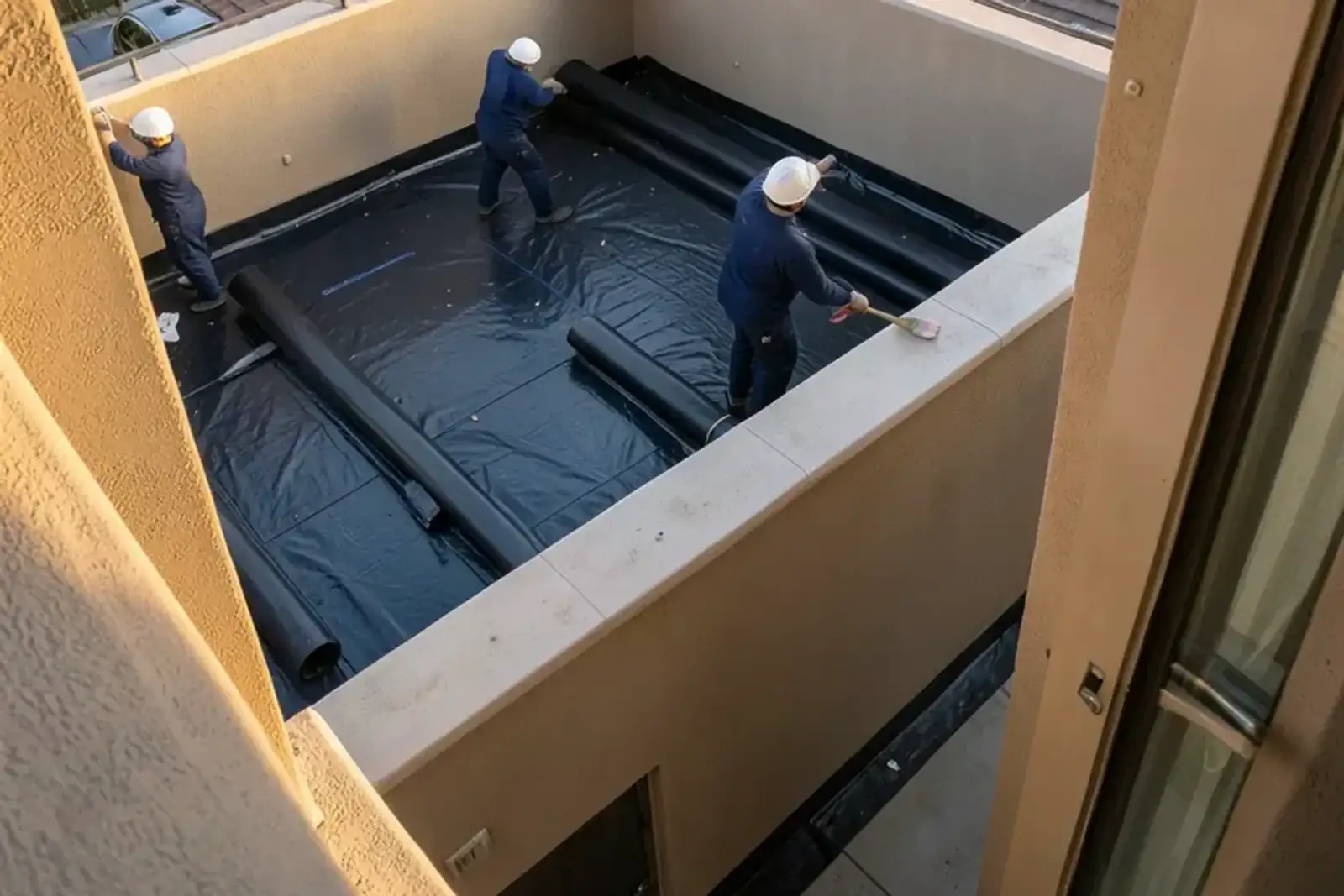
On a building like this, we start on the roof with a moisture check and a plain look at the drains. We walk the surface slowly, feel for soft spots, and tap the parapet cap for hollow sounds. We photograph the penetrations one by one, since a single bad pipe boot can mimic a failing roof.
Then we look underneath. A top-floor unit with an old stain tells us where to cut a test section, and the decking tells us how far the damage runs. If the deck is sound, we describe what a recover could do. If it is wet, we say so and price the tear-off, because covering soaked insulation just locks the water in.
Reviewers in Van Nuys mention pictures and measurements before quoting and clear explanations of the options. We aim for the same on any apartment roof: you see what we saw, in writing.
What do working roofers say about apartment flat roof trade-offs?
Here is the honest version of the choices an owner faces.
Recover or tear off? A recover over a dry, firm roof is cheaper and faster, but it adds weight and hides what sits below. A tear-off costs more and exposes the deck, which is where the surprises, and the fixes, are.
Coat or replace? A coating suits a roof that is dry, bonded and mostly sound. It does not repair wet insulation. We would test for moisture first and price both, as in our FAQ below.
Hot-applied or cold-applied systems? Torch-down is regulated as hot work under the California Fire Code, and permits and fire watch vary by jurisdiction, so many owners of occupied buildings prefer cold-applied or mechanically fastened options. The right one depends on the deck and the building.
Fix the drainage while the roof is open. Spending a little on slope and drains can matter more than the membrane brand, because standing water ages any roof faster.
Cool roof rules, permits and West Hollywood
California's Energy Code and the City of Los Angeles both set cool roof rules for re-roofs. Roof replacements in Los Angeles covering more than half the roof must use a cool-roof-rated product listed with the Cool Roof Rating Council. Requirements depend on slope and climate zone, and low-slope roofs have their own rules, so ask your building department what applies to your address.
Cities run their own building departments. Los Angeles has LADBS, while West Hollywood is a separate city with its own process. If your building is there, see our West Hollywood service area. The mailing address does not always match the city that issues the permit, so confirm it first.
Prices come in writing once we have walked the roof. Cost moves with the number of layers, the system chosen, drainage fixes, access and phasing.
Getting an older flat apartment roof assessed
Tell us how many units, how many stories, and where the stains show up, and we will say what a first visit would cover. To book a look at your building, call (209) 563-1278 and we will set the earliest visit we can.
Quick answers
How long does a flat roof on a dingbat apartment last before it needs replacing?
It depends on the system, the number of layers and how well drainage has been kept up, so there is no single number. Many flat roofs last a couple of decades or more with maintenance, and the manufacturer's rated life governs. A roof with repeated leaks, soft spots underfoot or wet insulation is usually near the end regardless of age.
Do tenants have to move out during a dingbat apartment reroof?
Usually not. Most reroofing happens on the roof and outside the units, but tenants may lose roof access, hear noise and see equipment staged on the ground. Interior work only comes up if water has damaged ceilings or the deck below. A written schedule and notice to residents before work starts keeps the project calm.
Can a landlord just coat an old flat apartment roof instead of replacing it?
Sometimes. A coating can extend a roof that is dry, firm and well bonded, but it will not fix wet insulation or a failing deck. We would inspect for moisture and soft areas first, then price a coating and a replacement side by side so the owner can compare what each one actually solves.
Why do dingbat apartment roofs pond after Los Angeles rain?
Most older dingbat roofs were built nearly flat, with a few small drains or scuppers, so any sag in the deck or settled insulation holds water. Debris in a scupper makes it worse. Standing water that is still there two days after a storm is the sign to have the slope, drains and seams checked, before winter storms arrive.
Who is responsible for the permit when a landlord reroofs a Los Angeles apartment building?
The contract should name who pulls the permit and who books the inspection, so ask each bidder in writing. The issuing agency depends on the building's address, since the City of Los Angeles uses LADBS while cities like West Hollywood run their own departments. Keep the permit and final sign-off paperwork with your building records.