
Commercial Roofing
HOA Roof Replacement: Approvals, Votes and Scheduling
An HOA roof replacement starts with your governing documents, which say who owns the roof, and with the reserve study, which says whether the money is there. Then comes board approval, a vote if your documents require one, bids compared on the same scope and a phased schedule. Here is the order that works.
- ★ 4.9 on Google · 69 reviews
- Same-day or next-day bookings
- Based in Van Nuys, CA
Published and updated November 3, 2026 · By the Clear Shield Roofers team, Van Nuys, CA
On this page
- Start with who owns the roof
- Reserve study, funding and timing
- From board vote to signed contract
- What working roofers tell boards: match, phase or replace everything at once
- How a phased schedule runs on the ground
- Stevenson Ranch: planning for the first full re-roof of a 1990s community
- Permits and rules for community roofs
- Take the HOA roofs from reserve line to bid
- Common questions
Replacing roofs across a community is a governance job first and a roofing job second. A board that settles who owns the roof, how it will be paid for and who must approve it can then ask contractors for bids that are easy to compare.
This guide walks through that order. It is written for board members and managers, and it pairs with our HOA roofing service page and the wider commercial roofing overview.
Start with who owns the roof
Your CC&Rs and bylaws decide who maintains and replaces the roof, not habit and not what the neighboring association does. In condominiums the roof is usually common area. In townhomes and planned developments, documents vary, and some split the roof from the structure below it.
Write the answer down before anything else. Then check three more things in the same documents:
- Spending limits the board may approve without a member vote
- Architectural rules on roof material, color and style
- Notice requirements for work that affects homes
When the wording is unclear, the association's attorney should read it. A bid accepted on the wrong assumption is expensive to unwind.
Reserve study, funding and timing
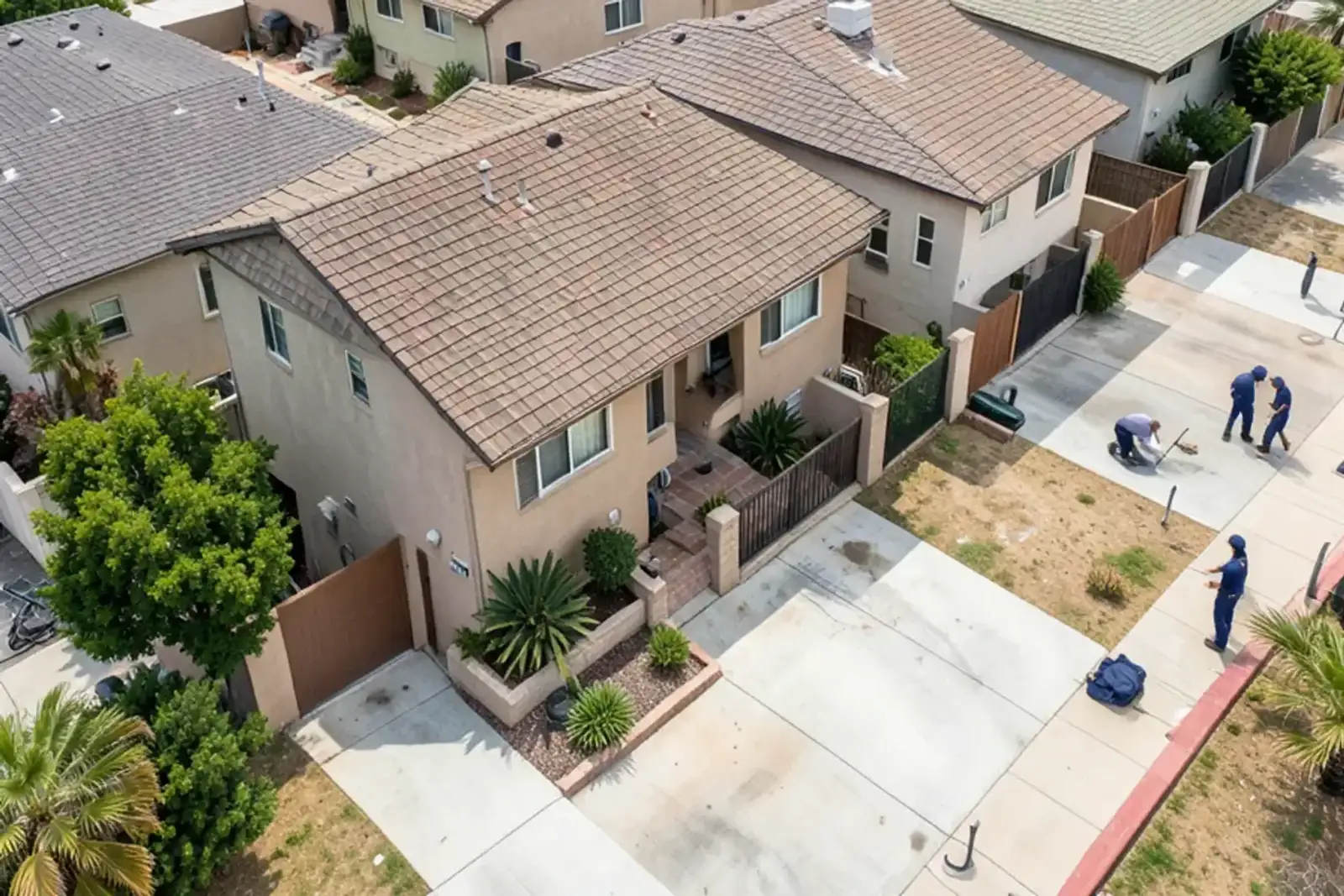
A reserve study estimates when major components wear out and how much money should be set aside. The roof line in that study is a forecast, not a promise. Roofs age by exposure and slope, so one building on a sunny slope can fail years before its neighbor.
Before choosing a year, ask a roofer to look at a sample of buildings and report on real condition. If the study says ten years and the roofs say three, the board needs to know before it is surprised by a leak. If reserves fall short, the usual choices are a special assessment, a loan or phasing the work. Each has its own approval path, so have counsel confirm it.
Material choice belongs in the same conversation. A community usually wants one look, so the board decides whether to match the existing material or change it everywhere. Switching from tile to shingle changes weight, cost and appearance, and may need architectural committee approval. Color fade also matters: new roofs next to old ones will not match until the old ones are gone.
For cost, the only market number we will quote is Angi's, which estimates roof replacement in Los Angeles at roughly $4 to $12 per square foot, accessed November 2026. Community pricing depends on roof size, material, pitch, access and how many buildings are bid together. Our prices come in writing after we see the roofs.
From board vote to signed contract
The steps below fit most associations. Adjust them to your documents.
- Confirm ownership and authority. Governing documents first, attorney if needed.
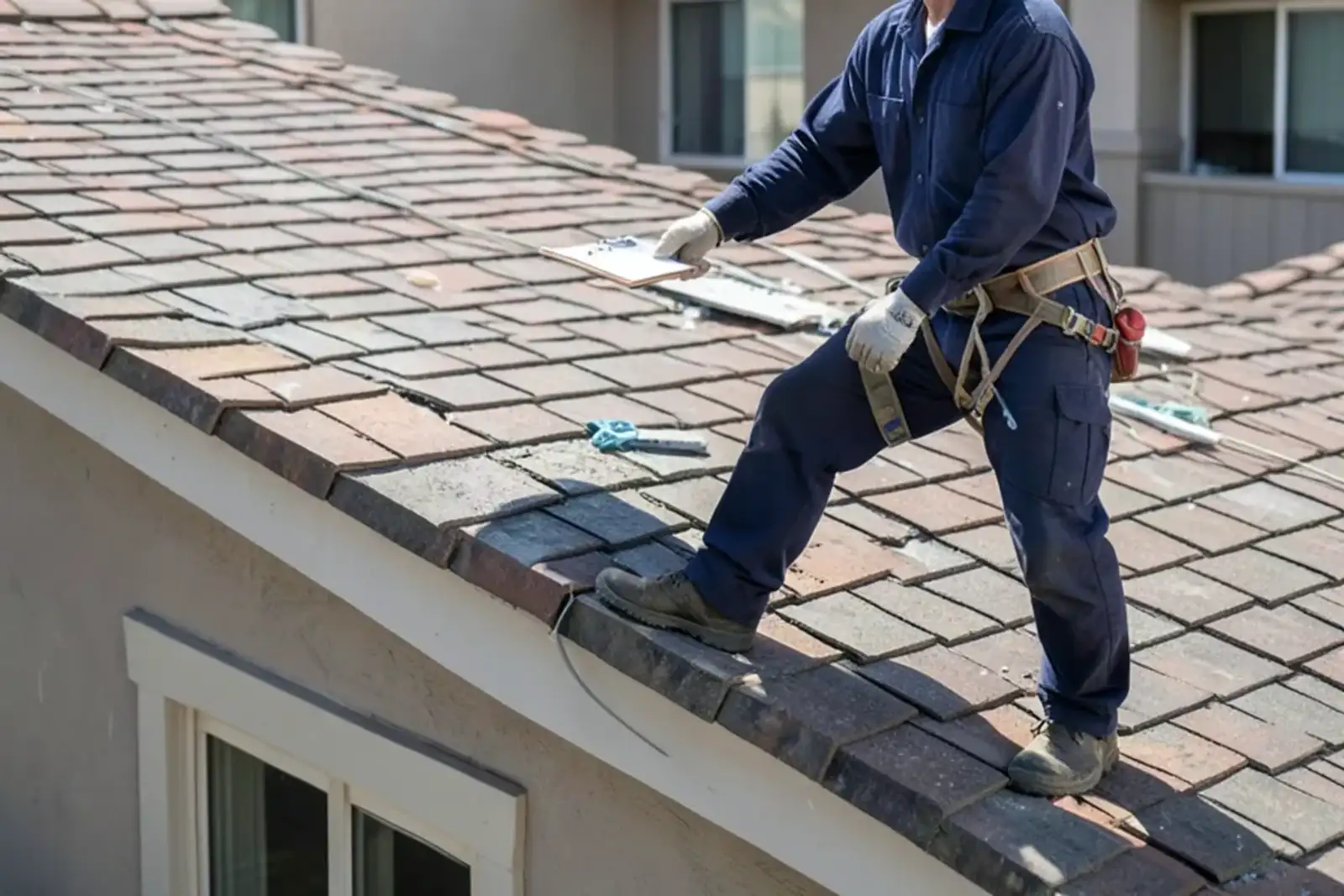
- Survey the roofs. Get a written condition report with photos and measurements.
- Write one scope. Material, underlayment, flashing, decking allowance and cleanup, identical for every bidder.
- Collect three or more bids. Compare scope line by line, not total by total.
- Check the contract terms. Payment schedule, insurance certificates from the contractor, change-order rules and who pulls the permit.
- Notify residents. Give dates, parking changes and a contact person.
A line-by-line comparison catches the bid that is low because it leaves out decking or tear-off. Ask each bidder for the manufacturer's rated life and the warranty terms in writing.
What working roofers tell boards: match, phase or replace everything at once
We are roofers, so here is how the choices look from the roof. None is free of trade-offs.
Phasing one building at a time spreads the cost and lets the board learn from the first job. The catch is that early and late buildings age differently, and prices can shift between phases. Keep the same written specification for every phase and record each one.
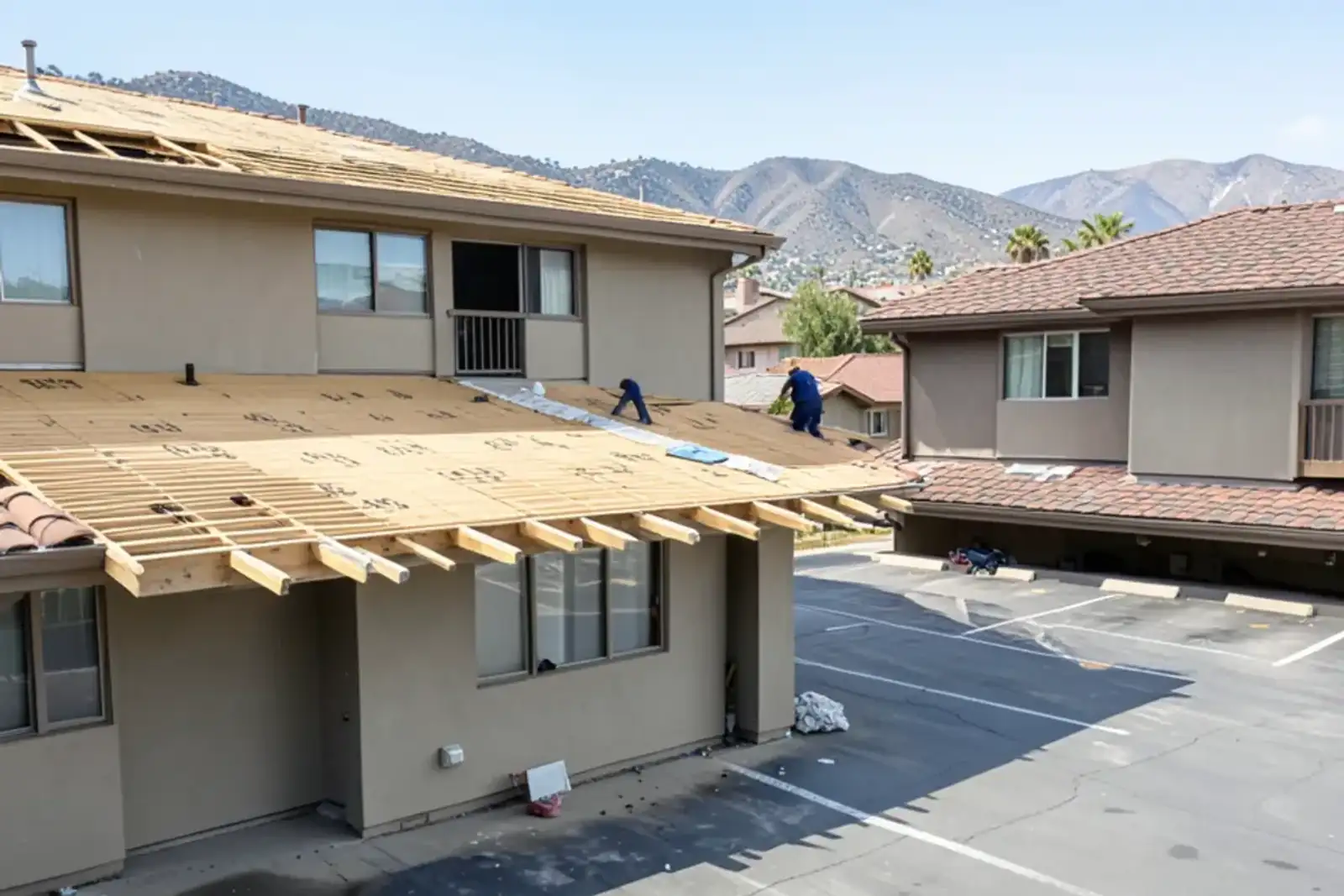
Doing every building at once locks in one price and finishes the disruption in one season. It also asks for the most cash and the most coordination, and a wet winter can strain a large stripped area. Weather is why crews close in each section at the end of the day.
Matching the existing material keeps the look and the approval simple. Changing it, for example from tile to shingle, can cut weight and cost, but it needs architectural approval and a decision about whether every building changes. Our guide to switching tile to shingles covers that question.
Last, ask for a deck allowance in the bid. Hidden rot shows up once the old roof comes off, and a line that says how replaced decking is priced prevents a dispute. One Van Nuys reviewer describes plywood being replaced and explained first, which is the kind of conversation a board should expect.
How a phased schedule runs on the ground
Phasing is where roofing meets neighbors. A crew works one building at a time, so a resident sees a few days of noise, a dumpster and a roof that goes from old to new. The board's job is to keep that predictable.
Here is how we would approach a community. We would walk the property first and number the buildings. We would photograph each roof and flag shared problems, such as the same failing vent detail on every building. Then we would propose a sequence that starts with the worst roofs, so the leaks stop first, and groups buildings that share a driveway so access is easy.
Reviewers in Van Nuys mention a townhome roof and gutters done in one day, daily cleanup, a second pass with a magnetic roller for missed nails and drone photos sent during work. Those are one customer's jobs in Van Nuys, not a promise for your property, but they show what a board can reasonably ask a contractor to describe.
Stevenson Ranch: planning for the first full re-roof of a 1990s community
Stevenson Ranch grew from a master plan approved by the Los Angeles County Board of Supervisors in 1985, and Census ACS puts the median home at 1999. Roofs original to that era are now around a quarter century old, an age at which a board should get a real condition report rather than rely on the reserve study alone. Rated life varies by material, and the manufacturer's figure governs.
The community runs along Pico Canyon Road, Poe Parkway and Hemingway Avenue, with Westridge to the north and open space, about 1,000 acres of parks and recreation land, close by. Trees and brush near roofs mean debris in valleys and gutters, and slopes make staging and dumpster placement a planning item. It is about 20 miles and 35 minutes from Van Nuys by our estimate, so we would schedule walks and phases around your calendar, not promise a quick turnaround.
Permits and rules for community roofs
Rules depend on who runs building permits where you live. Cities have their own building departments. Unincorporated areas fall under the county, and Stevenson Ranch, a master-planned community in the Santa Susana foothills, is unincorporated, so LA County Public Works handles permits there. See our Stevenson Ranch service area for how we cover it from Van Nuys.
In Los Angeles, replacing more than half a roof means choosing a cool-rated product, and the details change with slope and climate zone. The California Energy Commission has a lookup that finds your zone from the address. The contract should name who pulls the permit and who books the inspection, and the California Department of Insurance advises holding final payment until the building department signs off.
Take the HOA roofs from reserve line to bid
Ready to start? Call (209) 563-1278, tell us how many buildings and what the roofs are made of, and we will set the earliest visit we can to walk a sample.
Quick answers
Does an HOA need a homeowner vote to replace the roofs?
It depends on your governing documents and the size of the expense. Many boards can approve a reserve-funded replacement on their own, while a special assessment or a change to the roof's look may need member approval. Read your CC&Rs and bylaws, and have the association's attorney confirm the notice and voting steps before bids are accepted.
Who is responsible for a townhome roof, the owner or the HOA?
The governing documents decide. In many associations the roof is common area and the HOA maintains it, but some documents leave townhome roofs to the owner or split the duty. Do not assume. Check the CC&Rs, ask for any past board resolutions and, if the wording is unclear, ask the association's attorney to read it.
Can an HOA replace roofs one building at a time?
Yes, and many do. Phasing spreads the cost over several seasons, keeps crews working in small areas and lets the board learn from the first building. The tradeoff is that early buildings age differently from late ones, so keep the same specification and record each phase in the reserve study.
Should an HOA board hire a roof consultant before collecting bids?
It can help on a large community, because an independent consultant writes one scope that every bidder prices. The trade-off is an added cost and time. For a few buildings, a written condition report from a roofer with photos and measurements, plus a single scope sheet, often does the same job. Ask your attorney or manager what your documents require.
What should a Stevenson Ranch HOA know about permits for a community re-roof?
Stevenson Ranch is unincorporated, so roof permits generally go through LA County Public Works rather than a city building department. The contract should name who pulls the permit and who books the inspection, and the California Department of Insurance advises holding final payment until the building department signs off. Confirm current requirements with the county before the bid scope is final.