
Roof Repair
Leak Near a Window? It May Not Be the Roof
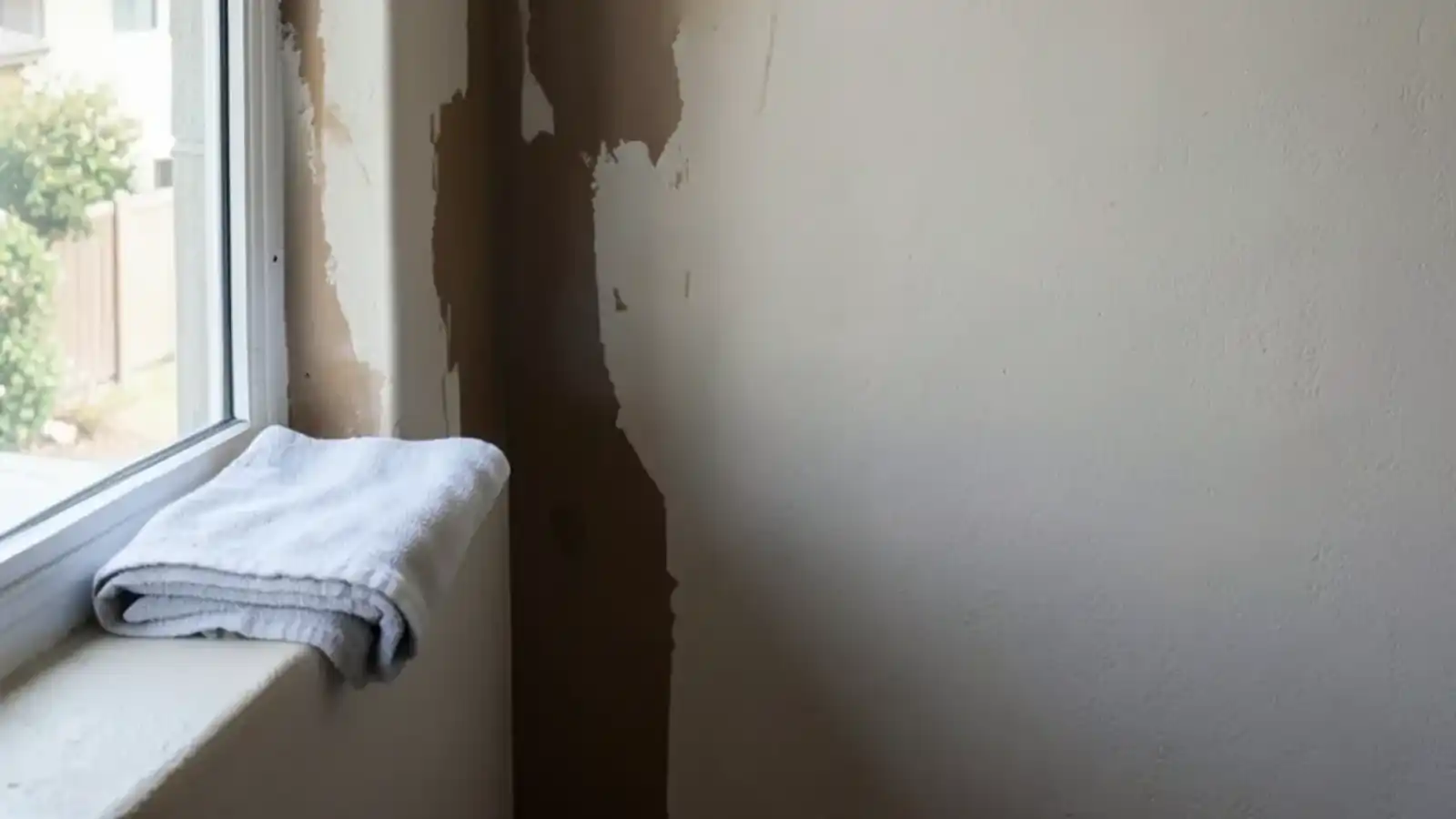
Water around a window often comes from the wall, not the roof. The source can be the window frame, cracked stucco, the flashing where a roof meets the wall above, or the roof covering itself. The way to tell is to test one area at a time, starting low and working up.
- ★ 4.9 on Google · 69 reviews
- Same-day or next-day bookings
- Based in Van Nuys, CA
Published and updated November 3, 2026 · By the Clear Shield Roofers team, Van Nuys, CA
On this page
- Where a leak around a window really starts
- Clues that point to the roof and clues that point to the wall
- How we trace a window leak step by step
- The roof-to-wall joint is the one that fools people
- Leaks that look like a window leak but are not
- What working roofers know about window leaks, and where the tests fall short
- What to do and record while you wait for the visit
- What a roof repair will not fix
- Getting the source of a window leak traced
- Common questions
When water shows up around a window, the roof is a suspect but not always the culprit. A leak around a window from the roof usually comes through a joint above the window, where a roof edge, a wall and a bit of metal meet. Many others start in the wall itself. Fix the wrong one and the stain will be back by the next storm.
Our roof leak repair work begins with the same question: where does the water get in, not where does it land. Window leaks are a clear case of that gap.
Where a leak around a window really starts
Water has six usual entry points near a window. Only some of them are roof problems:
- The window frame: worn sealant, a bad corner joint or a cracked sill
- Stucco or siding: hairline cracks and gaps that let rain behind the wall
- Roof-to-wall flashing: the metal where a roof edge meets a wall above the window
- The roof covering: a lifted shingle, cracked tile or failed boot upslope
- Gutters: overflow that sheets down the wall during heavy rain
- Condensation: warm indoor air hitting a cold frame, which wets the sill without any leak
Clues that point to the roof and clues that point to the wall
Where the stain starts and when it appears tell you a lot before anyone touches the house.
| What you notice | More likely source |
|---|---|
| Stain begins above the window and runs down | Roof-to-wall flashing or the roof covering |
| Water only after wind-driven rain | Window frame, stucco or siding |
| Wet sill after cool mornings, dry in the afternoon | Condensation |
| Stain at the top corner of the frame | Flashing above the window head |
| Leak appears during an overflowing gutter | Gutter and downspout |
| Several windows on one wall leak | Wall-wide issue or a long flashing line |
How we trace a window leak step by step
A hose test is the cleanest way to separate roof from wall. It only works if you wet one area at a time and wait. One Van Nuys review mentions water leaks traced around a window, and another describes a full water test after a leak repair to confirm everything stayed dry. This is the order we follow:
- Ask what happened. When did it show, in what weather, and what has been tried?
- Look inside first. We check the wall, the sill and the attic if the window is on an upper floor.
- Walk the outside. We look at the frame sealant, stucco, flashing and roof edge above, with photos.
- Hose from the bottom up. We wet the sill area first, then the frame, then the wall, then the flashing, then the roof covering, with a pause between each.
- Stop at the first leak. The first area that lets water in is the entry point. Anything above it stays dry until we confirm it.
- Repeat the test after the repair to confirm it holds.
Do not run a pressure washer at the window. Forced water goes where rain never would and proves nothing.
The roof-to-wall joint is the one that fools people
Where a sloped roof ends against a taller wall, step flashing should overlap each course of roofing and tuck behind the stucco or siding. A kick-out piece at the bottom sends water into the gutter and away from the wall. If that piece is missing or the metal has lifted, water runs behind the wall surface and shows up around whatever window sits below.
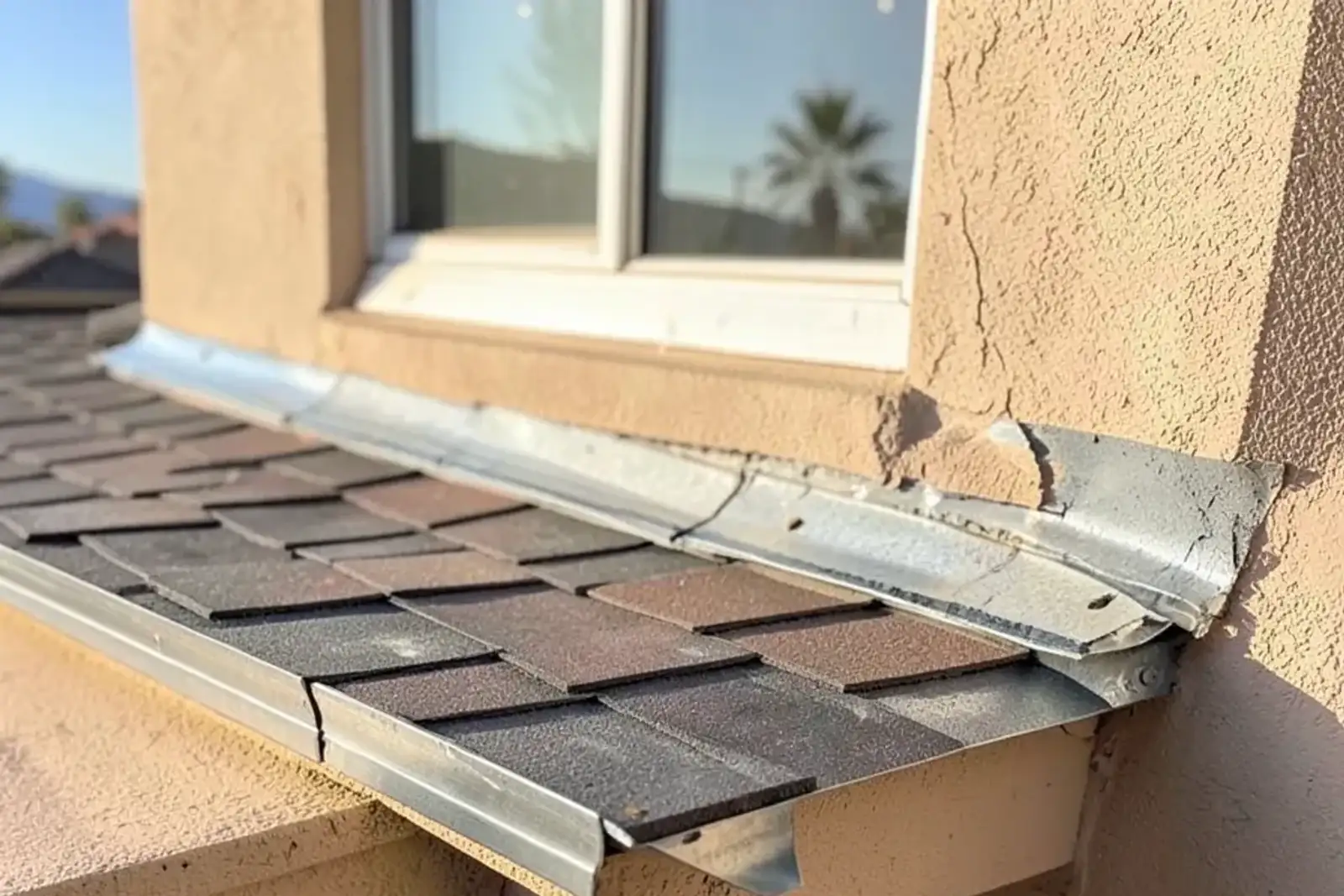
Sealant alone does not fix this. Caulk over bad metal buys a season at best. Our roof flashing repair work replaces failed metal and sets it behind the wall covering in the right order. Los Angeles averages roughly 14 inches of rain a year downtown by NOAA's 1991-2020 normals, mostly December through March, so a weak joint can wait months before it is tested.
Leaks that look like a window leak but are not
Not every stain beside a window involves rain. An upper-floor supply line, a shower pan or an air conditioner drain can wet framing, and the water can travel sideways before it shows. A stain that grows in dry weather, after a shower or when the air conditioner runs is a plumbing question. A stain that appears only during or after rain is ours to trace. A bad guess costs money, so we ask about the timing before we climb anything.
What working roofers know about window leaks, and where the tests fall short
A hose test is the best tool we have, and it still has limits. Water runs along framing before it shows, so the entry point is often higher or to one side of the stain. A long soak at the wrong spot can wet more of the wall than rain would and point you the wrong way, which is why we pause between each area and keep the stream gentle.
Trade-offs we weigh on most window calls:
- Caulk or flashing. Sealant at a window edge is a reasonable, low-cost fix when the frame is the problem. Over failed roof-to-wall metal it only hides the issue for a season.
- Opening the wall. Cutting a small inspection hole gives certainty but means drywall and paint. We try the exterior tests first and open the wall only when they do not settle it.
- Fixing in one visit. If the test finds a clear entry point, the repair can follow right away. If two joints fail, the fix may take more than one trade.
- An old, brittle roof. On a tile or aged shingle roof, we would rather test from the ladder and attic than walk it, because foot traffic can crack what is left.
Sometimes the answer is two small problems, not one. That is why we repeat the water test after the repair and not before.
What to do and record while you wait for the visit
Small steps help us find the entry point faster:
- Photograph the stain now, then mark its edge in pencil with the date
- Note whether it shows in wind-driven rain, steady rain or dry weather
- Move furniture and put a towel and a bucket where it drips
- Check the gutter above the window for overflow during the next rain
- Leave the caulk gun in the garage, because sealing before the test hides the clue
What a roof repair will not fix
Some window leaks are not ours to fix, and we say so. If the water enters through the frame or a cracked unit, the repair belongs to a window installer. If it enters through broad stucco cracks, a plasterer should close them. We report what the test showed, with photos, so you hire the right person.

Burbank is a good example. Census ACS (2020-24) puts the median home there at a 1959 build, and many postwar stucco ranches have additions tied into older rooflines. Each tie-in is another joint that can leak onto a window below. We cover Burbank from Van Nuys and can look at both sides of the joint on one visit.
Getting the source of a window leak traced
Tell us where the water shows, when it happens and what has been tried. We will set the earliest visit we can, trace the entry point one area at a time and tell you which trade fixes it. Call (209) 563-1278 to book the visit.
Quick answers
How can I tell if my window is leaking or the roof is leaking?
Note when it happens. If water only appears in strong, wind-driven rain, the window frame or wall is a suspect. If it also shows after a long, steady rain, the roof is likelier. A stain that starts above the window and runs down points upward. Any test that wets the window head first muddies the answer, so test one area at a time.
Can a roofer fix a leaking window?
A roofer can fix the roof-side causes: flashing, the roof-to-wall joint and the covering above the window. Frame sealant, a failed window unit or a stucco repair belongs to a window installer or plasterer. We will tell you which side the water is entering on, so you hire the right trade and do not pay for a roof repair that will not help.
Why does my window only leak after the first rain of the season?
Dry months crack sealant and open hairline gaps in stucco, so the first storm finds them. Los Angeles rain comes in a few winter storms, so a leak that shows up once or twice a year is easy to misread. Photograph the stain, mark its edge in pencil with the date, and check it after each rain.
Could a plumbing leak be mistaken for a leak around a window?
Yes. Water from an upper-floor supply line, a shower pan or an air conditioner drain can run along framing and stain the wall beside a window. If the stain appears in dry weather or grows after someone showers, call a plumber first. A stain that only appears during or after rain points to the roof, wall or window.