
Skylights and Ventilation
Keeping Birds and Embers Out of Roof Vents
Ember resistant roof vents use fine mesh or tested designs to keep wind-blown embers out of the attic, and bird blocking closes gaps where nesting starts. A vent still has to breathe, so the goal is to stop what should not enter without choking airflow.
- ★ 4.9 on Google · 69 reviews
- Same-day or next-day bookings
- Based in Van Nuys, CA
Published and updated November 3, 2026 · By the Clear Shield Roofers team, Van Nuys, CA
On this page
- Where birds and embers get in
- Fire season, vents and the building rules
- Mesh sizes, baffles and vent types: what the guidance says
- What we check at the eaves and vents
- Fix the gap without choking the attic
- What working roofers think about vent upgrades, with the trade-offs
- A short yearly routine for foothill homes
- La Crescenta-Montrose: pine needles, canyon wind and the roof edge
- Book a vent and eave check before fire season
- Common questions
An attic needs air, and every opening that lets air in can let something else in too. Birds look for the same gaps that embers find. A hot wind can carry burning debris a long way, and an unprotected vent gives it a place to land.
That is the tension with ember resistant roof vents. This page covers what to protect, what not to block and how to check your own roof. Our attic ventilation page explains how vents are chosen in the first place.
Where birds and embers get in
The weak spots are usually the same few places.
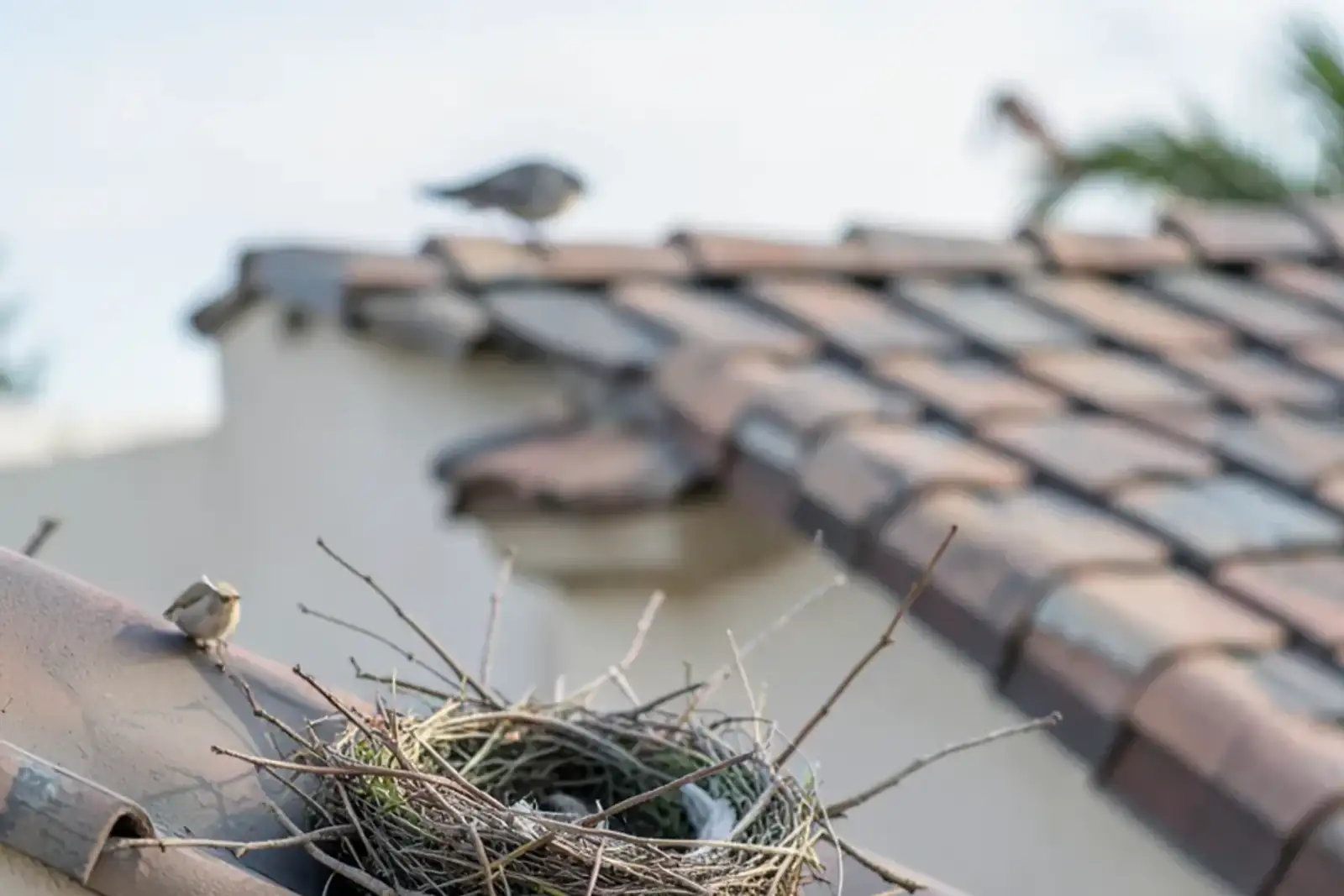
- Gable and soffit vents with wide or damaged screens: birds nest, and embers ride in
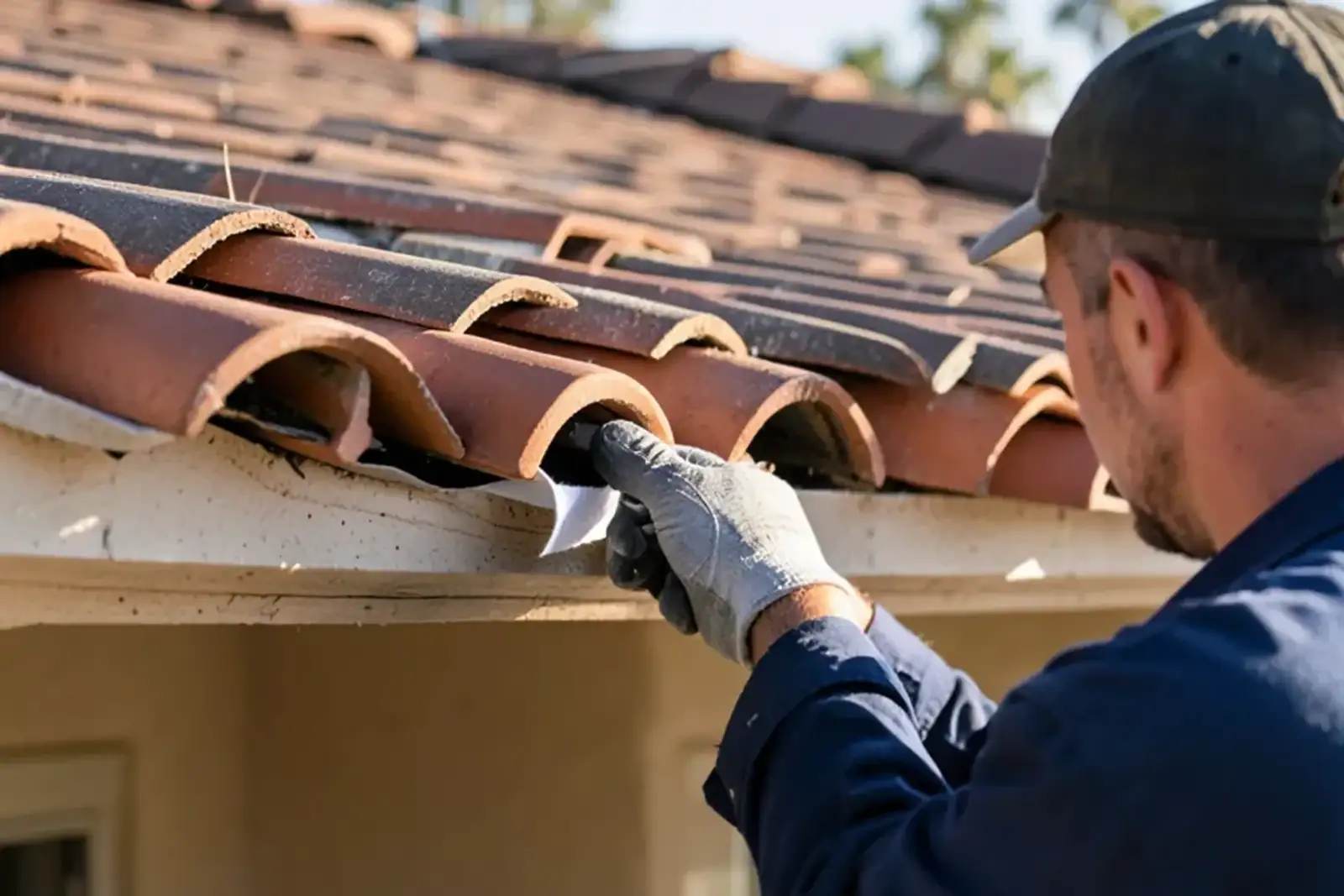
- Open ends under barrel tile: the lowest course of tile leaves gaps along the eave
- Ridge and hip ends: vent openings at the top of a roof
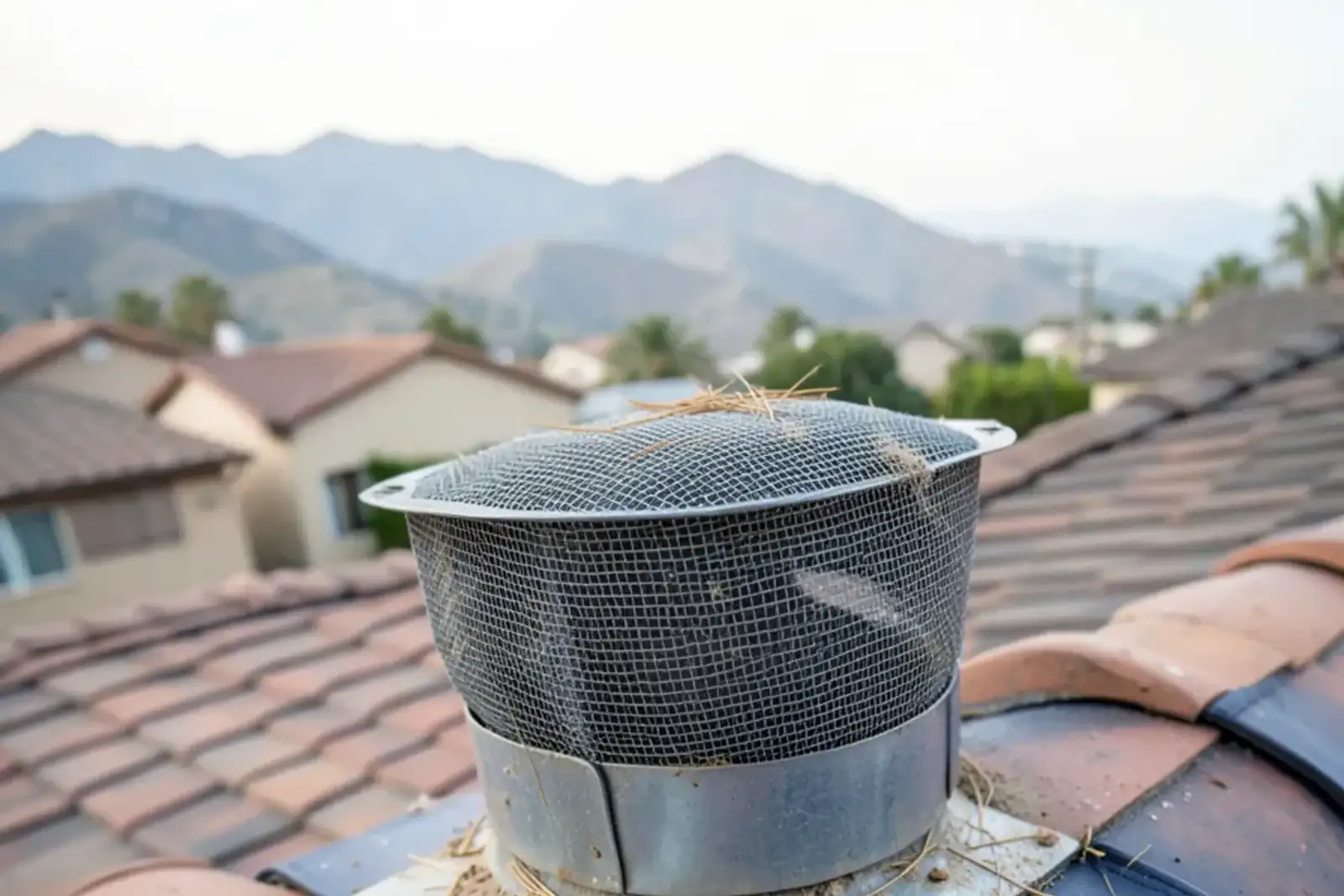
- Turbine and box vents with torn mesh: screens degrade with sun and age
- Gaps around pipes, fascia and rake edges: small spaces add up
Check them in a good light. A gap you can fit a finger through is large enough for a bird to get started.
Fire season, vents and the building rules
CAL FIRE reports the January 2025 Eaton Fire destroyed 9,419 structures and the Palisades Fire destroyed 6,845. Wind-driven embers are widely recognized as a leading way homes ignite in such fires, and vents are one place they get in. California's wildfire building rules address vent openings in designated fire hazard zones, and the California Wildland-Urban Interface Code, Title 24 Part 7, took effect January 1, 2026.
State fire hazard maps were updated in 2025, so look up your address in CAL FIRE's viewer rather than assuming. A Class A roof covering is generally required in a Very High zone, and your vents are part of that system. Your building department can tell you which vent products it accepts.
Mesh sizes, baffles and vent types: what the guidance says
Not every screen counts as ember resistant. UC Agriculture and Natural Resources fire guidance describes noncombustible, corrosion-resistant mesh with openings between 1/16 and 1/8 inch. Plastic and fiberglass screens can melt, so they do not belong on a fire-prone roof. Vents in eaves are a bigger concern, and the guidance points to products tested to resist embers and flame rather than mesh alone.
Approved products are tracked by the Office of the State Fire Marshal, so ask a roofer which product is on the list and keep the paperwork. You can also learn a lot by looking: a vent with coarse, rusted or sagging screen is the one to replace first.
Airflow is the catch. Finer openings clog faster and pass less air, which is why the vent area needs to be counted, not guessed. Tile roofs, box vents and ridge vents each handle it differently, and our attic ventilation page explains how the choices fit together.
What we check at the eaves and vents
We start at the edge, because that is where the damage usually begins. On the roof we look at every vent: what kind it is, whether the screen is intact, whether it is clogged with dust or nesting material and whether it sits where airflow makes sense. At the eaves we look at the tile ends, the fascia joints and the gutters.
One reviewer in Van Nuys describes hidden problems being found, including a poorly placed roof vent and the need for bird blocking. That is the sort of thing that looks fine from the ground. We explain what we find with photos, then write the fix into the estimate.
Fix the gap without choking the attic
Mesh is a tradeoff. The finer it is, the better it stops embers, and the faster it clogs. A vent covered with fine screen needs more opening area to pass the same air as a coarse one. If you wrap fine mesh over a vent that was already tight, you may suffocate the attic.
So the work goes in steps. Count the vent area the attic needs, check intake and exhaust, then choose products to match. Replace damaged vents with ones designed for the purpose instead of patching them. Where bird blocking is needed, use closure pieces fitted to the tile or eave profile, not stuffed rags or foam that can fall out.
What working roofers think about vent upgrades, with the trade-offs
We get on roofs to fix problems, and vents are a good example of a fix with a catch. Here is how we weigh it.
Replacing worn vents with ember-resistant ones is usually worth doing alongside a new roof, when the work is open anyway and nobody has to cut around old flashing. Done as a stand-alone job, it is smaller but still sensible if your screens are torn.
The honest trade-off is airflow against protection. A finer screen keeps more out and breathes less, so some attics need more vent area to compensate. That is not a reason to skip protection. It is a reason to have someone count the vent area first. Skip that step and you can trade an ember risk for a moisture problem.
Bird blocking is the cheaper, quicker win, and it cannot replace a good vent. Both work best with a clean roof edge. The Class A roof and fire zone guide explains how vents fit into a wider roof assembly, and the skylights and ventilation section lists the related services.
Questions to ask before anyone changes your vents
Ask what kind of vent is being proposed and how it was tested. Ask how much vent area it provides compared with what it replaces, and whether intake at the eaves is being checked too. Ask who maintains the screens, since dust and pine needles build up on them. If a contractor says a vent is ember rated, ask to see the product information in writing, and confirm with your building department that it is accepted at your address.
A short yearly routine for foothill homes
- Before fire season: look at every vent screen and eave gap from the ground and a ladder, where safe.
- Clear debris: pine needles and leaves collect on roofs, in valleys and in gutters.
- Trim back branches: keep tree limbs away from the roof and vents.
- Look for nesting: twigs, droppings and chirping near vents mean birds are in.
- Call for repairs: damaged screens and tile gaps should be fixed before wind events.
- Photograph the roof: a dated record helps with any later claim.
Never put a ladder against a loose gutter, and never climb in wind.
La Crescenta-Montrose: pine needles, canyon wind and the roof edge
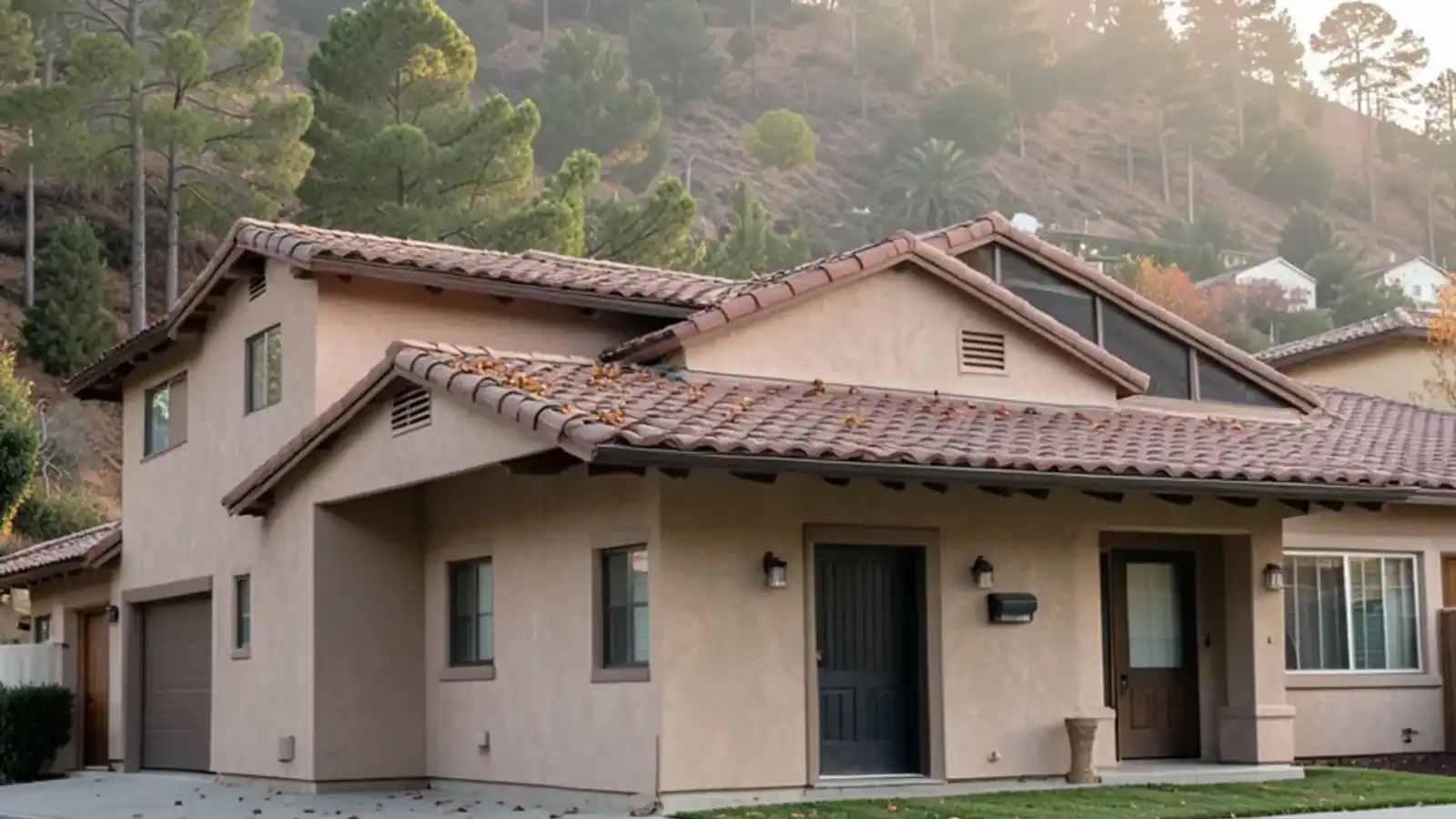
The foothills of La Crescenta-Montrose sit against the Angeles National Forest, and Census ACS puts the median home as built in 1958. Pine needles and canyon gusts test roof edges every Santa Ana season. It is a CDP, an unincorporated community, so permits go through LA County Public Works rather than a city building department.
Whether your address is in a mapped fire hazard zone is a question for CAL FIRE's viewer and the county. If it is, vent protection and a Class A roof assembly are worth planning together, ideally before the next roof or vent job.
Book a vent and eave check before fire season
If birds are in your vents or the screens look worn, call (209) 563-1278 and we will set the earliest visit we can. Tell us the roof type, where the vents sit and whether you have seen nesting, and send any photos from the ground.
Quick answers
What makes a roof vent ember resistant?
Ember resistant vents use fine mesh or baffle designs intended to keep burning embers from entering and igniting an attic. California's wildfire building rules address vent openings in designated zones, so the right product depends on your address. Check the vent's testing information and ask your building department what it accepts.
Can I just add fine mesh over my existing roof vents?
Not safely without checking airflow. Fine mesh clogs with dust, pine needles and lint, which cuts the air an attic needs and can trap moisture. Mesh also has to be fastened so it stays put in wind. A roofer should check how much vent area the attic needs before changing what is covering it.
Do bird blocking and ember protection do the same job?
They overlap, but they are different. Bird blocking closes gaps at tile eaves, vents and edges so birds cannot nest. Ember protection keeps burning material out. A gap that admits a bird can admit an ember, so closing both at the same visit makes sense. Neither should block the intake air your attic needs.
What mesh size do ember resistant roof vents use in California?
UC Agriculture and Natural Resources fire guidance describes noncombustible, corrosion-resistant mesh with openings between 1/16 and 1/8 inch, and says vents in eaves need designs tested to resist embers and flame. Older quarter-inch screens are the weak point. Check the State Fire Marshal's product list and your building department before choosing a replacement.
How do I stop birds nesting in roof vents on a foothill home in La Crescenta-Montrose?
Close the gap with a fitted cover rather than stuffing it. Tile eave closures, intact vent screens and sealed fascia joints stop most nesting. Clear any existing nest first, since old material also holds embers and moisture. Keep the closure from covering intake vents, because the attic still needs air to breathe.