
Roof Repair
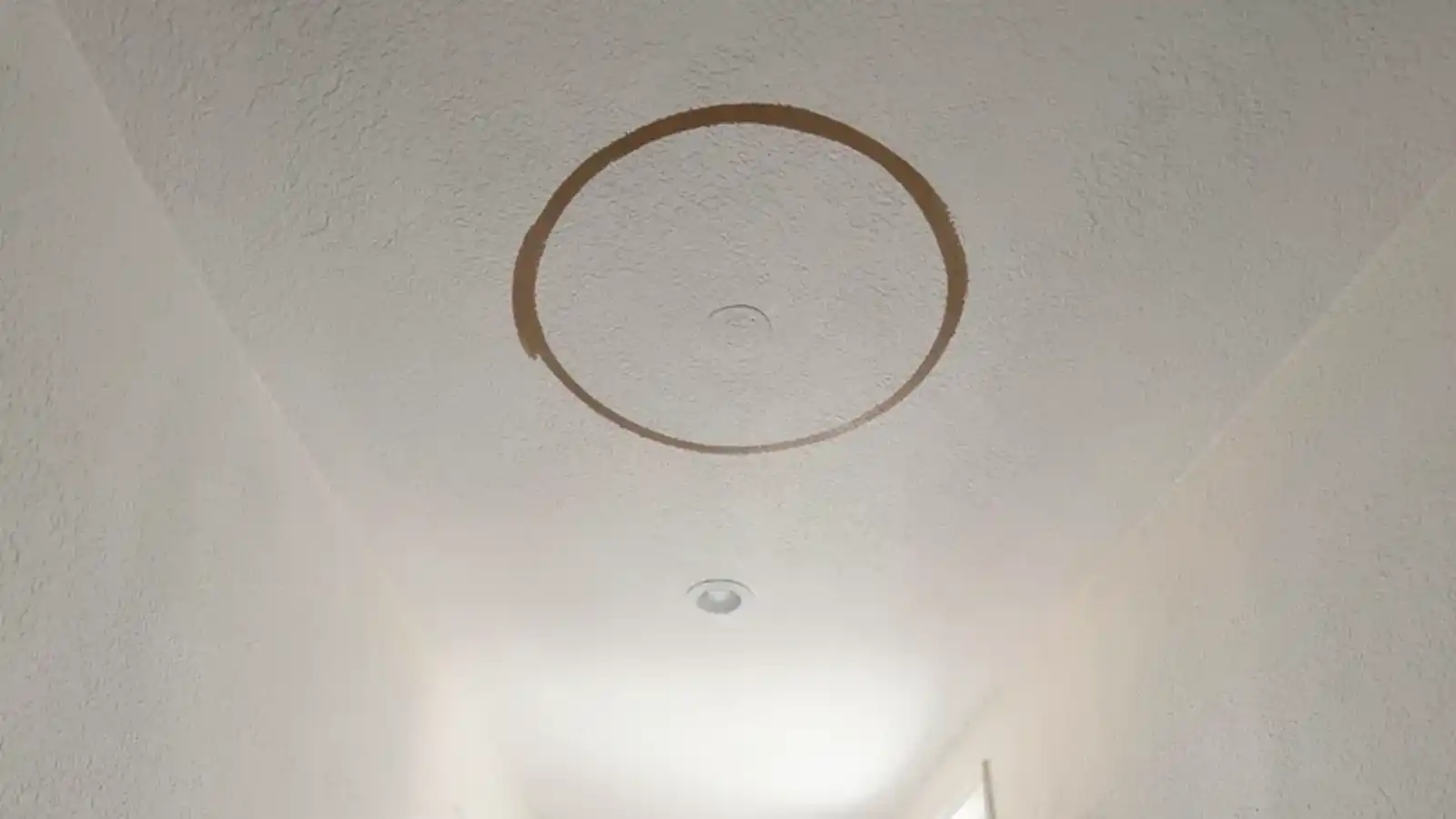
Why Your Ceiling Stain Keeps Coming Back
A ceiling stain that keeps coming back means the source was never found, or the repair went on the wrong spot. Paint hides the mark, not the water. The usual reasons are a patch downhill of the entry point, wet insulation, a second leak, condensation or a plumbing line.
- ★ 4.9 on Google · 69 reviews
- Same-day or next-day bookings
- Based in Van Nuys, CA
Published and updated November 3, 2026 · By the Clear Shield Roofers team, Van Nuys, CA
On this page
- Why your ceiling stain keeps coming back
- Roof leak, condensation or plumbing: how to tell
- What we find when we take an old patch apart
- A roofer's view of repeat stains, and the trade-offs
- When a repeat stain points to more than a repair
- How to check your own stain before calling a roofer
- What happens to the ceiling after the leak is fixed
- Getting a recurring ceiling stain traced
- Common questions
A ceiling stain that keeps coming back after you paint it is a message: the water source has not been dealt with. Paint changes the color of a ceiling, not what is above it. A good roof leak repair starts from the opposite end, with the roof and attic above the stain.
Here are the reasons we see a ceiling stain return, and how to narrow down yours before anyone gets on a ladder.
Why your ceiling stain keeps coming back
Most repeat stains trace to one of seven causes:
- A patch put on the wrong spot, usually where the stain is, not where the water enters
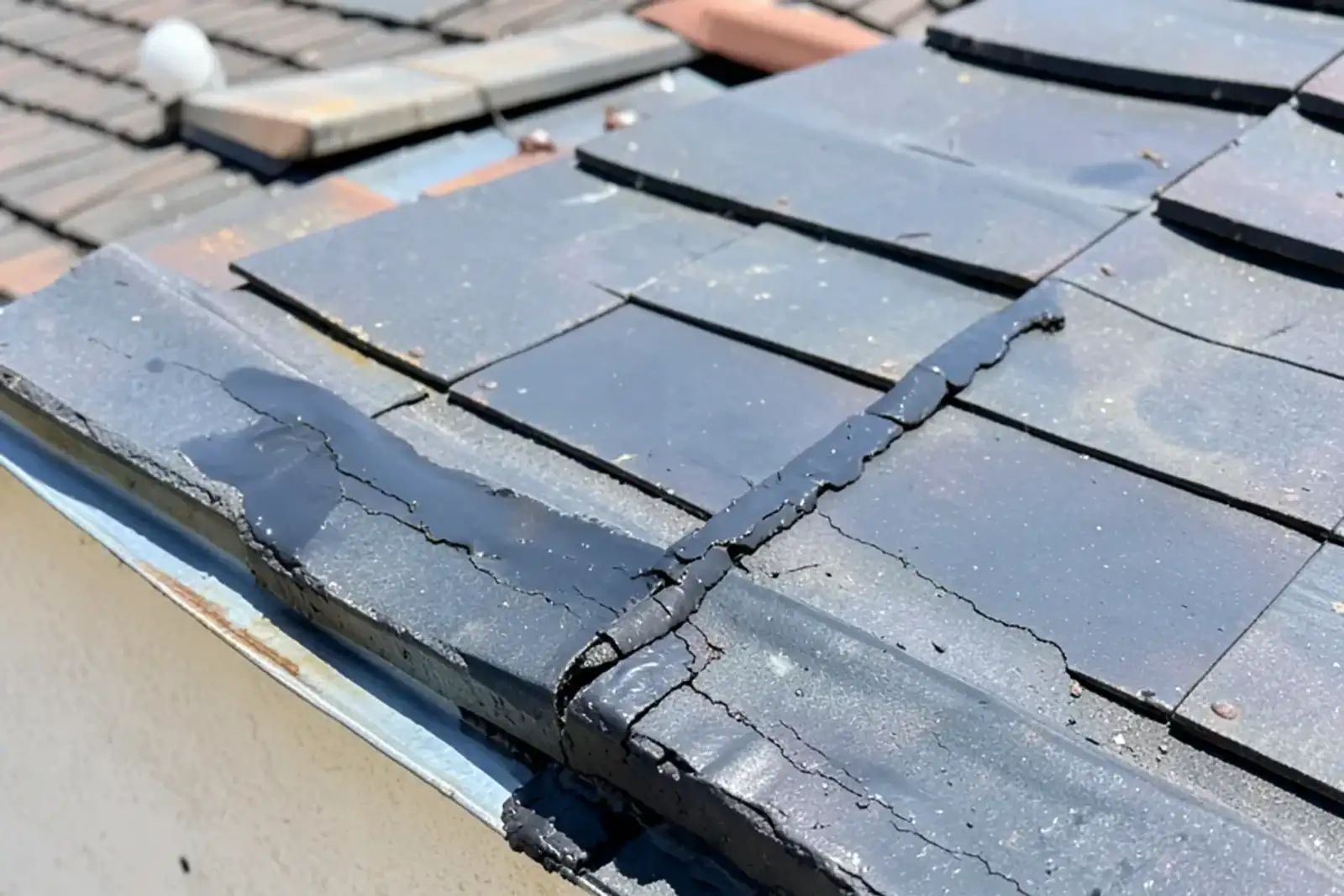
- Sealant over failing metal, which cracks again with the next heat cycle
- Wet insulation or drywall that never dried, so the stain wicks back through paint
- A second leak near the first, so fixing one leaves the other running
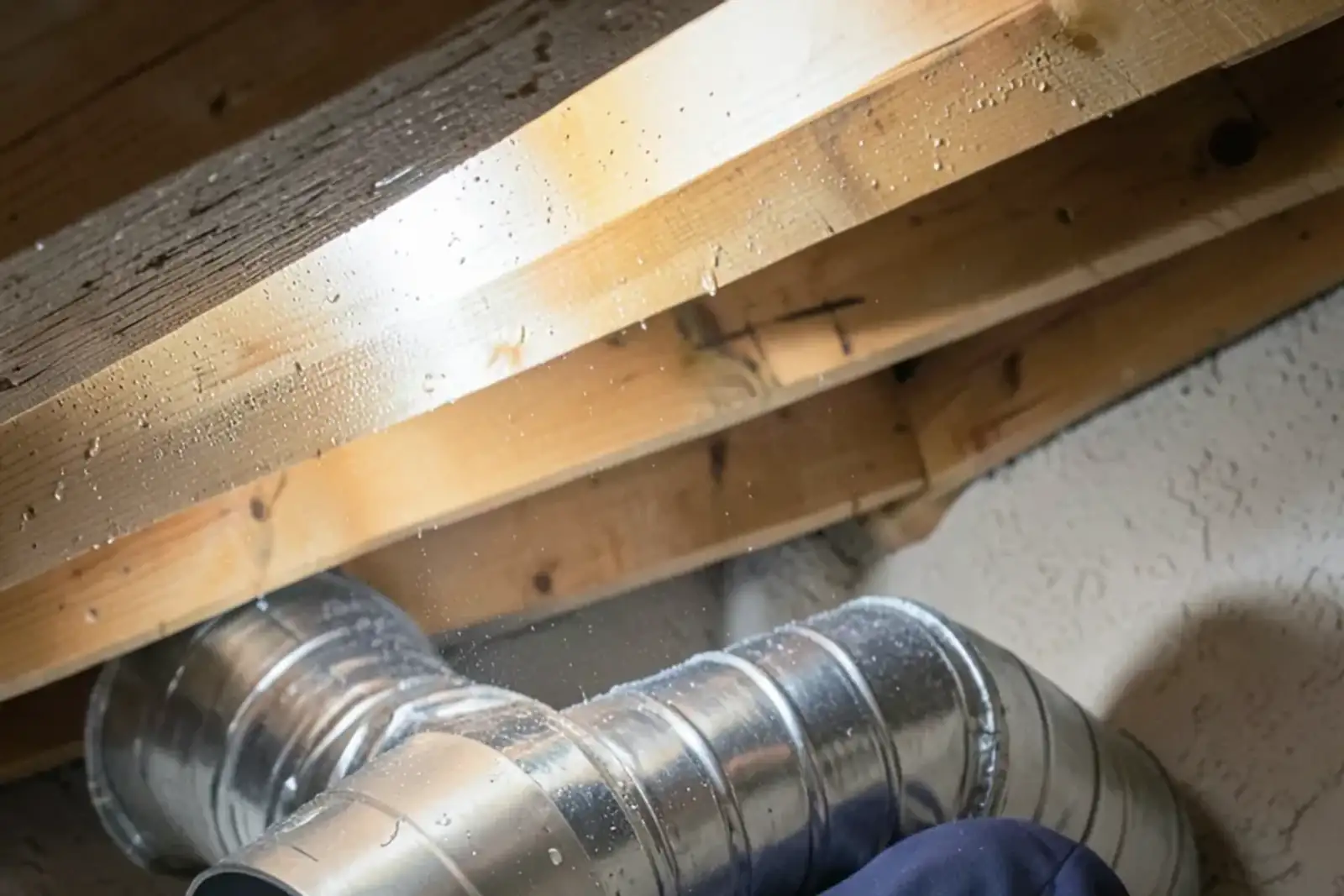
- Condensation from a bathroom fan or a poorly vented attic
- A plumbing or air-conditioner line that has nothing to do with the roof
- Deck damage the first repair did not reach
Roof leak, condensation or plumbing: how to tell
The timing of the stain is the biggest clue.
| What you see | Most likely source |
|---|---|
| Stain grows after rain, dry in between | Roof, flashing or a penetration |
| Stain grows with no rain at all | Plumbing or HVAC |
| Beads on attic boards and nails on cold mornings | Condensation |
| Stain directly below a bathroom or laundry | Plumbing, or a loose exhaust duct |
| Stain moves a little further each storm | Water travelling along framing from a growing opening |
| Stain with a ring and fresh dampness the day after rain | Wet insulation holding water |
Los Angeles rain is concentrated, so a leak can sit dormant for months. Downtown gets about 14 inches a year, mostly between December and March by NOAA's 1991-2020 normals. A stain that shows in January and fades by June has not healed. It is waiting for the next storm. If you have repainted twice and the ring returned both times, treat that as proof the source is still open, and stop painting until it is found.
What we find when we take an old patch apart
Taking a patch off tells us what it was hiding. We look at four things before anything new goes on. Is the sealant sitting over metal that is already lifted or rusted? Does the patch cover the real opening, or sit downhill of it? Is the decking under it dry and solid? Did water run beyond the patch to somewhere new?
Roof cement over a failed flashing joint is the classic repeat leak. It slows the water for a season, then cracks, and the next storm finds the same gap. We replace the failed part and set it so water sheds over it, then deal with any soft boards before the covering goes back. Our usual order is to trace before coating, a point several Van Nuys reviewers mention, and to water-test afterward where conditions allow. One reviewer describes a full water test that confirmed everything stayed dry.
A roofer's view of repeat stains, and the trade-offs
Repeat stains are rarely a mystery once someone gets above them. The honest part is that the answer is not always a roof repair, and not always cheap or quick.
- Water travels. It can run along decking or a rafter for several feet before it drips, so the entry point is often upslope of the stain. A patch placed at the stain does nothing.
- A stain is not always a live leak. An old mark can look fresh after humid weather. We check the wood above it and the insulation, because a dry attic with a stain below means the stain is history.
- Primer matters, but second. The brown mark is a water-soluble stain that bleeds through ordinary paint. A stain-blocking primer works after the source is fixed and the drywall has dried, not before.
- A second patch has diminishing returns. One repair at a failed boot makes sense. Three patches on the same slope say the surrounding material is tired, and a bigger repair may cost less over time.
We cannot promise a stain will never return. We can tell you what we found, show you the photos and water-test the repair where conditions allow.
When a repeat stain points to more than a repair
If the leak keeps coming back at different spots, or the decking is soft in more than one place, the roof may be near the end of its useful life. Check the age of the covering and how many patches it carries. Our roof flashing repair work fixes the joint that is failing, and our guide to roof repair vs replacement shows how to weigh a larger job against another patch. When replacement is the better call, the roof replacement page explains how that job runs.
How to check your own stain before calling a roofer
You can narrow it down in one dry afternoon and one rainy morning.
- Trace the outline in pencil and write the date beside it.
- Photograph it in the same light each time.
- Look in the attic above the stain with a flashlight, if it is safely reachable. Watch for dark trails on wood, flattened insulation or daylight.
- Check the bathroom fan. The duct should run to the outside, not end loose in the attic.
- Check after the next rain, then again two dry days later.
- Tell the roofer what you saw. The pattern speeds up the trace.
Do not climb a wet roof to look for yourself.
What happens to the ceiling after the leak is fixed
A repaired roof does not dry the ceiling for you. Wet insulation can stay damp for weeks, and soaked drywall may need to be cut out if it sags or crumbles. Mold can start on damp material, so do not seal it in with paint. Let the area dry, replace what will not recover, then prime and paint.
In Glendale, where Census ACS (2020-24) puts the median home at a 1966 build, an attic may carry several generations of patches and vent changes. We cover Glendale from Van Nuys, and when we trace a stain on an older roof like that, we write down what we find so the next owner knows too. Glendale's older attics often have several generations of vent cutouts and plumbing stacks, and each hole in the deck is another place a past repair may have missed. If a stain sits near one, mention it when you call, because that is where we start looking.
Getting a recurring ceiling stain traced
Tell us where the stain sits, when it grows and what has been done to the roof or ceiling so far. Photos from each repaint help. We will set the earliest visit we can, trace the source from the roof and attic and tell you what we found. Call (209) 563-1278 to start.
Quick answers
Why does my ceiling stain come back after I paint over it?
Because the water is still arriving, or the drywall and insulation never dried. Paint and stain blocker cover a mark, they do not stop a source. Before you repaint, find out why the stain formed, let the area dry fully, and then use a stain-blocking primer. A stain that grows again after the next rain means the entry point is still open.
How do I tell condensation from a roof leak?
Condensation appears on cold mornings or after showers, often with no rain at all, and it shows as beads on boards, nails or ducts in the attic. A roof leak follows rain and leaves a trail on the wood from the entry point down. Poor venting and loose exhaust ducts are the usual condensation causes.
Can a stain come from plumbing and not the roof?
Yes. A supply line, drain or air-conditioner pan above the ceiling can stain it in dry weather. If the mark grows with no rain, or sits below a bathroom, laundry or HVAC unit, have a plumber or HVAC technician check first. If it appears only after storms, the roof is the better suspect.
How long should I wait before repainting a ceiling that leaked?
Wait until the area is fully dry and one real rain has passed without a new mark. For most ceilings that means at least a few weeks. Press the drywall for softness, check that the attic insulation above is dry, then prime with a stain-blocking product. Repainting too early is the most common reason a stain seems to return.
Will a stain-blocking primer stop a ceiling stain from coming back?
Only if the water has stopped. The brown mark is a water-soluble stain that can bleed through ordinary paint, so a stain-blocking primer helps once the source is fixed and the drywall is dry. On a ceiling that is still taking water, even the best primer fails by the next storm. Fix the roof first, then prime.