
Emergency Roof Repair
What to Do When Your Roof Leaks in a Los Angeles Storm
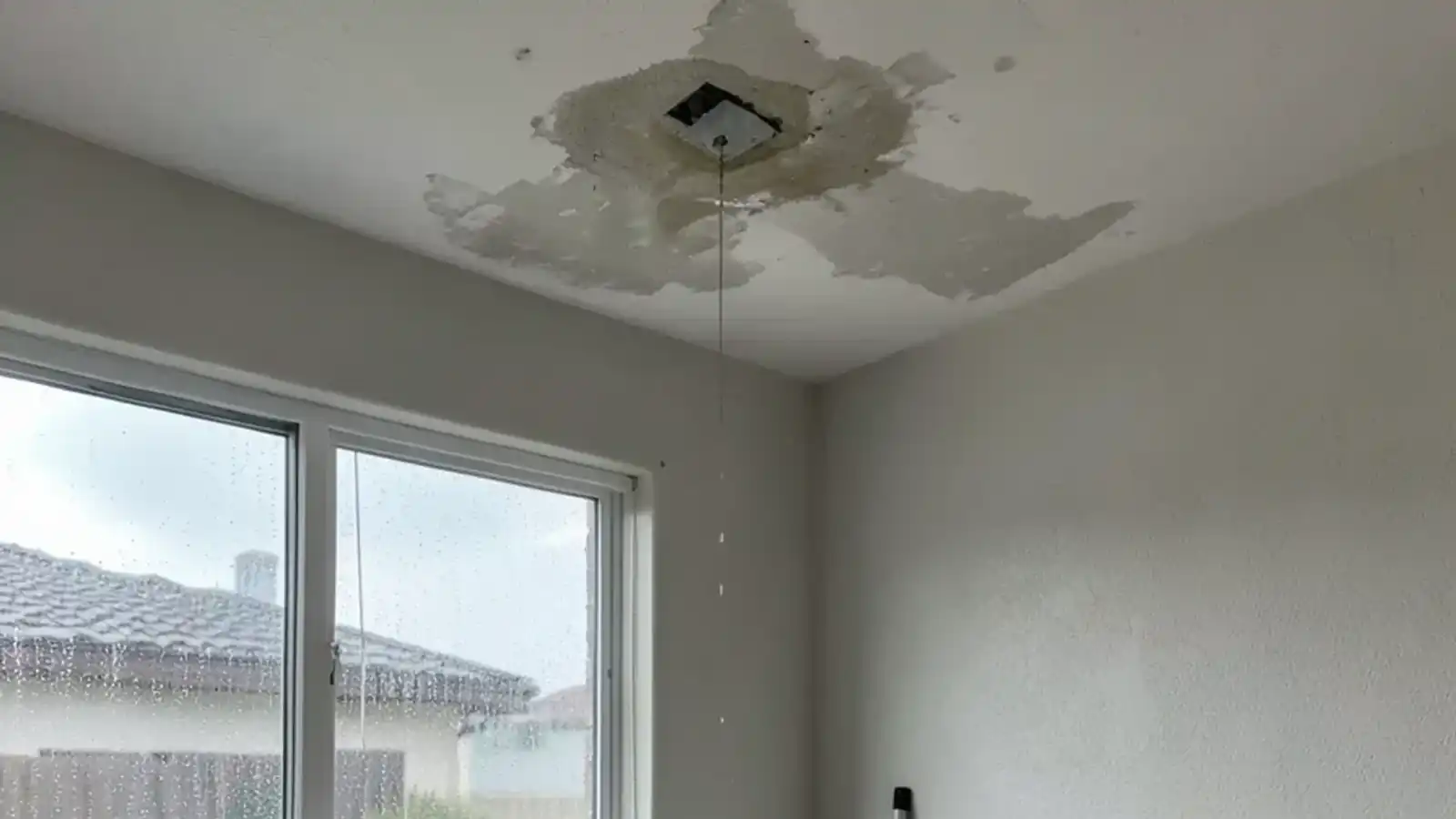
When a roof is leaking during a storm, what to do first is limit the damage inside. Catch the water, move belongings, kill power near wet fixtures and photograph everything. Stay off the roof until it is dry, then call a roofer to trace the source and cover it.
- ★ 4.9 on Google · 69 reviews
- Same-day or next-day bookings
- Based in Van Nuys, CA
Published and updated November 3, 2026 · By the Clear Shield Roofers team, Van Nuys, CA
On this page
- Roof leaking during a storm: what to do in the first 15 minutes
- Is a roof leak during a storm an emergency?
- Where the stain is and where the opening often is
- What roofers check once the rain eases
- Temporary cover or a permanent fix
- What working roofers wish homeowners knew about storm leaks
- Storm leaks, insurance and what to keep
- Why rain on a Valley roof finds old weak spots
- Who to call about a roof leak in Los Angeles, and what to say
- Common questions
Water finds the lowest path, not the shortest one. A stain over the kitchen can sit ten feet from the real opening, so the first job in a storm is the room, not the roof. The second job is staying off the slope.
That order surprises people. It saves them from a fall and from a bigger bill. A good emergency roof repair visit starts after the rain eases, with a clear picture of what you saw.
Roof leaking during a storm: what to do in the first 15 minutes
Work through these in order. Most of them take a minute.
- Move what water can ruin. Pull furniture, rugs and electronics out from under the stain.
- Catch the drip. Use a bucket or a deep pan with a folded towel in it to cut the splash.
- Relieve a bulging ceiling. If drywall sags into a bubble, stand clear and poke a small hole at the lowest point over a bucket. A tight bubble can fail all at once.
- Watch the electrics. If water reaches a light fixture, ceiling fan or outlet, turn off that circuit at the panel and leave it off until it dries.
- Photograph and video. Capture the ceiling, the drip, damaged belongings and the date. Do this before you clean up.
- Call a roofer. Say where the water is showing and what the roof is made of.
Do not chase the leak across the roof with a ladder. Do not push caulk or roofing cement into a wet joint either. It rarely sticks, and it can hide the entry point from whoever repairs it later.
Is a roof leak during a storm an emergency?
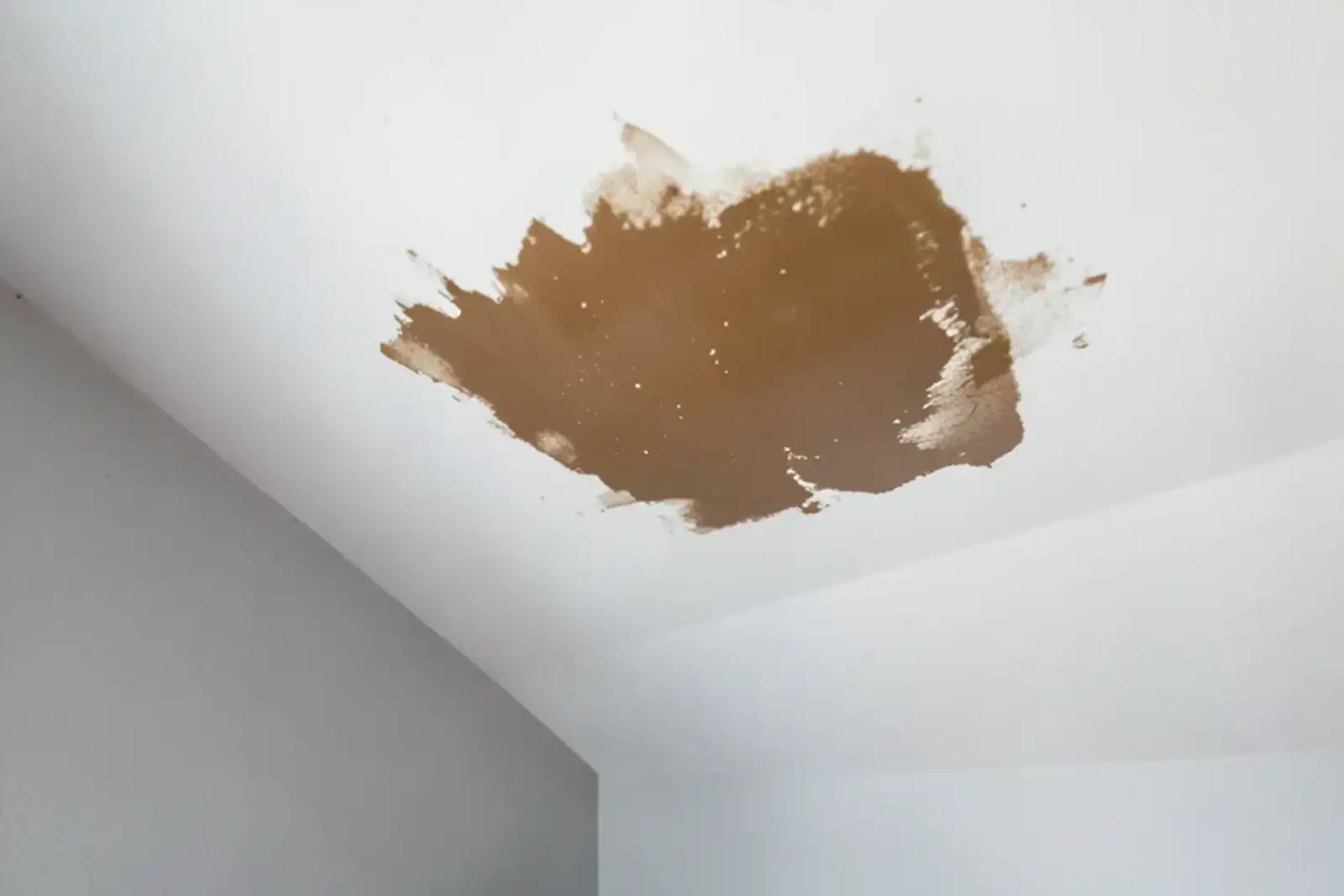
It is an emergency when water is entering faster than you can contain it, when it is near wiring, or when the ceiling is sagging. A slow drip into one bucket is urgent but manageable. A brown stain that appears after rain and dries out is a repair to schedule, not a midnight call.
| What you see | How urgent | What to do |
|---|---|---|
| Steady stream, or water at a light fixture or outlet | Call now | Cut power to that circuit, clear the room, call for the earliest visit we can set |
| Drip into a bucket, ceiling bulging or soft | Same day if possible | Contain it, relieve the bubble, photograph, call |
| Faint stain that grows only during rain | Within days | Document it and book an inspection once the roof is dry |
| Stain that grows with no rain | Probably not the roof | Check plumbing, the water heater and the air handler first |
Where the stain is and where the opening often is
Rain moves along rafters and decking before it drops. Treat the stain as a clue, not an address. These patterns are common:
| What you see inside | What is often above it |
|---|---|
| Stain beside an exterior wall | Flashing at a wall or chimney, or gutter overflow |
| Ring around a skylight or its curb | Skylight flashing, seal or cracked glazing |
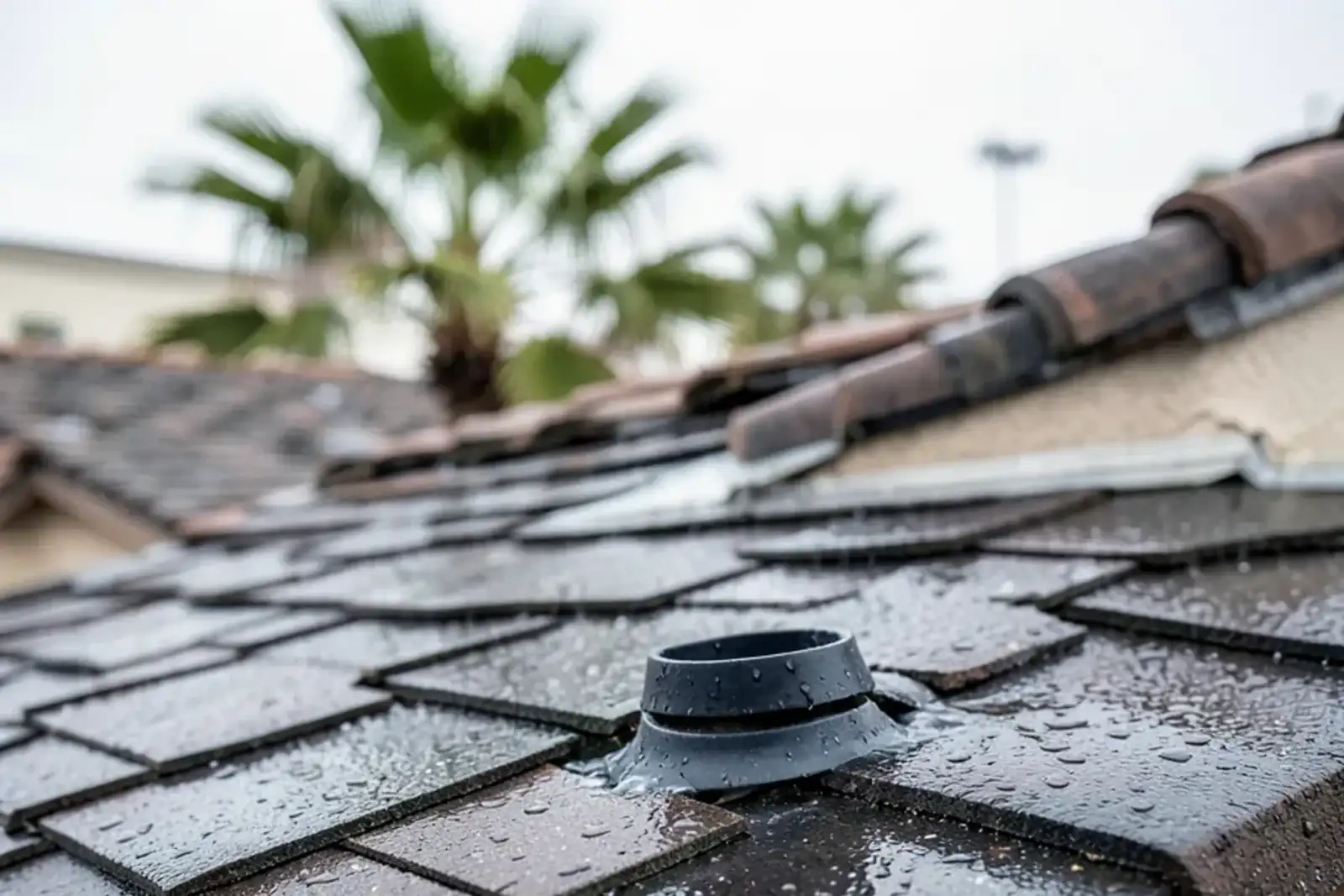
| Drip near a bathroom fan or vent | A split rubber pipe boot or a loose vent flange |
| Streaks running down a wall | Window or door flashing, or a wall-to-roof joint |
| Stain in the middle of a ceiling | A valley, a nail pop or a failed patch from before |
Flashing is the thin metal that sheds water at joints and edges. It fails far more often than the field of shingles or tile. The stain pattern does not prove the cause, but it tells us where to start looking.
What roofers check once the rain eases
We trace water uphill. If the attic is reachable, we go there first with a flashlight and look at the underside of the decking. Dark rings, rusted nail tips and wet insulation mark the track. The place where the water enters the attic is rarely where it enters the roof.
Then we go up on a dry roof. We check pipe boots, flashing runs, valleys, loose caps and anything that has moved. Older repairs get a hard look, since a patch that looked fine in summer may have cracked by January.
Reviewers describe what this looks like in practice. One customer in Van Nuys says we came out the same night for a kitchen ceiling leak. Another says the crew returned on a Sunday morning to fix a small leak that showed up after seasonal rain during a new roof job. A third says a full water test followed the repair to confirm it stayed dry. Those are their accounts of single jobs, not a promise for every call, and timing always depends on the schedule and the weather. Our emergency roof leak repair page explains how we would approach a visit.
Temporary cover or a permanent fix
Sometimes the answer is a temporary cover now and a real repair when the roof is dry. A tarp or a patch buys time without sealing the cause. A proper repair replaces the failed part, whether that is a boot, a run of flashing, a few tiles or a section of underlayment, the waterproof layer beneath the surface.
The choice depends on three things: how big the opening is, what the roof is made of and whether more rain is coming. We will tell you what we found and which option fits, and we will put the scope in writing before work starts.
What working roofers wish homeowners knew about storm leaks
These are the judgment calls we weigh on storm work, and each one has a cost.
Tarp now or wait for dry weather. A tarp stops more water, but fastening it means someone on a wet, steep surface. We would rather cover a roof from a dry window or with good fall protection than rush it in the rain. The trade-off is another night of buckets. If water is entering fast, that wait may cost more than the tarp.
Patch or replace the part. A dab of sealant over a cracked pipe boot looks like a fix and can last one storm. Replacing the boot takes longer and costs more, but it ends the repeat visits. On an old roof with several tired boots, the better answer is often to renew all of them in one trip.
Open the ceiling or leave it. Poking a relief hole feels wrong, yet a bulge full of water can drop on its own and take plaster and paint with it. Opening a small hole is cheaper than a ceiling that fails across the room. If the drywall is already sagging across a wide area, stay out from under it.
Dry the attic, not just the room. Wet insulation holds moisture against the decking for days. Check it, and tell the roofer what you find.
Storm leaks, insurance and what to keep
Sudden storm damage may be covered by a homeowners policy, while slow wear generally is not. Your policy and your insurer decide, so read the terms and ask. Start with these habits:
- Keep your photos, videos and any receipts for buckets, tarps or drying equipment.
- Report the loss promptly. California's claim regulations generally require an insurer to acknowledge a claim within 15 days and to accept or deny it within 40 days after receiving proof of claim.
- Ask for repair estimates in writing so you have something to send.
We can inspect the roof, photograph the damage, write a repair estimate and be on site when the adjuster visits. Negotiating the claim belongs to you as policyholder or to a licensed public adjuster you hire. If a claim goes badly, the California Department of Insurance helps consumers at 800-927-4357.
Drying out in the next 48 hours
The EPA advises drying water-damaged areas and items within 24 to 48 hours to prevent mold growth. Open windows between showers, run fans or a dehumidifier, lift wet rugs and check the attic for soaked insulation. Photograph it before anything is removed, and leave a stain unpainted until the roof is repaired and the area is dry. A repair stops new water but does not dry what is already inside.
Why rain on a Valley roof finds old weak spots
Downtown Los Angeles averages about 14 inches of rain a year by NOAA's 1991-2020 normals, mostly from December through March. Van Nuys averages about 13. That is not much, and it means a roof can sit dry for months and then take a hard soaking all at once.
Long dry spells also bake rubber boots and sealant until they crack. The first big storm of the season is the one that finds them. We work from Van Nuys and cover Burbank and the rest of the city, so the same checks apply across the Valley.
Who to call about a roof leak in Los Angeles, and what to say
Call a roofer for the opening, a plumber if the water keeps running in dry weather, and your insurer if the loss is large enough to claim. When you call us at (209) 563-1278, have the address, the room, the roof type and your photos ready. We book same-day or next-day as the schedule allows, and during a storm week the earliest visit depends on how many roofs are leaking at once. A leak near Burbank or Glendale from Van Nuys is a short drive in the Valley; farther places take longer, and we will say so.
For the next step, read about emergency roof tarping, our storm damage roof repair work, or the roof tarp guide on how long a cover really lasts.
Water coming through the ceiling right now? Call (209) 563-1278, describe what you see, and we will set the earliest visit we can.
Quick answers
Should I go on the roof to stop a leak during a storm?
No. Wet shingles, tile and stucco ledges are slick, and wind makes it worse. A fall costs far more than a ceiling. Work from inside, catching water and protecting belongings, then have a roofer look once the surface is dry. If you can see the damage from the ground, take photos from the yard with a zoom lens.
How do I tell a storm leak from a plumbing leak?
Check the timing. A roof leak shows up during or soon after rain and stops as the roof dries, though stains can linger for days. A plumbing leak keeps going in dry weather. Stains under an exterior wall, a vent or a skylight point to the roof. If the water is warm or the stain keeps growing without rain, call a plumber.
Will the leak stop once the rain stops?
The drip usually slows, but the opening is still there. Wet insulation and decking hold water for days, and the next shower will use the same path. A temporary cover or a repair after the roof dries is what actually ends it. Keep the bucket in place until a roofer has looked, and check the ceiling after each rain.
How long can a wet ceiling wait before mold becomes a risk after a Los Angeles storm leak?
The EPA advises drying water-damaged areas and items within 24 to 48 hours to prevent mold growth. After a storm that means opening windows, running fans, lifting wet rugs and checking the attic for soaked insulation. If the ceiling drywall is sagging or the stain keeps spreading, ask a roofer or a water-damage specialist to look before you paint over it.
What should I tell a roofer on the phone when my roof is leaking in the rain?
Give the address, the room where water shows, how long it has been dripping, the roof type (shingle, tile or flat) and whether the ceiling is bulging. Send your photos too. A roofer can then judge urgency and bring the right materials. If water is near wiring or the ceiling is sagging, say so first.