
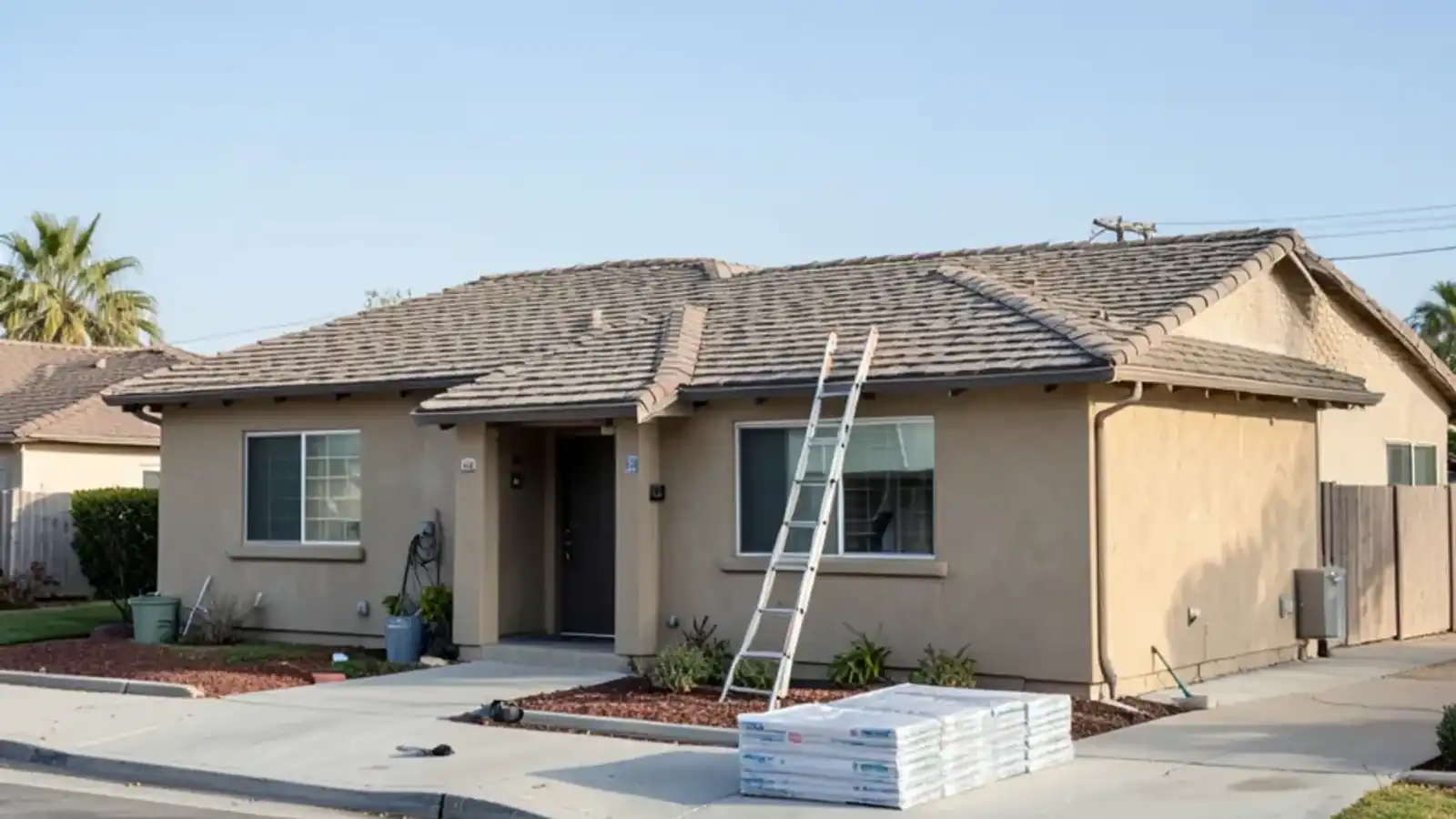
Roofing Contractor
Do You Need a Permit to Re-Roof in Los Angeles?
In the City of Los Angeles, replacing a roof generally calls for a building permit or, for eligible single-family homes, a certificate of compliance from a contractor in the city's Certified Licensed Contractor program. Other cities and county areas run their own offices. Your address decides the path.
- ★ 4.9 on Google · 69 reviews
- Same-day or next-day bookings
- Based in Van Nuys, CA
Published and updated November 3, 2026 · By the Clear Shield Roofers team, Van Nuys, CA
On this page
- Do you need a permit to replace your roof in Los Angeles?
- City, county or another city: who actually answers
- The paperwork behind a Los Angeles re-roof
- How we handle permit questions on a job
- Permit, Express Permit or certificate: which path fits a Los Angeles roof
- What working roofers say about permit paths
- What affects the cost of permit work on a re-roof
- What goes wrong on an unpermitted roof
- Fire zones, tile and other triggers
- Questions worth putting to the building department
- Next step for your re-roof permit
- Common questions
Do you need a permit to replace your roof in Los Angeles?
Usually yes, in one form or another. Inside the City of Los Angeles, a re-roof generally needs a building permit. For eligible single-family homes, the city also allows a certificate of compliance from a contractor registered in LADBS's Certified Licensed Contractor program, instead of a permit. LADBS also has an Express Permit path with no plan check for some re-roofs.
We do not quote you a size cutoff or a fee here, because those details change and LADBS is the source for them. Call the department or ask your roofer to confirm what applies to your address. Repairs, historic overlays and specific plans can change the answer.
City, county or another city: who actually answers
The first question is not "what does the code say." It is "which agency owns this address." Los Angeles County has dozens of incorporated cities, and each runs its own building department. A home in Glendale or Burbank is not under LADBS.
| Where the house sits | Who handles the permit |
|---|---|
| City of Los Angeles | LADBS |
| Independent city, such as Glendale | That city's building department |
| Unincorporated Los Angeles County | LA County Public Works |
| Ventura or Orange County unincorporated areas | Ventura County Building and Safety, or OC Public Works |
Neighboring zip codes can fall under different offices. The mailing city on your bill does not always match the legal city, so look it up before you call anyone.
The paperwork behind a Los Angeles re-roof
Los Angeles uses a Re-Roofing Certificate of Compliance, LADBS form IN.Form.12. The contractor or an owner-builder signs it to say the work matches the approved plans and follows the city's roofing rules. It is a record that something was checked.
Other rules ride along with the permit. Roof replacements in Los Angeles that cover more than half the roof must use a cool-roof-rated product. Wood shake and shingle coverings are not allowed in the city. In a Very High Fire Hazard Severity Zone, a Class A roof covering is required.
How we handle permit questions on a job
We ask for the address first, then the roof, then the plan. The right path depends on all three. Our hands-on routine is the same one every time:
- Confirm the agency that owns the address
- Check for zones or overlays that change the roofing rules
- Look at the existing roof for layers, tile or wood shake
- Pick the path: permit, certificate or Express Permit
- Write the applicant's name into the contract
- Schedule inspection or sign-off before final payment
A Van Nuys customer describes us taking care of the permit process, which they say made the job easier. It is one customer's account of one job, and the right answer still depends on your address. For more detail on how we approach the paperwork, see our roof permits page.
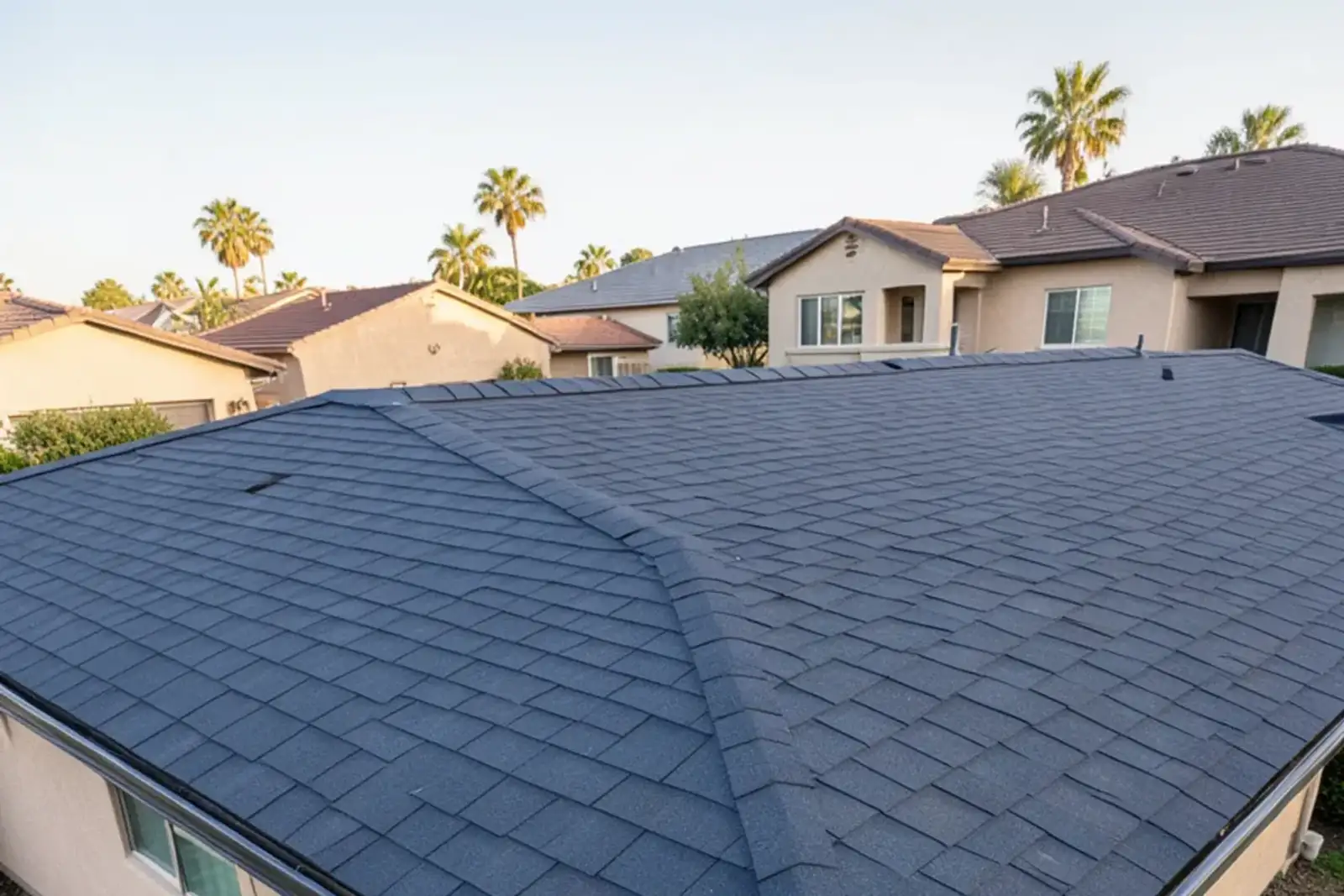
Permit, Express Permit or certificate: which path fits a Los Angeles roof
Inside the City of Los Angeles there are three common paths, and which one fits depends on the home and the roof. Each leaves a different paper trail.
| Path | What it is | Where it tends to fit |
|---|---|---|
| Building permit | A standard permit issued by LADBS, with inspection | Roofs that need more review, or homes the other paths exclude |
| Express Permit | A permit with no plan check for some re-roofs | Straightforward re-roofs that fit the bulletin's conditions |
| Certificate of compliance | A registered Certified Licensed Contractor certifies eligible work in place of a permit | Detached single-family homes and accessory structures with no restricting overlay |
LADBS's Express Permit bulletin ties the express route to conditions on the roof covering, and the bulletin also states that Class A covering is required in the Very High Fire Hazard Severity Zone. The certificate program, as LADBS describes it, covers re-roofing that does not alter roof support, and it does not apply where a historic designation, specific plan or other rule restricts re-roofing. Read the current bulletins or call LADBS before you assume a path.
What working roofers say about permit paths
Paperwork choices come with trade-offs. A certificate puts the record in the contractor's signed document rather than a city inspection, so ask for the signed certificate and keep it. A permit with inspection puts a city inspector on the record, which some owners prefer when they plan to sell. An Express Permit sits between the two. None of this changes the work on the roof.
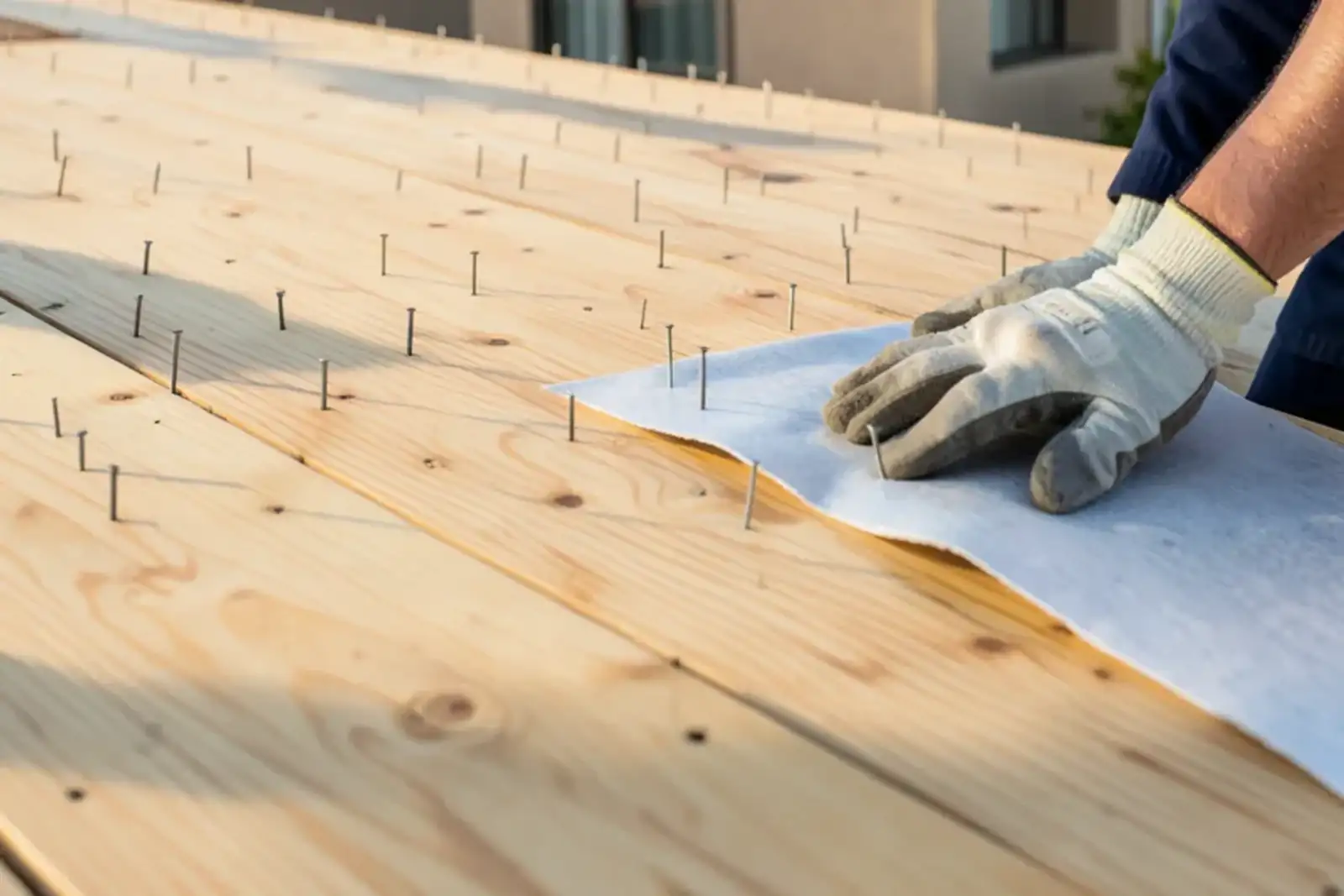
What does change the outcome is the tear-off. Layers, tile and soft decking are found when the old roof comes off, and that is when the scope can shift. Our roof tear-off page explains what we check at that stage, and our roof replacement page covers the full job. Ask that the contract state who pulls the permit and who signs the closing paperwork.
What affects the cost of permit work on a re-roof
We do not quote a City fee here, because LADBS sets fees and they change. Some variables are still worth knowing:
- Path chosen: permit, Express Permit or certificate each carries its own fee schedule
- Agency: the City of Los Angeles, another city or the county
- Scope: layers, tile and fire-zone rules change the paperwork
- Add-on documents: energy compliance forms may be required with the permit
- Timing: inspection scheduling can affect when final payment is due
What goes wrong on an unpermitted roof
Unpermitted work is cheap on the day and expensive later. A buyer's inspector may find it. An insurer may ask about it after a claim. A city may ask you to open up work to prove it was done right.
- Sale trouble: a buyer or lender may ask for proof the roof passed inspection
- Insurance questions: insurers consider roof age and condition, so ask yours what documents they want
- Rework risk: work that was never inspected can hide layers or bad nailing
The California Department of Insurance advises that you hold final payment until the building department signs off. That one habit protects you from most of the above.
Fire zones, tile and other triggers
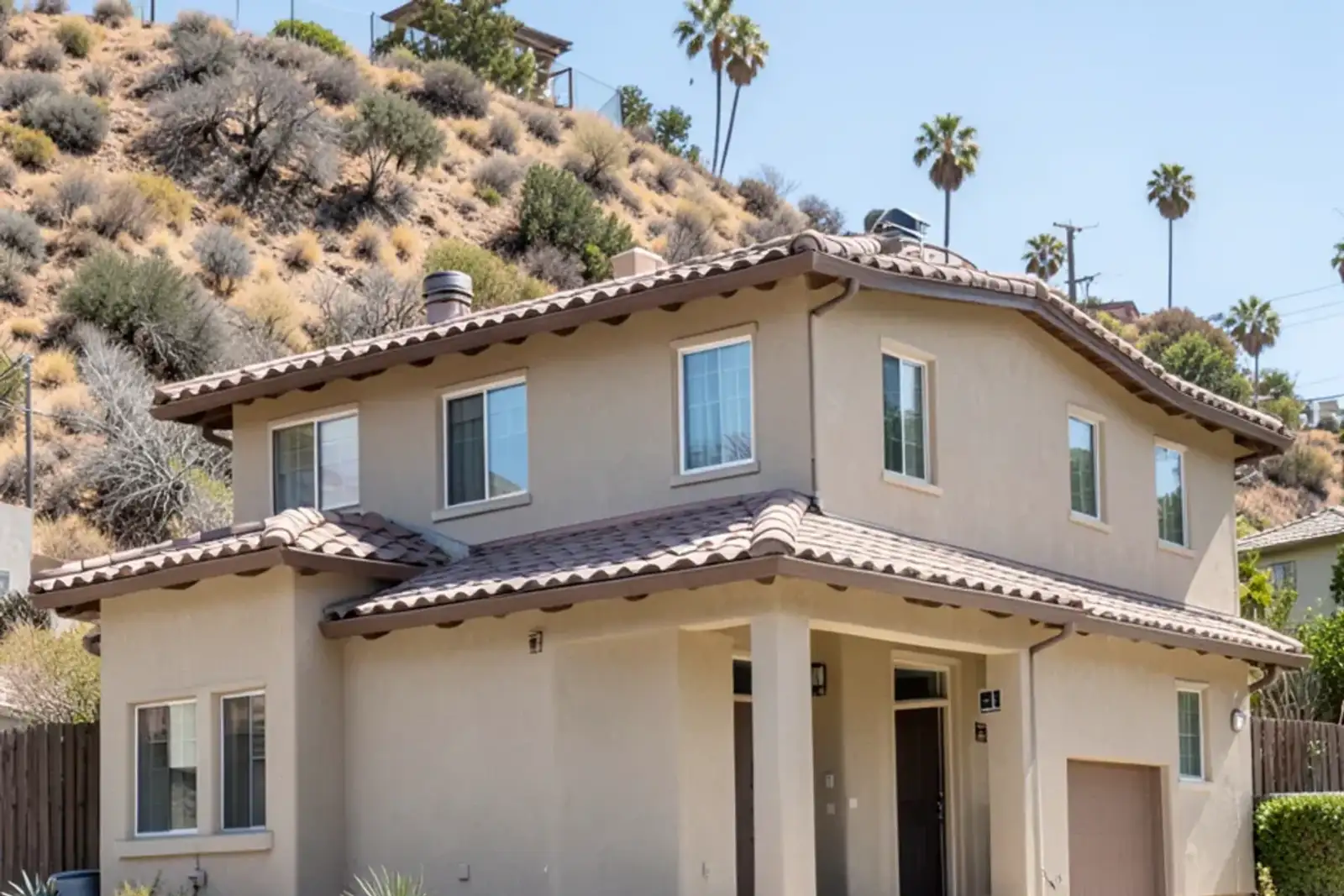
Some roofs raise the stakes. Hillside homes may sit in a fire hazard zone, and California's Wildland-Urban Interface Code (Title 24, Part 7) took effect on January 1, 2026. State maps were updated in 2025, so check your address on CAL FIRE's viewer rather than assuming.
Tile roofs add weight questions, and old roofs may hide layers. California's residential code does not allow a new roof over one with two applications already, or over tile. When we see an older material that might contain asbestos, we recommend lab testing before removal, and SCAQMD Rule 1403 sets survey and notification rules for that work.
Questions worth putting to the building department
Phone calls to the office are short and worth making. Ask these before you sign:
- Which path applies to my roof and my address?
- Do any overlays, specific plans or historic rules limit re-roofing?
- What does the final inspection or sign-off look like, and who schedules it?
- Is a cool-roof product required for the area being replaced?
Write down the name of the person and the date. If the answer later changes, you have a record.
When you shop, ask each roofer the same four things: which agency, which path, who applies and who attends the inspection. A plain answer to all four is a good sign. A roofing contractor in Los Angeles who cannot answer them is a risk to your roof and your resale.
Next step for your re-roof permit
Write down your full address, the roof type and any past roof work. Then call Clear Shield Roofers at (209) 563-1278 and we will talk through which agency owns your address and which questions to put to the building department before you sign.
Quick answers
Who is responsible for getting the roof permit in Los Angeles?
Whoever the contract names, so make sure it names someone. The contractor usually applies, but the owner is the one living with an unpermitted roof if it goes wrong. One Van Nuys customer says our team took care of the permit process. For any job, write the name of the applicant into the contract before you sign.
Can I re-roof a home in Glendale with a Los Angeles permit?
No. Glendale is its own city with its own building department, and a City of Los Angeles permit does not carry over. The same goes for Burbank, Pasadena, Santa Monica and other independent cities. Check the building department for your address first, since the process and the paperwork differ from place to place.
What is the difference between an Express Permit and a certificate of compliance for a Los Angeles re-roof?
An Express Permit is a permit issued without plan check for some re-roofs, so the job is on record with LADBS. The certificate route lets a contractor registered in the Certified Licensed Contractor program certify eligible single-family work in place of a permit. Neither applies everywhere, so ask LADBS which fits your address and roof.
Does a minor roof patch need a permit in the City of Los Angeles?
It depends on the scope and the address, and we will not give you a square-foot cutoff because LADBS sets the rules. Patching a flashing is a different job from replacing a roof. Before any work, ask your roofer which category the job falls into and ask the city or county office to confirm it.