
Emergency Roof Repair
Santa Ana Wind Roof Damage: What to Check First
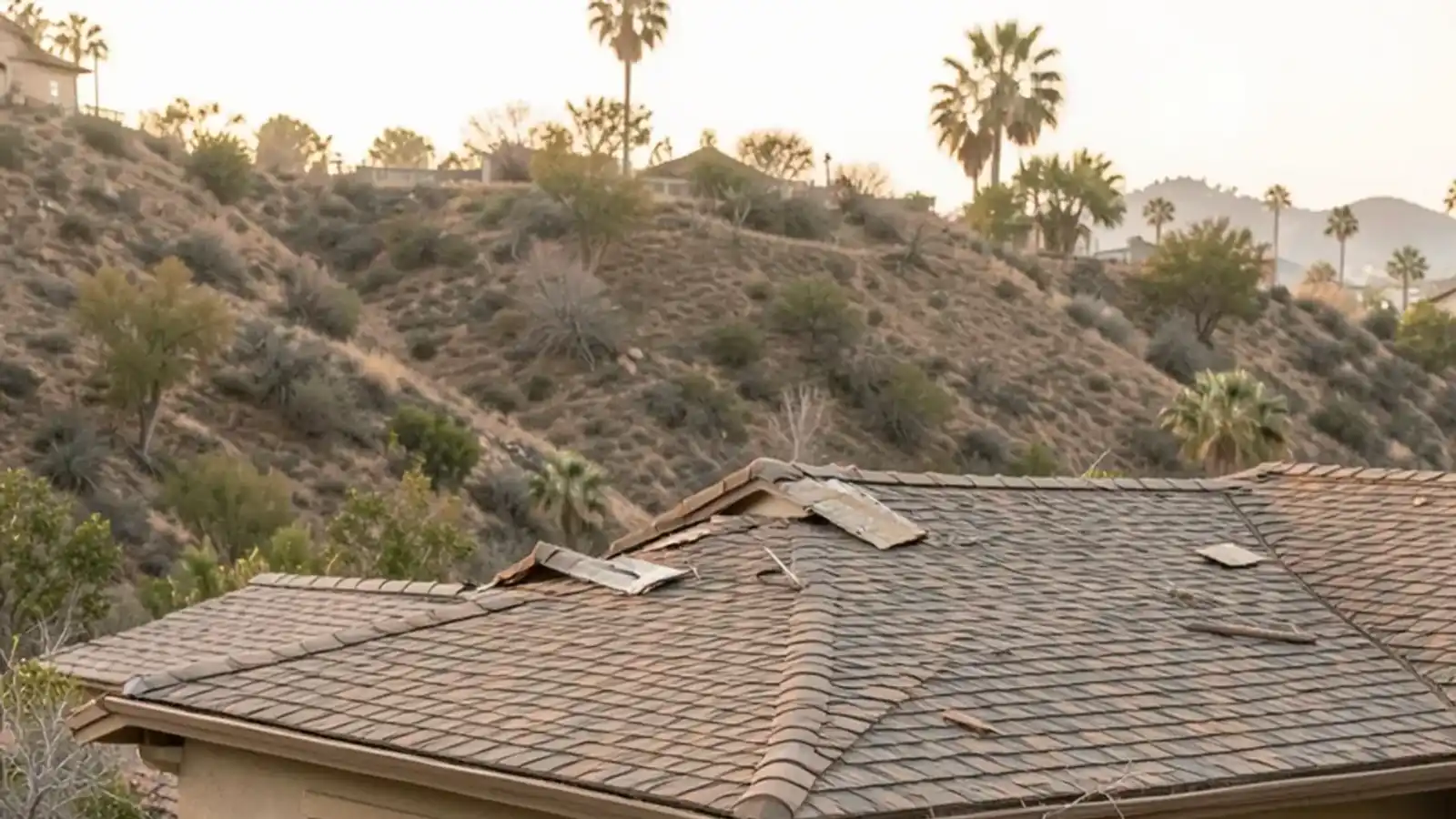
After a Santa Ana wind event, look from the ground for missing or lifted shingles, shifted ridge caps, loose tile, torn fascia and bent flashing. Do not climb up. Photograph what you see with a zoom lens and book an inspection, because wind damage often leaks at the next rain.
- ★ 4.9 on Google · 69 reviews
- Same-day or next-day bookings
- Based in Van Nuys, CA
Published and updated November 3, 2026 · By the Clear Shield Roofers team, Van Nuys, CA
On this page
- Wind damage to a roof: what to check from the ground
- Why Santa Ana winds are hard on roofs
- What the signs usually mean
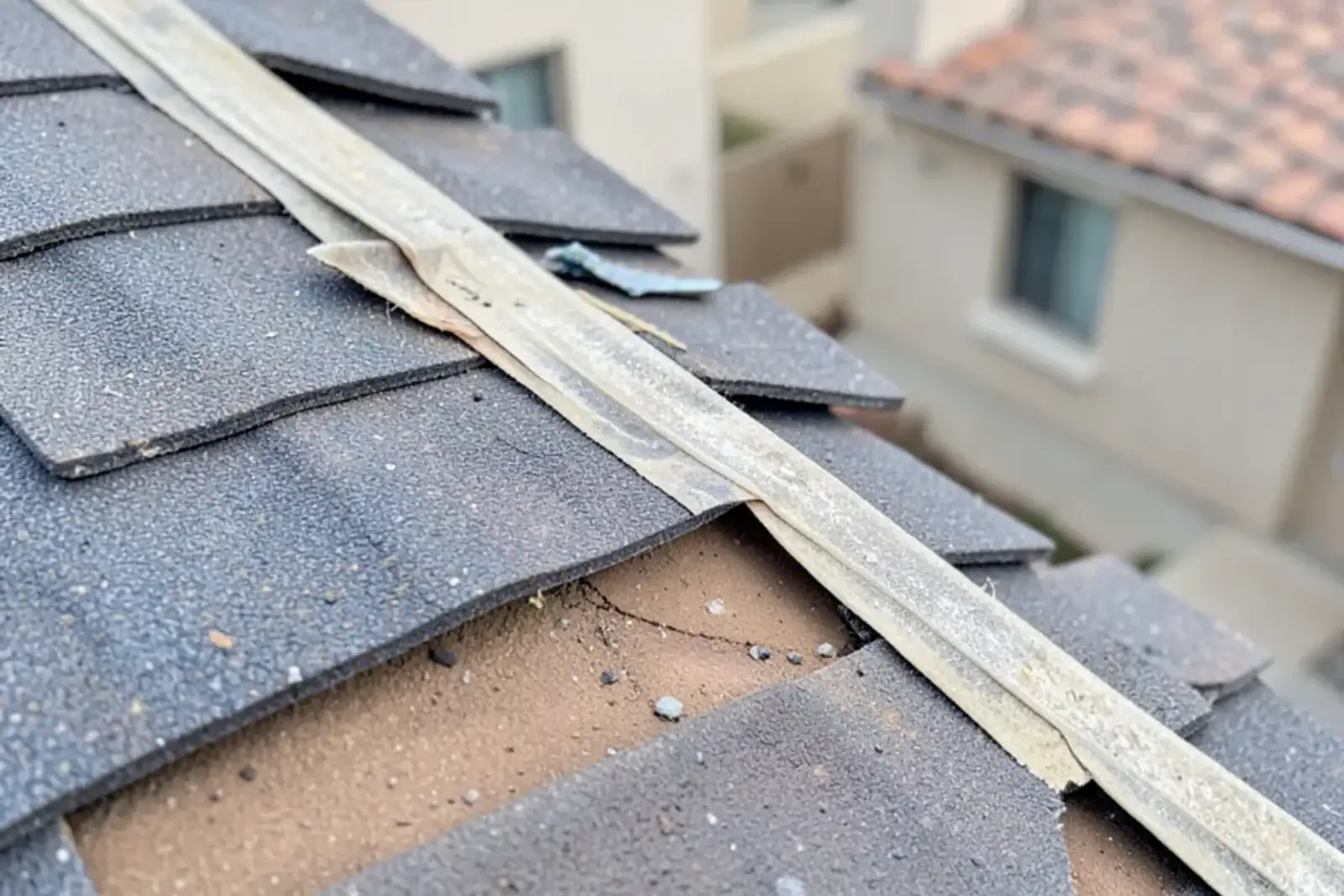
- How roofers look at a wind-damaged edge
- What roofers weigh on a wind repair, and the trade-offs
- What to do before and after the inspection
- Why foothill roofs in La Crescenta-Montrose take the brunt
- Where the repair stops being a patch
- Booking a roof inspection after a Santa Ana wind event
- Common questions
Santa Ana winds are dry, strong offshore winds that tend to blow in fall and winter. They hit a roof at its edges first. Shingles lift at the eaves and rake, ridge caps shift, fascia pulls away from the rafter tails and flashing bends back. The damage looks small from the street, and it can leak at the next rain.
You can learn a lot from your yard. This guide covers what to check from the ground, what each sign means and when to call. Our emergency roof repair work includes inspections after a wind event.
Wind damage to a roof: what to check from the ground
Walk the whole house, then step back far enough to see each slope. Bring your phone and use the zoom. Look for these signs, listed from most to least obvious:
- Missing shingles or tiles, shown by bare patches, dark underlayment or debris on the ground
- Lifted or creased shingle tabs, shown by wavy lines or tabs that sit proud of the surface
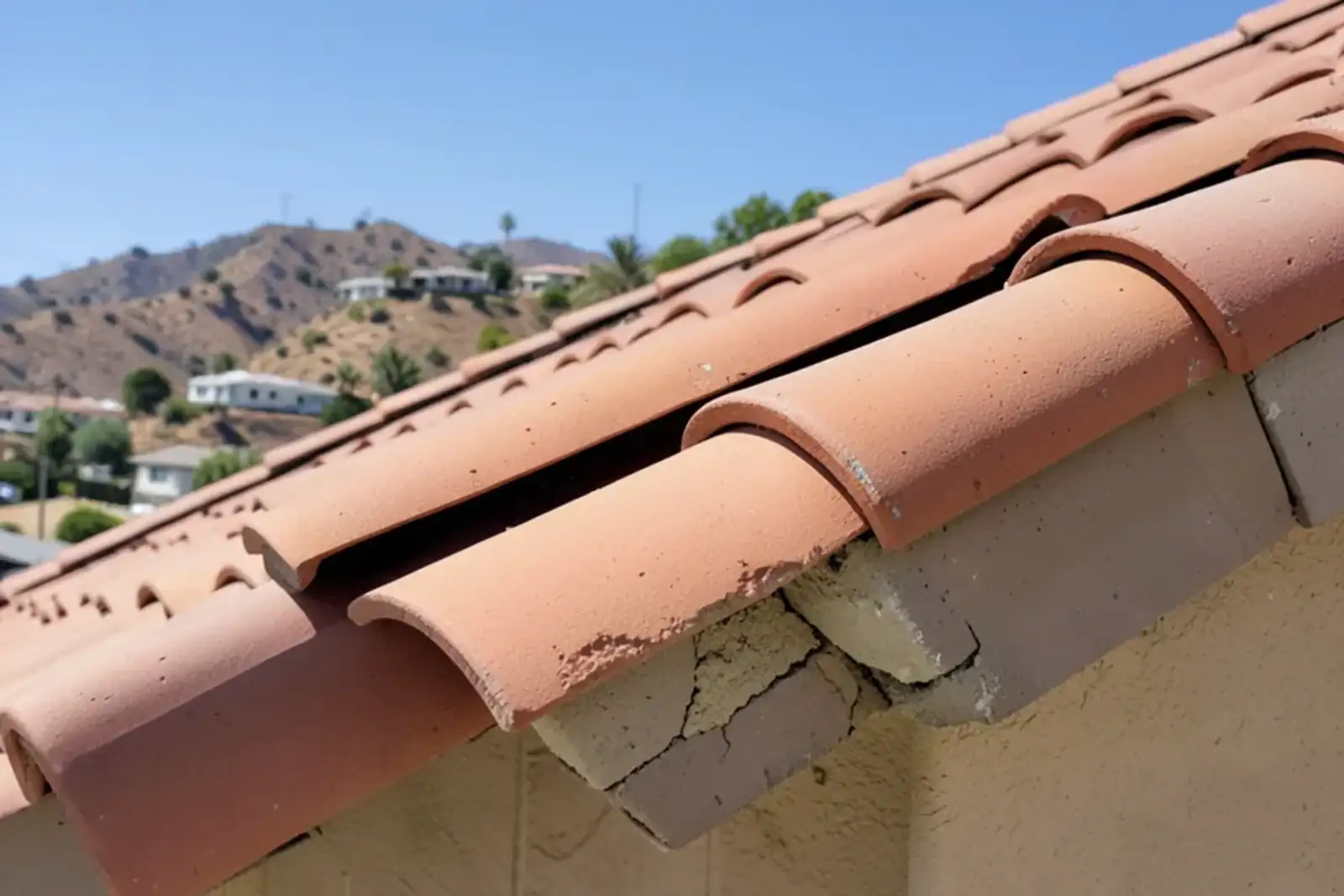
- Shifted ridge or hip caps, shown by a crooked line along the top
- Fascia or soffit hanging, shown by loose boards, gaps or a sagging gutter
- Bent or lifted flashing around chimneys, vents and walls
- Debris in valleys and gutters, such as branches, palm fronds and leaves holding water
Check the attic ceiling the next morning too. Daylight through the boards or fresh stains point to a breach. Do not walk on the roof to confirm any of it.
Why Santa Ana winds are hard on roofs
Santa Ana winds are offshore, downslope winds. Cool, dry air from the Great Basin and Mojave Desert funnels through mountain passes, speeds up and warms as it drops toward the coast, often arriving with relative humidity below 10 percent, according to the background summarized on Wikipedia. They blow mainly in autumn, though winter events happen. Gusts can easily exceed 40 mph, and the strongest recorded gust was 97 mph at Whitaker Peak in December 2011.
Three things make that hard on a roof:
- Uplift: Wind passing over a roof lowers the pressure above it and pulls at the edges, ridge and corners hardest.
- Dry heat: Asphalt shingle sealant strips dry and lose grip after a long summer, so tabs let go more easily.
- Repeated gusting: Loose caps, tiles and flashing flutter hundreds of times in one event, and each cycle loosens the fastening a little more.
The result is why a roof can look fine from the street and still be open at the edges.
What the signs usually mean
The table maps a ground-level sign to its likely cause and what comes next. It is a starting point, not a diagnosis.
| What you see | What it often means | Typical next step |
|---|---|---|
| Missing shingles or tiles | Torn off by gusts; underlayment exposed | Cover or patch quickly, then replace |
| Creased or lifted tabs | Sealant bond broken; edges open to rain | Reseal or replace the affected courses |
| Crooked ridge line | Caps loosened or mortar failed | Reset caps and renew the fastening |
| Fascia pulled away | Fasteners or board failed at the edge | Replace the board, then rehang the gutter |
| Gap along a wall or chimney | Flashing bent back or sealant gone | Reform or replace flashing |
Wind often exposes an old weakness. A tile or shingle that was already loose is the first to go, so the repair frequently reaches beyond the piece that fell.
How roofers look at a wind-damaged edge
On a wind job we start at the edges and work inward, because wind enters there. We lift shingle tabs gently to check whether the sealant strip still holds. We look under ridge caps, press along fascia for soft or split wood and follow flashing seams with a gloved finger.
We also check for nails that have backed out and for damage that is invisible from below, such as cracked tile hidden under a neighbor's. Soft or rotted fascia and soffit, the underside of the eave, are common companions to wind damage, because a loose board lets in rain and sometimes small animals. Our wind damage roof repair page covers repair methods in more detail.
Reviewers describe jobs along these lines in Van Nuys. One customer says a piece of fascia blown off in wind was replaced. Another mentions about 50 feet of soffit repaired after a storm. Those are single jobs, and every roof needs its own look.
What roofers weigh on a wind repair, and the trade-offs
Wind repairs are rarely one-size-fits-all, and each choice has a downside worth knowing about.
Reseal tabs or replace them. Hand-sealing a lifted tab is quick and cheap. On brittle, sun-baked shingles it can crack the tab, and the bond often fails again in the next event. Replacing the course lasts longer but costs more and can show against older, faded shingles.
Patch a few shingles or renew the slope. Old shingles do not always match new ones, and a roof that sheds tabs every wind season may be telling you something. If the roof is near the end of its life, repeated patches can cost more over time than one replacement.
Reset ridge caps with mortar or fasten them. Fresh mortar looks original on a tile roof but can crack again. Mechanical fastening holds in gusts and is often the better answer where wind is a regular visitor, though it takes more labor.
Replace fascia or patch it. A split board that is already soft will not hold fasteners. Patching it hides the problem, and replacing it means taking the gutter down and putting it back.
We would rather lay these options out with a written price for each than pick one for you.
What to do before and after the inspection
Before anyone arrives, protect the house and the record:
- Stay off the roof, especially with a wind advisory still in effect.
- Photograph every slope and any debris, with dates.
- Clear branches from walkways and gutters you can reach from the ground.
- Cover openings from inside if rain is coming, with buckets and plastic sheeting on the floor.
- Call for an inspection, and say what you saw and where.
- Ask your insurer what it requires before permanent repairs begin.
After the visit, you should have written findings, photographs and a repair estimate. If the loss may be an insurance matter, we can inspect, photograph and write the estimate, and we can be on site when the adjuster visits. Talks over the amount of a claim are for the policyholder or a licensed public adjuster, not the roofer.
Why foothill roofs in La Crescenta-Montrose take the brunt
La Crescenta-Montrose sits at the foot of the San Gabriel Mountains, with the Angeles National Forest to the north and the Verdugo Mountains to the south. Hillside homes and open slopes catch the downslope gusts that Santa Ana events push through canyons and passes. Roofs there often have exposed ridges and deep eaves where wind can get a grip.
La Crescenta-Montrose is an unincorporated area, so LA County Public Works generally handles building permits, and the county, not a city, is the agency to ask. Cities run their own building departments, which is why the address matters. Confirm requirements with the agency before any larger repair.
We work from Van Nuys and cover La Crescenta-Montrose, and the foothill drive is part of how we schedule the visit. The same wind pattern reaches the Verdugo slopes above Glendale.
Where the repair stops being a patch
A few shingles on a young roof is a small job. A roof that sheds shingles every wind season is telling you something else. When many courses lift, when sealant strips are dusty and dead across the slope, or when repeated repairs pile up, the roof as a whole may be near the end of its life. Ask for a repair price and a replacement price side by side, and get both in writing.
Booking a roof inspection after a Santa Ana wind event
Call before the next rain, not after the first stain. Tell us what you saw from the ground, send your photos and say whether anything is hanging. If water is already coming in, our emergency roof leak repair page and our storm damage roof repair page explain how we would approach a visit. A cover over an open edge is covered in our emergency tarping guide.
Wind took something off the roof? Call (209) 563-1278, describe what you see, and we will set the earliest visit we can.
Quick answers
Can wind damage a roof without any shingles missing?
Yes. Wind can lift shingle tabs and break their sealant bond without tearing them off. The tabs then flap, crease and let rain under the edge at the next storm. From the ground you may only see a wavy line or tabs sitting slightly up. If gusts were strong, ask for an inspection even if nothing visibly blew off.
Does homeowners insurance cover Santa Ana wind damage?
Wind is often a covered cause under homeowners policies, though terms, deductibles and exclusions vary, so read yours. A FAIR Plan policy is a basic fire policy, and wind can be added to it. Photograph the damage, avoid permanent repairs before documenting it, and ask your insurer what it needs. Roof age and condition often affect the outcome.
How soon after a Santa Ana wind event should I have the roof checked?
Book the check within days, and sooner if rain is in the forecast. Wind damage often leaks weeks later, when the first storm of the season finds a lifted tab or open flashing. Santa Ana events mostly come in autumn, though winter ones happen too, so a pre-rain look after the first big wind makes sense on foothill roofs in La Crescenta-Montrose.
Should I secure loose shingles or caps myself?
Not by climbing up. A fall is the worst outcome here, and dry winds make rooftops hazardous. From the ground you can clear fallen branches off walkways and photograph the roof. Leave loose material to a roofer, who can secure it or cover it. Stay clear of any hanging gutter or fascia until it is made safe.