
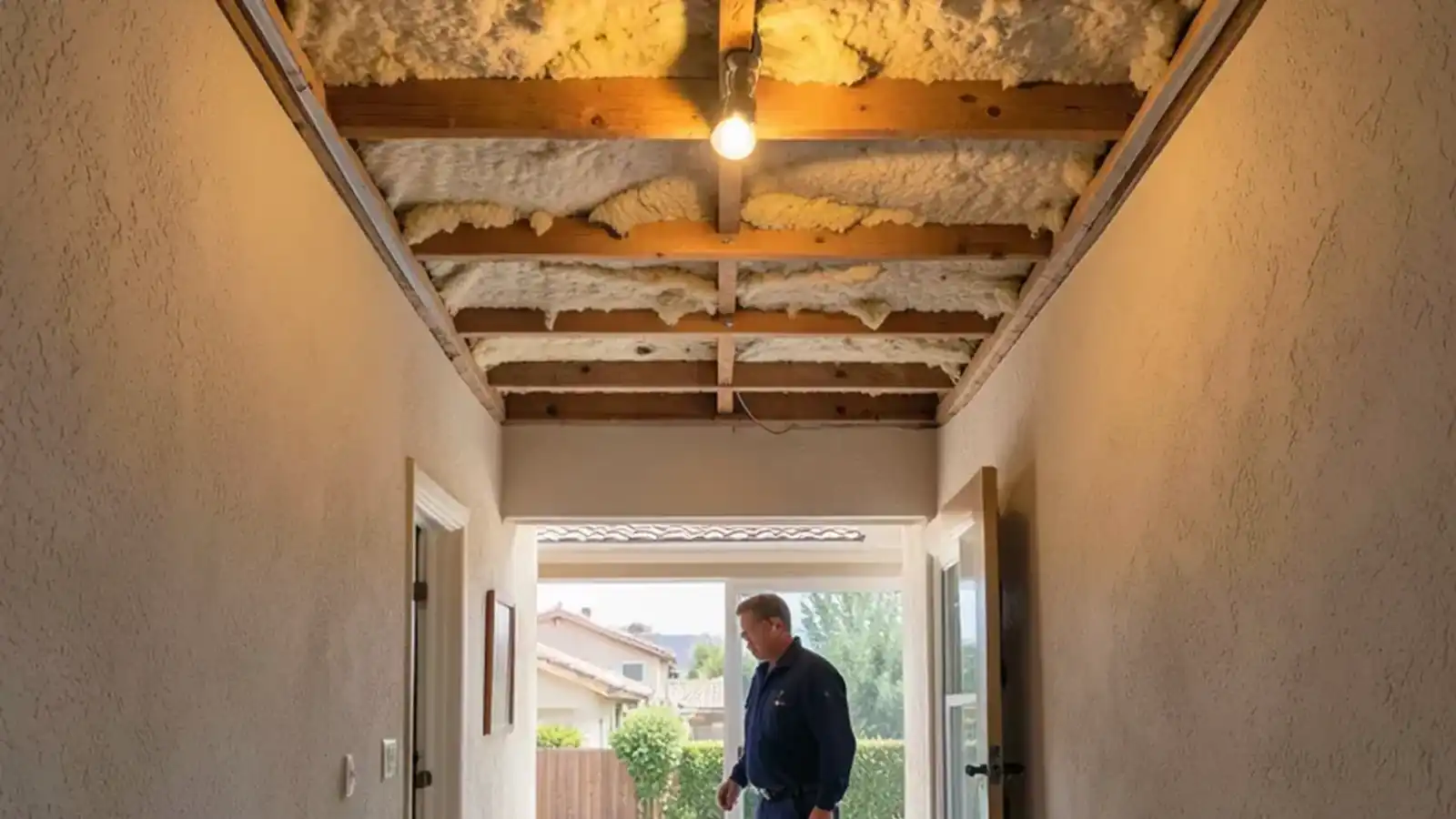
Attic Insulation in Los Angeles, CA
Attic insulation in Los Angeles slows the heat that moves through your ceiling, and it works best after the roof is dry and the attic vents are sorted. Here is how we would assess an attic, what the options are, and what a written quote should cover.
- ★ 4.9 on Google · 69 reviews
- Same-day or next-day bookings
- Based in Van Nuys, CA
On this page
- Signs your Los Angeles attic needs more insulation
- Blown-in, batts or under the roof deck: which fits
- Can old attic insulation stay in place?
- How we would assess and quote attic insulation, step by step
- What affects the cost of attic insulation?
- Title 24, permits and fire-area rules for attic insulation
- Why Clear Shield for attic insulation planning in Los Angeles
- Common questions
Insulation and ventilation do different jobs. Insulation slows the heat that crosses your ceiling. Ventilation carries hot, damp air out of the attic. Attic insulation works best after leaks are fixed and vents are clear, which is why it sits last in the order on our skylights and roof ventilation page.
This page explains how we would look at an attic, what choices there are and what a good quote should say. We assess the roof and attic and write it up; where a specialist insulation contractor would be the better fit for the job, we will say so in the estimate.
Signs your Los Angeles attic needs more insulation
Heat that reaches the rooms below is the main sign. Other clues show up when you look up through the hatch.
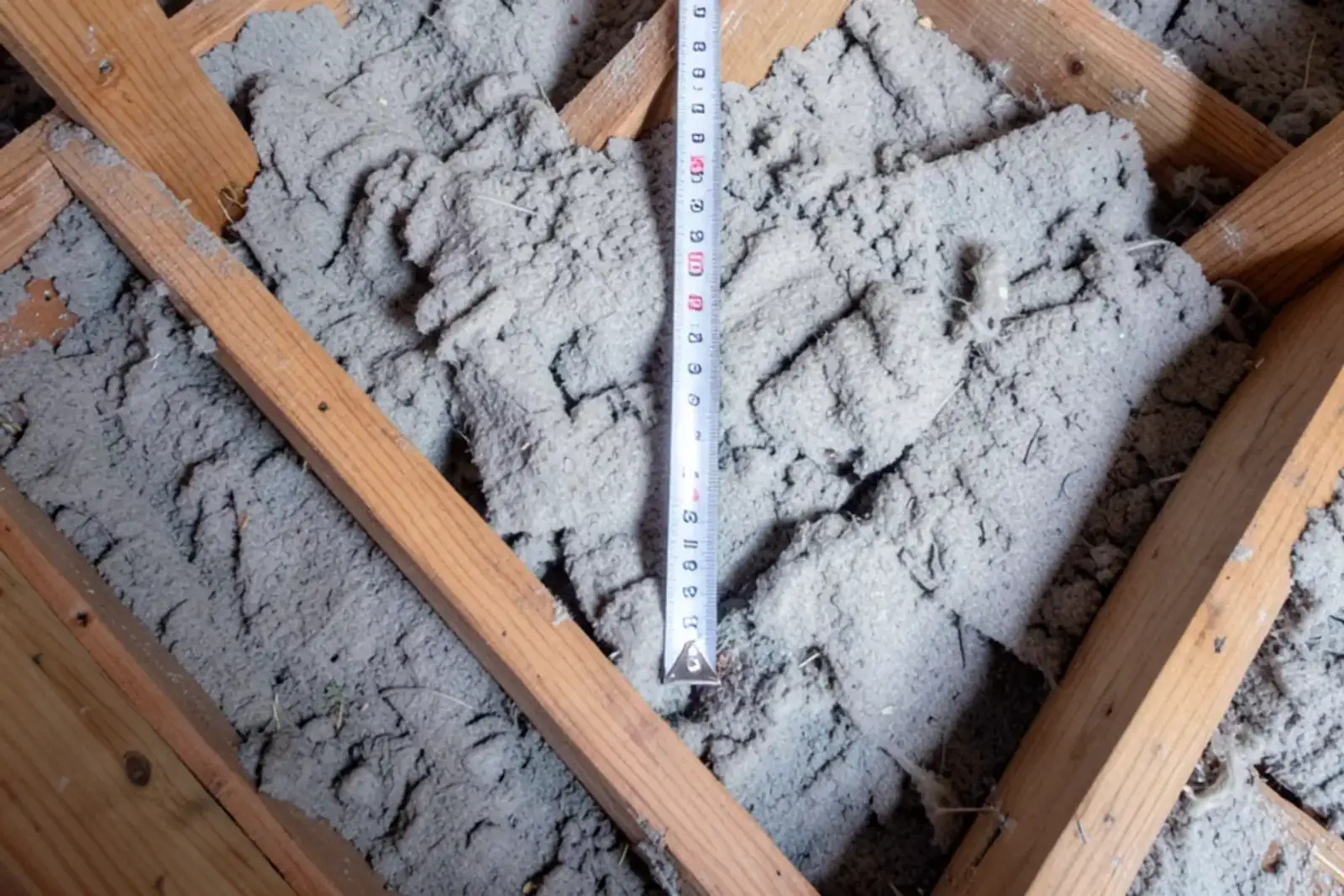
- You can see the tops of the ceiling joists. The insulation is thin or has settled.
- Rooms under the attic run hotter than the rest of the house and the air conditioner runs long.
- Patches of old batts are flattened, stained or missing.
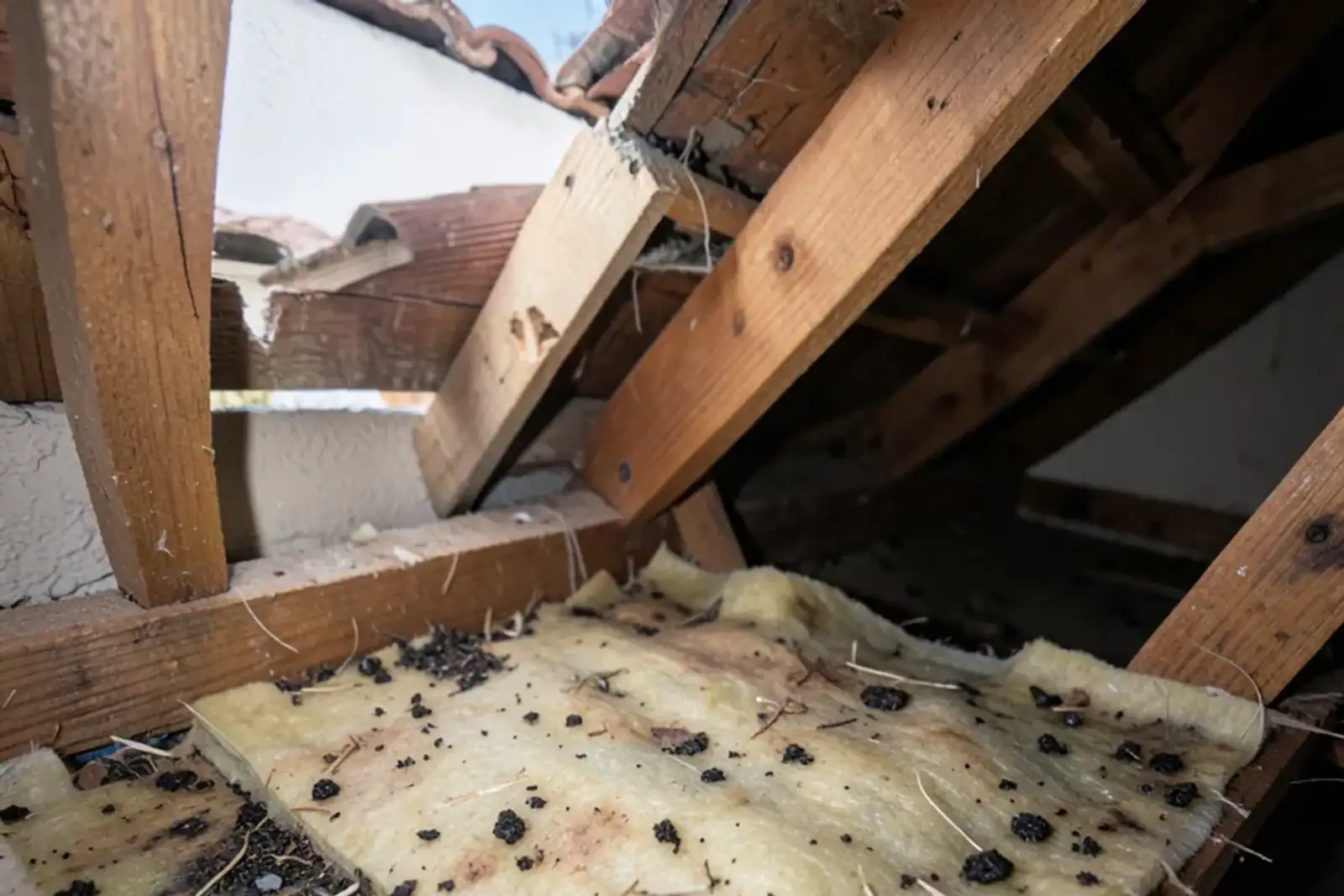
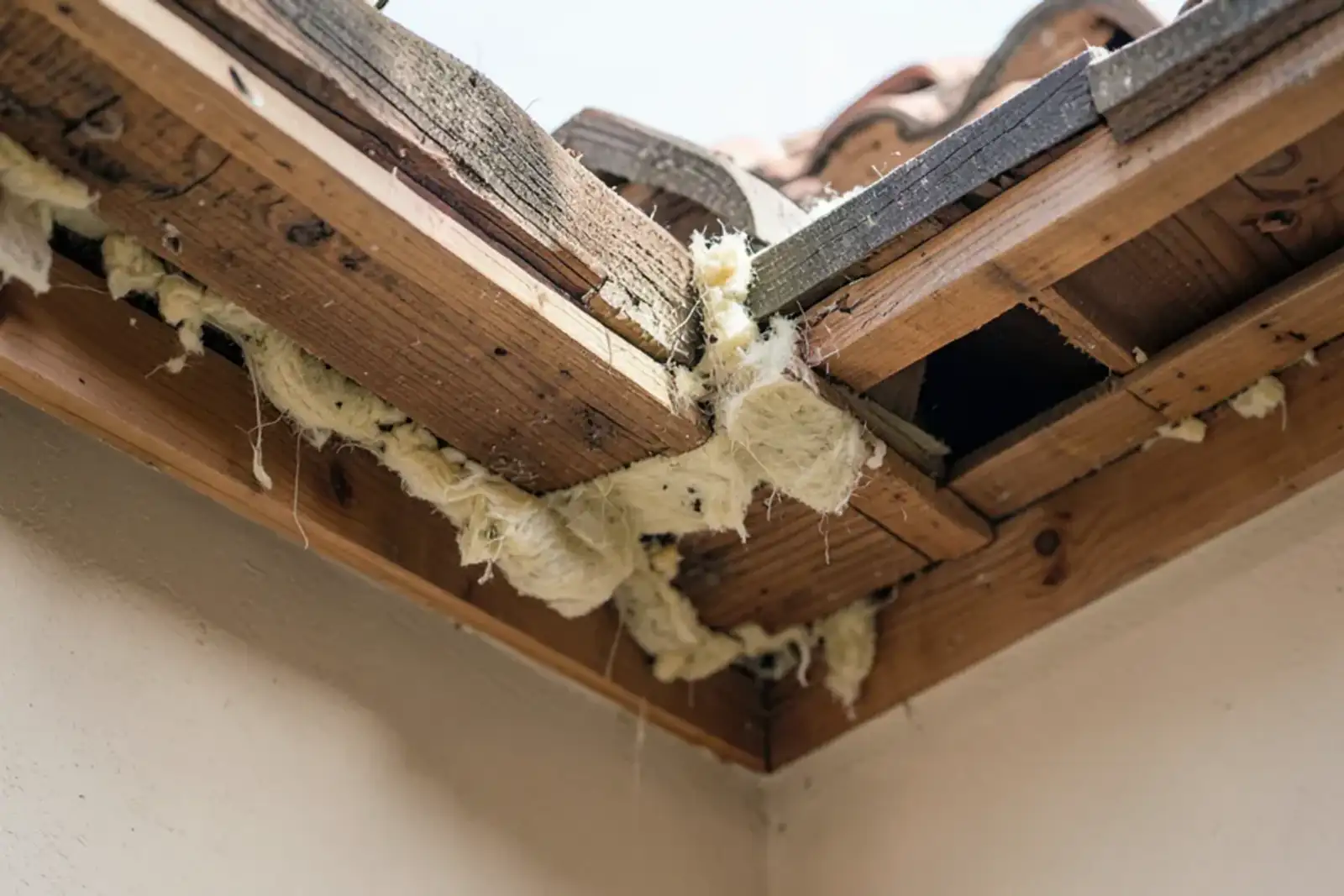
- Droppings or nesting material sit in the insulation, which means rodents have been through.
- Dark stains on the ceiling or damp insulation point to a roof leak that has to be fixed first.
Blown-in, batts or under the roof deck: which fits
Three approaches cover most attics.
| Approach | How it works | Watch for |
|---|---|---|
| Blown-in loose fill | Fiberglass or cellulose blown across the ceiling joists | Needs baffles at the eaves; depth should be even |
| Batts | Pre-cut blankets pressed between joists | Gaps and compression cut their value |
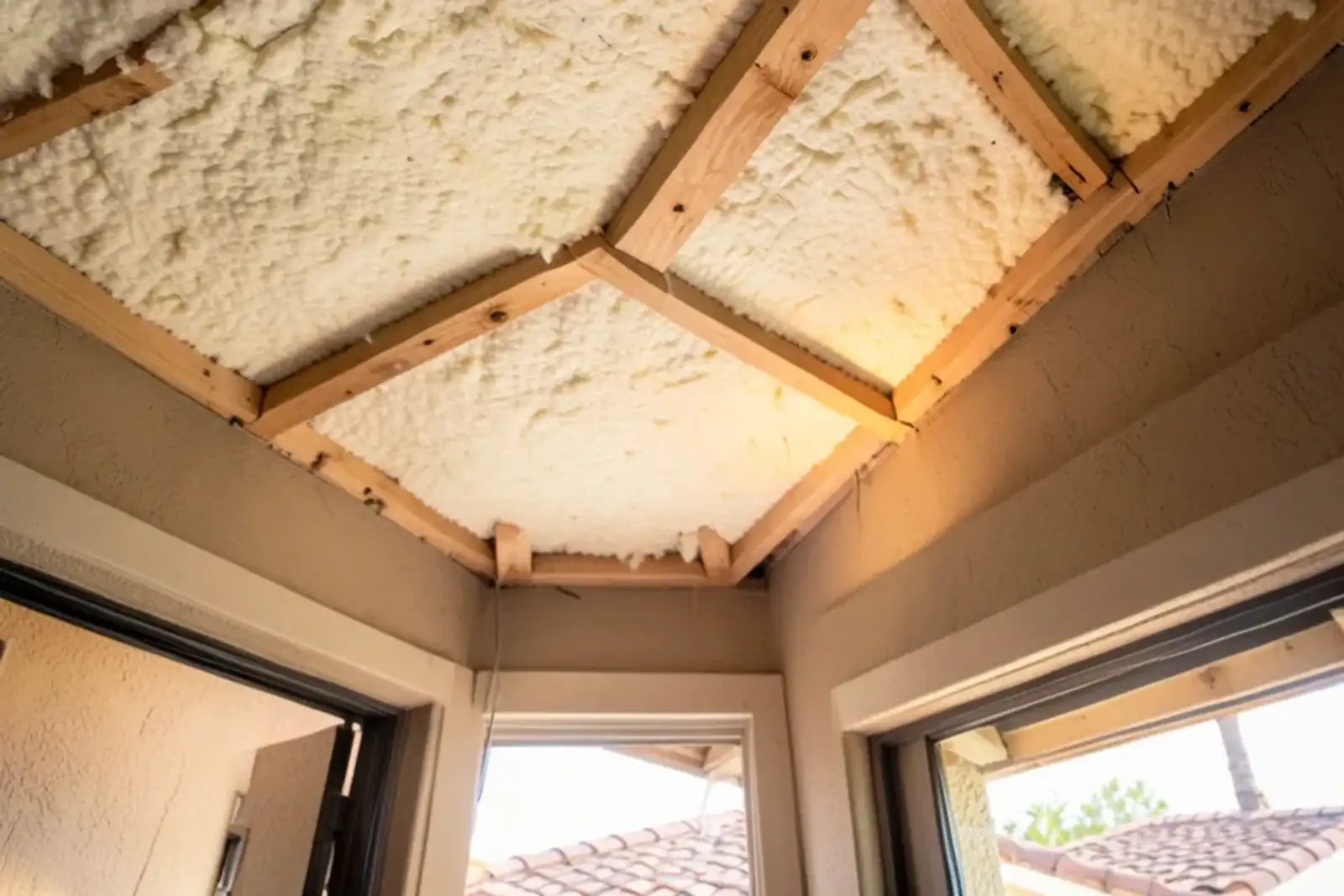
| Foam under the roof deck | Foam sprayed on the underside of the roof boards | Hides the decking; can change how the attic needs to be vented |
Blown-in insulation is the usual choice for an open, flat attic floor. It fills around wiring and odd corners better than batts. Foam under the roof deck turns the attic into part of the conditioned space, which changes the ventilation rules and can hide leaks in the decking. Mineral wool is a loose or batt option some owners choose for fire and moisture resistance, though it costs more than fiberglass or cellulose. Ask your building department and the roofing maker what they require, and get any warranty terms in writing.
Can old attic insulation stay in place?
Often it can, if it is dry and even. It should come out when it is wet, moldy, compacted flat or soiled by rodents, because insulation that has been through any of that has lost most of its value and can hold odors. Old loose-fill vermiculite is a special case. Some of it may contain asbestos, so leave it alone and have a lab test it before anyone digs in. We recommend that step if we see signs, and we do not do the testing ourselves.
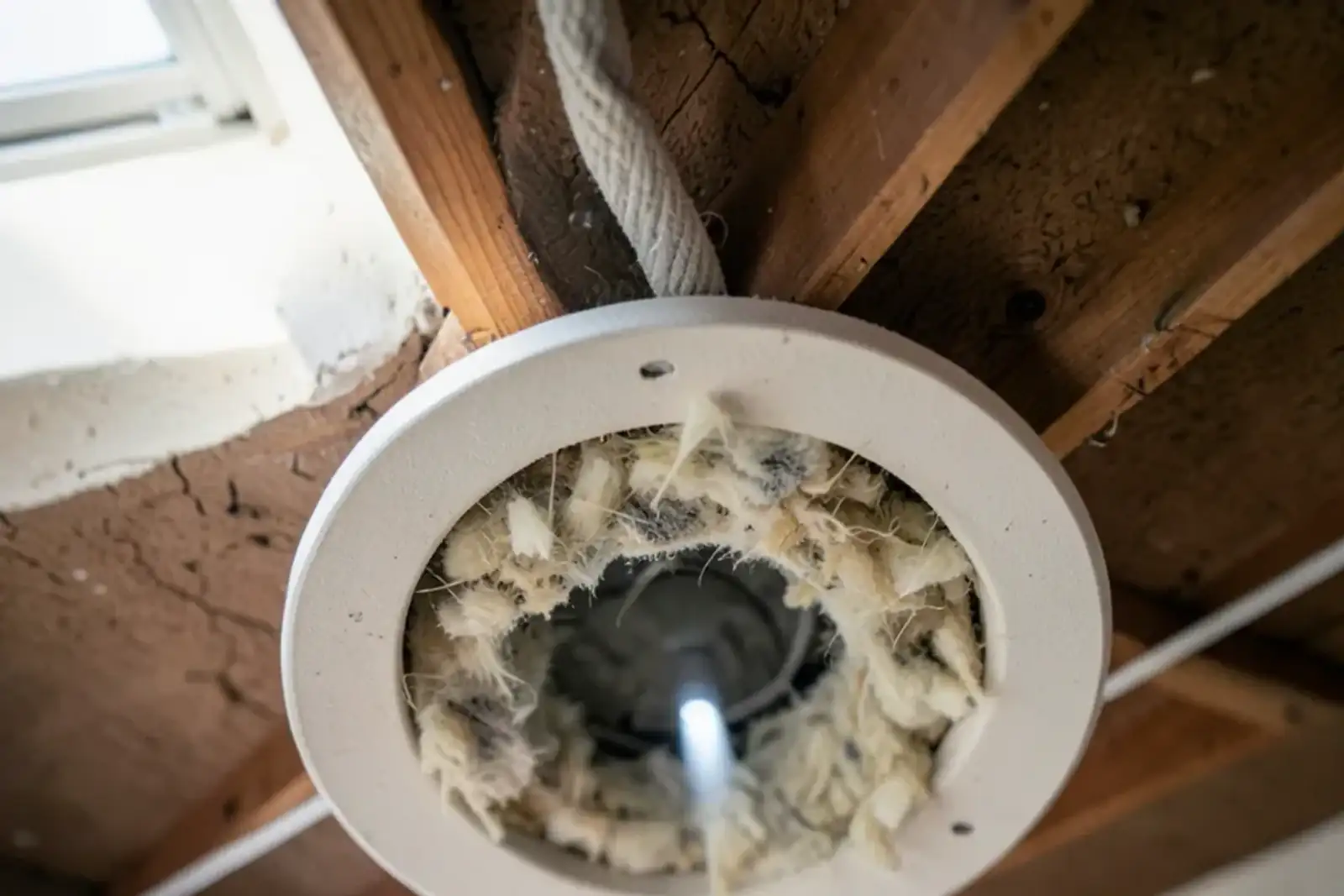
Two older-home details need a look before anything is buried. Cloth-covered knob-and-tube wiring should be checked by an electrician before insulation goes over it. Older recessed lights need clearance unless they are rated for insulation contact.
How we would assess and quote attic insulation, step by step
- Ask about comfort and history. Which rooms run hot, whether there have been leaks and what was done to the attic before.
- Check the roof and vents first. Leaks, damp decking and blocked intake get written up before insulation goes in.
- Measure what is there. Type, depth and condition are noted and photographed from the hatch.
- Look at the edges and obstacles. Eaves, the hatch, recessed lights, wiring and flues are checked for clearance.
- Write a scope. The quote names removal, baffles, air sealing and the final depth to be reached.
- Review the finish. You see photos of the finished attic, including the eaves, before it is closed up.
What affects the cost of attic insulation?
Attic size and access set the base. Removing old, soiled material adds labor and disposal. Rodent clean-up, air sealing around the hatch and lights, baffles at the eaves and new vent work each add a line. A low-slope or tight attic costs more to work in, and so do two-story houses where the hatch is far from the work.
We give prices in writing after seeing the attic. Compare quotes on depth, material type and what happens at the eaves, not only the square-foot total.
Title 24, permits and fire-area rules for attic insulation
California's Energy Code, Title 24 Part 6, sets insulation levels by climate zone, and your zone depends on the address, so use the California Energy Commission's lookup. Insulation levels also show up in the cool roof rules for some re-roofs: the code lists high ceiling insulation among its exceptions, with R-38 the figure named, so roofing and attic choices can affect each other. Our cool roofing page and the guide to Title 24 cool roof rules in Los Angeles cover that side. Ask your building department what applies before you choose. LADWP announced in September 2025 that its residential attic insulation rebate was returning, but terms and funding change, so confirm current eligibility at ladwp.com before you plan around it.
Fire areas add their own questions. Topanga was touched by the 2025 Palisades Fire, and Malibu burned in both the Palisades and the 2018 Woolsey fires. Class A roofing is a first priority in those rebuilds, so plan any attic work together with the roof. Check your address on CAL FIRE's viewer for the zone that applies.
Why Clear Shield for attic insulation planning in Los Angeles
We do not claim past insulation jobs here. What reviewers describe from Van Nuys is a way of working: a thorough inspection that finds hidden problems, pictures sent while the work is under way, and a written explanation of what needs to be replaced. In one review, the hidden finds were a badly placed roof vent, damaged fascia and missing bird blocking.
What Van Nuys customers say about attic inspections
“The crew’s workmanship looked top-notch, and they kept me updated by sending drone photos of the roof work as it happened, which was really helpful since I wasn’t about to climb up there myself!”
“They also found hidden roof problems we had no idea about, including a poorly placed roof vent, fascia damage, and the need for bird-blocking protection.”
“They completed a thorough roof cleaning, handled the gutter issues carefully, and also power washed the surrounding areas to leave everything looking clean and well kept.”
4.9 on Google · 69 reviews as of November 2026. Read all reviews
Foothill and hillside homes get their own checks. La Cañada Flintridge sits below mountains that burned in the 2009 Station Fire. Sierra Madre has cottages under heavy tree canopy, and Glendale has Spanish Revival homes in Rossmoyne and Verdugo Woodlands where tile work needs care. When attic work comes before a re-roof, see our skylight replacement and skylight repair pages, since both often come up on the same visit.
Attic Insulation: common questions
How much attic insulation do Los Angeles homes need?
It depends on your climate zone and the Energy Code that applies to your address, so look it up on the California Energy Commission's zone lookup instead of trusting a rule of thumb. Many older Valley homes have little or none. We would measure the depth you have, note the type and flag gaps near the eaves before quoting any added amount.
Should insulation be done with a re-roof?
Usually after the roofing work, not during it. Tear-off and nailing send dust and debris through the attic, and you do not want that in new insulation. Plan the sequence together: leaks and decking first, vents next, insulation last. A cool roof rule can also depend on attic insulation, so mention your plans to the building department.
Can old insulation stay in place?
Dry, even insulation in good shape can stay, and new material can go over it. Wet, moldy, rodent-soiled or heavily compressed insulation should come out first. Loose, pebbly vermiculite from older homes may contain asbestos, so stop and get a lab test before anyone disturbs it. We would flag it and not touch it.
Does attic insulation in Los Angeles cut cooling bills?
It usually helps, since it slows heat moving from a hot attic into the rooms below. Results depend on the starting level, duct location, air leaks and how well the attic vents. Fixing air leaks around the hatch and lights can matter as much as the added depth. Ask for a before and after plan, not a promised saving.
Will attic insulation block my attic ventilation?
It can, if it is blown to the eaves without baffles. Baffles are rigid channels that hold insulation back from the soffit slots so air can still enter at the bottom. Any attic insulation job in Los Angeles should leave the intake clear. We would check the eaves before and after the work and photograph them.
Areas served for attic insulation
- Hacienda Heights, CAHillside 1960s-70s homes on sloped lots often have attics with tight eaves, where baffles and even insulation depth need a careful look.
- Casa Conejo, CAHomes dating from the 1960 start of the community are old enough that original attic insulation may be thin, settled or missing.
- Rialto, CAAn inland city with hotter summer days than the coast, where heat moving through the attic ceiling drives cooling use.
- Norwalk, CALarge postwar neighborhoods have attics from several decades back, so old batts may be flattened, stained or sparse.
- San Marino, CAEstate-scale Period Revival homes have large, complex attics, and design review shapes any roof work done alongside them.
- La Palma, CAA small Orange County city of same-age tract homes, so many attics share the same original insulation and the same likely gaps.
- Calabasas, CAFoothill homes near the west Valley, many in HOA tracts, where attic work is often planned with a roof that must meet fire rules.
- Cudahy, CAVery dense, narrow lots make access hard, so we plan how to reach the attic hatch and move material before quoting.
- Yorba Linda, CAHillside tracts burned in the 2008 Freeway Complex Fire, so attic work is often planned with Class A roofing and vents.
- La Cañada Flintridge, CAMountains rise directly above the city, so attic insulation and vent choices are often decided alongside fire-area roof rules.
- Topanga, CA
- Glendale, CA
- Beverly Hills, CA
- Santa Barbara County, CA
- Cudahy, CA
- East San Gabriel, CA
- Valinda, CA
- Duarte, CA
- Lomita, CA
- Lennox, CA
Need attic insulation?
Call and tell us what you are seeing on the roof. We will take it from there.