
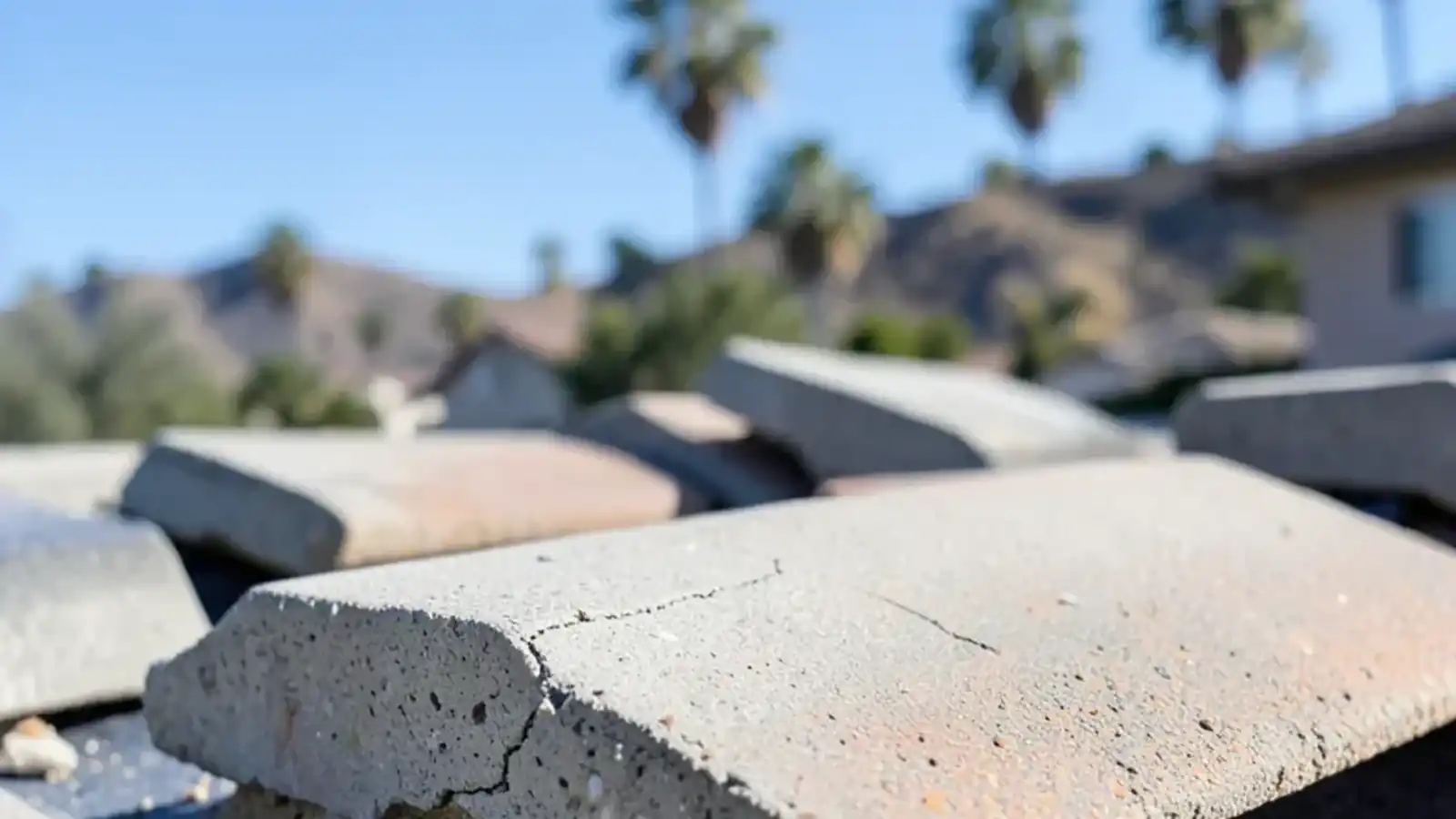
Emergency Roof Repair
After the Hail: What LA Homeowners Should Inspect
Hail is uncommon in Los Angeles, but a short burst can still bruise shingles, dent vents and crack old tile. Check soft metals and gutters first, since they show dents shingles hide. Photograph what you find from the ground, then book an inspection before the next rain.
- ★ 4.9 on Google · 69 reviews
- Same-day or next-day bookings
- Based in Van Nuys, CA
Published and updated November 3, 2026 · By the Clear Shield Roofers team, Van Nuys, CA
On this page
- Does it hail in Los Angeles, and does it matter?
- Check these first after hail
- What hail looks like on different roofs
- How roofers look for hail damage
- What roofers weigh after hail: repair, replace or leave it
- When a hail claim is worth filing
- Hail damage to gutters, skylights and vents
- Why Burbank homeowners should still look
- Booking a roof check after hail in Los Angeles
- Common questions
Hail does fall in Los Angeles, just not often. Most roofs go years between storms, which is exactly why people miss the damage. Nothing drips right away, and the marks are small.
If you saw stones in the yard, check before the next rain. This guide shows what to look at first and what it means. It sits within our wider emergency roof repair work, and hail damage roof repair is a service we would assess case by case.
Does it hail in Los Angeles, and does it matter?
It is uncommon, and a short burst of small stones does little to a sound, newer roof. It does more to an old one. Van Nuys averages about 77 days a year at 90°F or hotter by NOAA's normals, compared with about 26 downtown, and long heat dries out shingles and rubber parts until they bruise and crack easily.
Material matters too. Soft metal, thin shingles, aged tile and low-slope coatings show hail first. That is why one house can look untouched and the next can have a damaged roof after the same storm.
How big are the stones in a Los Angeles hail event?
Usually small. In the winter storm of February 23, 2023, hail was reported in Pasadena, Long Beach, Santa Monica and Sylmar, where it coated parking lots, according to ABC7. Stones that size mostly mark soft metal and tired roofs. Damage to a sound asphalt shingle roof generally starts with stones around an inch across or larger, and that is rare here. Local history varies by address, and storm-report sites show hail frequency near Altadena as low.
Check these first after hail
Start on the ground. Hail leaves its clearest marks on things that dent easily, and those marks tell you whether the roof deserves a closer look.
- Walk the yard and check the lawn, cars, patio furniture and planters for round dents or broken leaves.
- Look at the gutters and downspouts. Aluminum dents quickly, and dents tell you stones came down hard.
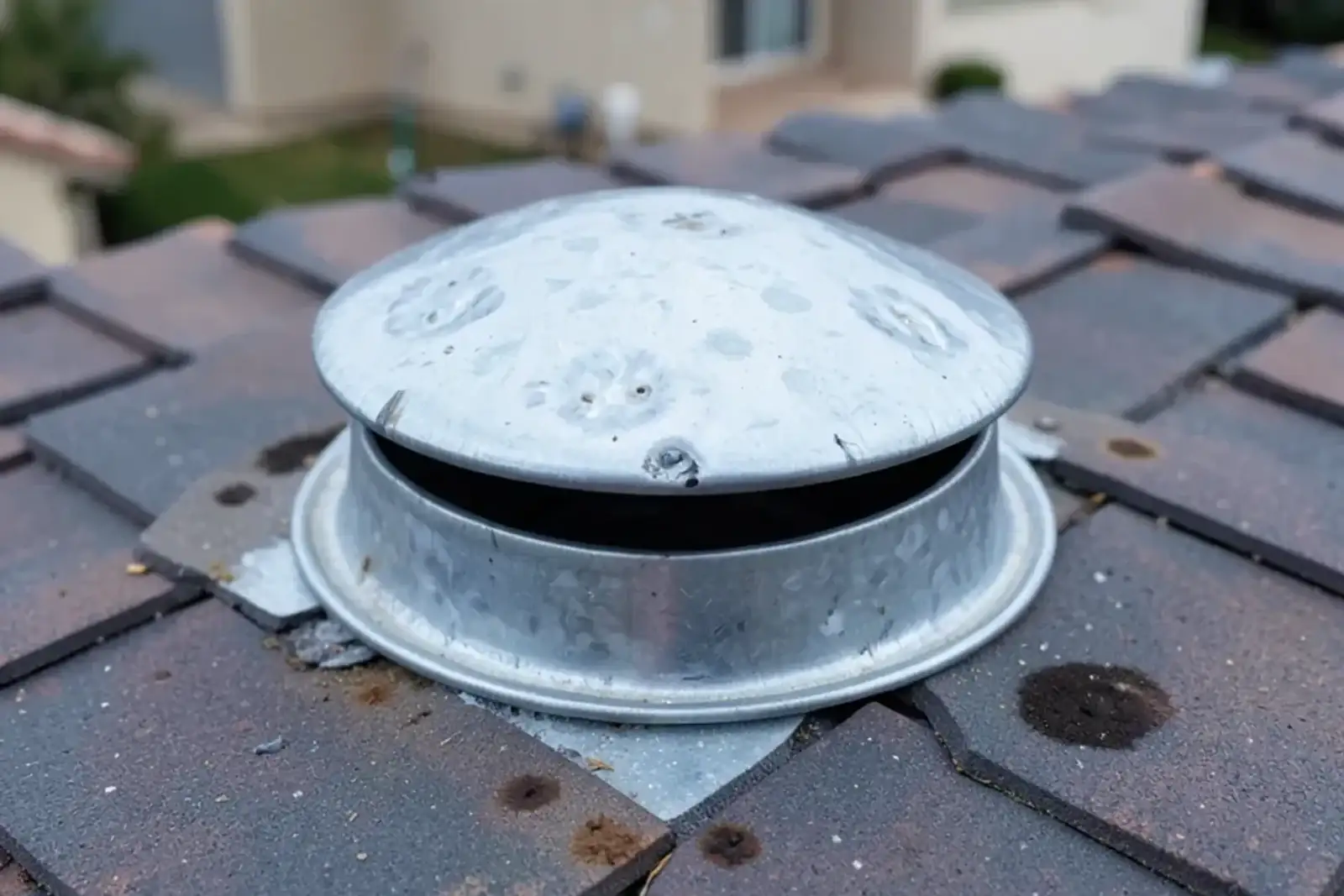
- Check vents and flashing you can see from the ground, especially soft galvanized caps.
- Look at skylights and window screens for cracks and tears.
- Photograph everything with dates, before rain washes it away.
- Do not climb up. Wet shingles and tile are slick.
If the soft metals show dents, ask for an inspection. If you find nothing, the roof may be fine, but small bruising can still hide in the shingles.
What hail looks like on different roofs
Each roof type shows hail a different way. This table is a guide, not a diagnosis.
| Roof type | What hail tends to leave | What to check |
|---|---|---|
| Asphalt shingle | Round bruises, bare mat, loose granules | Slopes facing the storm; granules in gutters |
| Concrete or clay tile | Chips, hairline cracks, broken corners | Tile edges and ridges; pieces on the ground |
| Metal | Dents, scuffed coating at fasteners | Panels and seams; flashing |
| Flat or low-slope | Bruised or cracked membrane, displaced gravel | Seams, drains and ponding areas |
Granule loss on its own can come from age. We compare shingles with nearby soft metal. If the vents carry the same pattern, hail is the likely cause.
How roofers look for hail damage
This is where an experienced eye helps. We start with soft metals because they give a clean record. Then we move to the shingle or tile field and press gently at bruised spots, since a hail bruise often feels soft and spongy. We check slope by slope and note which directions carry the marks, because hail usually favors the side facing the storm.
We also look at details that homeowners rarely see. We check vent boots, skylight curbs and flashing joints, plus gutters and the first row of tile or shingle. On a flat roof, we look for cracks in the coating and water that sits in low spots.
One reviewer in Van Nuys describes a roof inspection that documented damage for an insurance claim. Our hail damage roof repair page explains how we would approach an inspection and quote.
What roofers weigh after hail: repair, replace or leave it
In a place where hail is rare, the right call is often smaller than the claim letter implies.
Dented metal only. Dents in vents and gutters can be cosmetic. If the metal still sheds water and the seams hold, replacing a few caps is cheaper than any roof work. The trade-off is that the dents prove hail fell, so photograph them before anything is changed.
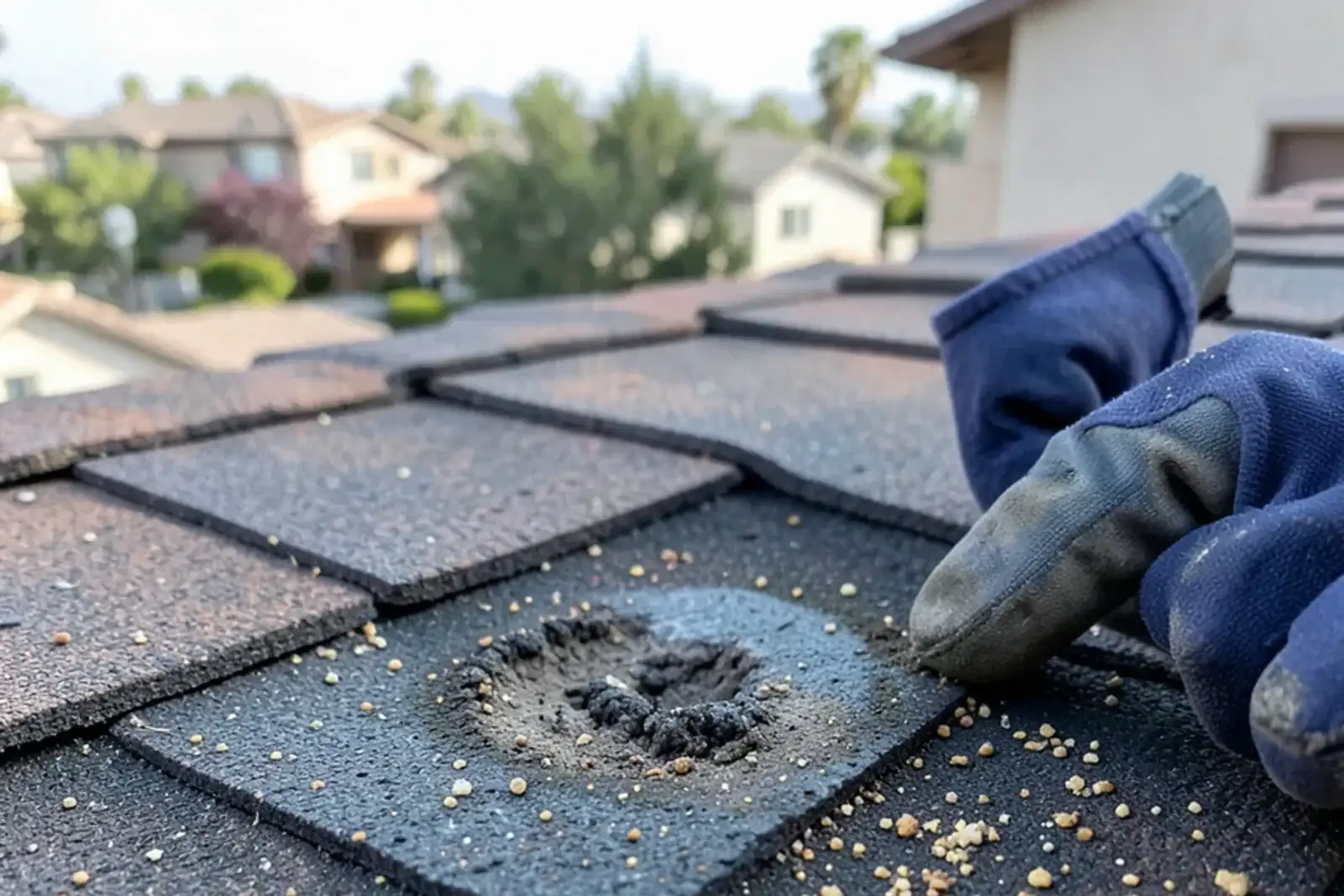
A few bruised shingles. Spot replacement is possible on a young roof. On an older roof, lifting tabs can crack them, and new shingles will not match faded ones, so the patch can look obvious. If bruising is widespread, the mat has lost granules and the roof is aging faster than it looks.
Tile with chips. Replacing individual tiles is the usual answer. The risk is matching, since old tile weathers differently, and walking on brittle tile causes new breaks.
Claim or pay out of pocket. A small repair under the deductible may not be worth a claim. A widespread loss on an older roof may be. Ask your insurer how roof age and condition affect coverage before you decide.
We would rather tell you that a roof is fine than replace it for dents that did not matter.
When a hail claim is worth filing
Whether it is worth filing depends on the damage, your deductible and your roof's age. Hail is often a covered cause, but terms vary, so read your policy. Ask your insurer how roof age and condition affect coverage, since insurers consider both.
A few practical points:
- Photograph before anything is cleaned or repaired.
- Get an inspection report and a written repair estimate.
- Ask what documentation your insurer wants.
- Know that a FAIR Plan policy is a basic fire policy, with wind and hail as add-ons.
We can inspect, photograph and document damage, write a repair estimate and be on site when the adjuster visits. Negotiating the claim itself is for you or a licensed public adjuster.
Hail damage to gutters, skylights and vents
Gutters and vents are the quickest read on a storm, and they are often the cheapest repair. Dented aluminum gutters may be only cosmetic. A crushed seam or bent hanger can send water down a stucco wall. Cracked skylight glazing or domes leak sooner or later. Vent caps that are dented or split let in rain and small animals.
Repairs can be small, and they can prevent a larger one. Ask for gutters, vents and skylights to be checked on the same visit as the roof.
Why Burbank homeowners should still look
Burbank sits at the foot of the Verdugo Mountains in the east San Fernando Valley, and hail is as uncommon there as anywhere in the county. That makes a homeowner's first question a fair one: was it hail, or was it age? Burbank has its own building department for permit questions, so the address matters for repairs beyond a patch.
We work from Van Nuys and cover Burbank. We would tell you plainly whether we found real hail damage or ordinary age wear, because the honest answer saves you money either way.
Booking a roof check after hail in Los Angeles
Call with what you saw in the yard, the gutters and the vents, and send your photos. Because hail is uncommon here, we would expect most visits to find either minor metal dents or age wear, and we will say which. Our storm damage roof repair and emergency roof leak repair pages explain how we would approach a visit, and our guide to meeting an insurance adjuster covers the claim side.
Think hail hit your roof? Call (209) 563-1278, describe what you found, and we will set the earliest visit we can.
Quick answers
Does it really hail in Los Angeles?
Rarely, but it does happen, usually in cold winter storms that pass through briefly. Downtown Los Angeles gets about 14 inches of rain a year by NOAA's 1991-2020 normals, mostly December through March, and hail is a small part of those storms. Small stones do little to new roofs, though aged shingles and soft metal can show marks.
How can I tell hail damage from normal roof wear?
Look at the pattern. Hail leaves scattered round marks, often on the slope facing the storm and on soft metals such as vents. Age wear spreads evenly across every slope as curling and granule loss. Photograph the vents and gutters first, since dents there confirm a hail strike. When unsure, ask for an inspection.
Is hail damage covered by homeowners insurance?
Often, since hail is a standard covered cause under many homeowners policies, though terms, deductibles and roof age conditions vary. A FAIR Plan policy is a basic fire policy, and wind and hail coverage can be added. Read your policy, photograph the damage, and ask your insurer what it needs before repairs.
How big do hailstones have to be to damage a roof?
Small pea-size stones mostly mark soft metal and old, brittle roofs, while stones around an inch or larger are where damage to sound asphalt shingles generally starts. Los Angeles hail is usually small and brief, as in the February 2023 storm that dropped hail on Pasadena, Santa Monica and Sylmar. Dents on vents and gutters are the quickest sign that stones were large enough to matter.
How soon after hail should I check my roof?
Once it is safe to look, and ahead of the next rain. A bruise or crack that sheds light rain can leak in a heavier storm. Stay off wet roofs. Walk the yard first, look at the gutters and vents from the ground, and take photos. Then call and describe what you saw.