
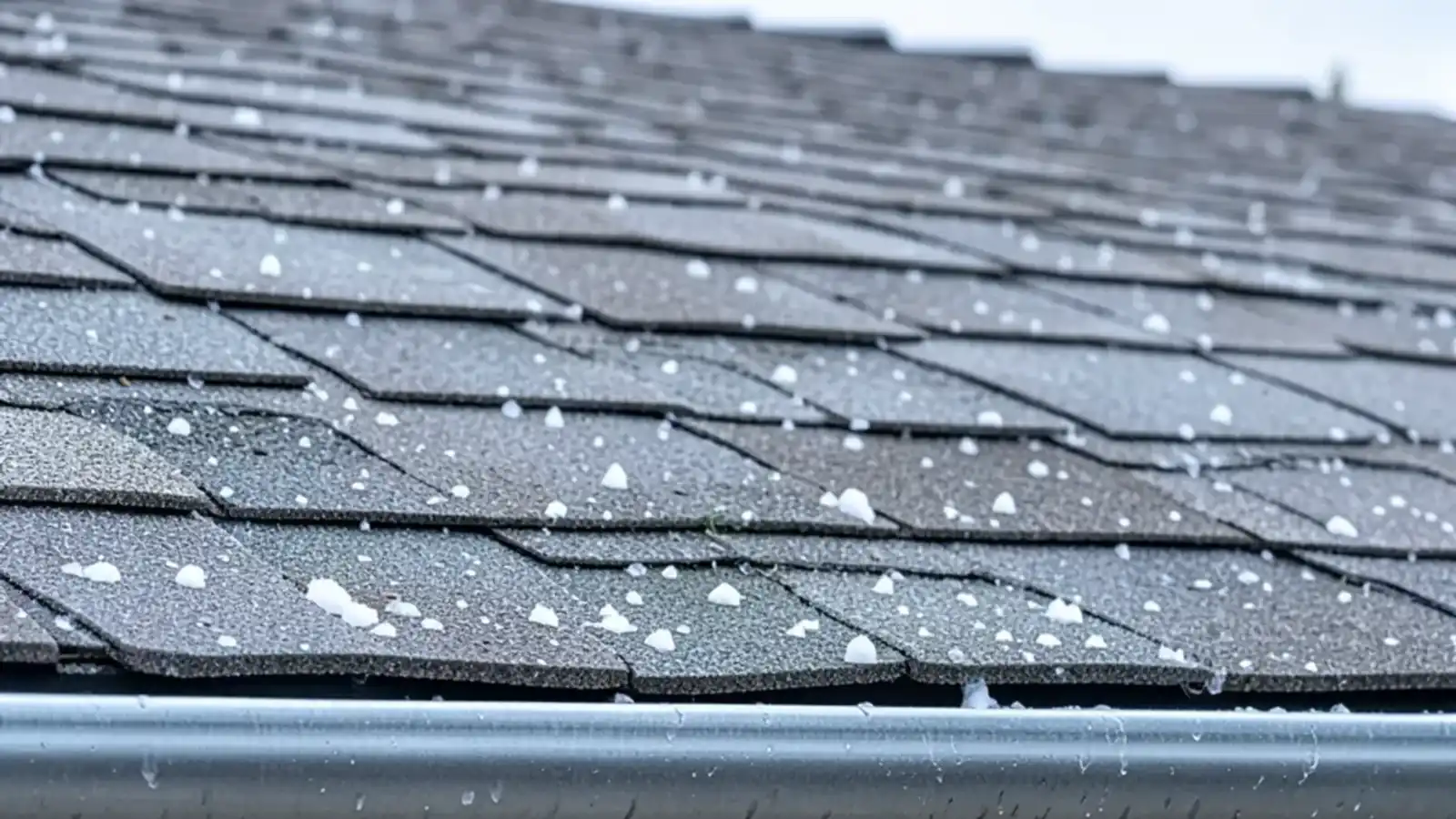
Hail Damage Roof Repair in Los Angeles, CA
Hail damage roof repair in Los Angeles starts with an inspection, because hail is uncommon here and its marks are easy to miss from the ground. We check the roof covering, vents, flashing and gutters, photograph what we find, and put any repair in writing. Same-day or next-day bookings, as the schedule allows.
- ★ 4.9 on Google · 69 reviews
- Same-day or next-day bookings
- Based in Van Nuys, CA
On this page
- Hail damage roof repair in Los Angeles: why a rare storm still matters
- Signs of hail damage on shingles, tile and metal
- How to check your roof after hail
- Do gutters, vents and skylights need a hail check too?
- Should you file a hail insurance claim, and do repairs need a permit?
- What affects the cost of hail damage roof repair?
- Why Clear Shield for hail damage inspections in Los Angeles
- Common questions
Hail damage roof repair in Los Angeles is an unusual call, and that is part of the difficulty. Hail is uncommon here, so many homeowners do not know what to look for, and a roof can lose protection without a single drip. This page explains how we would inspect and quote hail damage as part of our wider emergency roof repair work.
If hail has already fallen, look before the next rain rather than waiting to see whether a stain appears.
Hail damage roof repair in Los Angeles: why a rare storm still matters
Downtown Los Angeles averages about 14 inches of rain a year by NOAA's 1991-2020 normals, nearly all of it from December through March. Hail is a small, rare part of those storms. When hail has reached the Southland it has generally been small. Pea-sized hail fell in Huntington Beach on March 2, 2015, and the National Weather Service Los Angeles office posted that half-inch hail fell that morning. A short burst of small stones does little to a sound, newer roof. It does far more to one that is already brittle, and Van Nuys averages about 77 days a year at 90°F or hotter, which dries out shingles and rubber parts well before their time.
Damage also depends on what the roof is made of. Soft metals, thin shingles and old tile show it first. That is why the same storm can leave one house untouched and its neighbor with a bruised roof.
Signs of hail damage on shingles, tile and metal
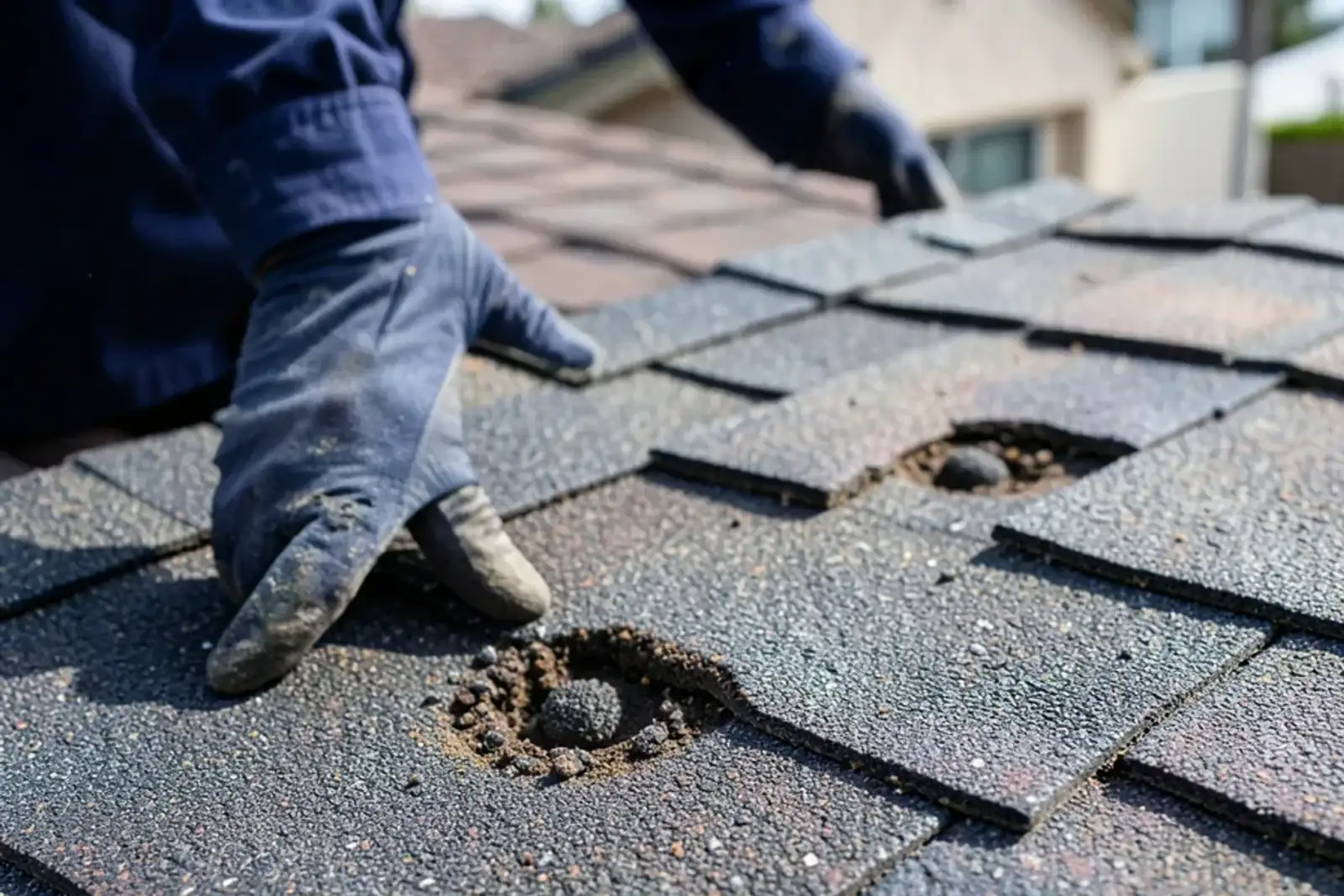
Each material tells you something different, and the marks are easy to confuse with age. We look for a pattern, not a single spot.
| Roof type | What hail leaves behind | What it can lead to |
|---|---|---|
| Composition shingle | Round bruises, bare mat, soft spots, loose granules in gutters | Faster aging, leaks at the bruise |
| Concrete or clay tile | Chips, cracked corners, broken tile edges | Water reaching the underlayment |
| Metal panels and flashing | Round dents, bent edges, scratched coating | Mostly cosmetic, unless a seam opens |
| Flat roof membrane or coating | Punctures, cracked coating, displaced gravel | Ponding and leaks at low spots |
| Vents, skylight frames, chimney caps | Dents, cracks, loosened seals | Drips near the opening |
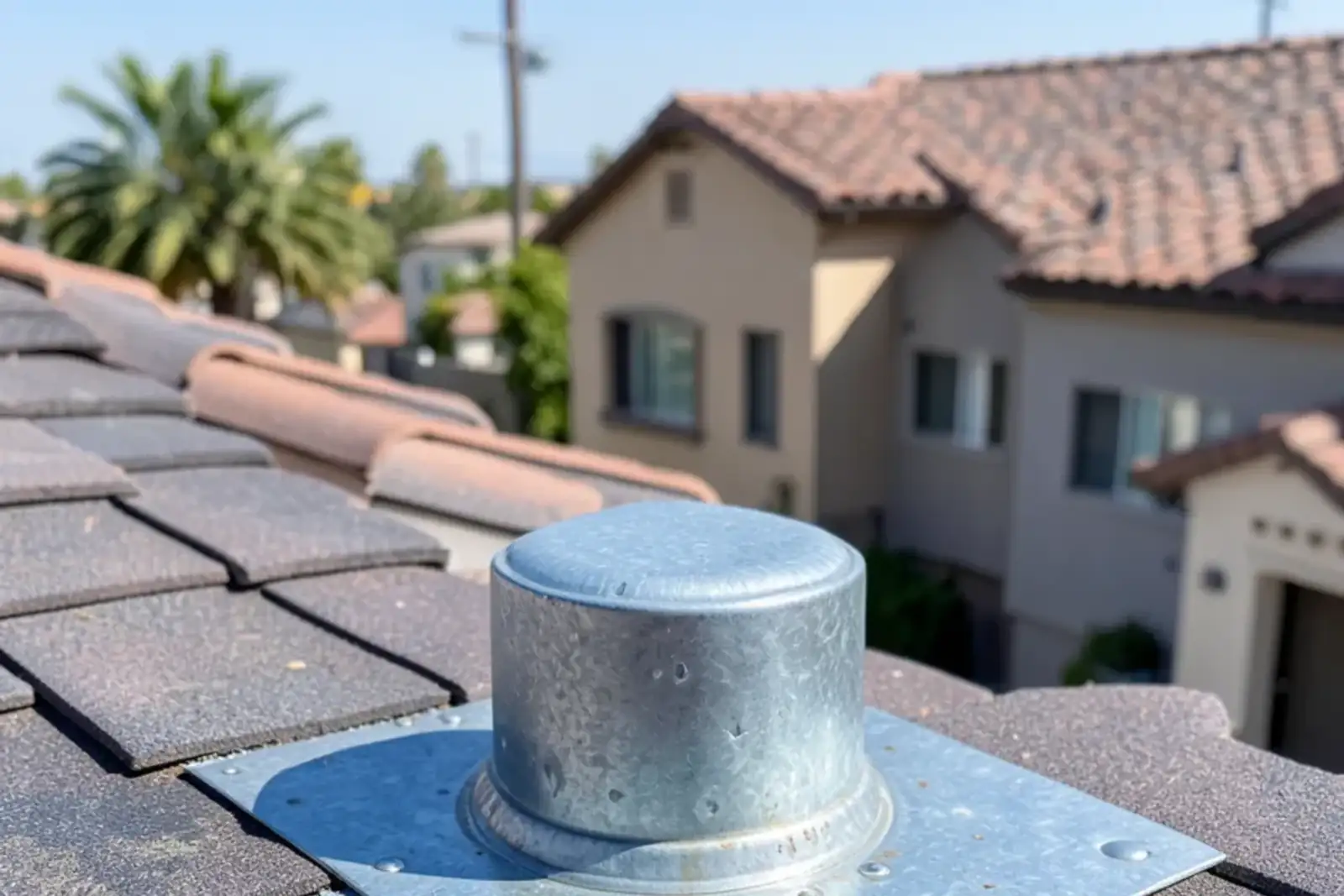
A quick test helps: soft metal such as vent caps and gutters records hail very clearly. If those are dented in a scatter pattern, the shingles or tile around them deserve a closer look.
How to check your roof after hail
Start from the ground, in dry weather, with a camera. Do not climb a roof that is wet or that has lost tile. Photograph the gutters, downspouts, vents and any skylights, then walk the yard for granules, chipped tile or stones still sitting in the gutters.
If the photos show dents or loose material, this is how we would inspect it:
- Listen first. You tell us when the storm hit, what you saw fall and where the stones were largest.
- Check the soft metals. Vents, flashing, gutters and downspouts show the direction and size of the storm.
- Walk each slope. We look at bruises, chips and cracks in the roof covering and photograph each one.
- Check the attic. We look for daylight, damp decking and stains under the worst slope.
- Separate hail from age. Wear spreads evenly; hail marks are random and face the storm.
- Write it up. You get the findings with photos and a repair estimate in writing, in case your insurer asks for one.
Do gutters, vents and skylights need a hail check too?
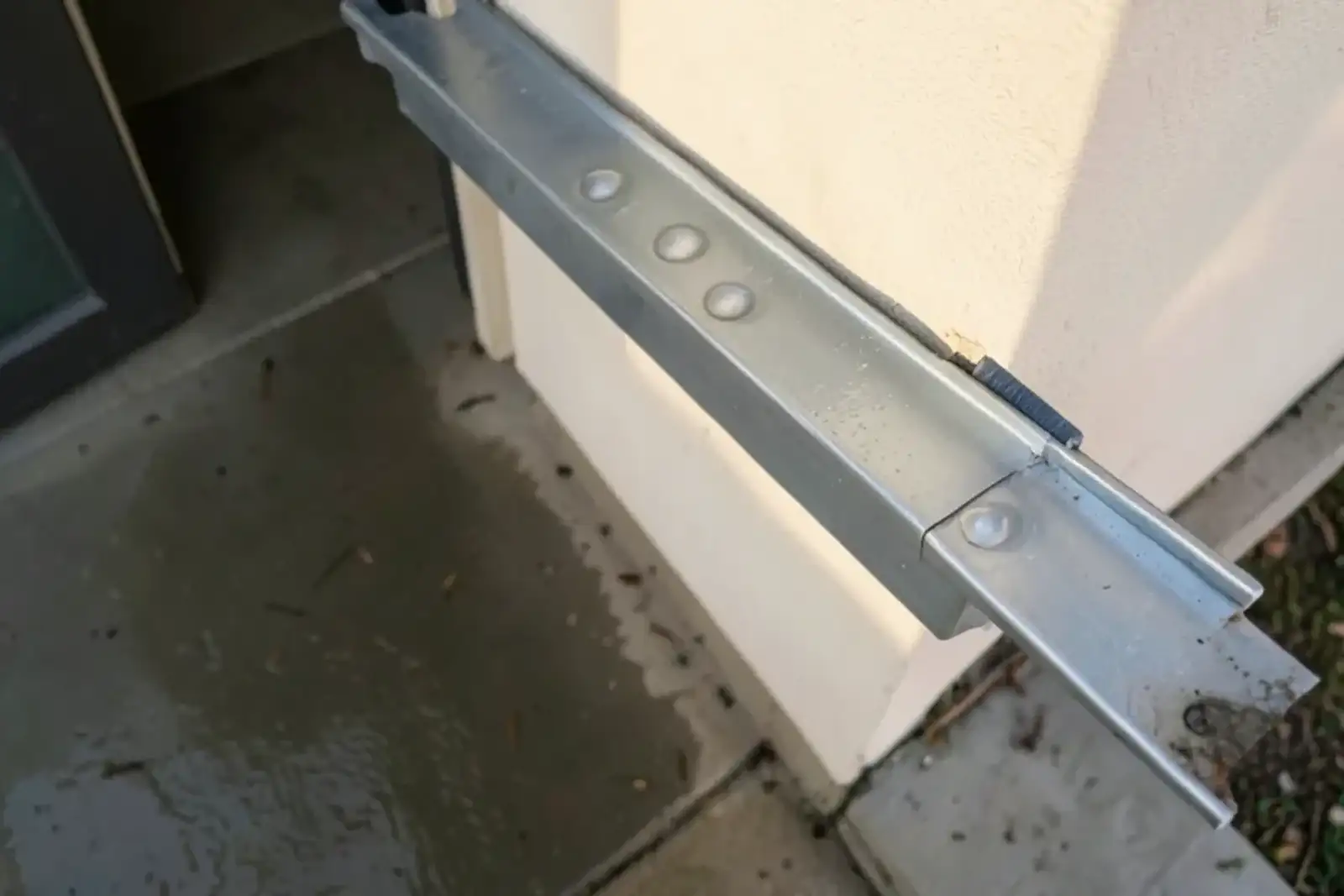
Yes, and they often tell the story faster than the roof does. Aluminum gutters and downspouts dent first, and a bent hanger or opened seam can put water against a stucco wall. Our gutter repair page covers what a damaged run needs.
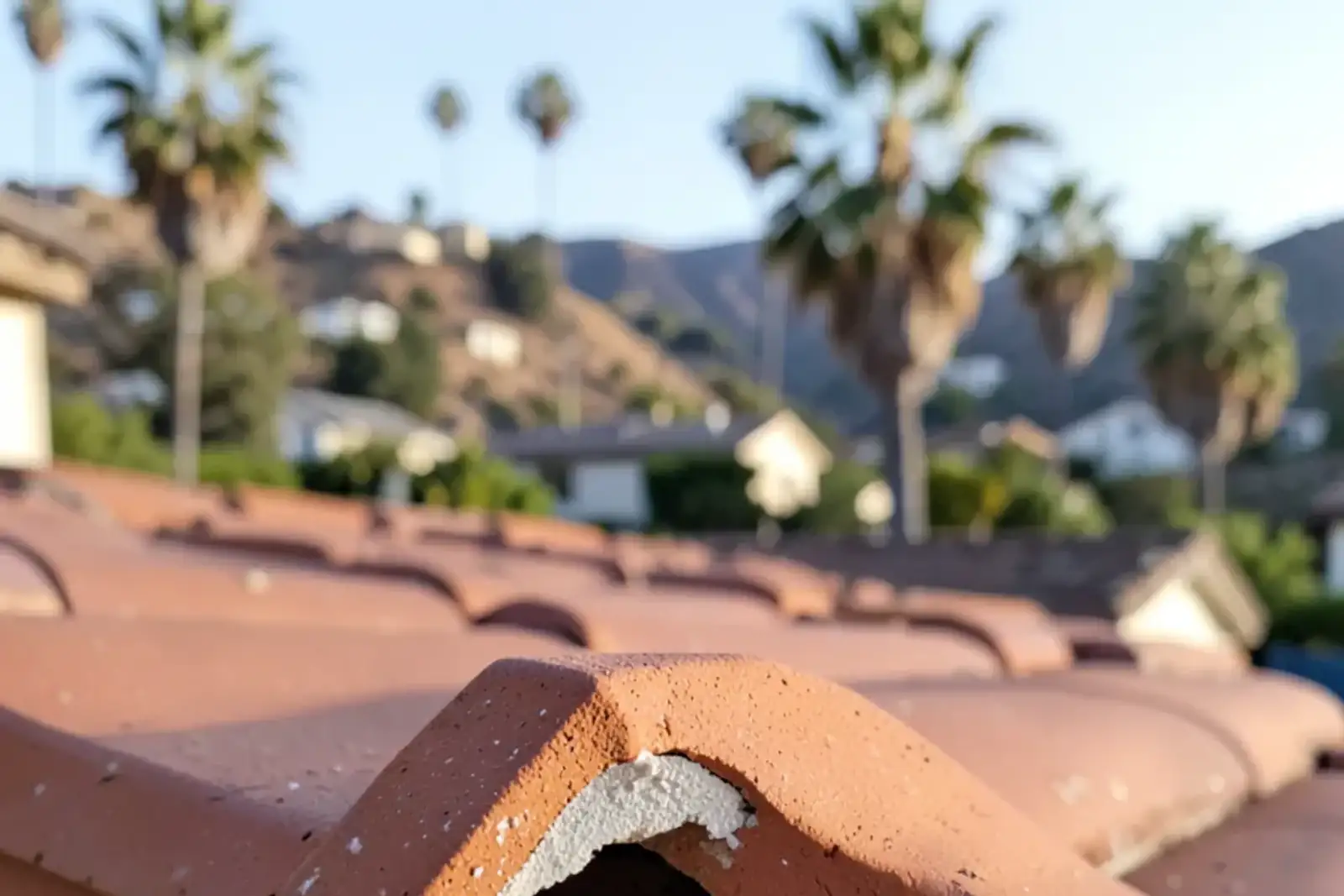
Skylight frames and chimney caps deserve the same attention. A cracked dome or loosened seal leaks long before the roof covering does, and a damaged vent hood is an open door for birds. We check each opening, then price any repair separately from the roof.
Should you file a hail insurance claim, and do repairs need a permit?
That depends on your policy and the extent of the damage, so read your policy and call your insurer. Many homeowners policies treat hail as a covered peril, but deductibles and roof-age terms vary. A FAIR Plan policy is a basic fire policy, and wind and hail can be added to it, so ask what yours includes. Insurers also consider roof age and condition, so ask yours what it requires.
Our part is the roof: an inspection, photographs, a written repair estimate, and a place at the roof when the adjuster comes. Dealing with the insurer stays with you, or with a licensed public adjuster if you hire one. Our roof insurance claims page explains the split. Never agree to skip your deductible.
Small repairs seldom change the permit picture, but replacing a roof generally calls for a building permit or, for eligible single-family homes in the City of Los Angeles, a certificate of compliance from a registered contractor. Cities run their own building departments, so confirm the rule for your address.
What affects the cost of hail damage roof repair?
Price follows the amount of damage and the material. A few cracked tiles and a dented vent are a repair. Widespread bruising across a worn shingle roof can tip the decision toward replacement, which is a different scope and a different permit. Roof height, steep slopes and tile that must be lifted by hand add time. We put every price in writing after we have seen the roof.
If you are weighing a patch against a new roof, our roof repair versus replacement guide lays out how age, layers and decking change the answer. For a longer read on this storm type, see our guide to hail damage on roofs in Los Angeles.
Why Clear Shield for hail damage inspections in Los Angeles
Hail work is mostly careful looking, and reviewers describe that side of our work in Van Nuys. One customer mentions drone photos sent while work was underway. Another says hidden problems were found that they had no idea about, including a poorly placed roof vent and fascia damage. We have not listed hail jobs in the neighborhoods below, so we say only what we would do: inspect, photograph, explain and price in writing.
What Van Nuys customers say about roof inspections
“They also performed a full water test afterward to make sure the leak was fully resolved, and everything stayed dry.”
“The crew’s workmanship looked top-notch, and they kept me updated by sending drone photos of the roof work as it happened, which was really helpful since I wasn’t about to climb up there myself!”
“During the new roof installation, a small leak showed up after some seasonal rain, and Frederick and the crew responded right away, even on a Sunday morning, to fix it fast.”
4.9 on Google · 69 reviews as of November 2026. Read all reviews
We cover Culver City, La Cañada Flintridge, View Park-Windsor Hills and Hidden Hills. Hidden Hills homes sit under homeowner association design rules, so check yours before changing materials. For other storm damage, see our fallen tree roof damage and fire damage roof repair pages.
Hail Damage Roof Repair: common questions
Does it really hail enough in Los Angeles to damage a roof?
Rarely, which is why hail damage gets dismissed. Downtown Los Angeles gets about 14 inches of rain a year by NOAA's 1991-2020 normals, mostly December through March, and hail is an uncommon part of those storms. When it does fall, even a short burst can bruise aged shingles or dent vents. If you saw stones in the yard, check the roof before the next rain.
What does hail damage look like on shingles?
Look for round bruises where granules are knocked off, leaving dark mat showing, often with a soft feel when pressed. Marks cluster on slopes facing the storm and are scattered, not in a line. Granule loss on its own can also come from age, so we compare the shingles against nearby soft metal such as vents, which dent easily and show the same pattern.
Should gutters and downspouts be checked too?
Yes, and they are often the quickest clue. Aluminum gutters and downspouts show round dents from hail before the roof covering shows anything you can see from the ground. Dents alone may be cosmetic, but a crushed seam or bent hanger can leave water running down a stucco wall. We look at gutters, downspouts and vents in the same visit as the roof.
How do I tell hail damage from normal wear on a Los Angeles roof?
Pattern is the main clue. Hail leaves random, round marks that appear on soft metals and on the slopes facing the storm. Long Valley summers cause wear that spreads evenly across every slope, with curling edges and widespread granule loss. If you are unsure, photograph the vents and gutters first, since they hold dents that shingles hide.
Is hail damage different on a flat roof than on a pitched roof?
It can be. Flat and low-slope roofs hold water, so a punctured or bruised membrane can leak at the next rain even when the surface looks fine from a ladder. Gravel-surfaced roofs may show displaced stones, and coated roofs can show cracked coating at impact spots. We check seams and drains as well as the field of the roof.
How soon after hail should a Los Angeles roof be looked at?
As soon as it is safe, and before the next rain. A small crack or bruise that sheds water today can pass it into the attic in a heavier storm. Do not climb a wet roof yourself. Call, tell us what you saw, and we will set up the earliest visit the schedule allows. Photos from the ground help us plan.
Areas served for hail damage roof repair
- Lancaster, CADesert wind, heat swings and strong UV age shingles faster than on the coast, so brittle roofs here show hail bruising more readily; the drive from Van Nuys is long.
- Acton, CARural homes and ranch outbuildings between two mountain ranges, with thin metal sheds and vent caps that record hail dents clearly.
- Thousand Oaks, CAHillside streets and oak-heavy yards mean leaf-filled gutters, which hide hail dents until someone cleans them out and looks.
- Moorpark, CARapid growth from the 1980s means many roofs share one age, so hail marks on a worn tract roof are compared against even age wear.
- San Dimas, CAFoothill neighborhoods below San Dimas Canyon, where we check soft metal vents and gutters first and then the shingle slopes facing the storm.
- Pico Rivera, CAPostwar tract homes near Whittier Narrows, where a hail check covers the roof covering, gutters and older vent caps in the same visit.
- Irvine, CAHomes in HOA villages with material rules, so any hail repair should match the approved roof tile or shingle, and the drive from Van Nuys is long.
- Temescal Valley, CANewer HOA tracts along I-15 south of Corona, far inland, where an inspection compares fresh roofs with real impact marks.
- Artesia, CAA small Gateway city of older single-family lots, where gutters and downspouts are the first place a hail pattern would show up.
- View Park-Windsor Hills, CA
- Hidden Hills, CA
- Culver City, CA
- La Cañada Flintridge, CA
- Kern County, CA
- San Dimas, CA
- La Verne, CA
- Santa Paula, CA
- Walnut, CA
- Seal Beach, CA
- Port Hueneme, CA
Need hail damage roof repair?
Call and tell us what you are seeing on the roof. We will take it from there.