
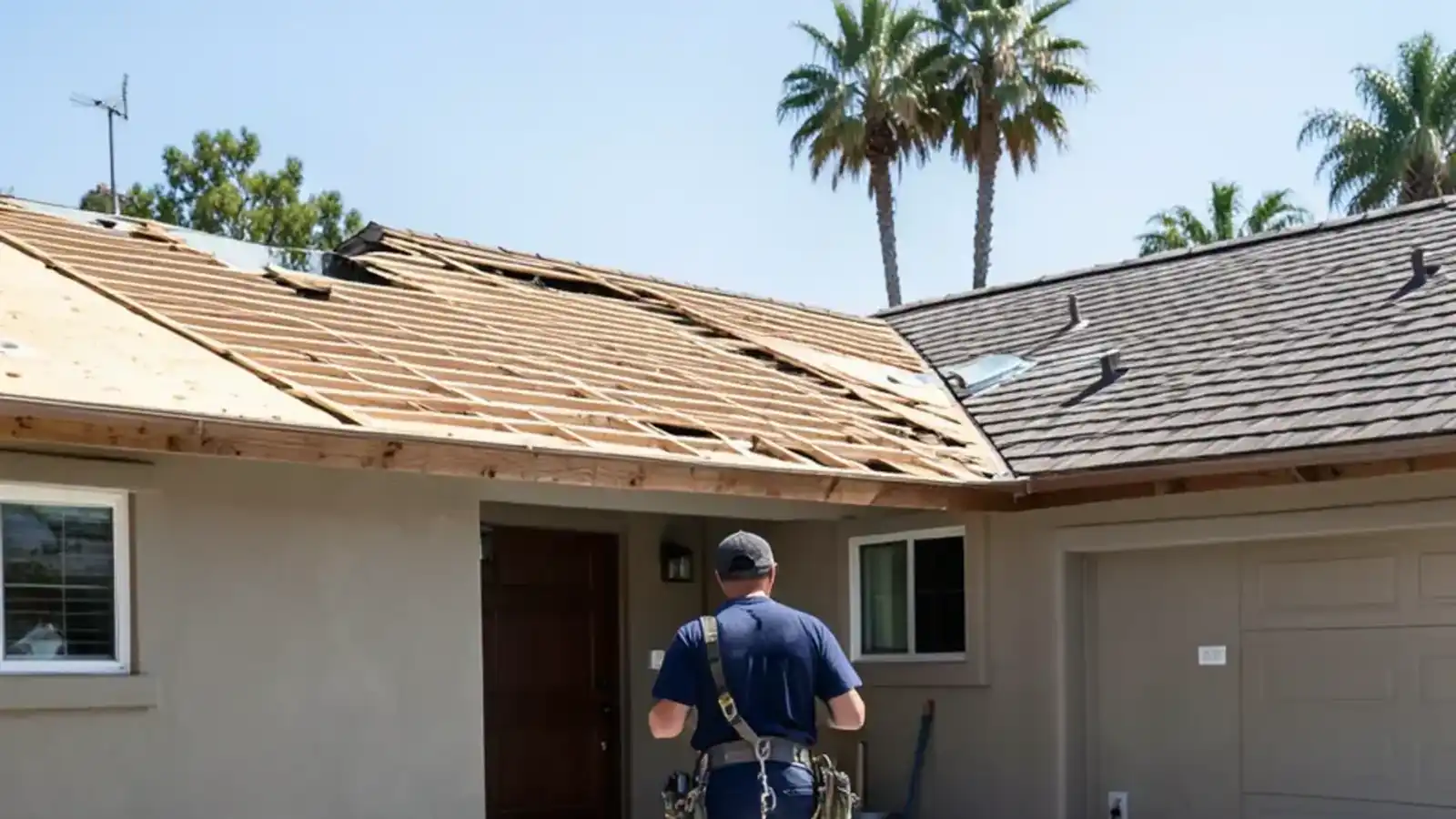
Roof Replacement
How Much Does a New Roof Cost in Los Angeles?
Angi estimates roof replacement in Los Angeles at roughly $4 to $12 per square foot, averaging about $8.60, or about $17,200 for a typical 1,700 sq ft home (accessed November 2026). Where your roof lands depends on material, tear-off, decking, access and permits. This guide shows how each one moves the number.
- ★ 4.9 on Google · 69 reviews
- Same-day or next-day bookings
- Based in Van Nuys, CA
Published and updated November 3, 2026 · By the Clear Shield Roofers team, Van Nuys, CA
On this page
- What moves a new roof cost in Los Angeles
- How the material choice shifts the bill
- What we see when the old roof comes off
- Permits, cool roof rules and other paperwork in the quote
- Extras that sit outside a base quote
- What working roofers would tell you about saving on a new roof
- Reading three estimates side by side
- How we price a roof before work starts
- Common questions
The Angi average above is a starting point, not a quote. Two roofs of the same size can sit far apart on that range, and the reasons are mostly things you can see, measure or ask about. Here is where the money goes on a new roof cost in Los Angeles.
What moves a new roof cost in Los Angeles
Six things set most of the price. We list them in the order they tend to matter:
- Roof area and pitch: more squares of roof means more material and labor, and steep or cut-up roofs slow a crew down
- Material: composition shingle, concrete or clay tile, standing seam metal and low-slope membranes all price differently, and so does their installation
- Tear-off and layers: what comes off, how many layers there are and what it costs to haul away
- Decking repairs: rotted or water-stained boards must be replaced before anything new goes on
- Details: flashing, vents, skylights, chimneys, drip edge and gutters
- Access and paperwork: hillside driveways, tight lots, permits and cool-roof requirements
A square is 100 square feet of roof. Roofers price in squares, so ask for the square count on every estimate and check that it matches the others you collect. Angi's average works out to about 2,000 square feet of roofing, or 20 squares, for a typical 1,700 square foot home, so roof area runs larger than floor area.
How the material choice shifts the bill
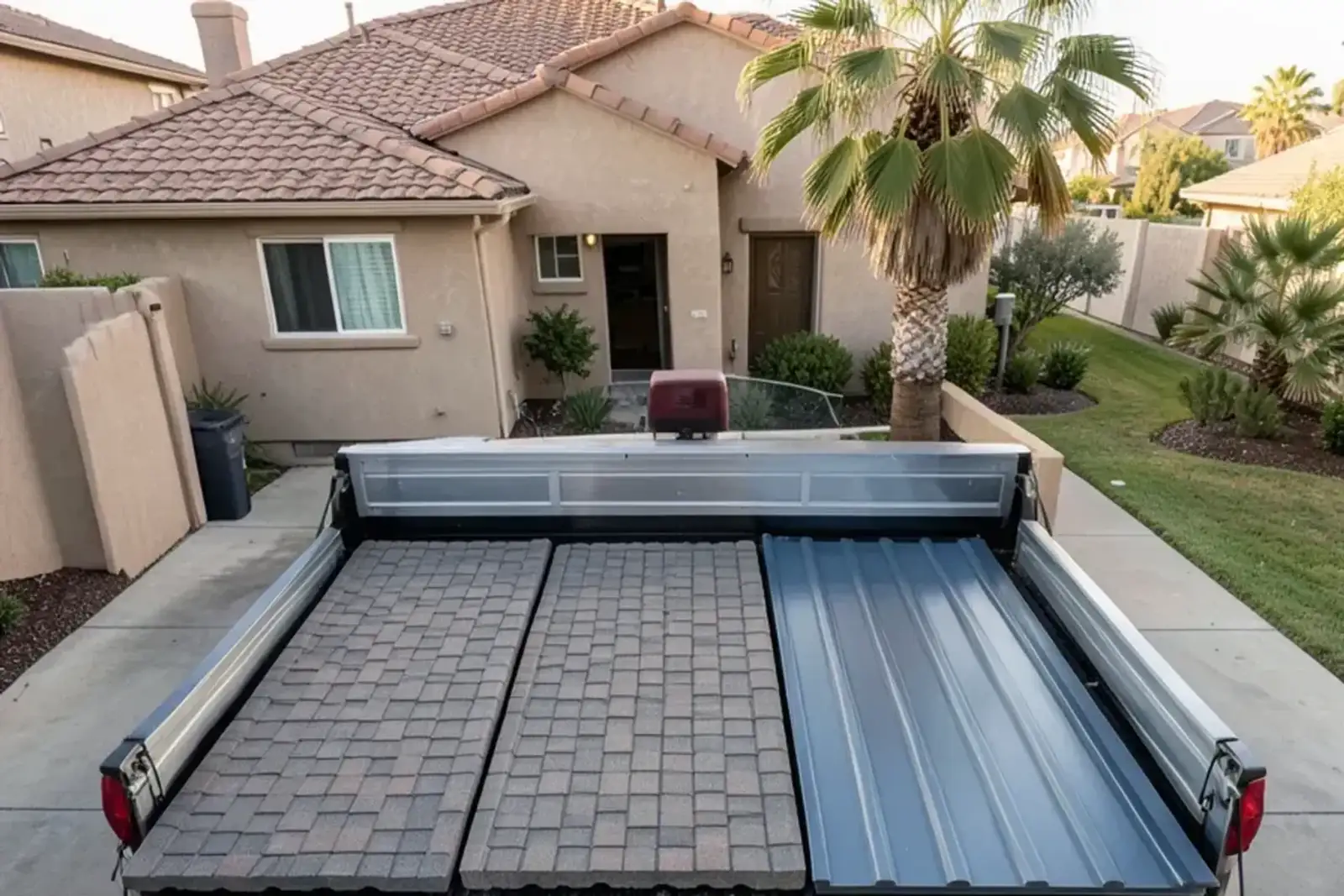
Material is the biggest single choice, and it changes more than the line item for shingles or tile. Weight, underlayment and labor change with it too. This table compares the common options without putting prices on them, since prices belong in a written estimate for your roof.
| Material | Where it sits on cost | What else it changes |
|---|---|---|
| Composition shingle | Usually the lowest starting point | Fast install; wide range of grades and colors |
| Concrete or clay tile | Usually well above shingle | Heavy; the structure and underlayment must suit it |
| Standing seam metal | Usually the highest of the three | Precise seam work; long service life |
| Low-slope membrane | Varies with system and drainage | Seams, drains and edge metal drive the labor |
Switching materials adds its own steps. Going from tile to shingle, for example, means removing a very heavy covering and checking the deck beneath. Our guide to roof tear-off explains what that stage involves. One customer in Van Nuys describes the pros and cons of standing seam metal and asphalt being talked through before they chose.
What we see when the old roof comes off
This is the part of the job nobody can price from the street. When we lift the first courses of old roofing, we are looking at the deck, and the deck decides whether the quote holds.
Water stains around vents and valleys tell us where boards may be soft. Older homes can have spaced boards instead of solid sheeting, which changes what the new roof can be nailed to. We walk the roof, press on suspect spots and mark the boards that need replacing. Reviewers mention that damaged plywood was shown to them and explained before it was replaced. That is how it should go, because decking repairs are a cost you approve first.
Layers matter as well. California's residential code does not allow a new roof over one that already has two applications, or over a deteriorated roof, or over tile. In that case a full roof replacement in Los Angeles means tearing off to the deck. The cheaper overlay many people hope for is simply not available on those roofs.
Permits, cool roof rules and other paperwork in the quote
Paperwork has a cost, and the estimate should say who handles it. In the City of Los Angeles, replacing a roof generally calls for a building permit or, for eligible single-family homes, a certificate of compliance from a contractor registered with LADBS's Certified Licensed Contractor program. Cities such as Burbank, Glendale and Pasadena run their own building departments, and unincorporated areas go through the county.
Cool roof rules can also change the product. Roof replacements in Los Angeles covering more than half the roof must use a cool-roof-rated product, and the details depend on slope and climate zone. Check your zone with the California Energy Commission's lookup. Your contract should name who pulls the permit. One customer says we took care of the permit process for their job, and we will tell you what applies at your address before work starts.
Extras that sit outside a base quote
A new roof cost often grows at the edges, not the field. Ask about these before you sign:
- Rooftop solar: panels must come off and go back on, which adds a separate scope. Our guide on whether to replace the roof before solar covers the order.
- Skylights: old curbs and flashing are best renewed while the roof is open.
- Gutters and fascia: a new roof is the cheapest time to replace worn gutters and soft fascia, because the ladders and crew are already there.
- Attic ventilation: vents that are poorly placed or missing can be corrected during the job. One reviewer in Van Nuys describes a poorly placed vent being found.
- Chimney and wall flashing: reused flashing is cheaper now and a leak later.
Rebates and credits that can lower the net cost
LADWP residential customers may qualify for a cool roof rebate of $0.20 to $0.60 per square foot, by SRI tier. It needs a CRRC Product ID and an application within 12 months of purchase, and funding is limited, so check ladwp.com/crp before you count on it. The federal 25C home-improvement credit ended for property placed in service after December 31, 2025. Do not plan on a tax credit.
What working roofers would tell you about saving on a new roof
Saving money and cutting scope are not the same thing. These are the trade-offs we weigh with owners.
Spend on underlayment and flashing, not the top layer. A pricier shingle on thin underlayment and reused flashing fails at the joints first. Putting money into the waterproof layers usually buys more than a fancier surface.
Replace gutters now or later. Doing it with the roof saves ladder time and avoids damaging new work. It also raises the total, so some owners split it into a second phase.
Accept the tear-off. Skipping tear-off sounds cheaper, but on a roof with two layers, a soaked roof or tile it is not allowed, and on others it can hide rot. Money saved on a layer can become a repair later.
Wait or replace. Waiting works only while the roof still sheds water. A roof that leaks into the attic is damaging the deck, and repeated repairs can approach the price of replacement. Dry months from late spring to early fall are the easiest to schedule.
Lowest bid or clearest bid. The cheapest number with the thinnest scope tends to grow through change orders. The clearest scope is easier to hold to.
Reading three estimates side by side
Comparing bids works best when you do it in a fixed order. Use these steps:
- Match the square count across all the estimates.
- Check that tear-off is included and how many layers each bid assumes.
- Find the decking line. Is there an allowance or a per-board price for replacement?
- Confirm the details: underlayment, flashing, vents and drip edge named, not implied.
- Look at the payment schedule and who handles the permit.
- Ask what is excluded, such as gutters, skylights or painting.
The lowest bid is not always the cheapest roof. A bid that leaves out decking or flashing can grow once the work starts.
How we price a roof before work starts
We start with the roof itself. Reviewers mention that we send pictures and measurements before quoting, and one customer describes drone photos arriving during the work. Whatever we send you, it should show what we measured and why.
Our prices come in writing after we see the job, and we do not give numbers over the phone for a roof we have not looked at. We work out of Van Nuys across the city, including Burbank. Ask us for the scope, the exclusions and the decking terms in the same document so you can compare it against any other bid. For warranty terms on materials and workmanship, get them in writing from whoever you hire.
Planning a new roof in Los Angeles? Call (209) 563-1278, tell us about the roof, and we will book a visit, same-day or next-day as the schedule allows, and put the price in writing.
Quick answers
Does a bigger house always mean a higher new roof cost in Los Angeles?
Roof area drives price more than floor area. A one-story ranch can have more roof than a compact two-story with the same square footage. Pitch, number of hips and valleys, and chimneys or skylights all add labor. We measure the roof itself, from the ground and from above, before we put a number in writing.
Why do two written estimates for the same Los Angeles roof differ so much?
Usually the scopes differ. One bid may include full tear-off, new underlayment, flashing and a decking allowance, while another leaves them out or lists them as extras. Line the estimates up item by item. If something looks missing, ask whether it is included, because the gap often shows up later as a change order.
Can a rebate lower the cost of a new roof in Los Angeles?
LADWP residential customers may qualify for a cool roof rebate of $0.20 to $0.60 per square foot, depending on the product's SRI tier. You need a CRRC Product ID on the invoice and must apply within 12 months of purchase, and funding is limited, so check ladwp.com/crp first. The federal 25C credit ended for property placed in service after December 31, 2025, so do not plan on it.
What do new roof quotes in Los Angeles often leave out?
Common gaps are decking repairs beyond an allowance, gutters, skylight replacement, vent upgrades, fascia repair, and removing and resetting rooftop solar. A quote that does not mention them may not include them. Ask each bidder to list inclusions and exclusions in writing, and ask what each decking sheet costs if boards turn out soft.
Can I pay for a new roof up front?
California limits the down payment on a home improvement contract to the lesser of a set dollar amount or 10 percent of the contract price. Many people also pay in stages as work is completed. The state insurance department advises against making a final payment until the building department signs off. Ask for the payment schedule in writing.