
Gutters
Seamless vs Sectional Gutters
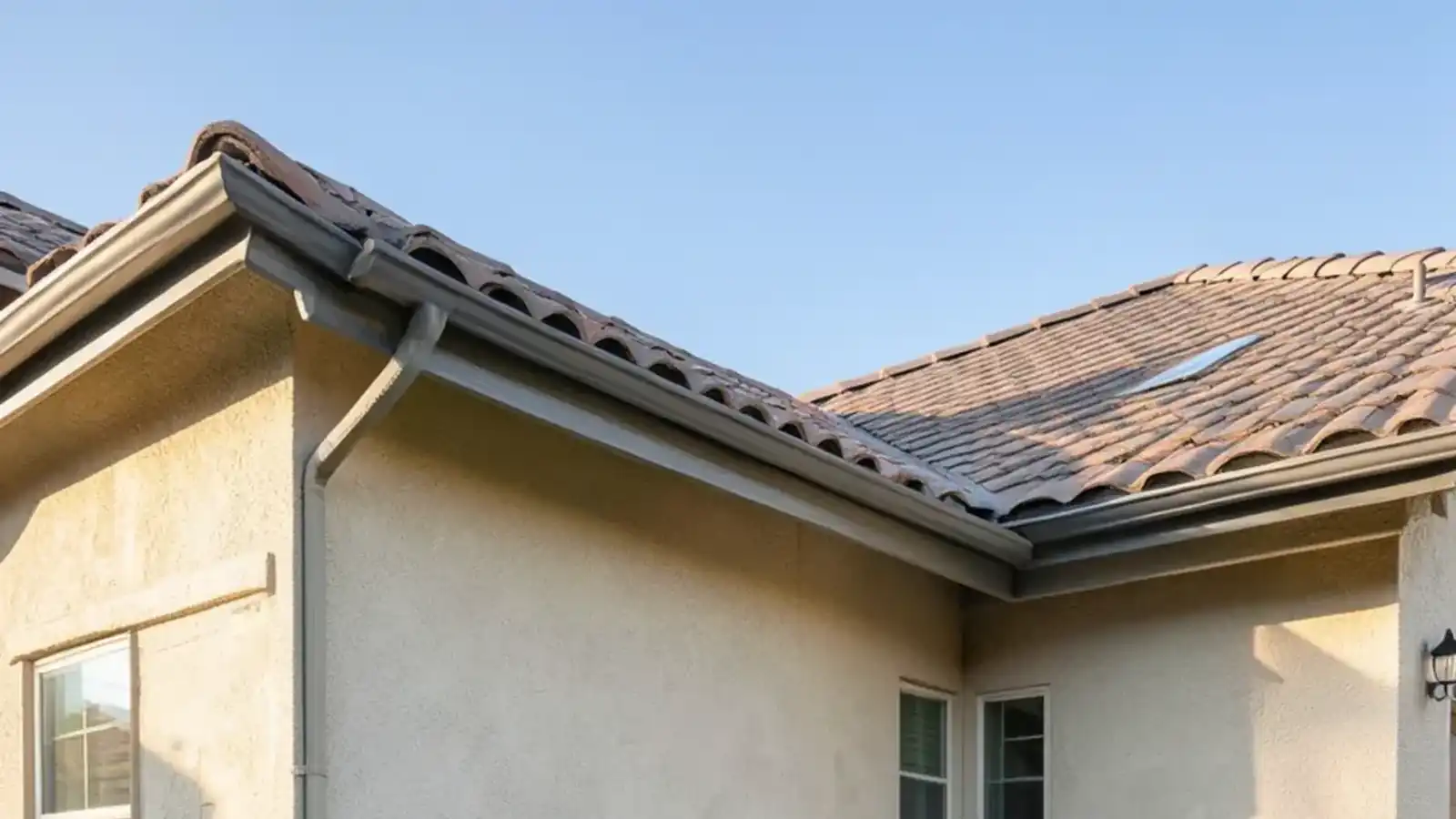
Seamless gutters are formed on site from one piece along each run, so they have joints only at corners and outlets. Sectional gutters come in short lengths joined at many seams. Seamless leaks less at the joints and tends to last longer, while sectional can be easier to patch. The right choice depends on your roof and your fascia.
- ★ 4.9 on Google · 69 reviews
- Same-day or next-day bookings
- Based in Van Nuys, CA
Published and updated November 3, 2026 · By the Clear Shield Roofers team, Van Nuys, CA
On this page
- Seamless vs sectional gutters at a glance
- How seams fail, and why heat matters here
- Aluminum, steel and what size trough you need
- Do downspouts and metal thickness matter as much as seams?
- What we look at before recommending one
- Where sectional gutters still make sense
- The installer's view: when each type is the honest answer
- Gutter choices on Burbank ranch homes
- What should you ask each installer before you choose?
- Common questions
The difference comes down to joints. A seamless gutter is shaped from a coil of metal on site, cut to the length of each run, so water passes along the whole eave without meeting a seam. A sectional gutter is built from lengths joined together, and each joint is a place where sealant has to work for years.
If you are planning new gutters, our gutter installation page covers the options. This guide compares the two types so you can choose with facts.
Seamless vs sectional gutters at a glance
| Seamless | Sectional | |
|---|---|---|
| How it is made | Formed on site from a coil | Pre-cut lengths joined together |
| Joints | Corners and outlets only | Every length |
| Leak risk | Lower at the joints | Higher, since each seam relies on sealant |
| Repairs | Replace or patch a section | Swap one length or reseal a joint |
| Fit to the house | Cut to your measurements | Fits to standard lengths |
| Appearance | Clean, continuous line | More visible seams |
| Best suited to | Long runs and new work | Short runs, tight spots and patch jobs |
Neither type is perfect. Seamless takes a crew with the right equipment on site. Sectional is easier to handle and carry up a ladder. For most whole-house jobs, seamless is the better long-term fit.
How seams fail, and why heat matters here
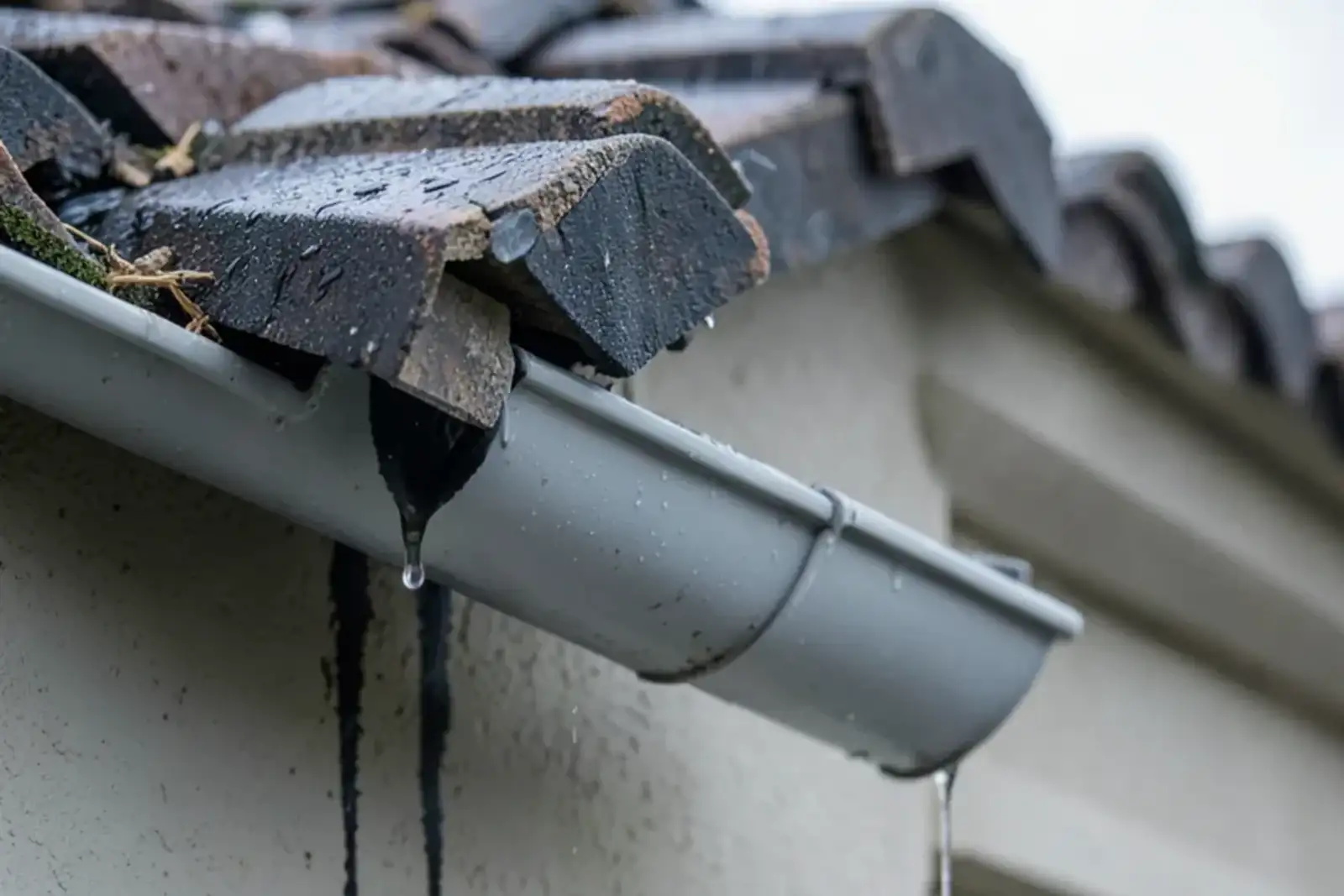
Sealant is the weak link. Sun and heat cause the metal to expand and contract, and over time the seal cracks or pulls away. The first sign is a drip at the joint during rain, then a dark line on the fascia or wall below.
Heat exposure is real in the Valley. By NOAA's 1991-2020 normals Van Nuys averages about 77 days a year at 90°F or hotter, compared with about 5 at LAX. A joint in direct sun on a west-facing eave works harder than one in the shade. Fewer seams means fewer joints to fail.
Aluminum, steel and what size trough you need
Material and size matter as much as seams. Aluminum is common here because it is light and does not rust. Steel is tougher where a ladder or a branch might hit it but needs coating to stay rust-free. The thickness of the metal matters, so ask for it in writing.
On size, five-inch and six-inch troughs are the common choices. A wider gutter and larger downspouts suit bigger roofs, steeper slopes and valleys that send water to one point. A small low-pitch roof may do well with the standard size. We choose by looking at the roof area and layout, not by habit.
Do downspouts and metal thickness matter as much as seams?
They matter more than most owners expect. A gutter that overflows in a downpour even when it is clean is often short on downspout capacity, not seams. Contractor guidance commonly points to a 3 by 4 inch downspout in place of the smaller 2 by 3 where a roof sheds a lot of water to one point, and to adding a downspout on long runs. Ask the quote to list the downspout size and how many there are.
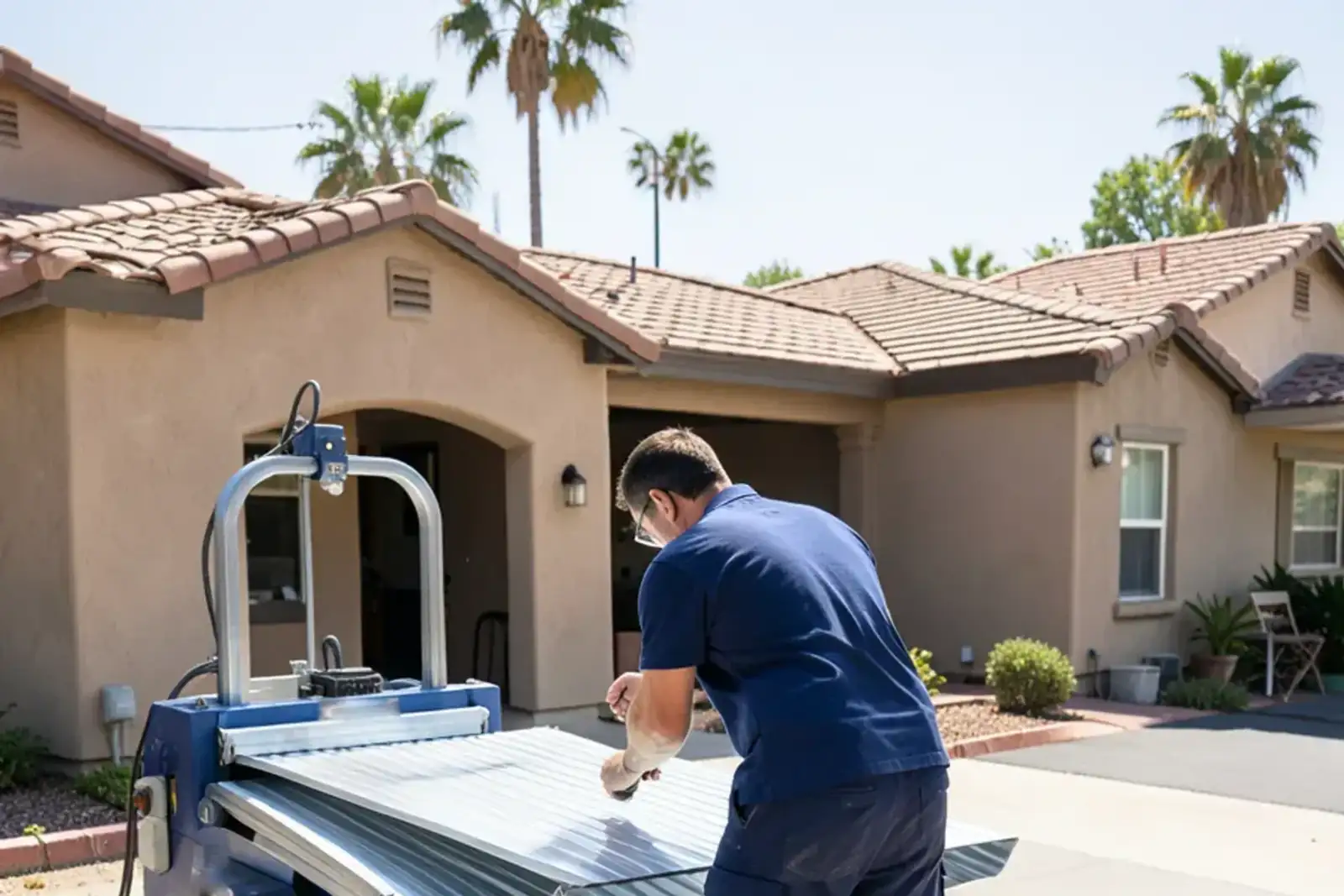
Metal thickness is the other line to read. Residential aluminum gutter is commonly sold at .027 inch, with .032 inch as the heavier choice that dents less when a ladder leans on it. A seamless run in thin metal can sag between hangers, so ask how often hangers are spaced and what type they are. Two bids that both say "seamless aluminum" can be quite different gutters.
If a joint or a hanger is already failing, our gutter repair page explains when a fix beats replacement. Leaves from overhead trees point to gutter guards, and our guide on whether gutter guards are worth it covers the trade-offs.
What we look at before recommending one
When we measure for gutters, a few checks decide the type and the size:
- The fascia: Is it straight, sound and free of rot?
- The length of each run and the number of corners.
- The roof above: area, slope, valleys and any tile lines.
- Trees overhead, which affect debris and guard choices.
- Where each downspout can drain.
- Existing damage, such as sagging, seams and rust.
Reviewers mention materials explained plainly, with samples and guard options brought to the house. We use the same approach on gutters: you see the material and the trade-offs before you decide. Ask any installer for warranty terms in writing, whichever type you pick.
Where sectional gutters still make sense
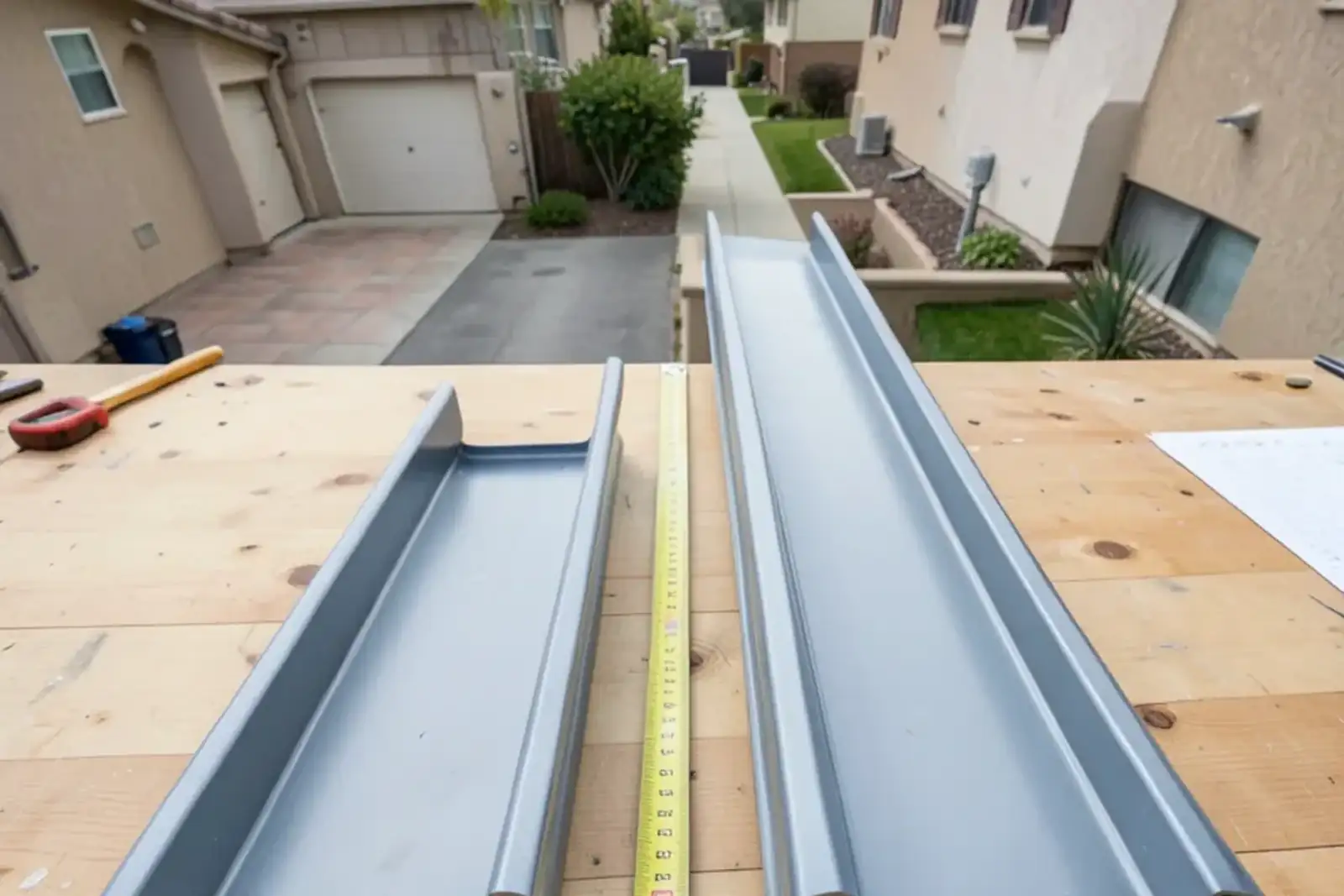
Sectional is not wrong. It makes sense when you only need to replace one damaged piece, when the run is short, when access is limited, or when a repair is all that is needed and a full replacement is not in the plan. A good sectional job with careful sealing can serve a home for years.
On older houses with uneven fascia, a crew may choose sectional pieces to follow a wavy line. Even then, we would ask what the long-term plan is, because the old gutter is often the clue to what is wrong with the fascia. Patching a failing system run by run can cost more in the end than replacing it once.
The installer's view: when each type is the honest answer
We would recommend seamless on most whole-house jobs, and we say it with the downsides in view. Seamless needs the forming machine on site and room to bring long runs to the eave, which can be awkward on a tight hillside lot. A long run is also harder to haul off when it is time to replace it. Sectional costs less per piece, but once the extra sealant, connectors and labor are counted, the gap on a whole house often shrinks, and you carry more seams for decades.
Where sectional wins is a short run over a back door, a small addition, a shed, or one damaged length on a gutter that is otherwise fine. We would also hesitate to put brand-new seamless on fascia that is rotted. Fixing the fascia first matters more than the gutter type.
Gutter choices on Burbank ranch homes
Burbank's housing leans old, with a Census ACS 2020-24 median build year of 1959. Single-story ranch homes with long, straight eaves are well suited to seamless runs, since a long straight line is where fewer joints pay off most.
If your gutters came with the original build, check the fascia before you choose a type. Measuring for gutters in Burbank means about 9 miles from Van Nuys, or an estimated 20-minute drive.
What should you ask each installer before you choose?
Bring these questions to every bid:
- Is the gutter seamless or sectional, and how many joints will there be?
- What metal and thickness is quoted, and how far apart are the hangers?
- What size gutter and downspouts, and where does each downspout drain?
- Is any fascia repair included, or priced separately?
- Where are the warranty terms, in writing?
Written answers make bids comparable. To have us measure your eaves, call (209) 563-1278 and we will set the earliest visit we can.
Quick answers
Are seamless gutters worth it compared with sectional?
For most houses, yes. Fewer joints means fewer places to leak, sag or collect debris, and a long run looks cleaner. Sectional costs less up front on some jobs and is easier to repair one piece at a time. If your fascia is straight and sound, seamless usually pays off in fewer callbacks over the years.
Do sectional gutter seams always leak?
No, but seams are where leaks begin. Sealant dries, expands and cracks with heat and rain, so a new joint may hold for years and then drip. Gutters on a sunny Valley elevation take more heat cycling. A sealed seam needs to be checked now and then, and resealed when it starts to weep.
Which is better for gutters, aluminum or steel?
Aluminum does not rust and is lighter, which is why it is common on homes here. Steel is stiffer and stands up to impact, but it can rust where the coating wears through. The right choice depends on trees, ladders and finish. Ask for material and thickness in writing so quotes compare fairly.
Should I choose five-inch or six-inch gutters?
Match the size to the roof. A larger or steeper roof, or one with valleys that funnel water, often calls for the wider trough and bigger downspouts. A small, low-pitch roof may be fine with the standard size. We look at roof area and layout, then suggest a size for your house.