
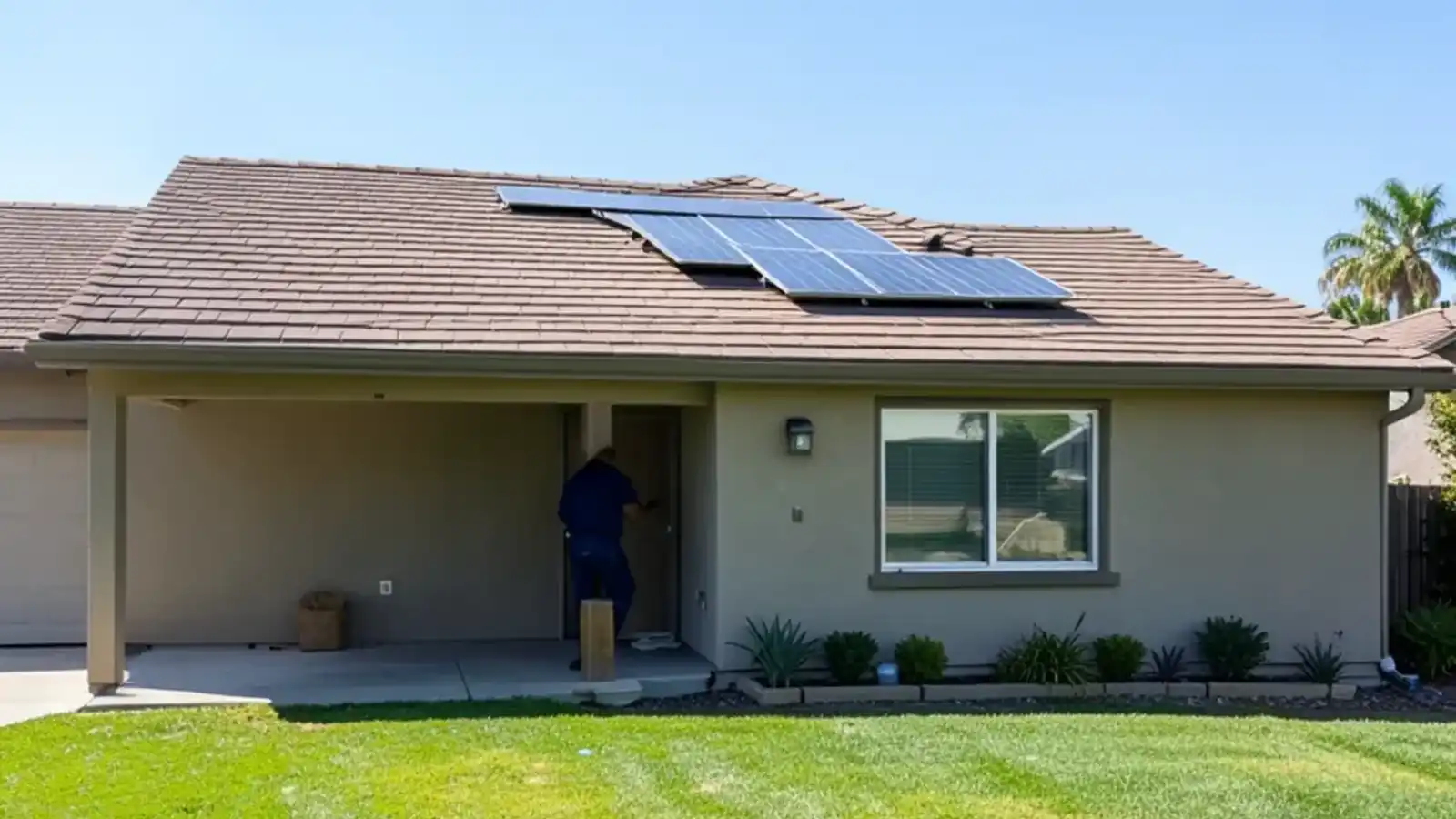
Skylights and Ventilation
Solar Attic Vents vs Ridge Vents
A solar attic fan vs ridge vent comes down to how the roof is built. A ridge vent is passive and runs the length of the peak, with no motor to fail. A solar vent is a small powered fan on one spot. Both need enough air coming in at the eaves to work.
- ★ 4.9 on Google · 69 reviews
- Same-day or next-day bookings
- Based in Van Nuys, CA
Published and updated November 3, 2026 · By the Clear Shield Roofers team, Van Nuys, CA
On this page
- Solar attic fan vs ridge vent at a glance
- How a ridge vent works and when it wins
- How a solar fan works and where it earns its place
- What we look at on a Valley attic before suggesting either
- What is net free area, and why does intake decide the result?
- Choosing by roof shape
- The roofer's view: honest trade-offs on a hot Valley attic
- Heat, rules and cool roof exceptions
- Burbank ranch homes and short ridges
- What should you decide before you ask for attic vent quotes?
- Common questions
Both vents move hot air out of an attic, but they do it differently. A ridge vent lets air leave by natural convection and wind along the whole peak. A solar attic fan pulls air out with a small motor powered by its own panel.
Neither works without intake. Air has to enter at the eaves before it can leave, which is the core of any attic ventilation plan. Here is how the two compare and where each fits.
Solar attic fan vs ridge vent at a glance
| Ridge vent | Solar attic fan | Box (static) vents | |
|---|---|---|---|
| How it works | Passive, along the full peak | Powered by a small solar panel | Passive, individual openings |
| Moving parts | None | A motor that can wear out | None |
| Roof openings | One continuous slot | One cut per fan | Several cuts |
| Needs sun to run | No | Yes | No |
| Best on | Gable roofs with a long ridge | Roofs with little ridge, hot attics | Hip roofs, short ridges |
| Main watch-out | Needs open intake at eaves | Can pull air from the house | Can shortchange airflow if too few |
Use the table to narrow it down. The roof shape and the intake do the rest.
How a ridge vent works and when it wins
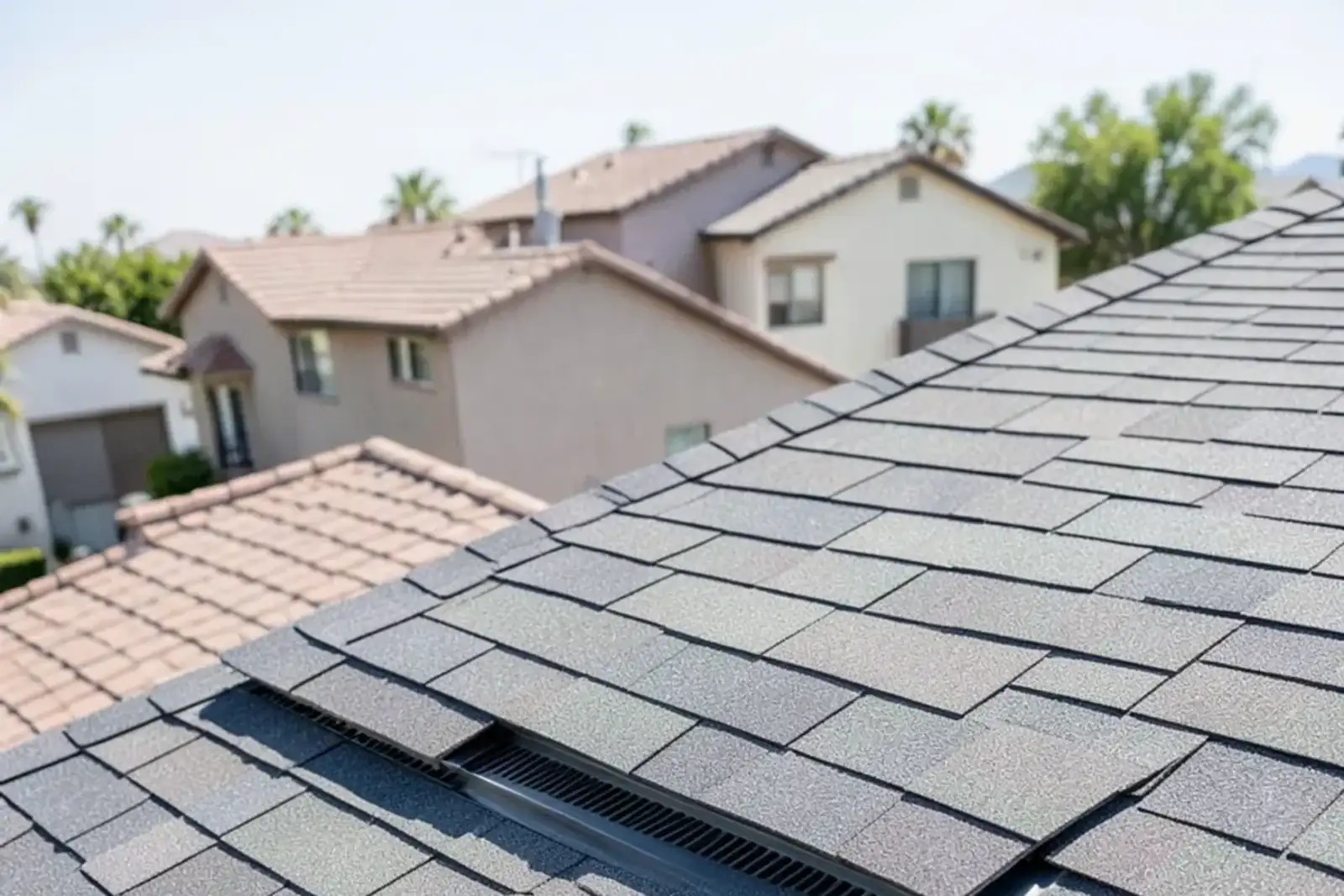
A ridge vent is a vented cap along the peak, covered with ridge shingles. Warm air rises, wind passes over the roof and the attic air leaves through the slot. Because it spans the whole ridge, it exhausts evenly along the length of the attic.
It suits gable roofs with a long, clear ridge. There is nothing to wear out, it does not need electricity and it adds no cuts across the slope. Its limits are physical. A short ridge cannot hold much vent, and a ridge vent does nothing if the eaves are blocked.
How a solar fan works and where it earns its place
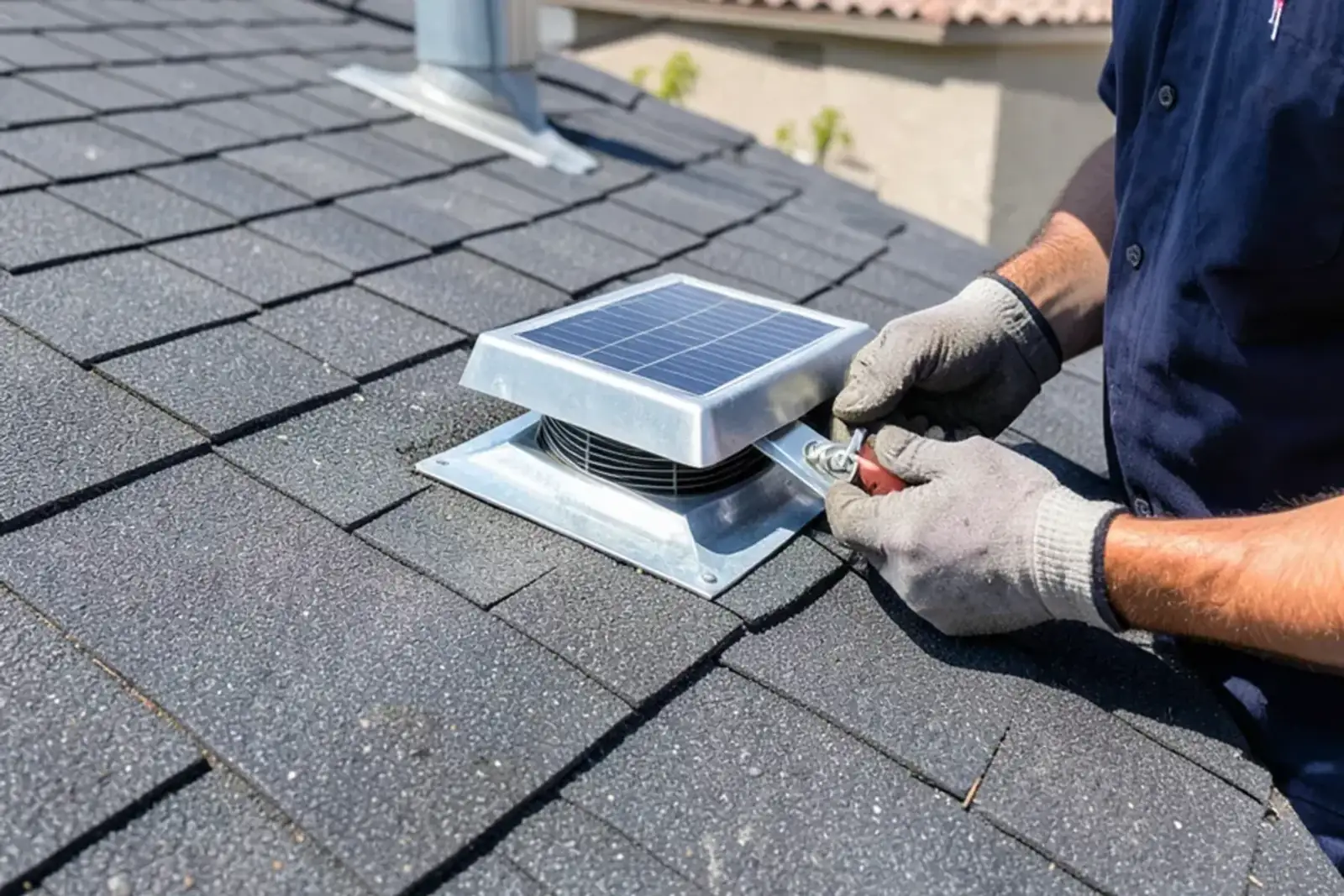
A solar attic fan sits on a slope and runs when sun hits its panel. It moves more air than a static vent when the sun is strong, which is when the attic is hottest. There is no wiring to run, so it is often chosen when the attic has no power.
It has downsides. It needs make-up air, and if the eaves are weak it will pull air from the nearest opening, which can be a gap around the ceiling into the house. It adds a roof penetration, so the flashing has to be right. The motor will wear out eventually, and a fan that stops silently leaves you with less ventilation than you thought you had.
A fan added to a roof that is near the end of its life has to come off for the re-roof. Planning the vent with the roof avoids doing the flashing twice.
What we look at on a Valley attic before suggesting either
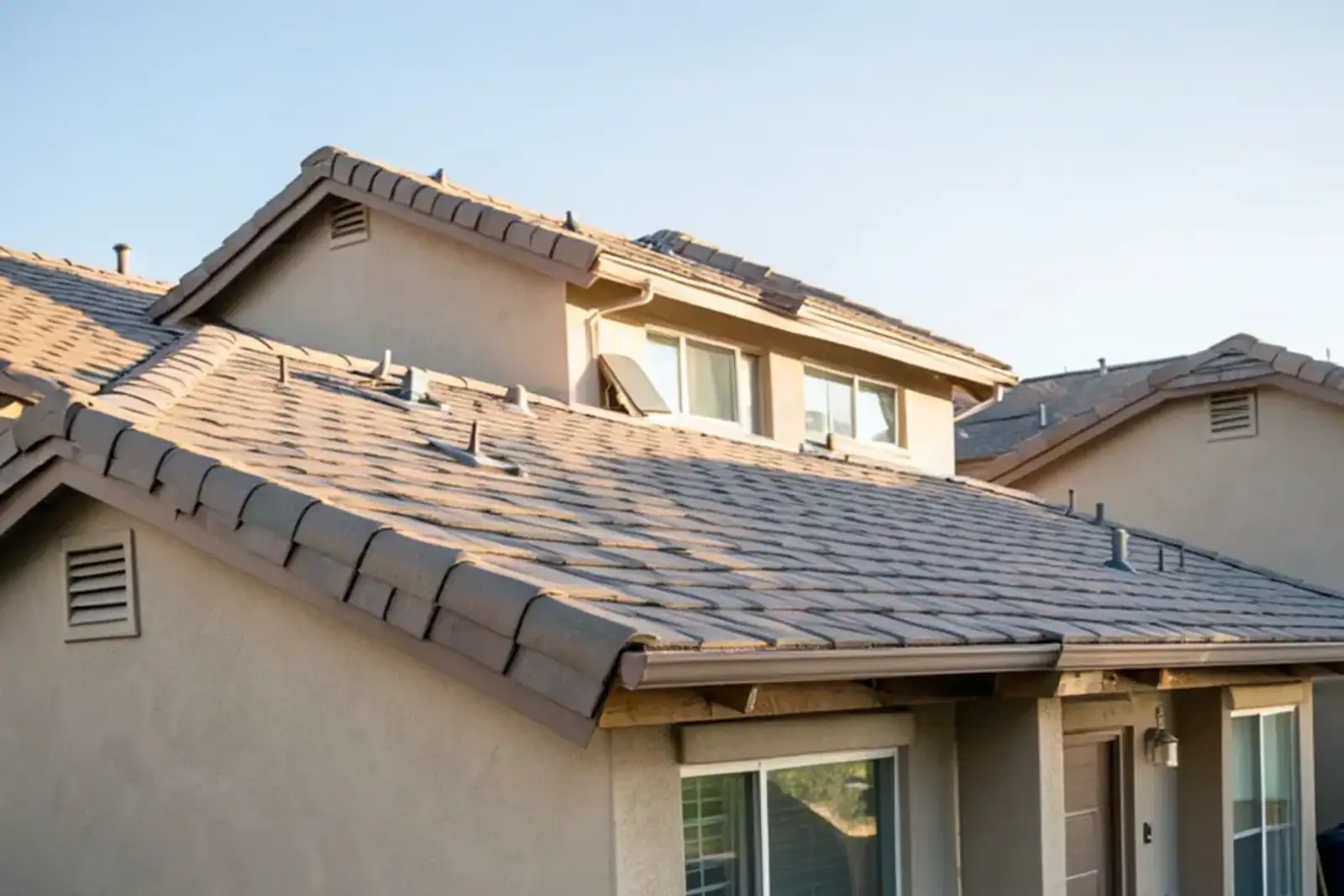
The roof shape and the attic tell us more than the product. We look at the length of the ridge, the number and type of vents already in place, and whether the eaves are open. We check that insulation has not been blown over the soffit gaps. We look at the underside of the deck for staining, and for rust on nail tips.
If the answer is a new vent layout, we would explain the pros and cons and put the options in writing. One reviewer in Van Nuys mentions a ridge vent and gutters done after storm-fallen limbs, which is a reminder that vent work often comes up during other roof repairs. Another describes a roofer who explained materials, colors and pros and cons so they could choose, and that is how we would approach this decision too.
What is net free area, and why does intake decide the result?
Every vent is rated by its net free area, the open space air can actually pass through once the screen, louvers and baffles are counted. It is always smaller than the hole in the roof, so a vent that looks big may move less air than its size suggests. The ratings on a product's data sheet are what to compare.
Exhaust is only half of the system. The air leaving the ridge or fan has to be replaced by air entering low, at the soffits or eave vents, and the intake area should be at least as large as the exhaust. Contractors see the same failures again and again: insulation pushed against the roof deck at the eaves, soffit vents painted shut, and decorative soffit with no openings. Fixing those costs less than a new vent, and a fan or ridge vent added on top of a blocked intake does little.
Our post on signs of poor attic ventilation lists what to look for in the attic itself.
Choosing by roof shape
Match the vent to the roof you have.
- Gable roof with a long ridge: a ridge vent with open eaves is the usual first choice.
- Hip roof with short ridges: box vents across the slope, or a combination, because the ridge is too short to carry enough vent area.
- Tile roof: vents designed for the tile profile, set carefully into the roofing.
- Hot attic, limited ridge, working intake: a solar fan may add airflow if the passive vents fall short.
- Thin insulation: deal with it separately, since a vent cannot make up for heat coming through the ceiling. Our attic insulation page covers that, and we would assess any job like that first.
The roofer's view: honest trade-offs on a hot Valley attic
If a company offers you a solar fan as the answer before looking at your intake, be careful. A fan is the easy product to sell because it is a visible gadget, but the cheaper and more durable fix is usually passive: open the eaves, add or extend a ridge vent, fix the insulation baffles. The trade-off is plain. Passive systems have nothing to fail, but they rely on wind and convection and do little on a still day. A fan moves more air in strong sun, but it has a motor and a roof cut, and when it dies you often find out only after a hot summer.
We would also not stack a fan beside a ridge vent. In a re-roof, our preference is to settle the vent layout before the new covering goes on, so flashing is done once. Ask for the vent type, the count and where each one sits on the written scope.
Heat, rules and cool roof exceptions
Valley attics see long hot seasons. Van Nuys averages about 77 days a year at 90°F or hotter by NOAA's normals, so ventilation matters more here than at the coast. Cool roof rules in California's Energy Code include exceptions tied to attic features, such as a radiant barrier, and those rules depend on your slope and climate zone. Ask your roofer to check what applies before you choose products.
Burbank ranch homes and short ridges
Many Burbank homes are 1940s and 50s ranches, and Census ACS puts the median home there as built in 1959. Low-pitch ranch roofs often have short ridges and hip sections, which limits what a ridge vent can do. For those roofs, a mix of box vents, a short ridge vent and clear eaves can do more than one fan. Check the intake first, whatever you choose.
What should you decide before you ask for attic vent quotes?
Run through this short list so the bids compare well:
- Photograph the eaves from the ground and the underside of the roof deck in the attic
- Note any heat, staining or musty smell, and when it appears
- Ask whether the quote includes intake work, not just a new vent
- Ask for the vent type, count and net free area on paper
- Plan the vent job with a re-roof if one is coming
To have us look at your attic and eaves, call (209) 563-1278 and we will set the earliest visit we can.
Quick answers
Is a solar attic fan worth it in Los Angeles?
It can help in a hot Valley attic if there is enough intake air, but it is not a cure. The fan needs sun to run, and it will pull air from wherever it can find it, including from the house. Fix intake and insulation first, then decide whether a fan adds anything beyond the passive vents you have.
Can I have both a ridge vent and a solar attic fan?
Generally they should not compete. A fan pulling air near a ridge vent can draw air from the ridge instead of the eaves, short-circuiting the loop. If you add a powered vent, a roofer should check where it sits relative to the passive vents so the air moves the way you want.
Which roof vents suit a tile roof?
Tile roofs usually need vents made for tile, either low-profile vents set into tile courses or ridge systems designed for the tile profile. Standard shingle vents do not fit. A roofer should check the tile type, the underlayment and the attic space before choosing, and set the new flashing into the roofing carefully.