
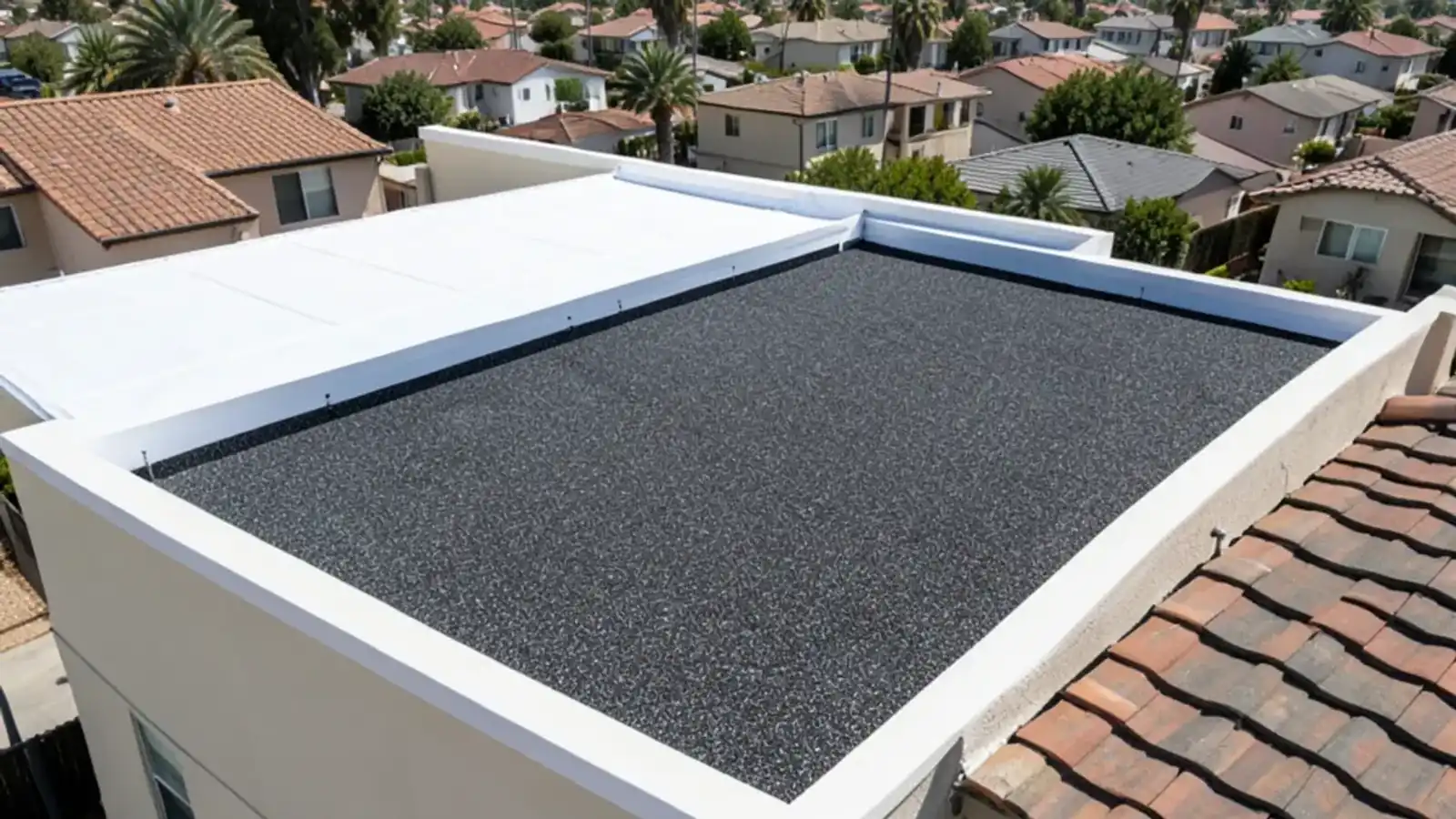
Flat Roofing
TPO vs Torch-Down vs Foam for LA Flat Roofs
TPO vs torch-down vs foam comes down to seams, heat and how the roof will be used. TPO is a white welded sheet, torch-down is layered asphalt rolls, and foam is a sprayed seamless layer. Each suits different roofs, and the building decides which one fits.
- ★ 4.9 on Google · 69 reviews
- Same-day or next-day bookings
- Based in Van Nuys, CA
Published and updated November 3, 2026 · By the Clear Shield Roofers team, Van Nuys, CA
On this page
- TPO vs torch-down vs foam roof: seams, heat, repair and rules
- TPO: when a white welded sheet fits
- Torch-down: the layered, tough option
- Spray foam: seamless, with its own rules
- What we would look at under any of the three
- Which system copes best with ponding and drainage problems?
- The roofer's view: honest trade-offs among the three
- How we would weigh it on your roof
- Flat roofs in West Hollywood and tight-lot decisions
- What should you do before you ask for flat roof bids?
- Common questions
No flat roof system wins everywhere. The right pick depends on the shape of the roof, the heat it takes, how many people walk on it and what the fire rules allow at your address. Below, the three most common choices compare on the points that decide most jobs.
We would assess the building first, then explain which of these fits. For the full picture of options, see our flat roofing overview.
TPO vs torch-down vs foam roof: seams, heat, repair and rules
| TPO | Torch-down | Spray foam | |
|---|---|---|---|
| What it is | Single-ply white sheet, heat-welded at seams | Layered modified asphalt rolls, melted on | Sprayed liquid that expands into rigid foam, then coated |
| Seams | Welded, so seam quality is the key | Overlapped and sealed by heat | None in the foam itself |
| Heat | Reflective when white | Dark unless coated or reflective-capped | Reflective with a light coating |
| Foot traffic | Fair, add pads on paths | Tough, good for traffic | Needs a protective coating and pads |
| Repair | Patch with a welded piece | Patch with torch or cold-applied material | Re-spray or patch, then recoat |
| Install rules | Heat welding, no open flame | Hot work rules under the California Fire Code | Needs dry, calm weather and masking |
Use the table to narrow the field, then check the details that follow.
TPO: when a white welded sheet fits
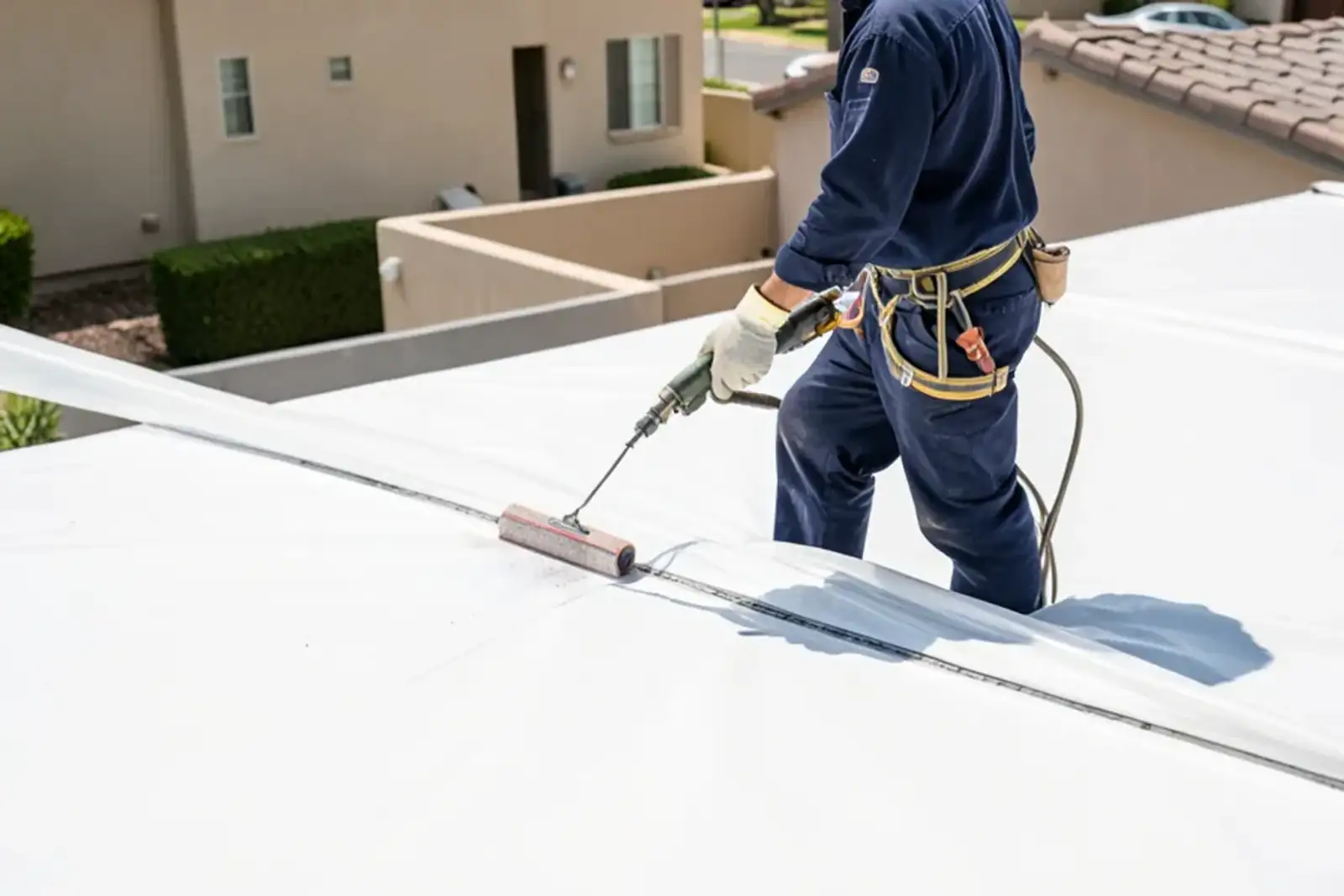
TPO is popular on larger, simple roofs. Crews roll out wide sheets, fasten or glue them, and weld the seams with hot air. Done well, a TPO roof is clean and reflective. Done poorly, it fails at the seams, so installer skill matters more than the sheet itself.
It suits roofs with open areas and a manageable number of penetrations. It struggles where foot traffic is constant or the surface is cut up with small details, because every detail is a hand-welded flashing.
Torch-down: the layered, tough option
Torch-down uses modified bitumen rolls, melted onto the roof with a flame. It is layered, so there is redundancy, and it tolerates foot traffic better than most membranes. Dark surfaces absorb heat, so a Los Angeles roof often needs a reflective surface or coating to meet cool roof rules.
The catch is fire. Torch-applied roofing is regulated as hot work under the California Fire Code. Permits and fire watch vary by jurisdiction, and tight lots, wood parapets or old combustible materials can rule it out. Where open flame is a worry, a heat-welded or cold-applied system is the alternative.
Spray foam: seamless, with its own rules
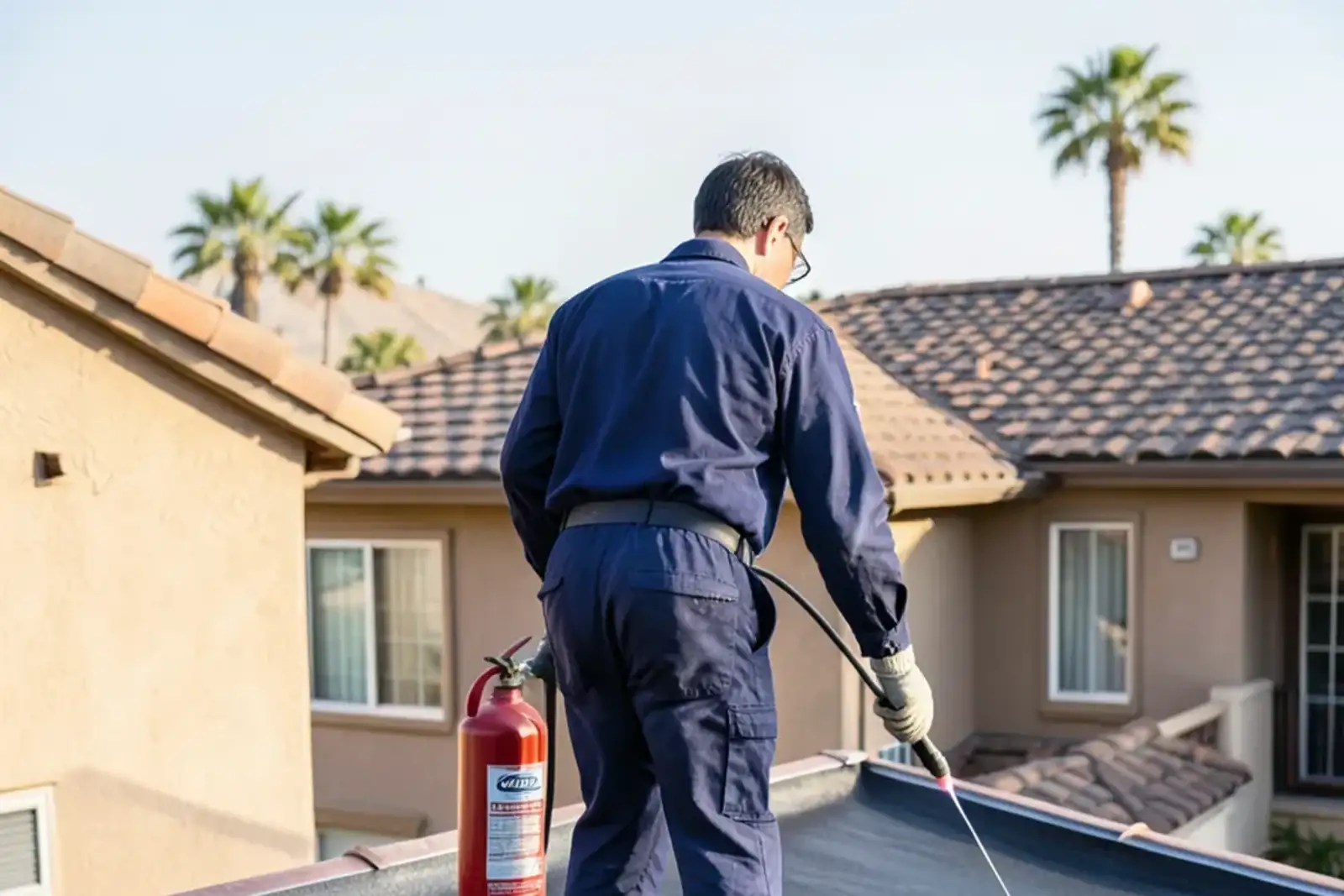
Foam is sprayed, expands and cures into a rigid, seamless layer that insulates as well as seals. It fills odd shapes and goes around vents and curbs without joints. A protective coating on top keeps the sun from breaking it down, and that coating needs renewing over time.
Foam is picky about weather and prep. The surface has to be dry and clean, the air calm, and the neighbors' cars and windows masked from overspray. It is also a poor match for roofs that get heavy foot traffic unless pads are added. If the old roof beneath is wet, foam can trap that moisture, so a moisture check should come first.
What we would look at under any of the three
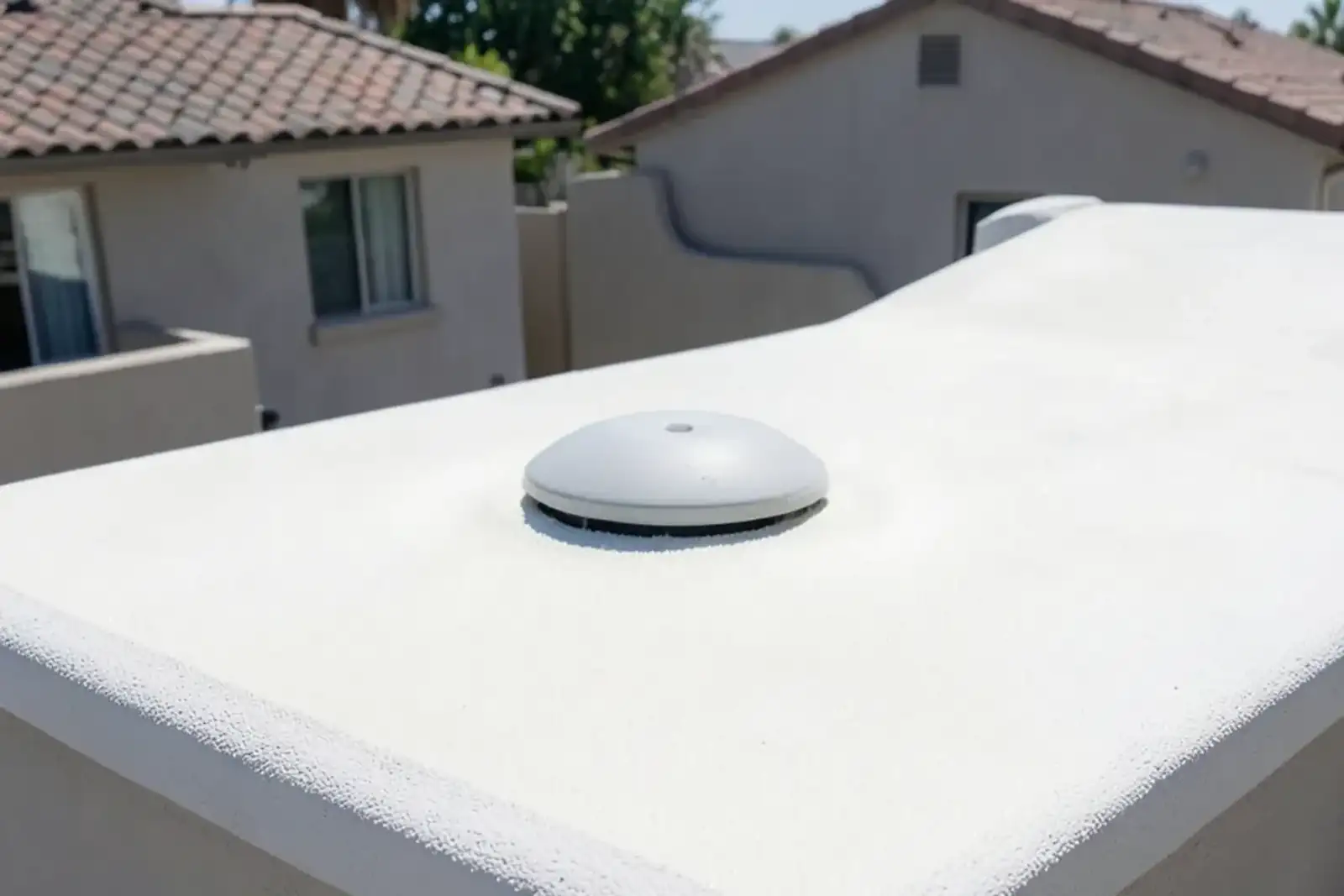
Whichever system you pick, it is only as good as what it sits on. On the roof we would probe for soft insulation, check the deck for rot or movement, and look at every drain and curb. We would also look for old layers, since California's residential code does not allow a new roof over one that already has two applications or over a deteriorated roof. Commercial buildings follow their own code, so the answer depends on the building.
We would also ask about leaks. A roof that has leaked for years usually has wet insulation, and neither a white sheet nor foam will dry it out. A good plan says what comes off, what stays and what it costs to find out.
Which system copes best with ponding and drainage problems?
Ponding is standing water that stays on a flat roof more than a day or so after rain. It matters more than most owners expect, because water that sits wears the surface, loads the structure and finds weak seams. Our post on why flat roofs pond covers the causes.
The systems tolerate it differently. Contractor comparisons generally say a welded TPO sheet copes with some standing water better than layered asphalt rolls do, and that layered rolls are the least forgiving. Sprayed foam is seamless, but it is hard to spray perfectly smooth, so low spots can build in. No surface makes ponding harmless. The cure is fixing slope or drains, or adding tapered insulation, before any system goes on. We would look at the drains and the deck first, and price drainage work as its own line.
The roofer's view: honest trade-offs among the three
Foam gets sold hard, and we would be straight about it. It insulates, it has no seams and it suits roofs full of curbs and pipes. But it needs a coating renewed over time, it dislikes heavy foot traffic and it cannot go over wet insulation. TPO is quicker to install on big open roofs, and a good welder makes it excellent, but a rushed crew makes a seam failure. Torch-down is rugged, but open flame is a real limit on tight urban lots.
If the building has constant rooftop traffic, such as equipment servicing, we would lean toward the tougher layered surface or add walkway pads to whatever we choose. If it is a simple roof with few penetrations and a cool-roof requirement, white TPO is often the straightforward answer. If it is a cut-up roof, foam is worth pricing. These are starting points. The inspection decides, and the written scope should say why.
How we would weigh it on your roof
The decision usually turns on a few questions. We would ask them on the roof, with the building in front of us.
- How much traffic? Mechanics, tenants or a rooftop deck push you toward tougher surfaces or pads.
- How many penetrations? Many small details favor foam or hand-flashed membrane.
- What is underneath? Wet or damaged insulation must come out whatever the system.
- What do the fire and building rules allow? Hot work may be limited.
- What will the cool roof rules require? Replacing more than half the roof in Los Angeles generally means a cool-rated product, with rules that vary by slope and climate zone.
- What happens at the end of the life? Ask how the roof will be recoated, patched or removed.
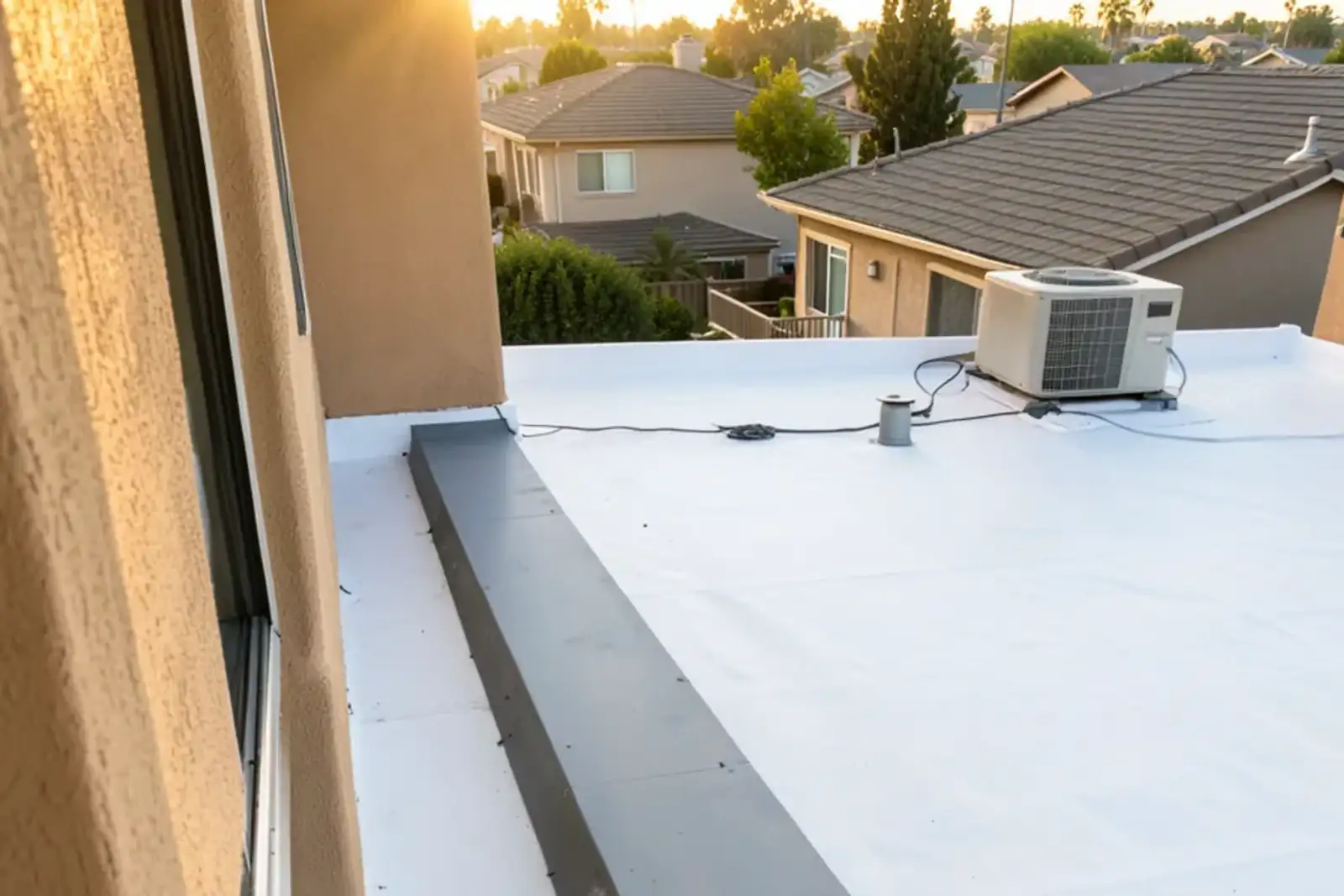
Flat roofs in West Hollywood and tight-lot decisions
Apartments and condos dominate West Hollywood, where Census ACS puts the median home as built in 1965. Dense lots mean neighbors close to the work, which matters for torch-down fire rules and foam overspray. Pairing the right system with the staging plan is part of the choice. If you manage a building, ask for the system, the staging and the permit steps in one written scope. Our pages on TPO roofing, torch-down roofing and SPF foam roofing cover each system in more detail.
What should you do before you ask for flat roof bids?
Prepare these items first so the bids compare cleanly:
- Photos of the ceiling stains and ponding spots, with dates
- The roof's approximate age and any past repair invoices
- A note of who walks on the roof and how often
- Any HOA, landlord or fire department notes about hot work
- A request that every bid names the system, the insulation plan and the drain work
When you are ready, call (209) 563-1278 and describe the roof. We will set the earliest visit we can and tell you plainly which of the three we would assess first.
Quick answers
Which flat roof system is best for a hot Los Angeles summer?
Reflective systems, such as white TPO or a coated foam roof, are built to bounce sun and run cooler than dark surfaces. Torch-down is usually dark unless it is coated or has a reflective cap, so check the product's CRRC listing. Valley roofs see far more 90 degree days than the coast, which makes this choice matter more.
Is torch-down roofing allowed everywhere in Los Angeles?
It depends on the address. Torch-applied roofing is regulated as hot work under the California Fire Code, and permits and fire watch requirements vary by jurisdiction. Some buildings are also poor candidates because of tight access or combustible materials nearby. Ask your fire department and building department before you choose it.
How long does a TPO, torch-down or foam roof last?
Ranges are rough. Each of these often lasts somewhere from the mid teens to well past twenty years when installed and maintained well, with foam depending on recoating. Sun, ponding and foot traffic shorten that. The manufacturer's rated life for the specific product governs, so get terms in writing.