
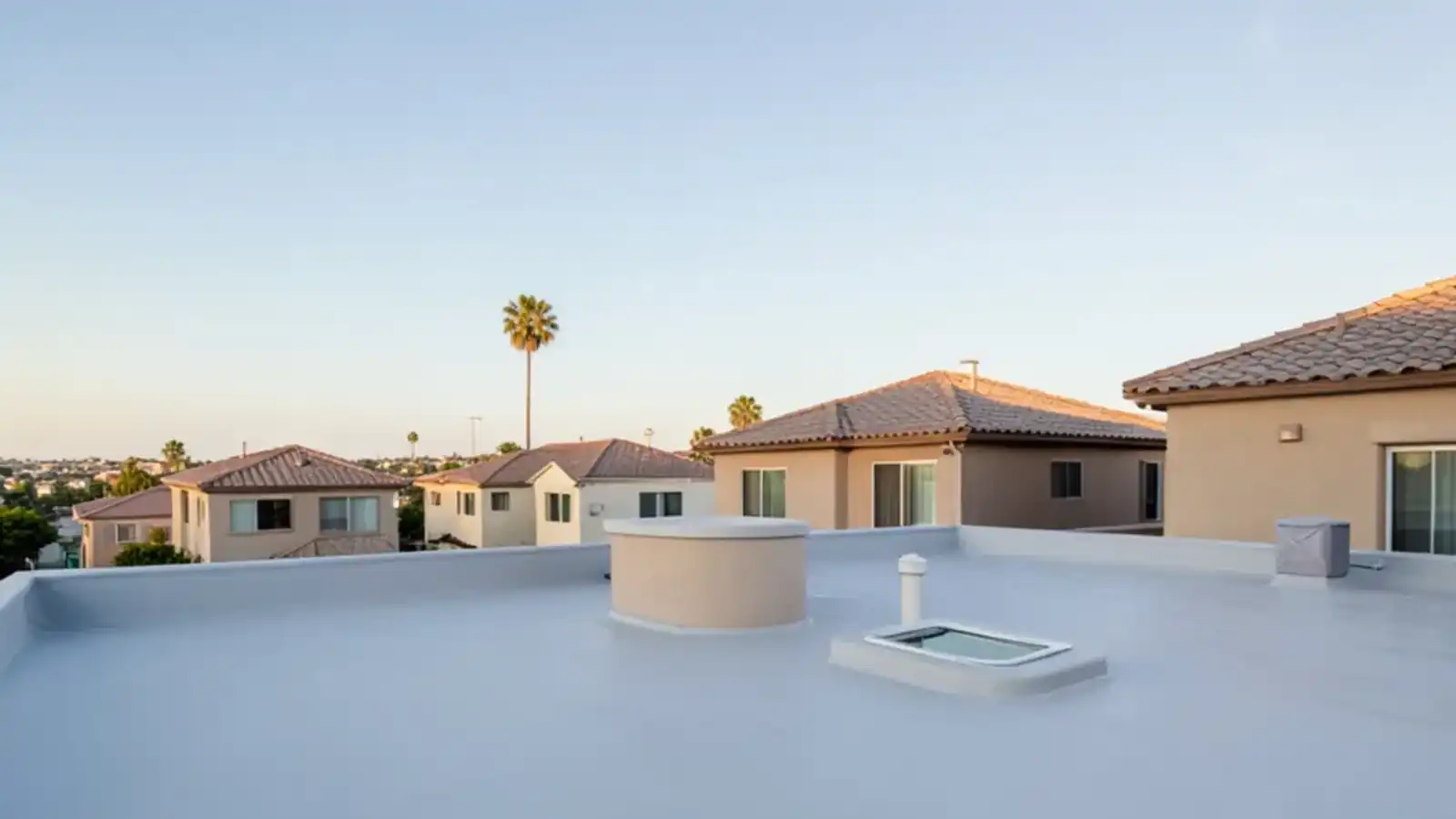
SPF Foam Roofing in Los Angeles, CA
Foam roofing in Los Angeles means sprayed polyurethane foam, a seamless insulating layer that cures into a rigid surface and is protected by a topcoat. It suits odd shapes and hot Valley roofs but needs dry conditions and care. We assess the roof and quote the work in writing.
- ★ 4.9 on Google · 69 reviews
- Same-day or next-day bookings
- Based in Van Nuys, CA
On this page
- Foam roofing in Los Angeles: how sprayed polyurethane foam works
- Pros and cons of a foam roof in Valley heat
- When is foam a good fit, and when is it not?
- How a foam roof goes on, step by step
- What drives foam roofing cost?
- Foam roof repair and recoating
- Fire, permit and cool roof rules for foam roofs
- Why Clear Shield for foam roofing in Los Angeles
- Common questions
Foam turns a liquid into a roof. Two components are mixed at the spray gun, expand on the surface and set into a rigid layer without seams. It belongs to our flat roofing group, and its closest siblings are roof coating and roof waterproofing.
Foam roofing in Los Angeles: how sprayed polyurethane foam works
Spray polyurethane foam (SPF) is applied in passes, building up thickness where the roof needs insulation or slope. It bonds to many clean, dry surfaces and wraps around pipes, curbs and corners without joints. Once cured, it is covered with a protective coating, because sunlight breaks down bare foam.
That coating is the roof's real skin, and it is the part that needs care over the years. A foam roof is a foam layer plus a coating layer, and both matter.
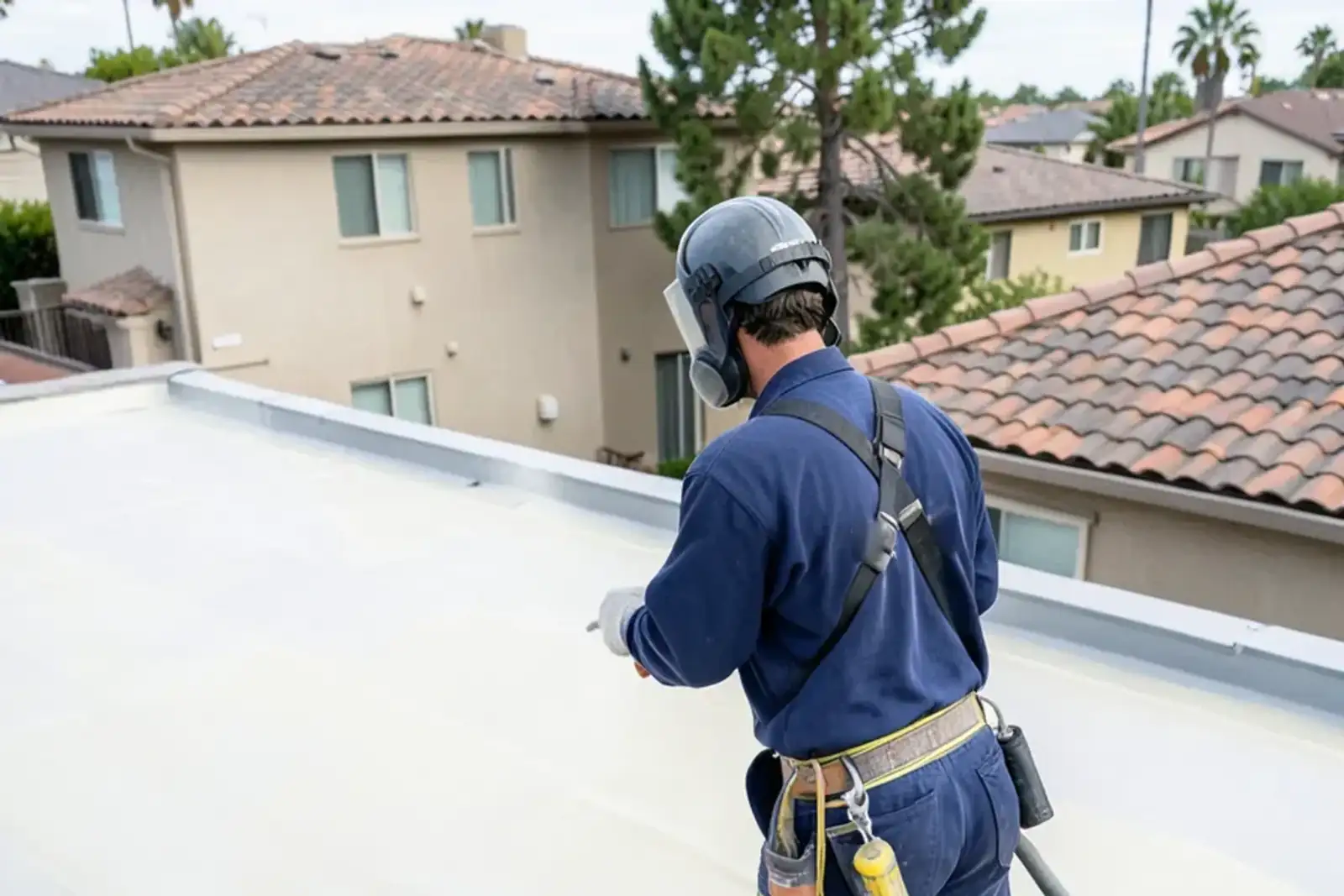
What the written scope should list
- Moisture testing of the existing roof, with wet sections removed first
- Surface cleaning, repairs and primer
- Foam thickness in inches, with slope added toward drains where specified
- Topcoat type, thickness and how many coats
- Masking of walls, glass, vehicles and rooftop equipment
- Walk pads on service routes, and an inspection schedule
Pros and cons of a foam roof in Valley heat
| Pros | Cons |
|---|---|
| Seamless over curbs, pipes and odd corners | Needs dry, calm conditions to spray |
| Adds insulation under the surface | Overspray can reach cars, glass and neighbors |
| Light weight for older structures | Dents and punctures from impact or heavy traffic |
| Can build slope toward drains | Topcoat must be renewed over time |
| Reflective topcoat cuts heat gain | Foam alone is not a finished roof |
Heat is the reason many Valley owners ask about it. Van Nuys averages about 77 days a year at 90°F or hotter by NOAA's normals, and an insulated, reflective surface slows that heat. Our guide to the best roof for San Fernando Valley heat covers the other options.
When is foam a good fit, and when is it not?
Foam fits roofs with many penetrations, curved or odd shapes, and structures that cannot carry much extra weight. It also fits roofs that need a little more fall toward the drains, since thickness can be varied.
It is a weaker choice for roofs with regular foot traffic, roofs that hold standing water for long periods, and roofs that are wet below the surface. Fire needs thought as well. Foam is combustible on its own, so the finished assembly's fire rating matters, and you should ask for the rating in writing. We would assess all of this before recommending foam.
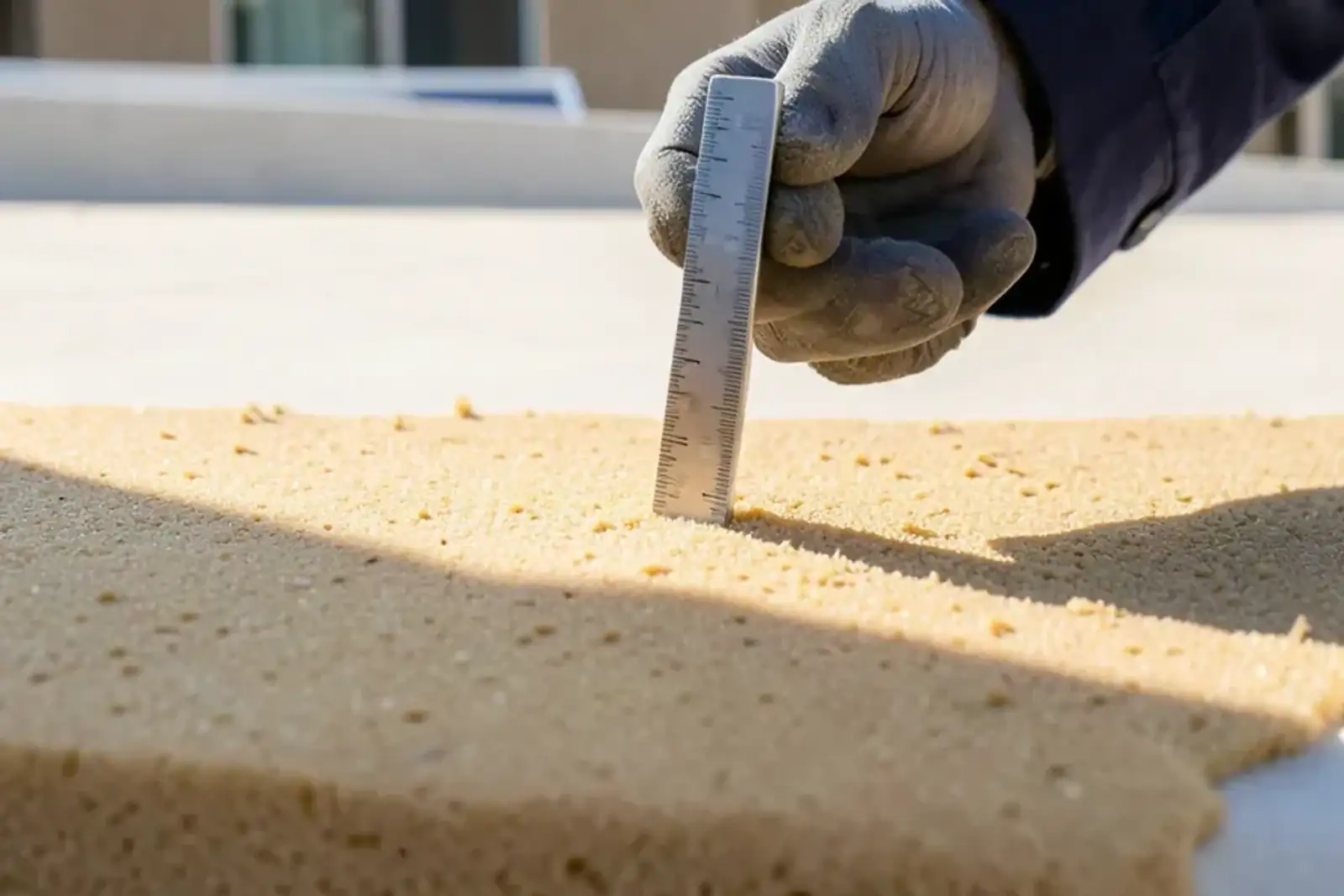
How a foam roof goes on, step by step
This is the sequence we would explain when quoting.
- Inspect and test. We check for moisture, loose areas and drainage, and note every penetration.
- Prepare the surface. The roof is cleaned, repaired and primed where needed.
- Check the weather. Spraying needs dry conditions, moderate wind and a suitable temperature.
- Mask and protect. Walls, windows, vehicles and rooftop equipment are covered against overspray.
- Spray the foam. Passes build to the planned thickness, with slope added where specified.
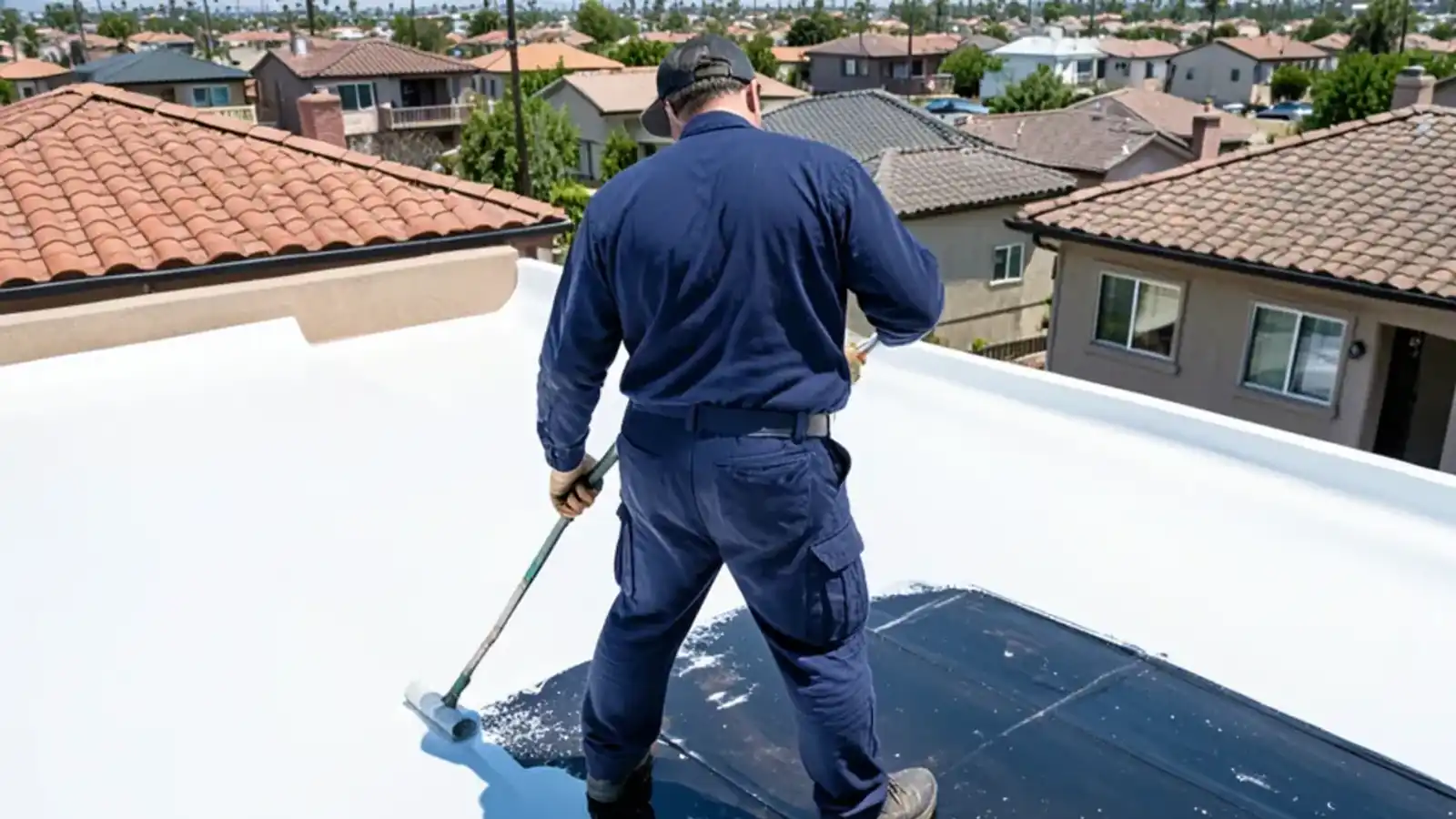
- Coat and inspect. The protective topcoat goes on, and thickness and coverage are checked.
Weather decides the schedule more than it does on most systems. Foam needs a dry surface and calm air, so winter is the hard window, when most of Los Angeles' roughly 13 to 14 inches of yearly rain falls between December and March. Late spring and early fall tend to give the longest runs of spray-ready days, though morning dew and afternoon wind can still shift a start time.
What drives foam roofing cost?
Roof size and the foam thickness lead, then surface preparation, the number of penetrations and the topcoat system. Drain work, parapet height and access add labor. Weather delays matter, since foam cannot be sprayed in the rain, and a small roof pays more per square foot of roof because setup is a fixed cost.
For scale, Angi estimates roof replacement in Los Angeles at roughly $4 to $12 per square foot, averaging about $8.60, or about $17,200 for a typical 1,700 square foot home (accessed November 2026). Foam is quoted on its own thickness and topcoat, so that is only a market reference. We price each roof in writing after seeing it. Compare quotes on thickness, topcoat type and thickness, and who covers the masking.
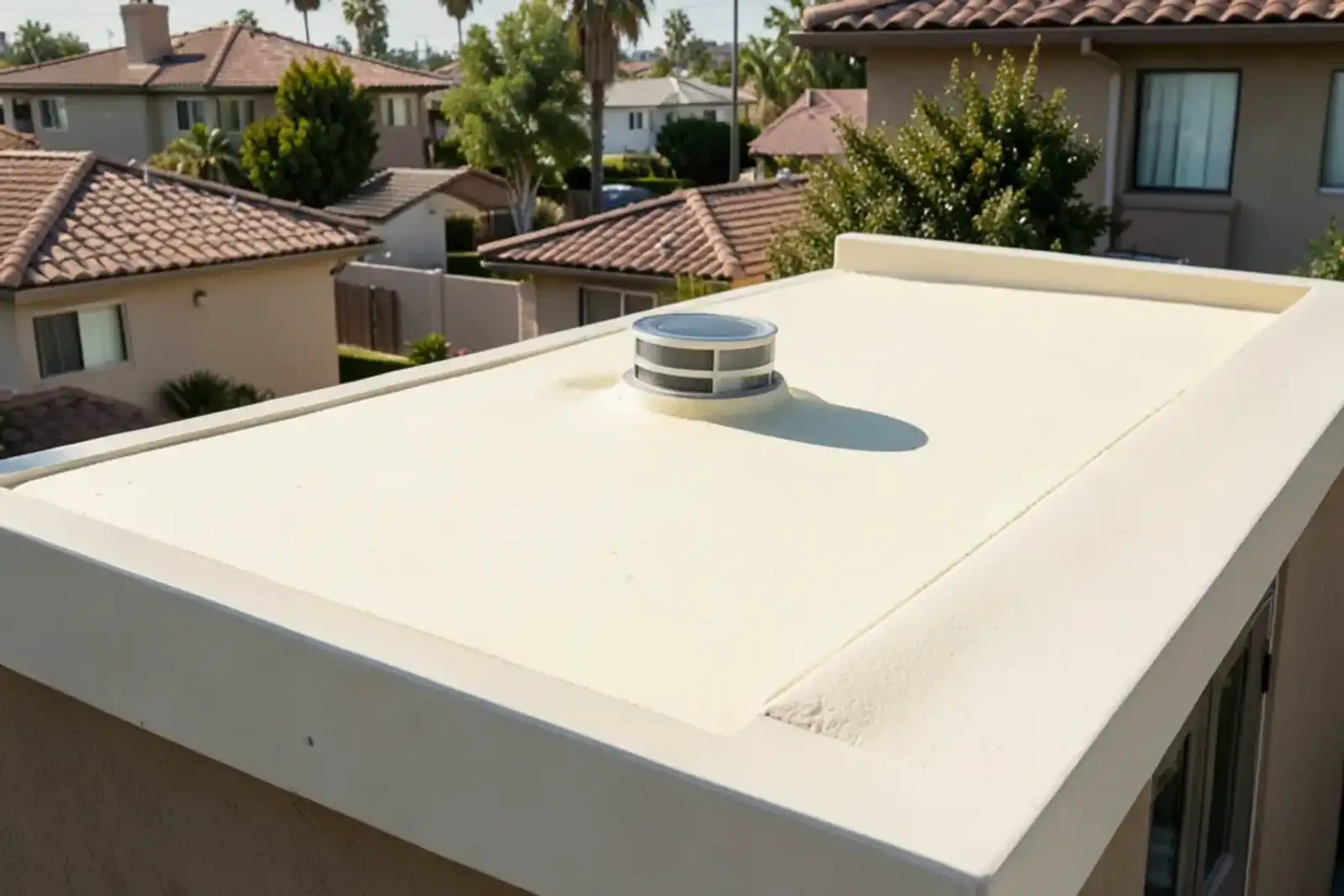
Foam roof repair and recoating
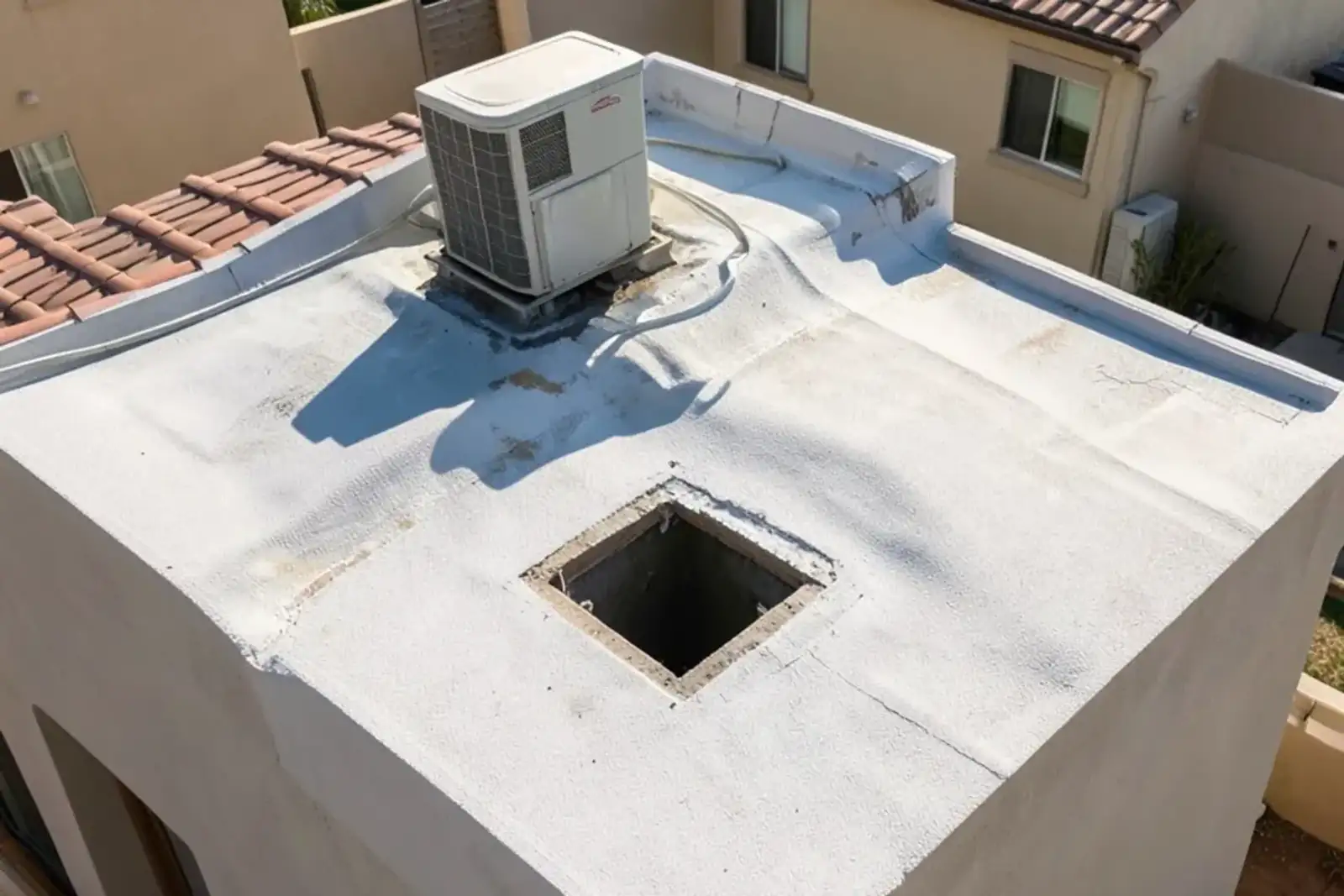
Foam repairs well when the problem is found early. A dent or a cracked spot can be cut out, filled with new foam and recoated. A roof that is wet below needs the wet section removed first. A worn topcoat can usually be cleaned and recoated before the foam is exposed, which is usually a smaller job than redoing the foam.
The Spray Polyurethane Foam Alliance's consumer guidance recommends inspecting a foam roof twice a year and after severe weather, and ASTM D6705 is the standard guide for repair and recoat. Look for pale, chalky patches, bubbling, cracks, bird pecking and damage near equipment. If the whole system has failed, flat roof replacement is the other path.
Fire, permit and cool roof rules for foam roofs
Foam roofs have to meet the fire rating that your location requires. Class A roof covering is required in the Very High Fire Hazard Severity Zone, and California's Wildland-Urban Interface Code (Title 24, Part 7) took effect Jan 1, 2026. Check your address on CAL FIRE's viewer, since state maps were updated in 2025.
Permits depend on the city. For Los Angeles addresses, LADBS generally wants a building permit for a new roof, with a compliance-certificate route for eligible single-family homes. Cool roof rules apply to many replacements, so ask for a CRRC listing on the topcoat.
Why Clear Shield for foam roofing in Los Angeles
We limit what we say here to how we assess and quote. In Van Nuys, reviewers mention pictures and measurements before quoting, materials and pros and cons explained, and hidden problems found and explained. Others describe leaks traced before any coating went on and a full water test afterward, which is the discipline a foam roof needs, since foam cannot be sprayed over moisture.
What Van Nuys customers say about our work
“I recently had my old shingle roof replaced with a new CertainTeed Pro line roofing system, and I am very happy with the results.”
“We were deciding between a standing seam metal roof and asphalt shingles, and frederick was a great guide who helped us understand the pros and cons so we could make the best choice for our home and budget.”
“They also took care of the permit process, which made everything much easier for me.”
4.9 on Google · 69 reviews as of November 2026. Read all reviews
Foam suits different roofs across the county. Glendale is known for Spanish Revival homes in Rossmoyne and Verdugo Woodlands, where a low-slope section beside tile needs a careful tie-in. La Cañada Flintridge sits below mountains burned in the 2009 Station Fire, so fire rating comes first. Topanga was touched by the 2025 Palisades Fire, and Cudahy has dense narrow lots that complicate access and overspray control.
SPF Foam Roofing: common questions
What are the pros and cons of a foam roof?
Foam gives a seamless surface, adds insulation and wraps around curbs and pipes without joints. It also needs dry weather to spray, careful masking against overspray, and a protective topcoat that must be renewed over time. Foot traffic and impact can dent it. We weigh these against your roof's shape, traffic and budget when we quote.
How often does a foam roof need recoating?
The topcoat protects the foam from UV, so it needs renewal over time, and the interval depends on the coating type, thickness and wear. Ask for the recoat schedule and the topcoat product data in writing. Valley sun is strong, with about 77 days a year at 90°F or hotter in Van Nuys. Check the roof surface after each winter.
Can foam go over an existing flat roof?
Often, if the existing roof is dry, clean and well bonded. Foam does not tolerate moisture below it, so wet insulation, loose gravel or failing layers must be dealt with first. Some roofs need a primer or a cover board. A moisture check before the job shows whether the old roof is a sound base, and a tear-off is the alternative.
Is foam roofing noisy or smelly during application in Los Angeles?
The spray rig is loud and the chemicals have an odor while they cure. Wind carries overspray, so neighbors and parked vehicles need to be masked and informed. Occupants are usually kept away from the area during spraying and for a time afterward. Ask the contractor for the product's safety data and re-entry guidance before work starts.
Does foam roofing hold up to foot traffic from rooftop equipment?
Occasional light traffic is fine, but repeated walking over one path can dent or wear through the topcoat. Walk pads or a thicker protective coat on service routes help. If technicians visit your roof often, tell us where, and we can plan the paths into the quote. Dents should be patched and recoated before they hold water.
Areas served for spf foam roofing
- Bellflower, CAWhere 1950s homes have flat additions or porch roofs, foam's seamless wrap around curbs and pipes is worth assessing.
- West Athens, CASmall older homes under county permitting; a moisture check comes first because foam cannot go over a wet roof.
- Bell Canyon, CAClose to where the 2018 Woolsey Fire began, so the finished foam assembly's fire rating comes before any other question.
- South El Monte, CASmall manufacturers beside older single-story homes mean rooftop equipment curbs and walkways shape any foam plan and topcoat wear.
- Rowland Heights, CAHillside homes in the Puente Hills make wind and overspray control part of planning a spray day.
- Moorpark, CARapid growth from about 4,000 residents in 1980 to over 25,000 by 1990 left many same-age tract roofs due for assessment.
- Lancaster, CADesert wind, heat swings and strong UV wear topcoats faster, and wind limits spray days, so scheduling and recoat plans need care.
- Cudahy, CADense, narrow lots complicate access and overspray control, so masking neighbors and parked cars is planned first.
- West Carson, CAPostwar homes in an unincorporated area follow county permitting, and flat rear additions need a moisture check before foam.
- La Cañada Flintridge, CA
- Topanga, CA
- Glendale, CA
- Beverly Hills, CA
- Ventura County, CA
- Burbank, CA
- Santa Monica, CA
- Culver City, CA
- West Hollywood, CA
Need spf foam roofing?
Call and tell us what you are seeing on the roof. We will take it from there.