
Flat Roofing
Why Flat Roofs Pond and How to Fix It
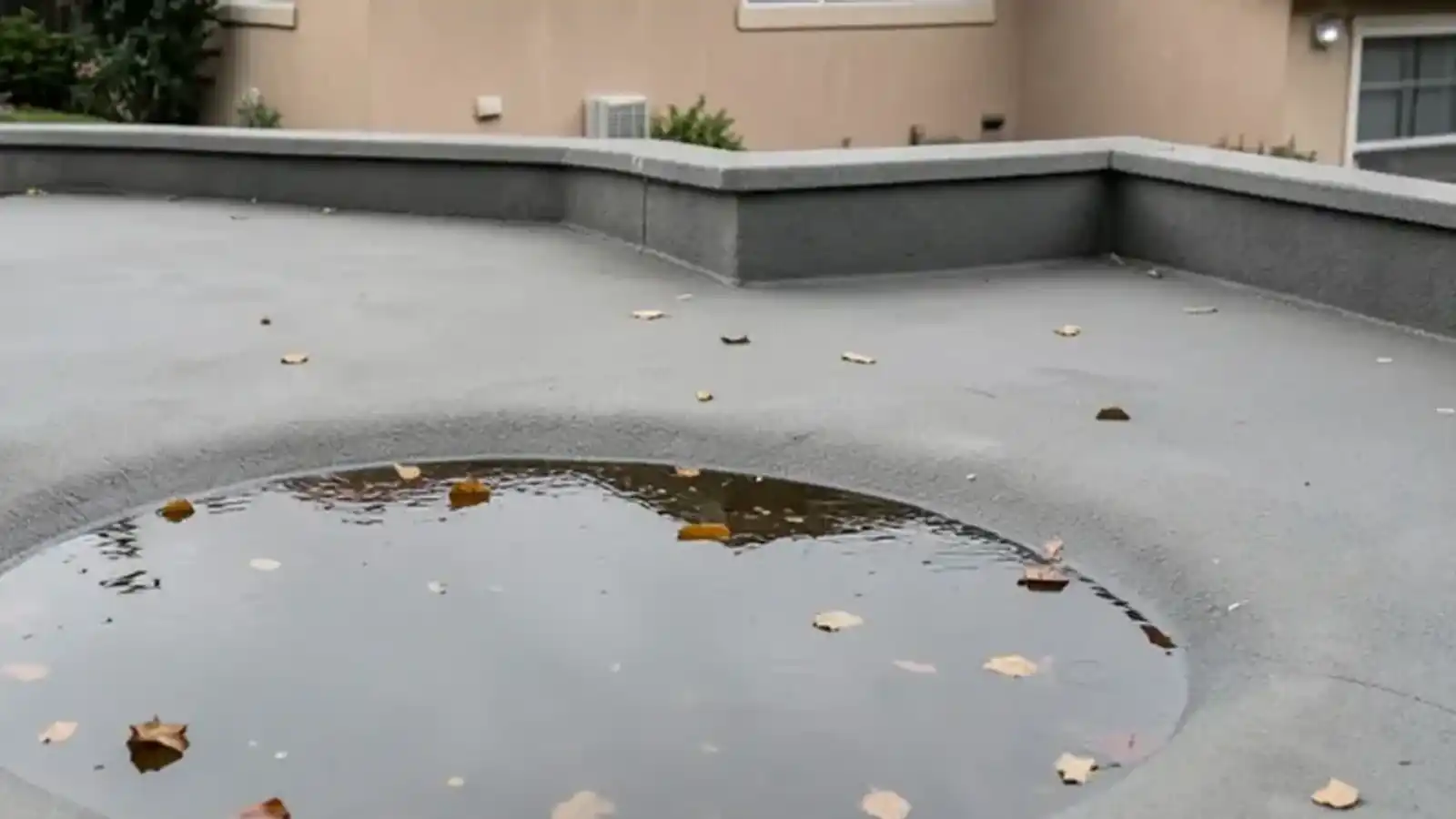
Ponding water on a flat roof means water still standing a couple of days after rain stops. It collects because of low spots, too little slope, blocked drains or a sagging deck. The fix depends on which one it is, and a patch rarely solves it.
- ★ 4.9 on Google · 69 reviews
- Same-day or next-day bookings
- Based in Van Nuys, CA
Published and updated November 3, 2026 · By the Clear Shield Roofers team, Van Nuys, CA
On this page
- Why does ponding water on a flat roof keep coming back?
- The Los Angeles twist: dry months hide the problem
- How we trace where the water goes
- What actually fixes a flat roof that ponds
- Why standing water is also a weight problem
- What working roofers say about ponding fixes
- What changes the cost of fixing ponding
- Culver City roofs and the weight of standing water
- What to do this week
- Common questions
A flat roof is not flat. It is built with a slight fall toward drains or edges, often a quarter inch per foot, so water has somewhere to go. Ponding means that fall has failed somewhere.
A small puddle that dries in a day is normal. Water that lingers is what shortens the life of any flat roofing system, because it rides the seams, feeds algae and holds weight the structure was not planned for. Here is why it forms and what really fixes it.
Why does ponding water on a flat roof keep coming back?
Five causes account for most puddles. Several often work together.
| Cause | How to spot it | What fixes it |
|---|---|---|
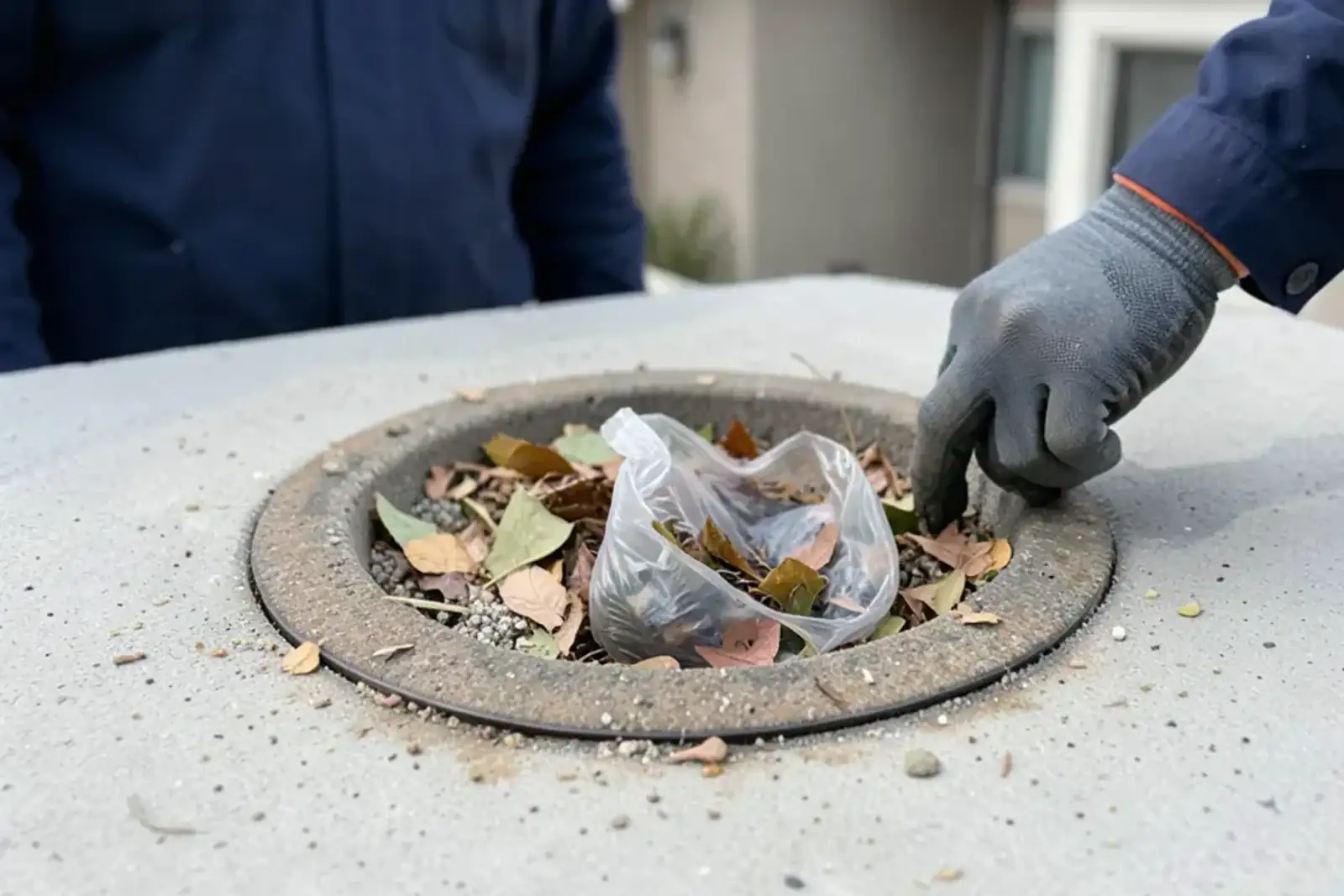
| Blocked drain or scupper | Water rings the drain; leaves and grit in the bowl | Clear it, then add a strainer dome |
| Not enough original slope | Puddles in the same spots after every storm | Tapered insulation or a re-sloped layer |
| Compressed insulation | Soft, spongy patch underfoot | Cut out and replace the insulation |
| Deck deflection | A visible dip in the roof line, often between supports | Reinforce framing, then rebuild the slope |
| Drains in high spots | Drain sits above the surrounding surface | Move or add drains at the low point |
Heavy rooftop equipment and years of foot traffic can crush insulation along the path to the air conditioner. That produces a groove that holds water.
The Los Angeles twist: dry months hide the problem
Downtown Los Angeles gets about 14 inches of rain a year by NOAA's normals, and most of it falls from December through March. That means a roof can look fine for eight months and then hold water for a week during a wet stretch.
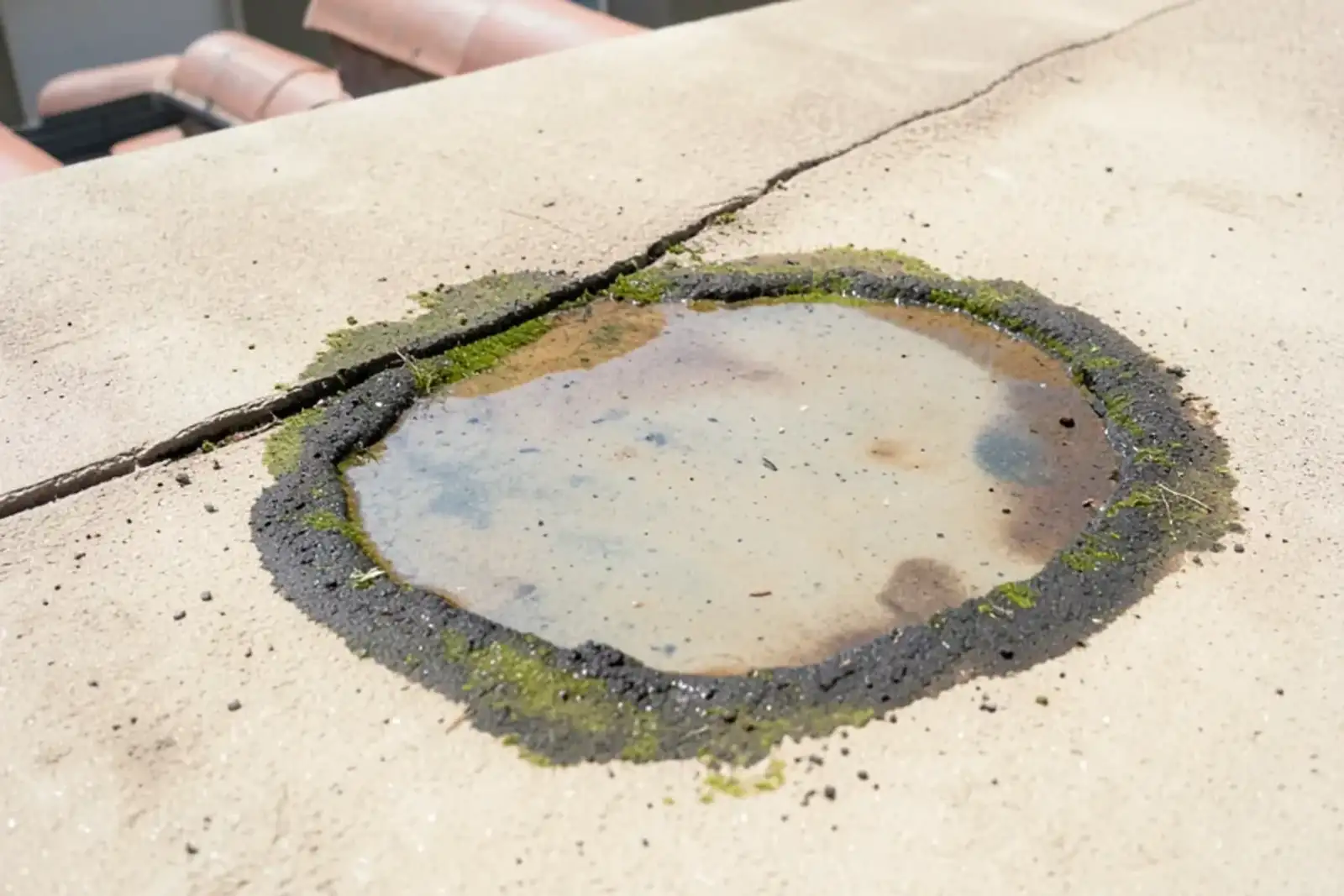
The summer sun then works on the same spots. The stained ring left behind by a dried puddle is worth reading. It shows how deep the water got and how often it comes back. If you see rings, algae or a different color around a seam, that is where we would start.
How we trace where the water goes
Walking the roof after a storm tells us more than a dry-day inspection. We look at where water stands, where it runs and whether it reaches a drain at all. We probe soft spots, check seams inside and around any puddle, and see whether the drain is the lowest point or just a point nearby.
Then we ask why. A clogged drain is easy. A dip between two beams is not, and covering it with a thicker layer of roofing only makes the roof heavier. We tell you which one you have before we talk about a fix.
One customer in Van Nuys describes a full water test after a leak repair, to confirm the repair held. On a ponding roof, a controlled test of the low spot gives the same kind of proof. Once you have a repair that passes it, you know what you paid for.
What actually fixes a flat roof that ponds
Start with the cheapest, most honest step: clear every drain and scupper and see what changes. If water still stands, the options are these:
- Add or move drains: put a drain at the true low point, or add a scupper through the parapet
- Tapered insulation: angled boards laid under a new membrane to create fall toward the drain
- Crickets: small wedge-shaped build-ups that push water around a curb or behind a unit
- Replace wet insulation: cut out the bad section so the new layer sits flat and sound
- Repair the structure: if the deck has dropped, address that first
A coating over a ponded area does not fix it. It only hides it for a season. Coatings can help a sound roof, but they do not add slope. Our flat roof repair page explains how we approach repairs that stay put.
Why standing water is also a weight problem
Water is heavy. A cubic foot weighs about 62 pounds, so every inch of depth adds roughly five pounds to each square foot it covers. A shallow puddle over a few square feet is nothing. A dip that holds two or three inches across a large area adds real load to a deck that is already dipping, and the added weight deepens the dip. That loop is how a small low spot becomes a structural one.
The Asphalt Roofing Manufacturers Association defines ponding as water that stays 48 hours or more and notes a usual minimum slope of a quarter inch per foot for drainage. It also lists the surface damage: debris that dries and cracks, algae that attacks the membrane and wet and dry cycles that stress it. So we treat a roof with deep, recurring puddles as a structure question first, and a surface question second.
What working roofers say about ponding fixes
Honest answers here include trade-offs. Tapered insulation fixes slope properly, but it adds height at the edges, and a parapet or door threshold may not allow it. New drains solve the water, but they mean cutting through the deck and running pipe, which costs more than a surface fix. Crickets are cheap for a puddle behind a curb, yet they do nothing for a roof that is dished across its middle.
Ponding is often blamed on the membrane when the deck is the cause. Recoating a ponded area only restarts the clock. If a roofer offers a coating without talking about where the water goes, ask where it goes. Our roof coating page explains when coating does make sense, which is on a sound, draining roof.
What changes the cost of fixing ponding
We price after we see the roof, in writing. These variables move the number:
- Cause: a clogged drain is a small job, a dropped deck is not
- Area affected: one puddle or the whole field
- Insulation condition: dry boards can stay, wet ones are cut out and replaced
- Drain work: adding or moving a drain means plumbing and deck cuts
- Height limits: parapets and doors can limit tapered insulation, which changes the plan
If repairs keep stacking up on a worn membrane, the money may belong in a flat roof replacement instead.
Culver City roofs and the weight of standing water
Flat and low-slope roofs are part of the mix in Culver City, alongside 1920s to 1940s bungalows that often have a flat porch or addition section. Census ACS puts the median home there as built in 1963, so many roofs have been recovered or patched more than once.
Each added layer adds weight. Older framing was sized for the original roof, not three layers and a puddle. If your roof has been patched repeatedly and still holds water, treat that as a reason to look at the structure, not just the surface.
What to do this week
Take a photo of your roof two days after the next rain. Note where water stands and whether it moves toward a drain. Clear any drain you can reach safely from a ladder, and stay off a wet roof.
Then call Clear Shield Roofers at (209) 563-1278 with the photos. A clear picture of the puddle and a note of how long it lasted are enough to tell whether you have a ten-minute drain job or a slope problem.
Quick answers
How long can water sit on a flat roof before it is a problem?
Many roofers treat water still standing 48 hours after rain as ponding. A puddle that dries by the next afternoon is common and mostly harmless. Water that stays after dry sunny days speeds up seam wear and algae growth and points to a slope or drain problem worth checking before the next storm series.
Can a sagging flat roof be fixed without replacing it?
Sometimes. If the sag is in the insulation or a small area of deck, a crew can cut out the weak section, rebuild it and slope the new layer toward a drain. If the framing itself has dropped, that is a structural question and a builder or engineer should look before roofing goes back on.
Is ponding water on my flat roof bad for the membrane?
It can be. Dirt settles in the puddle and dries into a crust, algae grows on the same spot and the membrane swells and shrinks with every wet and dry cycle. The Asphalt Roofing Manufacturers Association describes these effects and treats water that stays 48 hours or more as ponding. Check your membrane maker's written terms on ponding before you assume it is covered.
Does Los Angeles get enough rain to cause flat roof ponding?
Yes. Downtown Los Angeles averages about 14 inches a year by NOAA's 1991-2020 normals, mostly December through March, and storms often arrive in a row. A roof that never fully dries between them keeps water on low spots, and the summer sun then bakes the same spots again and again.