
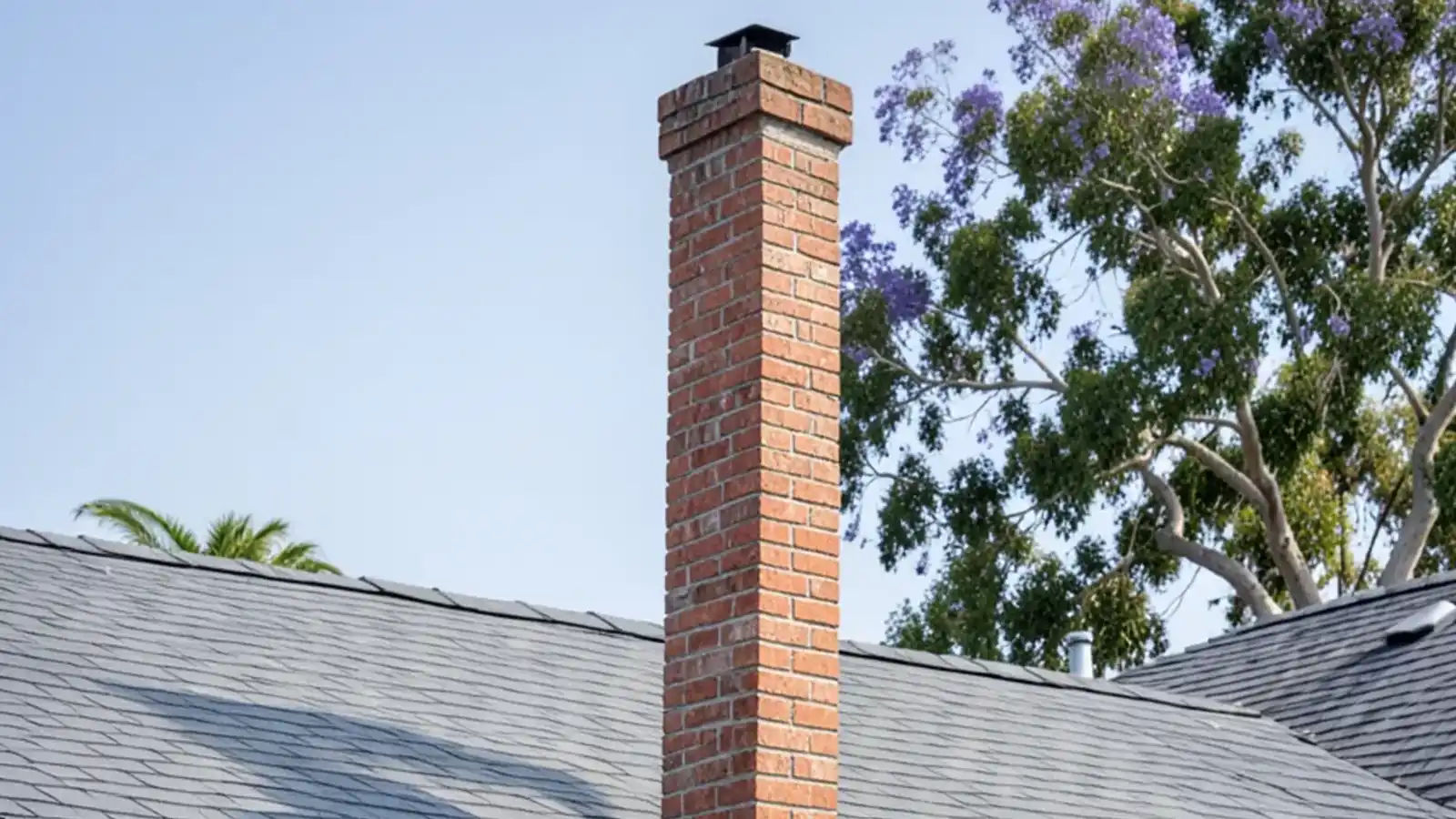
Chimney Flashing Repair in Los Angeles, CA
Chimney flashing repair in Los Angeles stops leaks at the point where masonry meets the roof. Water usually gets in through open counter-flashing, a missing cricket or failed sealant, not through the brick. We open the joint, replace the metal, rebuild the water path and tell you if the masonry itself needs a mason.
- ★ 4.9 on Google · 69 reviews
- Same-day or next-day bookings
- Based in Van Nuys, CA
On this page
- How a chimney joint is built, and where it leaks
- What does chimney flashing repair in Los Angeles include?
- Why does a chimney leak when the brick looks fine?
- How we repair chimney flashing, step by step
- Chimney leak repair, sealing and crickets compared
- What affects the cost of chimney flashing repair?
- Chimney leaks, permits and insurance
- Why Clear Shield for chimney flashing repair in Los Angeles
- Common questions
A chimney is a heavy brick or block tower sitting on a roof that moves differently. The joint between them is one of the hardest on the roof to keep watertight, and it is a common reason an otherwise sound roof leaks. If you are comparing leaks around the house, start with roof repair in Los Angeles and then come back here for the chimney detail.
Our roof flashing repair page covers the rest of the roof's joints.
How a chimney joint is built, and where it leaks
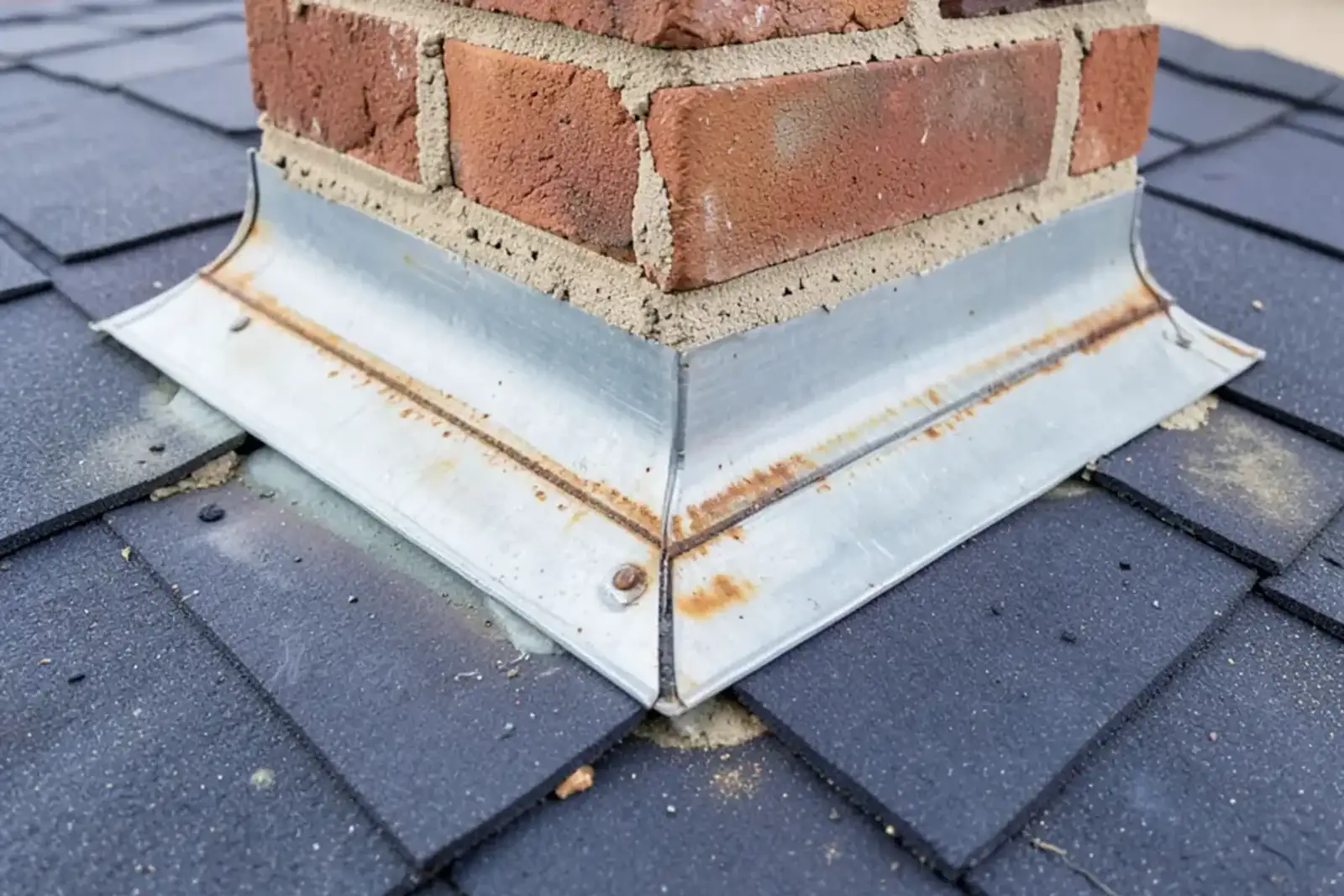
A watertight chimney is several layers of metal working together, and each layer fails differently:
- Base flashing sits at the downslope face and sheds water onto the roof.
- Step flashing climbs the sides of the chimney, one piece per course of shingle or tile.
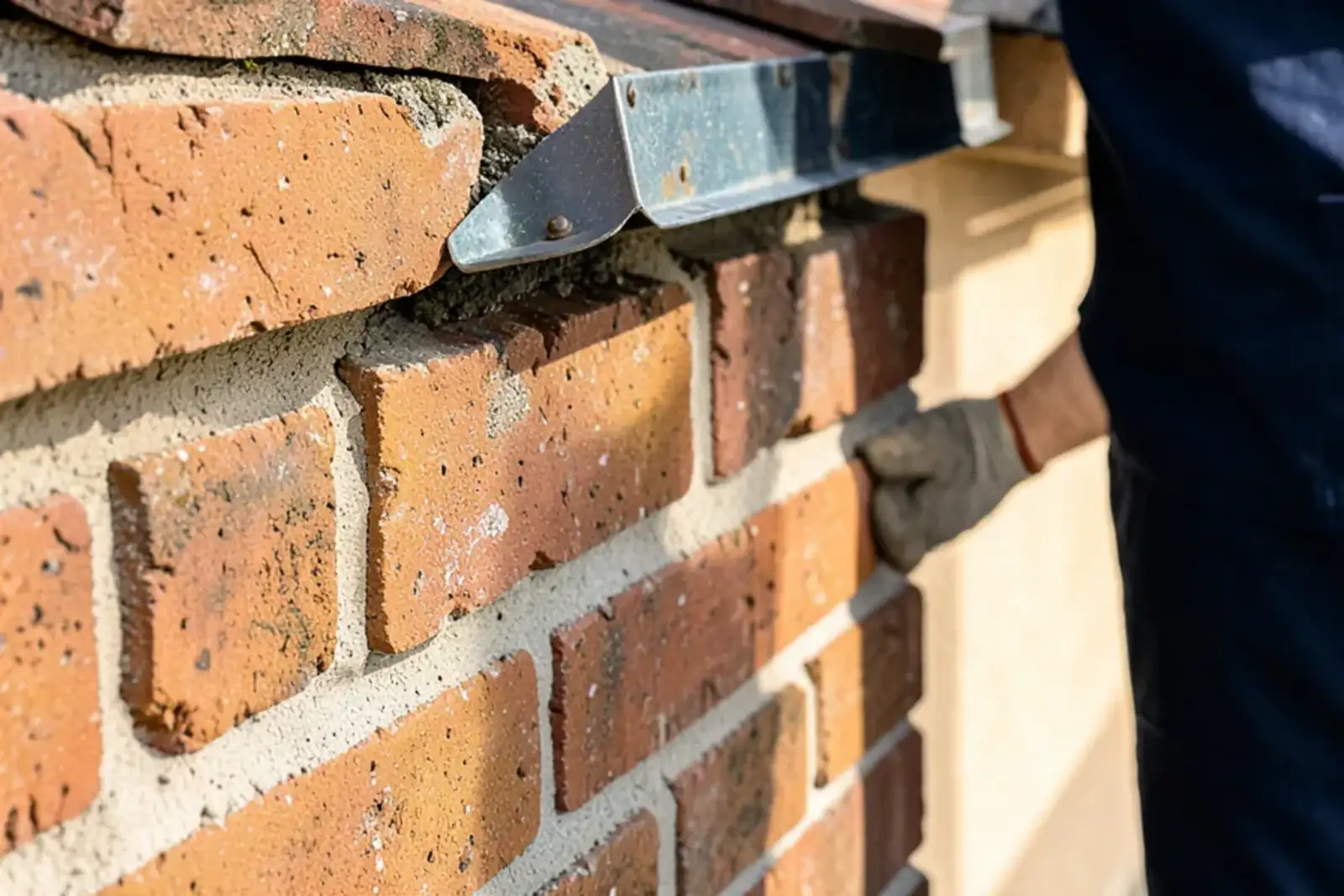
- Counter-flashing is cut into the mortar joints and hangs over the step flashing to cover its top edge.
- A cricket or saddle sits behind the chimney on the upslope side and splits the water around it.
Leaks usually start where one of these has lifted, rusted, lost its seal or never existed. Counter-flashing set only with caulk, instead of cut into the mortar, is a classic early failure.
What does chimney flashing repair in Los Angeles include?
A chimney repair rebuilds the water path around the stack, not just the visible seam. The scope depends on which layers have failed.
- Base and step flashing: lifted, rusted or poorly lapped metal replaced and layered with the roofing
- Counter-flashing: cut into the mortar joint and sealed, instead of caulked to the face
- Cricket or saddle: added behind a wide chimney where water pools
- Roofing around the stack: shingles or tile lifted, reset and reflashed
- Deck check: wet or soft sheathing at the junction found and priced before it is covered
Who fixes a leaking chimney: a roofer, a mason or a chimney sweep?
Each trade owns a different layer. A roofer handles flashing, cricket and the roofing around the stack. A mason repairs cracked brick, loose mortar and a damaged crown. A chimney sweep cleans and inspects the flue. A leak near a fireplace can involve more than one of them, which is why we check the flashing first and tell you when another trade is next.
Why does a chimney leak when the brick looks fine?
The brick is rarely the entry point. Water works under the flashing, behind the counter-flashing or across the flat upslope face, then drips into the attic or runs down inside the wall. Older chimneys add masonry movement, since mortar loosens over decades and earthquakes can open a gap between brick and roof.
Four causes dominate:
- A lifted or corroded base or step flashing
- Counter-flashing that was caulked on, not cut into the mortar
- No cricket behind a wide chimney, so water and debris sit on the upslope side
- Failed sealant that was asked to do the work of metal
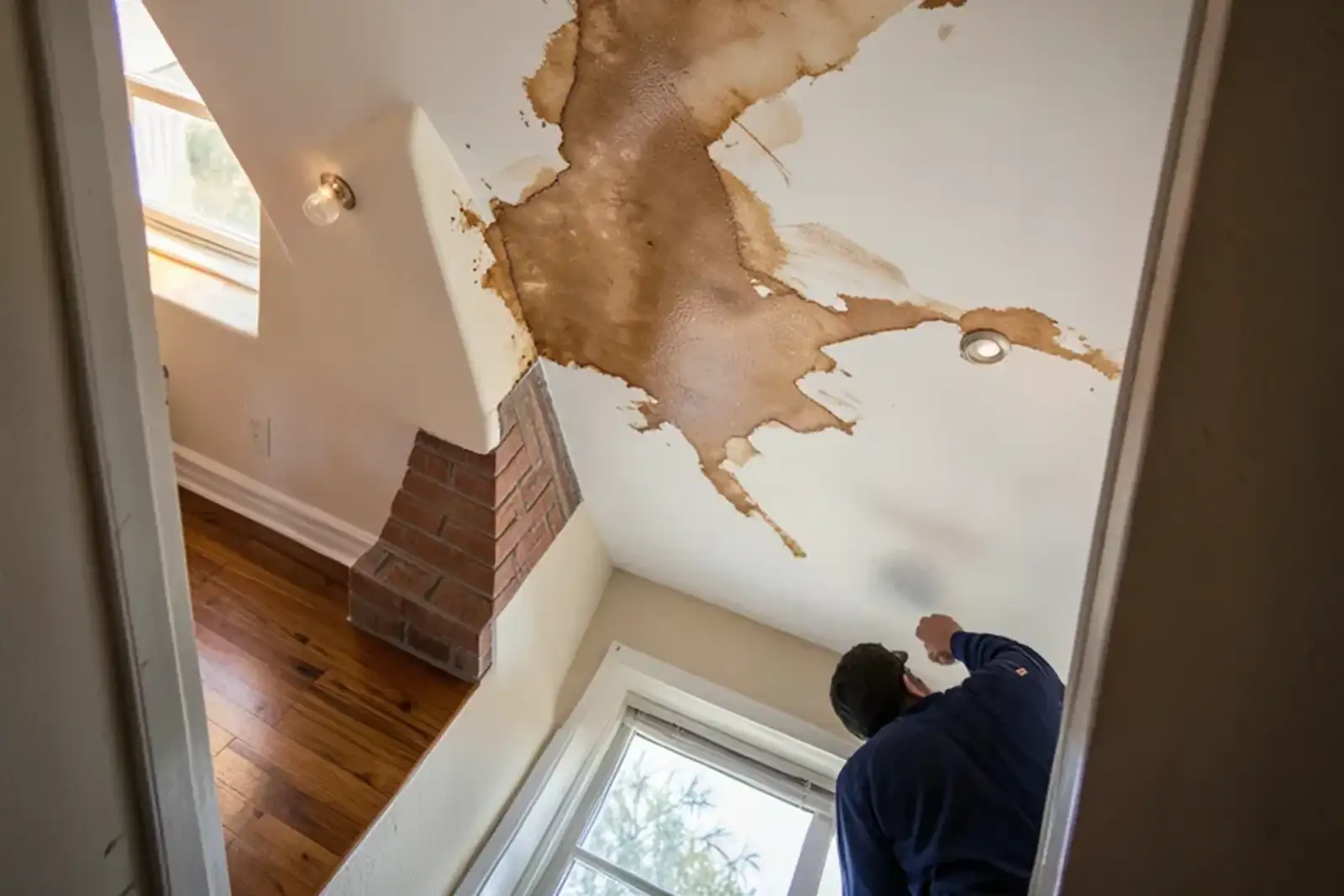
Stains from a chimney leak often appear on the ceiling next to the fireplace wall. They can also show up several feet away. Our guide to why a ceiling stain keeps coming back explains why a leak keeps returning after quick fixes.
How we repair chimney flashing, step by step
- Check the attic. We look at the chimney chase for water trails, damp insulation and stained framing.
- Inspect from the roof. We examine every layer of metal, the sealant, the mortar joints and the crown.
- Open the junction. Shingles or tile around the chimney are lifted so the old metal and the deck below are visible.
- Replace the metal. New base and step flashing go in layered with the roofing, and counter-flashing is set into a cut mortar joint.
- Add a cricket where it is needed. A saddle behind the chimney moves water around it.
- Test and photograph. Where conditions allow, a controlled water test confirms the joint holds, and you see photos of each stage.
Chimney leak repair, sealing and crickets compared
| Option | What it does | When it fits |
|---|---|---|
| Reseal the existing joint | Renews sealant at the counter-flashing | Metal is sound and the gap is small |
| Replace flashing | New base, step and counter-flashing | Metal is lifted, rusted or poorly set |
| Add a cricket | Diverts water behind the chimney | Wide chimney, pooling, no saddle |
| Masonry repair | Fixes cracked mortar, crown and brick | Water is entering through the masonry |
Resealing is the least expensive and the shortest-lived. Replacement is the permanent fix when the metal itself has failed. Masonry repair is its own trade, and it belongs to a chimney mason, not a roofer. If the crown or brick is cracked, flashing alone will not stop the leak.
What affects the cost of chimney flashing repair?
Size is the first factor. A wide chimney has more flashing to replace and may need a cricket. Roof material is the second, because tile has to be lifted and reset by hand, while shingles around a chimney are quicker to release and weave back.
Access and height come next, and so does hidden damage. Wet insulation, stained framing or soft decking found once the joint is opened adds work. Pricing comes after we have looked at the chimney, in writing, ahead of any work. A brick chimney that has settled away from the roof can need masonry attention first.
Chimney leaks, permits and insurance
A flashing repair generally raises few permit questions, and rules vary by address. Check with LADBS, your city or the county. Building codes generally set a width above which a chimney should have a cricket, so ask the local building department about your address. Seismic concerns, such as a leaning or cracked chimney, are a separate safety matter for a chimney professional.
Sudden storm damage may be covered by your homeowners policy, but a worn-out flashing usually is not. We can photograph the joint and write a repair estimate for your insurer. Only the policyholder or a licensed public adjuster does the negotiating.
Why Clear Shield for chimney flashing repair in Los Angeles
Chimney leaks reward patience and tracing. Reviewers describe leaks traced before coating, a full water test after the repair and a Sunday morning return for a small leak after rain during a job. One customer describes pictures and measurements before quoting.
What Van Nuys customers say about leak repairs
“They also performed a full water test afterward to make sure the leak was fully resolved, and everything stayed dry.”
“The crew’s workmanship looked top-notch, and they kept me updated by sending drone photos of the roof work as it happened, which was really helpful since I wasn’t about to climb up there myself!”
“During the new roof installation, a small leak showed up after some seasonal rain, and Frederick and the crew responded right away, even on a Sunday morning, to fix it fast.”
4.9 on Google · 69 reviews as of November 2026. Read all reviews
We cover several areas where older homes keep their chimneys. Glendale has Spanish Revival homes in areas such as Rossmoyne and Verdugo Woodlands that need careful tile work, and Beverly Hills has period Revival homes where clay tile and slate come first. La Cañada Flintridge is the foothill city where the 2009 Station Fire burned the mountains directly above. Downey has a large stock of 1950s ranch homes.
Other roof-edge repairs are covered under ridge cap repair and fascia and soffit repair.
Chimney Flashing Repair: common questions
Why does water come in around my chimney?
Usually at the flashing, not the brick. The metal where the chimney meets the roof can pull away, rust or lose its seal, and the upslope side collects water if there is no cricket. Cracked mortar or a damaged crown can add water from above. We start with the flashing because it is the most common and the least costly to fix.
Do you reseal chimney and roof intersections?
Yes, at the roof junction. We replace failed flashing and reseal the counter-flashing joint as part of the repair. Sealant alone is a short-term measure, so we use it as a finish over proper metal. Cracked brick, loose mortar and a damaged crown are masonry repairs, and we tell you when a chimney mason is the right next call.
Does an older chimney need a cricket added?
Often it helps. A cricket is a small peaked saddle behind the chimney that sends water around it instead of letting it pool on the upslope side. Wider chimneys especially collect water and debris there. Building codes generally expect one on chimneys over a certain width, and older roofs frequently have none, so we check.
Can I just caulk the gap around my chimney?
Caulk can slow a small leak for a season, but it does not replace flashing. Masonry moves, sun breaks sealant down and water slips behind the bead. If the metal is lifted or rusted, caulk hides the problem while water keeps entering. A proper repair replaces the failed flashing and uses sealant only as a finishing detail.
Can a chimney leak show up far from the chimney?
Yes. Water that enters at the chimney can run along the roof deck or a rafter before it drops, so the stain may sit several feet away. In a chimney leak, we begin in the attic around the chimney chase and work out from there, then confirm the source from above.
Areas served for chimney flashing repair
- View Park-Windsor Hills, CAMid-century hillside houses on view lots often have original brick chimneys with decades-old flashing at the roof joint.
- Lomita, CAOlder, modest homes beside Torrance where an original chimney is a likely place for aged flashing and failed sealant.
- Glendora, CAFoothill homes below slopes burned in the 2014 Colby Fire, where ash and debris collect behind chimneys and in valleys.
- Piñon Hills, CAWind-exposed rural lots in the high desert, where gusts lift loose flashing and dried sealant around a chimney.
- Bell Gardens, CAMany older small-lot homes and small apartment buildings, where original chimneys and their flashing are decades old.
- Anaheim, CAFlat 1950s tracts near the resort and hillside homes in Anaheim Hills, with chimneys and roof pitches that differ between them.
- Rancho Santa Margarita, CAMaster-planned tile-roof homes with HOA oversight, where fireplace chimneys need tile lifted and reset around the flashing.
- Baldwin Park, CAA large stock of postwar single-family homes, where original masonry chimneys sit through aging shingle roofs.
- Alondra Park, CAPostwar tract homes in unincorporated county land, where chimney flashing from the original build is a common leak point.
- La Cañada Flintridge, CA
- Topanga, CA
- Glendale, CA
- Beverly Hills, CA
- Kern County, CA
- West Carson, CA
- Cudahy, CA
- East San Gabriel, CA
- Valinda, CA
- Duarte, CA
- Lomita, CA
Need chimney flashing repair?
Call and tell us what you are seeing on the roof. We will take it from there.