
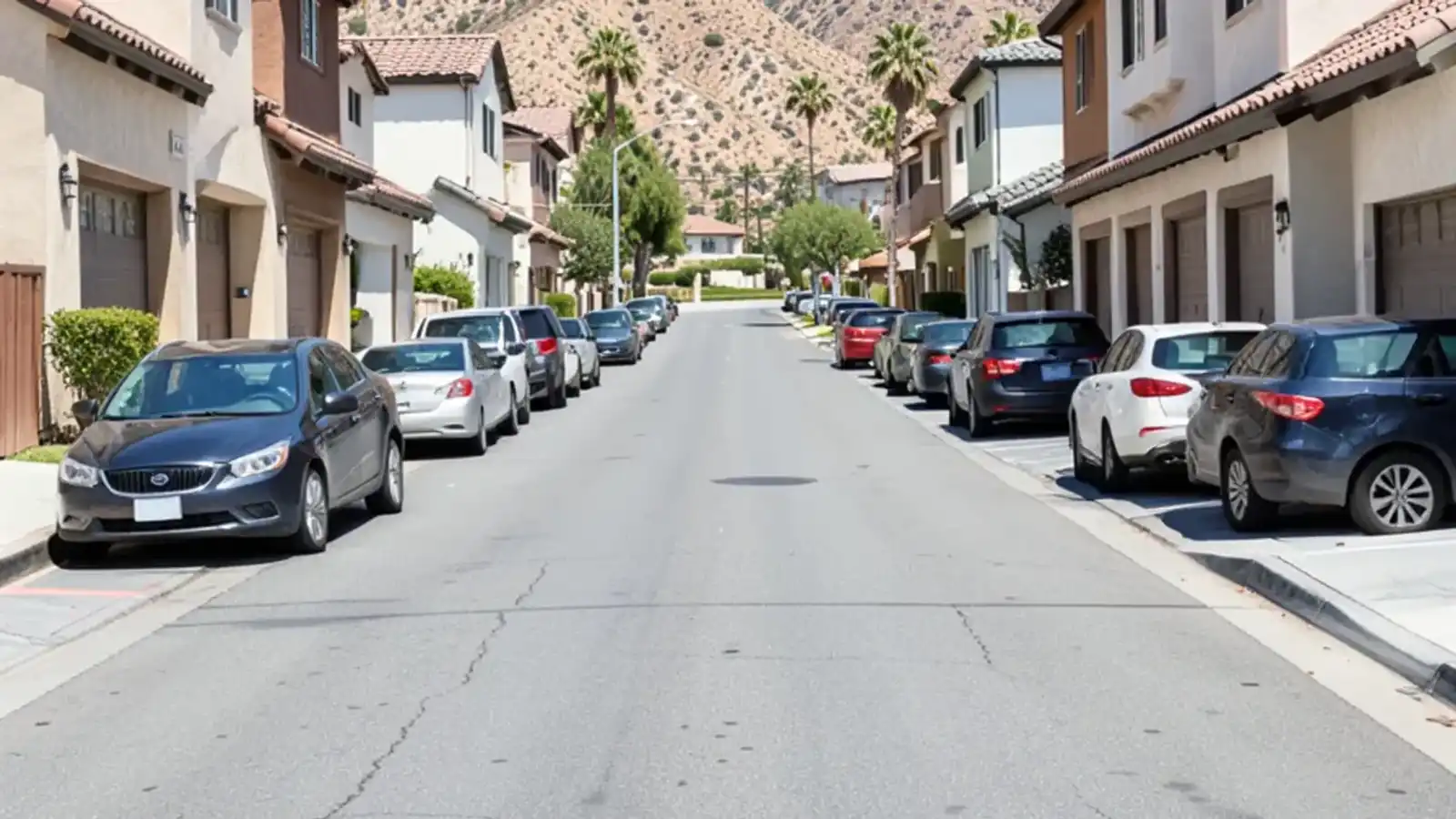
Roofing Contractor in Corona, CA
Corona has a hot Mediterranean climate, with the Santa Ana Mountains along its west and south and an industrial north half. For a roofing contractor in Corona, CA, Van Nuys is 72 miles and about 110 minutes of driving away on our estimate.
- ★ 4.9 on Google · 69 reviews
- Same-day or next-day bookings
- Based in Van Nuys, CA
The Circle City's big residential tracts were built around the Census median year of 1991, so tile underlayment and sealant are now old enough to need checking, and about a third of the homes are not owner-occupied.
On this page
City of Corona permits, tract associations and nearby county pockets
Within city limits, Corona runs its own building department. A re-roof permit in Corona does not come from Riverside County. Unincorporated pockets sit right beside it, including Coronita, El Cerrito and Home Gardens, so the office that applies can change from street to street.
Large tracts bring associations too, and their review of materials and color is separate from the permit. A cool-rated product is required on many re-roofs covering over half the roof, and the city can say how that applies to you. See Riverside County for the neighboring offices.
Grand Boulevard, Eagle Glen and the lemon-grove past
Corona began in 1886 as South Riverside, a citrus-boom town, and took its present name in 1896. It was once billed as the Lemon Capital of the World, and Grand Boulevard, the circle that gives Corona its nickname, hosted automobile races in 1913, 1914 and 1916. The oldest roofs stand in the downtown circle and the streets around it. Later tracts spread south and east, including Eagle Glen, adopted as a city neighborhood in 1991, and Dos Lagos, adopted in 2000.
Southern California Edison provides most of Corona's electricity, with the Corona Department of Water and Power serving a small part of the city, so the LADWP cool roof rebate does not apply here. The Building Division sits at 400 South Vicentia Avenue.
Hot summers and a mountain edge around Corona
Corona has a hot Mediterranean climate, with winter days in the mid to upper 60s and long hot summers. Sun is the main wear on a roof here. July and August highs average 92°F and 93°F, and the record is 118°F. It bakes sealant, cracks rubber boots and dries felt underlayment under tile.
The Cleveland National Forest and the Santa Ana Mountains form the city's west, southwest and south edges. Homes against that edge collect dry leaves and brush in valleys and gutters. Santa Ana winds blow two or three times a year between October and December and push that debris onto roofs. Rain averages about 13.95 inches a year, mostly in winter and early spring. Search for your address in CAL FIRE's hazard map viewer before you settle on a covering.
1990s tile tracts and the industrial flat roofs of north Corona
Corona is big, 38.9 square miles with 157,136 residents, and its housing is mostly tracts of the 1980s through the 2000s. The Census median is 1991 and about 64% of homes are owner-occupied, so landlords and tenants figure into many roof decisions.
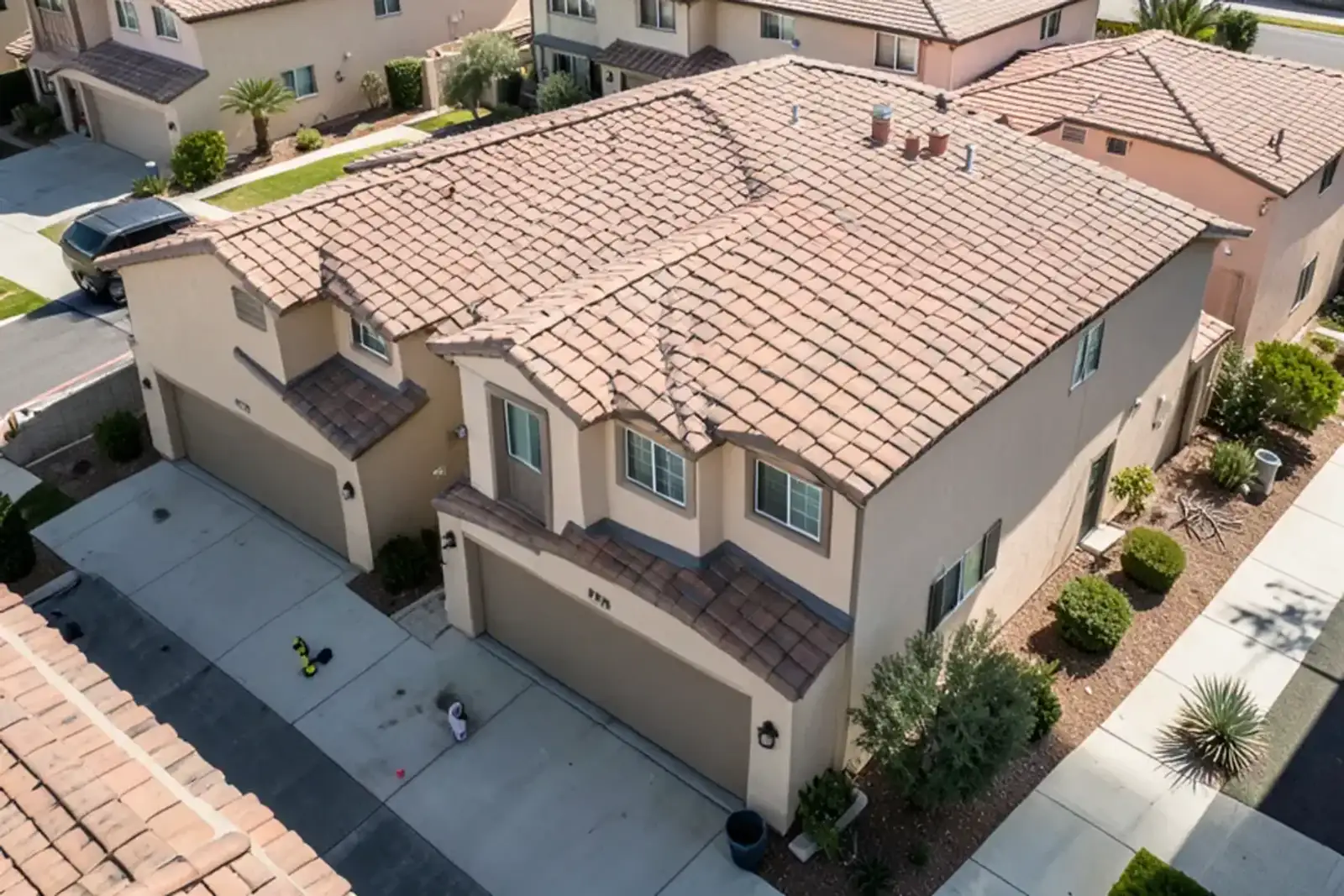
At that age the surface is not the question. The question is whether the water barrier under the tile has aged out. Lifting a few tiles answers it.
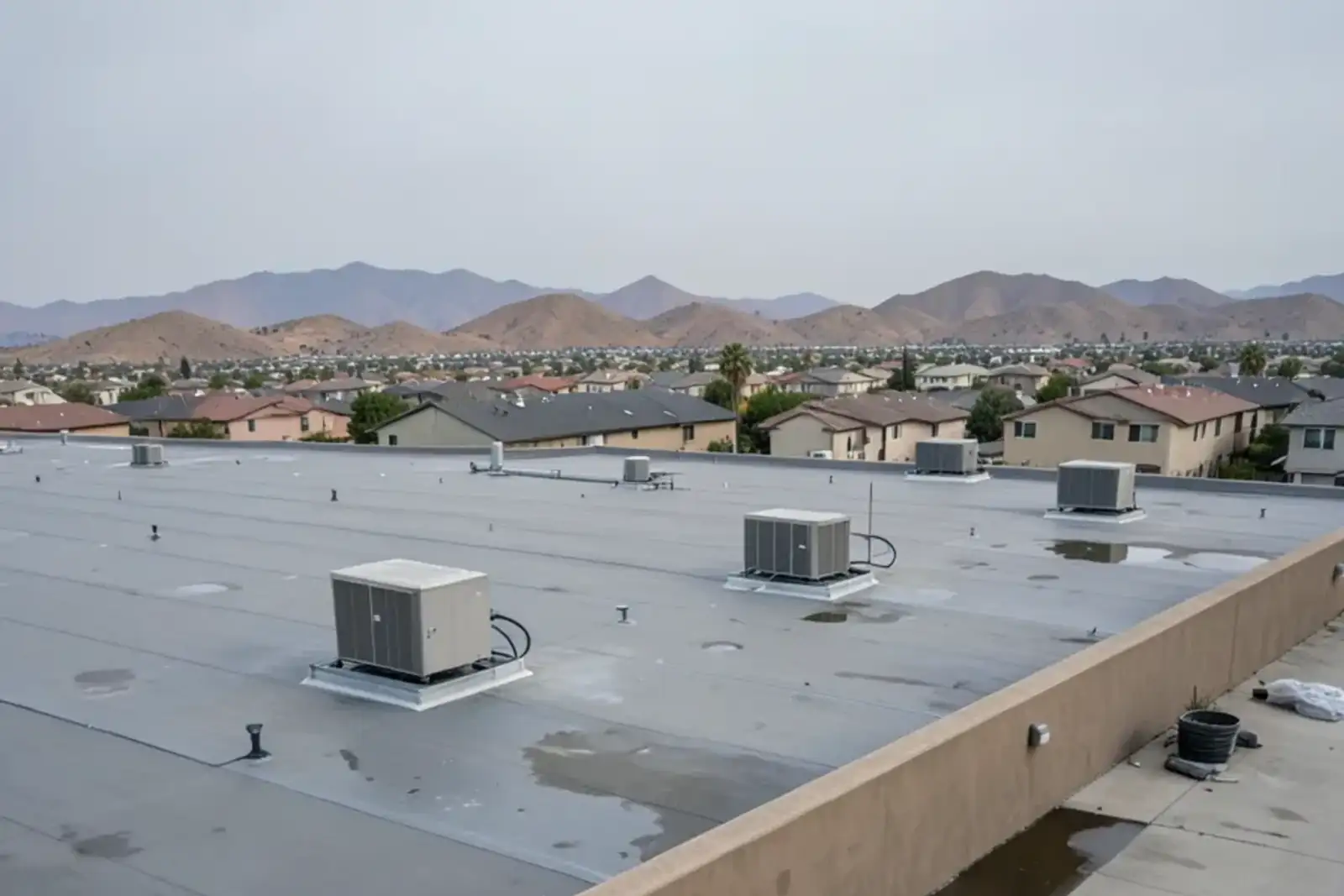
The north half is industrial. Those buildings have low-slope roofs with rooftop units, drains and parapet edges, and they pond water when drains clog.
The 110-minute trip from Van Nuys to Corona
Corona sits roughly 48 miles southeast of downtown Los Angeles, but the road from our base runs 72 miles, around 110 minutes on our estimate. Visits are booked ahead from photos. If a leak is active, tarp the roof, phone early and we will find the nearest open day; a closer roofer may reach you sooner. For planned work, read about roof replacement.
What customers say
“I even saw Roger return later with a magnetic roller to check the ground again for any missed roofing nails, which showed real care and attention to detail.”
“The crew’s workmanship looked top-notch, and they kept me updated by sending drone photos of the roof work as it happened, which was really helpful since I wasn’t about to climb up there myself!”
4.9 on Google · 69 reviews as of November 2026. Read all reviews
Roofing questions from Corona
Will Corona's building department or the county permit my re-roof?
If your home is inside Corona's city limits, the city's own building department handles the permit. Nearby unincorporated areas such as Coronita, El Cerrito and Home Gardens fall under Riverside County instead, so the answer can change a block away. We check which office applies to your address before pricing, and your contract should name the person responsible for getting the permit.
Do you quote flat roofs on Corona's industrial north side?
We can inspect and quote low-slope commercial roofs. Send photos, the building's age and how roof access works. The drive from Van Nuys runs about 110 minutes, so we book ahead and check drains, seams and curbs around rooftop equipment in one trip.
Services in Corona
- Roof Replacement
With a 1991 median build year, many Corona tract roofs are in their mid-thirties. Replacement planning here starts with the underlayment and the pipe-boot and flashing details.
- Tile Roofing
Large 1980s to 2000s tile tracts mean matching profile and color matter. Tile is often reusable, but the barrier beneath needs a lift-and-check before anyone decides.
- Commercial Roofing
The north half of Corona is largely industrial, which means big low-slope roofs with rooftop equipment. Seams, drains and curbs there need a different inspection than a house does.
- Gutters
Homes backing onto the Santa Ana Mountain edge catch brush and leaf debris. Open runs and sound downspouts keep water away from stucco and slab edges.
- Flat Roofing
Corona's industrial north half holds large low-slope roofs, and July and August highs average 92°F and 93°F. Heat opens seams and sealant, so we check drains, laps and curbs before choosing between repair and recoat.
- Roof Repair
Rubber pipe boots and flashing sealant crack first under Corona's summer sun. A targeted repair on a 1991-era tract roof can stop a leak long before the whole covering needs replacing.
- Class A Fire-Rated Roofing
Homes along the Santa Ana Mountain edge sit next to dry brush, and Santa Ana winds blow in autumn. Check your address on the state hazard map, then see what a Class A roof involves.
- Roofing Materials
- Gutter Cleaning
- Skylights and Ventilation
Map of Corona
Near Corona
Worth reading
Part of our Riverside County service area, worked from our base in Van Nuys.
Roof trouble in Corona?
Call us with your address and what you are seeing.