
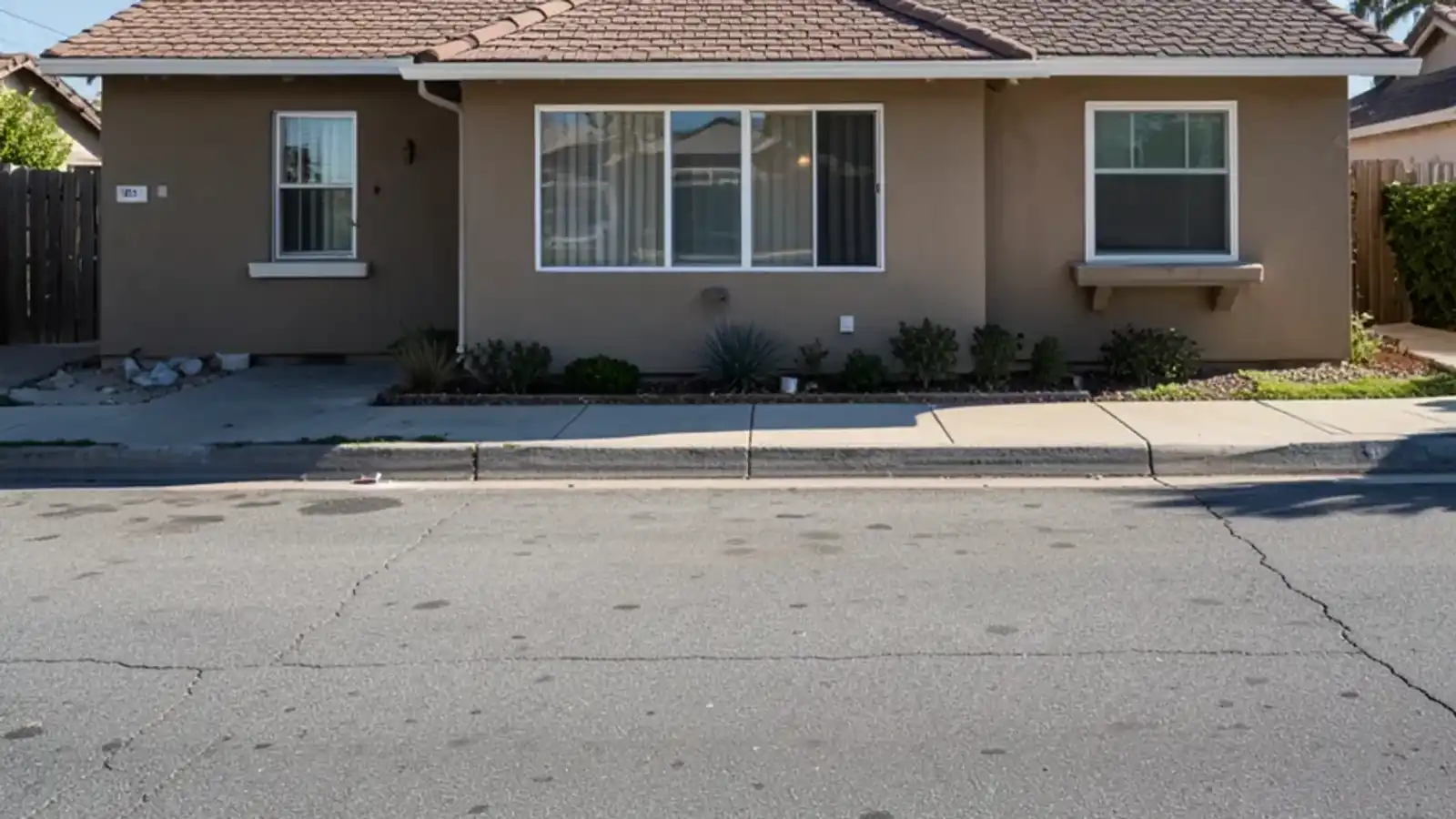
Structural Roof Repair in Los Angeles, CA
Structural roof repair in Los Angeles fixes what holds the roof up: soft decking, rotted plywood, cracked rafters and sagging lines. We find how far the damage runs, show you photos, and price the work in writing before any board is replaced.
- ★ 4.9 on Google · 69 reviews
- Same-day or next-day bookings
- Based in Van Nuys, CA
On this page
- How to tell if a roof problem is structural
- What causes a roof to sag or its decking to rot in Los Angeles?
- Roof decking replacement: plywood, boards and what goes under tile
- What happens when we find bad plywood during a job
- Structural roof repair step by step
- What drives the cost of structural roof repair?
- Do structural roof repairs need a permit, an engineer or an insurance claim?
- Why Clear Shield for structural roof repair in Los Angeles
- Common questions
Structural problems sit under the roofing, which is why they get found late. The shingles or tile can look fine while the deck beneath them has gone soft. If you suspect that, the right roof repair in Los Angeles starts from the attic and works outward, not from the surface down.
Some of this work is small, a few sheets of plywood in a patch. Some is large, a sagging section that needs framing help. The first job is to find out which one you have.
How to tell if a roof problem is structural
A leak and a structural problem are not the same thing, although one often leads to the other. These signs point to the deck or framing:
| What you notice | What it often means |
|---|---|
| A dip or wave in the roof plane, seen from the street | Soft decking, or weak framing under it |
| A sag along the ridge itself | Framing or a bearing problem, not just the deck |
| Spongy or bouncy feel underfoot | Rotted or delaminated sheathing |
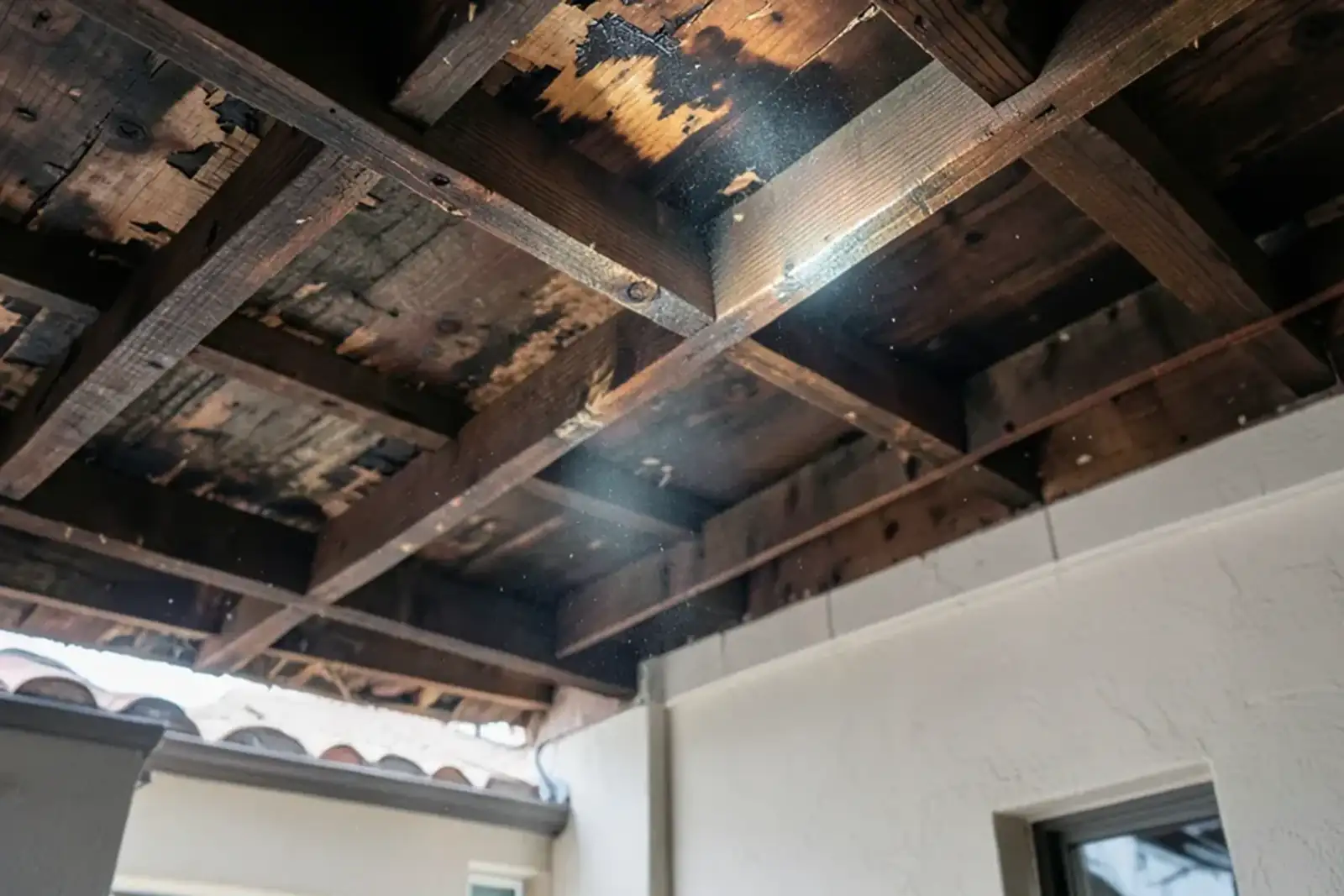
| Dark, flaking or swollen plywood from the attic | Long-term moisture |
| Daylight between boards, or boards with gaps | Spaced sheathing, or boards that have split |
| New cracks above doors and windows inside | Movement. Get it looked at promptly |
What causes a roof to sag or its decking to rot in Los Angeles?
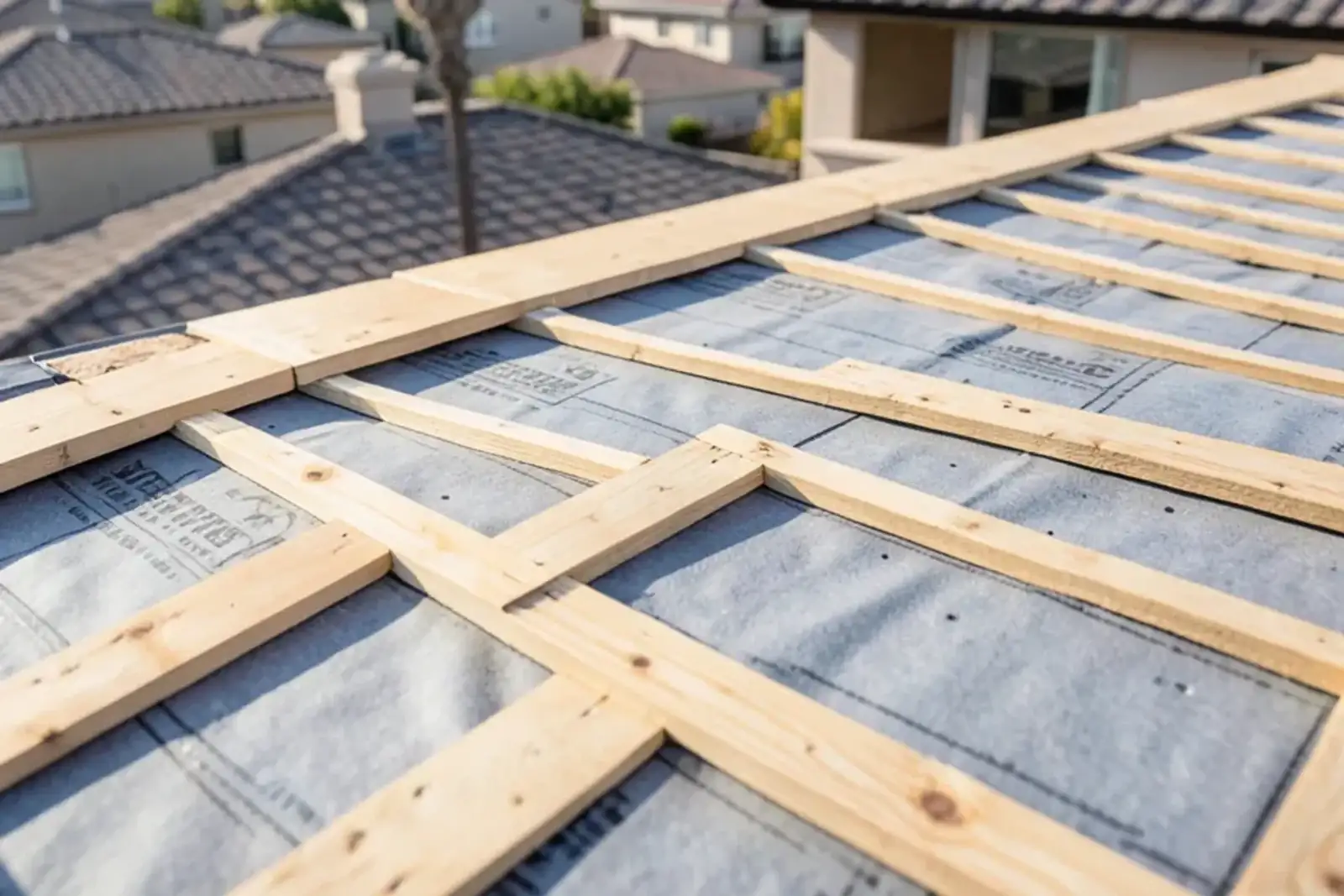
Water is behind most of it, usually slow. A flashing leak that nobody traced can soak one patch of deck every winter for years. Poor attic ventilation holds moisture under the sheathing as well. Los Angeles gets most of its rain from December through March, so a wet deck gets a long dry season to partly recover, and then a new storm to start again.
Weight is the second cause. Extra roofing layers add pounds per square foot, and a heavy tile roof that replaced a lighter one may sit on framing that was never meant for it. Old alterations are the third. Rafters that were cut for a skylight, a vent or an attic stair sometimes lost strength no one noticed, and storm damage can add to it. If a tree has come down on a roof, treat it as a framing question first and a roofing question second.
Roof decking replacement: plywood, boards and what goes under tile
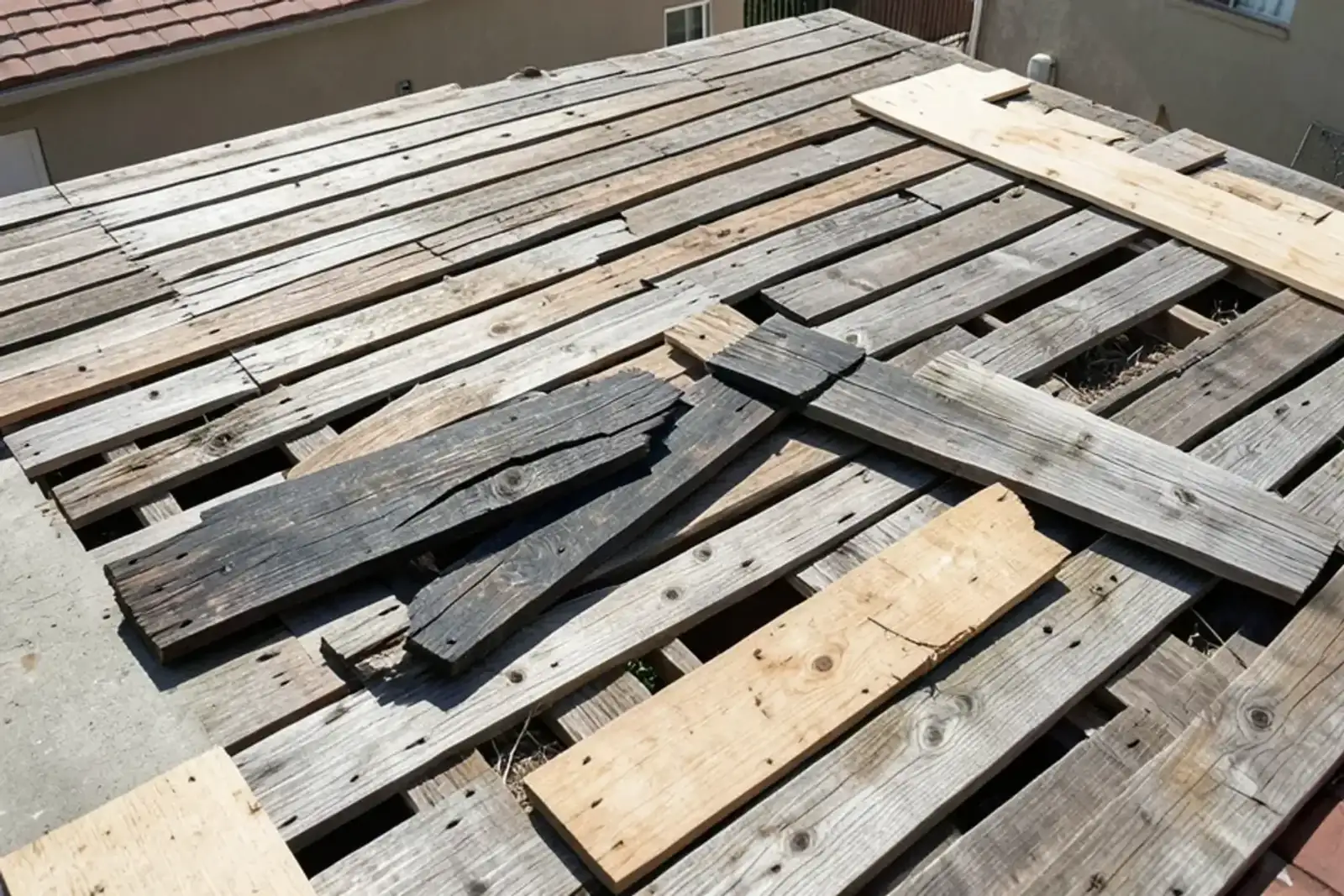
The deck is the surface the roofing is fastened to. On most newer homes it is plywood or oriented strand board. On older ones, especially under tile, it can be spaced one-by boards with gaps between them.
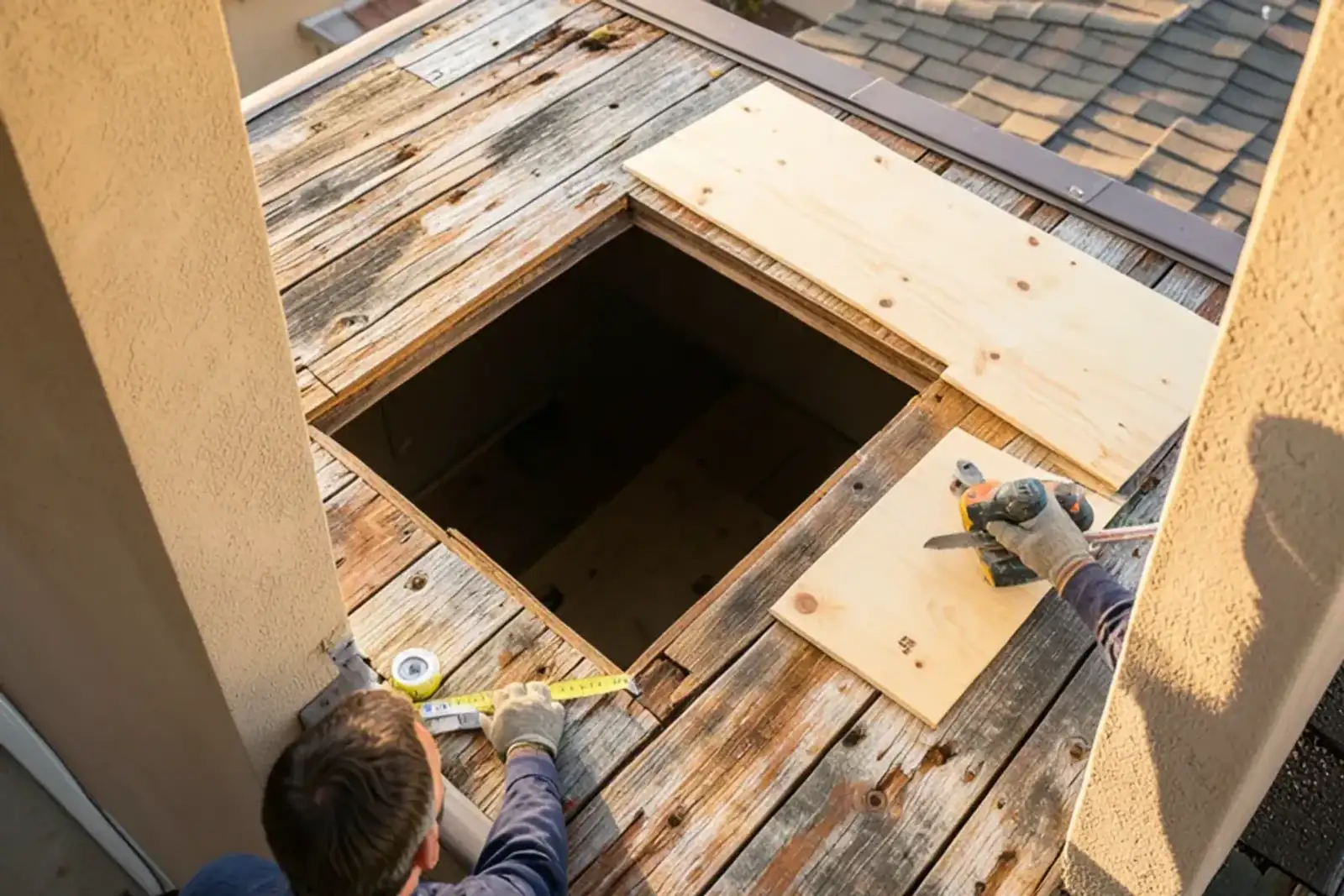
Replacement is done in sections. Bad plywood is cut out back to the nearest sound rafter so the new panel has solid framing to nail into. Spaced boards can be replaced with matching lumber, or the area is covered with sheathing if the new roof needs a solid base. Which one you need depends on the covering going on top, so a new roof choice and a deck repair are often decided together.
What does structural roof repair include?
- Deck replacement: soft, rotted or split sheathing cut back to sound rafters and replaced
- Spaced board repair: old one-by boards replaced or covered with sheathing
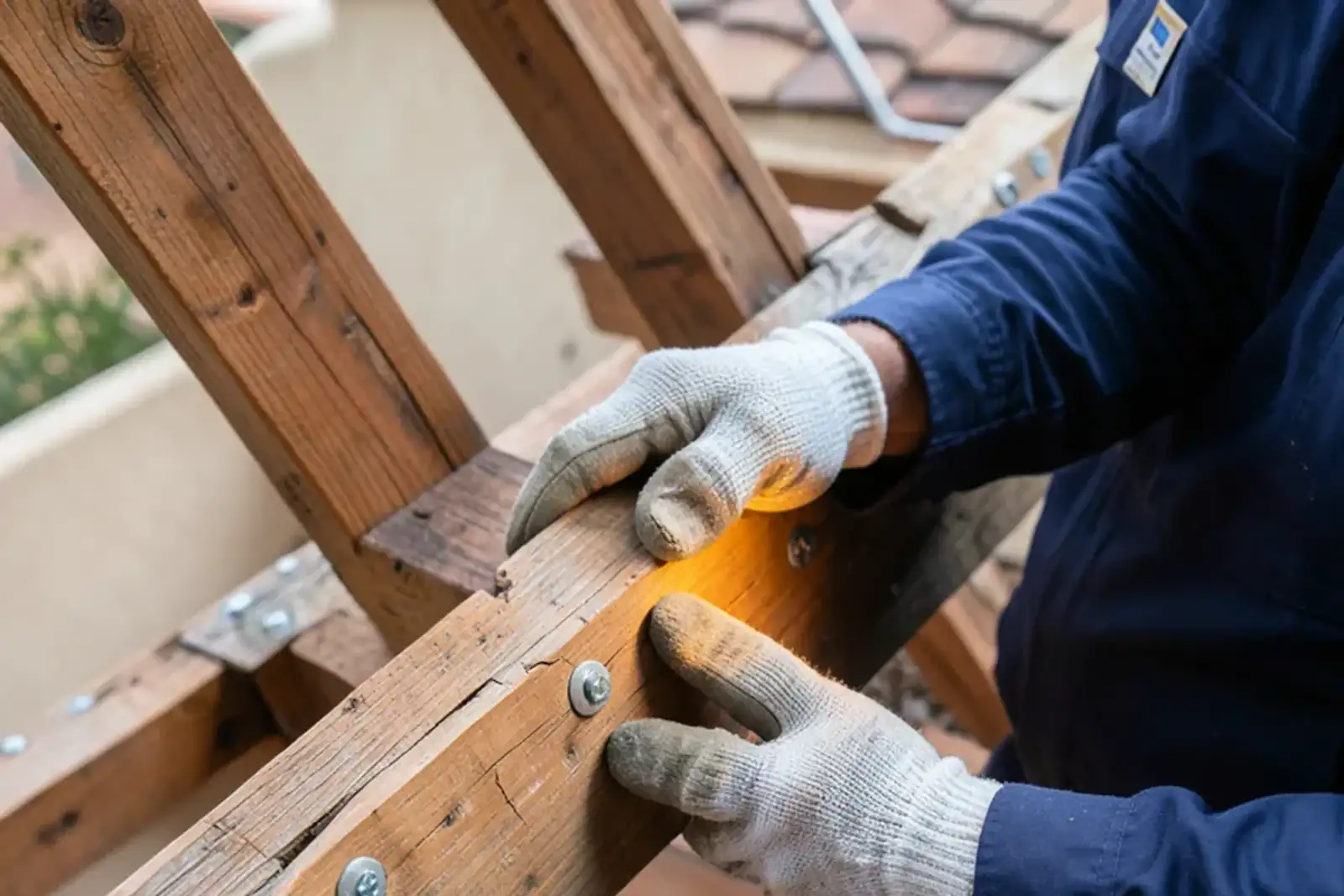
- Framing help: cracked rafters reinforced with new lumber
- Roofing reset: the covering and underlayment lifted, then restored over the repair
A sudden or worsening sag is a different call. Keep clear of it and ask a structural engineer before any roofer. Some dips are age and not structural at all, and we say which we see.
What happens when we find bad plywood during a job
Hidden deck damage is common on older roofs, and often only shows once the covering is off. When we open a roof and find damage, we stop, photograph the area, and tell you what we see. You get the extent and a written price for the repair before it is done.
A Van Nuys customer describes damaged board near the roof being found, and another describes plywood replaced and explained first. Those two jobs are not a promise about yours, but they match how we want to run the work. If you are planning a re-roof, ask the roofer how deck repairs are priced up front and whether replacement is charged per sheet or per section. Our guide to the signs that roof decking needs replacing walks through what you can check yourself.
Structural roof repair step by step
- Hear the history. You tell us when the roof dipped, where it leaks and what work was done before.
- Inspect the attic. We check the underside of the deck, the rafters and the connections for staining, softness and cracks.
- Inspect the roof surface. We look for dips, soft spots and sagging lines, and take photos.
- Explain the options. We show you the findings and tell you whether the repair is a patch, a section or a larger job, with a written price.
- Open and repair. The covering over the damaged area is removed, bad deck is cut out and replaced, and weak framing is reinforced.
- Close up and check. New underlayment and covering go back, and we confirm the area is dry and level.
What drives the cost of structural roof repair?
The extent of the damage matters most. A single sheet is small. A whole slope of rot is not. Access matters too, because a tile roof has to be lifted and reset by hand before anyone can reach the deck, and an attic with little headroom slows framing work.
Reinforcing a cracked rafter or replacing a beam adds labor and, sometimes, an engineer's letter. Whether the roofing above can be saved or has to be replaced is the other swing. We price the work after we have seen it, and the price comes in writing before work starts. Comparing quotes means checking what each one fixes, not only the total.
Do structural roof repairs need a permit, an engineer or an insurance claim?
Replacing a few sheets of sheathing during a repair is different from altering the framing, and rules depend on the address. Framing changes may need a building permit and sometimes an engineer's drawing. Ask the City of Los Angeles building department (LADBS), or your own city or county agency, before you plan around a repair. Your contract should say who pulls the permit and who books the inspection.
Sudden damage, such as a fallen limb, may be covered by a homeowners policy. Rot from a slow leak usually is not, and insurers also look at roof age and condition. We can document what we find and write a repair estimate for your insurer. The claim itself stays with you, or with a licensed public adjuster you hire.
Why Clear Shield for structural roof repair in Los Angeles
Structural work needs a roofer who explains before cutting. Reviewers in Van Nuys describe finding hidden problems on inspection, a damaged board near the roof, and plywood replaced only after it was explained. That is the kind of conversation you should expect before any deck work.
What Van Nuys customers say about hidden roof problems
“I recently had my old shingle roof replaced with a new CertainTeed Pro line roofing system, and I am very happy with the results.”
“We were deciding between a standing seam metal roof and asphalt shingles, and frederick was a great guide who helped us understand the pros and cons so we could make the best choice for our home and budget.”
“They also took care of the permit process, which made everything much easier for me.”
4.9 on Google · 69 reviews as of November 2026. Read all reviews
Two related pages help here: roof leak repair covers tracing the water that softened the deck, and animal damage roof repair covers pest damage to boards and eaves. We work in Santa Clarita, where hot, dry summers and brush exposure shape tile and shingle choices, Stevenson Ranch, where concrete tile tract roofs are reaching underlayment age, South Gate, where 1920s and 1940s bungalows are common, and Carson.
Structural Roof Repair: common questions
How can I tell if my roof decking needs replacing?
Look for dips between rafters, spongy spots underfoot, dark or delaminating plywood from the attic, and daylight through the boards. A screwdriver that sinks into the wood is a clear sign. Many problems only show during tear-off, so we photograph what we find and explain it before we cut out any section.
What causes a roof to sag?
Long-term moisture is the usual cause, because it softens the deck and weakens framing. Heavy loads such as extra roofing layers, or tile on framing not built for it, add to it, and cut or notched rafters from old work can do the rest. A sag along the ridge points to the framing rather than the deck.
Will you tell me before replacing plywood during a job?
Yes. One customer describes plywood being replaced and explained first, and that is how we want it to work. If we open a roof and find bad boards, we show you photos, say how much needs to go, and give you the price in writing before we replace it. Nothing gets added without you knowing.
Is a sagging roof in Los Angeles an emergency?
It can be. A slight dip over a long time is a problem to schedule, but a roof that has dropped suddenly, creaks, or shows new cracks in ceilings or walls needs attention now. Keep people out from under it, do not walk on it, and call. We will set the earliest visit we can and tell you what we see.
Can one section of roof deck be replaced without redoing the roof?
Often, yes. A rotted patch can be cut out and filled with new plywood, with the roofing around it lifted and put back, if the surrounding roof is in good shape. If the covering is old and brittle, matching it is hard, and a larger section or the full slope may make more sense. We lay out both options.
Why does spaced sheathing matter on an older Los Angeles roof?
Older homes, especially under tile, often have one-by boards with gaps between them instead of sheets of plywood. Some roofing needs a solid surface, so the boards may have to be covered or replaced before a new roof goes on. We check what is there first, so the plan matches the framing you have.
Areas served for structural roof repair
- Ladera Heights, CAPostwar homes on view lots in the Baldwin Hills, where decades of slow leaks can soften decking before a stain appears.
- Hermosa Beach, CANarrow lots and walk streets make staging and hauling deck material harder, which affects the plan and the price.
- Cypress, CATract homes from the 1950s to 70s where original decking and framing are now several decades old.
- Las Flores, CAHOA-governed tile tracts, where lifted tile can hide soft deck and framing that was sized for a lighter roof.
- Temple City, CAOlder ranch homes beside large new tile-roofed builds, so framing and deck age differ from one lot to the next.
- Huntington Beach, CAConstant salt air corrodes nails and clips in the deck, and damp can soften sheathing under leaking flashing.
- Norco, CABarns and corrals with open framing sit beside houses, so deck and rafter repair covers outbuildings as well as homes.
- Montebello, CARolling hills, 1950s houses and low-slope commercial roofs, where ponding water can soften decking over time.
- South San Gabriel, CACompact postwar homes under county permitting, where framing changes need that agency's approval first.
- Santa Clarita, CA
- West Hollywood, CA
- Stevenson Ranch, CA
- Ventura County, CA
- Oak Park, CA
- Palos Verdes Estates, CA
- Avocado Heights, CA
- San Marino, CA
- Commerce, CA
- Signal Hill, CA
Need structural roof repair?
Call and tell us what you are seeing on the roof. We will take it from there.